
Loading, please wait...
LOT 0946
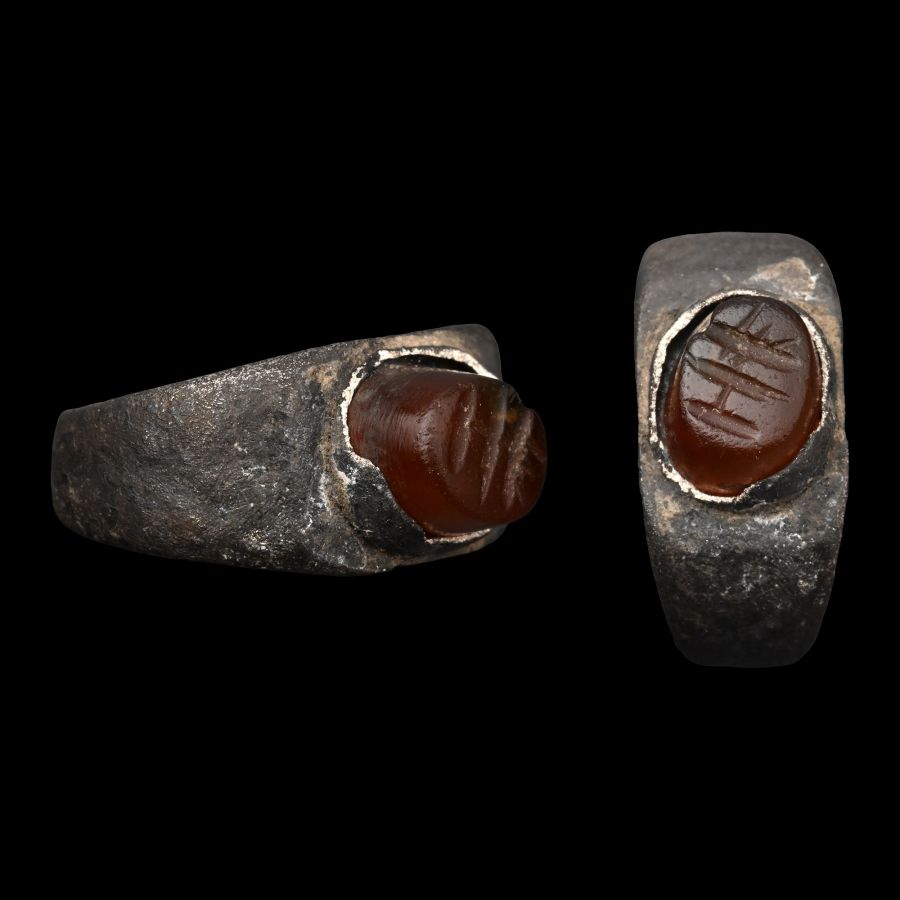
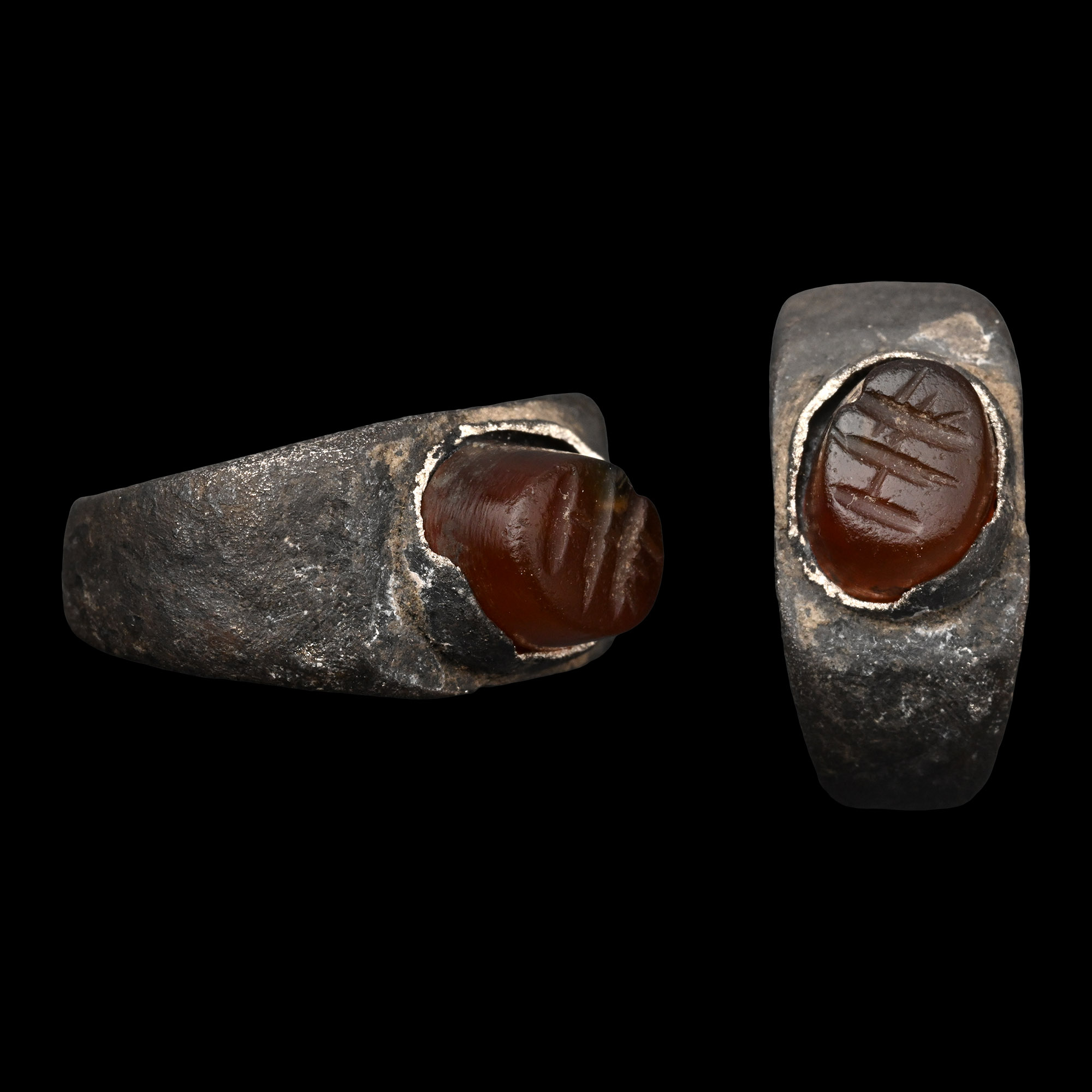
Roman Silver Ring with Carnelian Gemstone
2ND-3RD CENTURY A.D.
3/4 in. (3.94 grams, 19.72 mm overall, 16.88 mm internal diameter (approximate size British H 1/2, USA 4, Europe 6.81, Japan 6)).
Comprising a flat-section hoop, cell to the bezel with inset carnelian stud, geometric motif. [No Reserve]
ProvenanceEx German art market, 2000s.
Acquired from an EU collector living in London.
From the collection of a Surrey, UK, gentleman.
This lot is accompanied by an illustrated lot declaration signed by the Head of the Antiquities Department, Dr Raffaele D'Amato.
TimeLine Auctions follows a vetting process to ensure the authenticity and legality of all items, reinforcing our commitment to integrity and responsible trading. Each antiquity, antique, and coin lot undergoes thorough examination by a vetting committee of at least ten external specialists, professional trade association members, scientists, and archaeologists: Our Vetting Process
AUCTIONS:
TimeLine is a leading auction house specialising in antiquities, ancient art, collectables, natural history, coins, medals, and books. Our auctions offer museums, collectors, historians, and enthusiasts the opportunity to acquire unique and historically significant pieces.
-
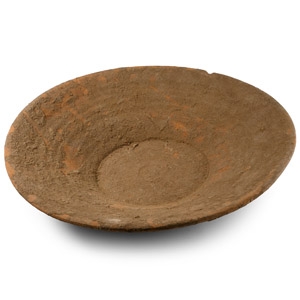
Roman Terracotta Dish
1st-4th century A.D.Sold for (Inc. bp): £85
With central tondo and gentle fluting, curved profile, basal ring. 780 grams, 25 cm
Ex London, UK, collection, 1990-2000. This lot is accompanied by an illustrated lot declaration signed by the Head of the Antiquities Department, Dr Raffaele D'Amato. -
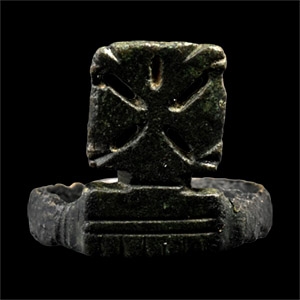
Romano-British Key Ring with Saltire Cross
4th century A.D.Sold for (Inc. bp): £98
Comprising a large D-section hoop with 'faux twist' decoration and a rectangular panel at the base, rectangular section bezel with linear decoration expanding to an openwork shank with saltire cross. 5.98 grams, 25.50 mm overall, 21.47 mm internal diameter (approximate size British U 1/2, USA 10 1/4, Europe 23.15, Japan 22)
Found near Ragby, Lincolnshire, UK This lot is accompanied by an illustrated lot declaration signed by the Head of the Antiquities Department, Dr Raffaele D'Amato.
Rotary type ring-keys are recorded from excavations in Colchester and associated with small boxes and caskets of personal possessions, rather than doors or cupboards. -
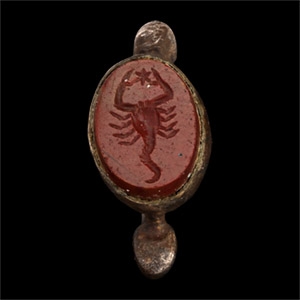
Roman Silver Ring with Jasper Scorpion Gemstone
3rd-4th century A.D.Sold for (Inc. bp): £598
With trumpet-shaped shoulders, ellipsoid drum bezel, inset jasper cloison with intaglio scorpion; supplied with a museum-quality impression. 5.24 grams, 24.36 mm overall, 16.77 mm internal diameter (approximate size British J, USA 4 3/4, Europe 8.69, Japan 8)
Ex German art market, 2000s. Acquired from an EU collector living in London. From the collection of a Surrey, UK, gentleman. This lot is accompanied by an illustrated lot declaration signed by the Head of the Antiquities Department, Dr Raffaele D'Amato.
