
Loading, please wait...
LOT 0659
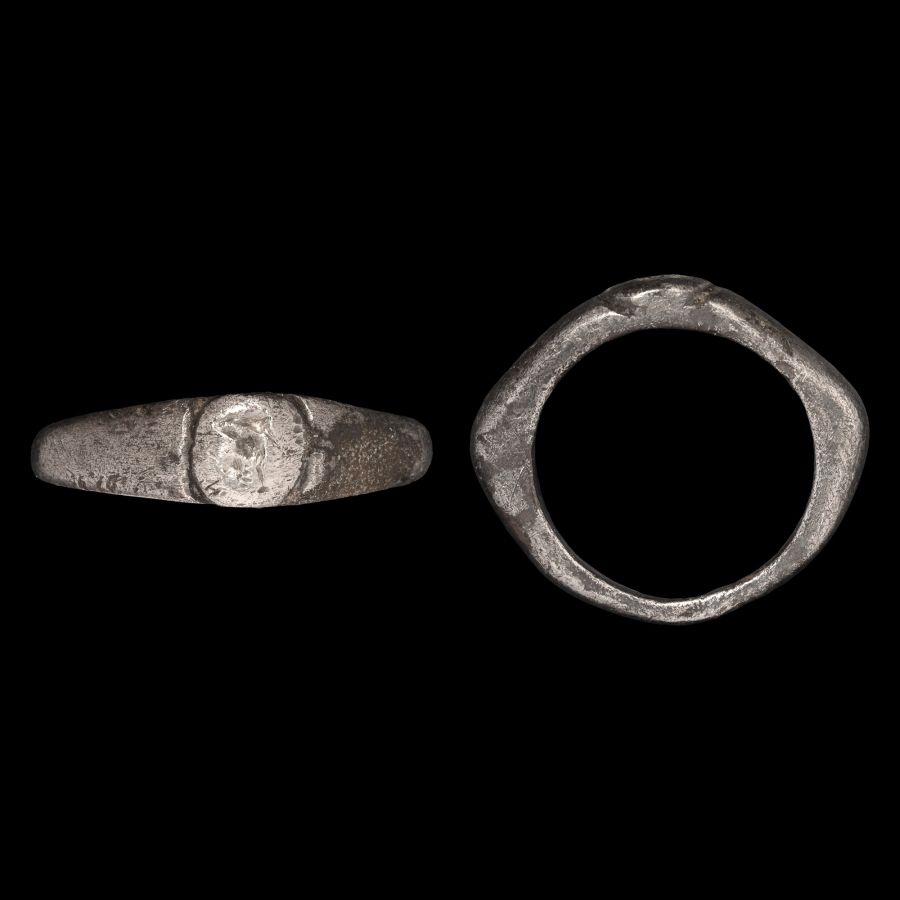
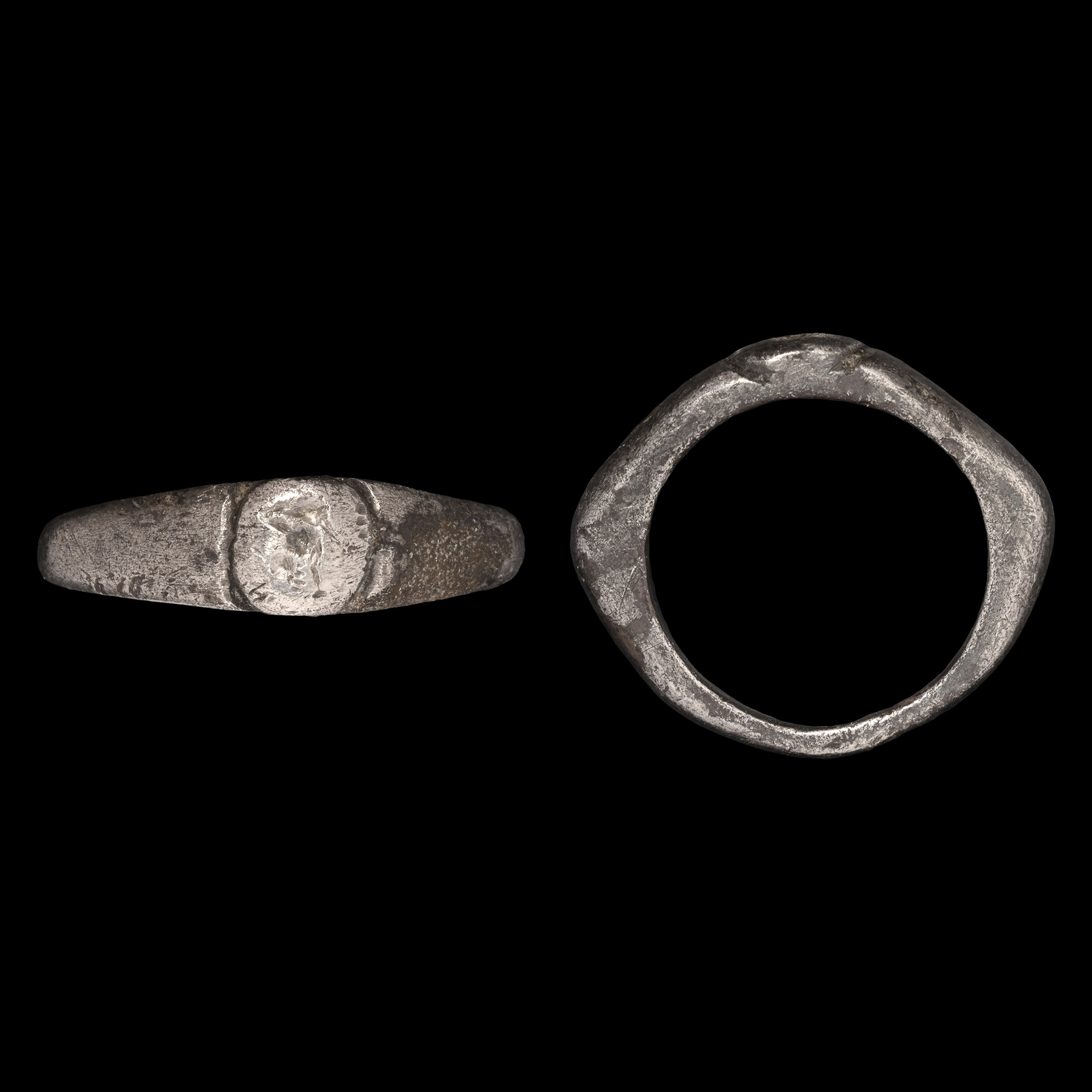
Roman Silver Ring with Animal
3RD-4TH CENTURY A.D.
1 in. (6.05 grams, 23.52 mm overall, 16.37 mm internal diameter (approximate size British K 1/2, USA 5 1/4, Europe 9.95, Japan 9)).
Featuring a D-section hoop with angled shoulders and the bezel with a creature facing left. [No Reserve]
ProvenanceFrom the private collection of a European gentleman (1942-2024), formed since the 1970s.
CONDITIONTimeLine Auctions follows a vetting process to ensure the authenticity and legality of all items, reinforcing our commitment to integrity and responsible trading. Each antiquity, antique, and coin lot undergoes thorough examination by a vetting committee of at least ten external specialists, professional trade association members, scientists, and archaeologists: Our Vetting Process
AUCTIONS:
TimeLine is a leading auction house specialising in antiquities, ancient art, collectables, natural history, coins, medals, and books. Our auctions offer museums, collectors, historians, and enthusiasts the opportunity to acquire unique and historically significant pieces.
-
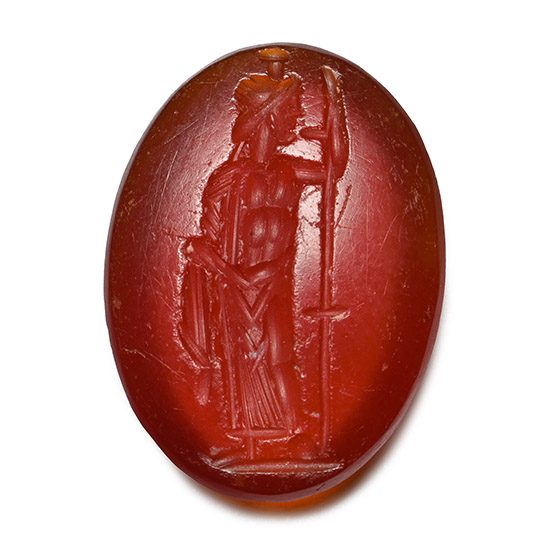
Roman Gemstone with Standing Figure
2nd-3rd century A.D.Sold for (Inc. bp): £416
An oval red carnelian intaglio gemstone engraved with a togate male figure leaning on a long staff. 0.7 grams. 14 mm
From the Fortuna collection of engraved gems; acquired on the European art market in the late 1960s-early 1970s. Private collection, Suffolk, UK. -
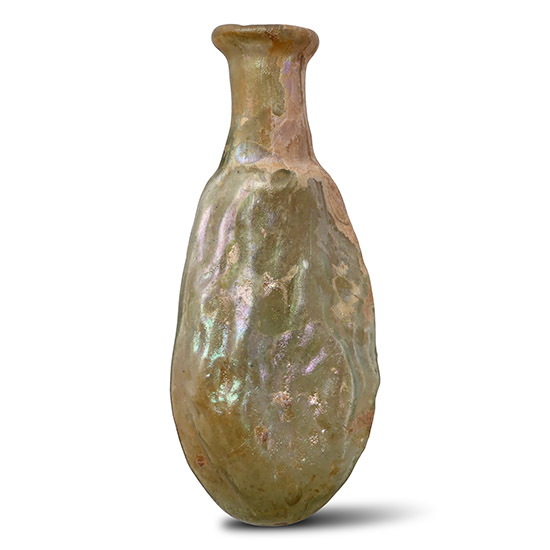
Roman Pale Green Glass Mould Blown Date Flask
1st century A.D.Sold for (Inc. bp): £260
With an elliptical body, short neck and thick everted rim, with modelled wrinkles imitating the texture of a dried date. 16.22 grams, 78 mm
Acquired from Millennium Antiquities, Lancashire, UK, in 2001. From the collection of a Bedfordshire, UK lady. Accompanied by an original Millennium Antiquities invoice dated 28 June 2001.
Dates were not only a staple of the Mediterranean diet, used to sweeten food and wine, but also a symbol for the New Year and a fruit often given as a gift on the occasion. -
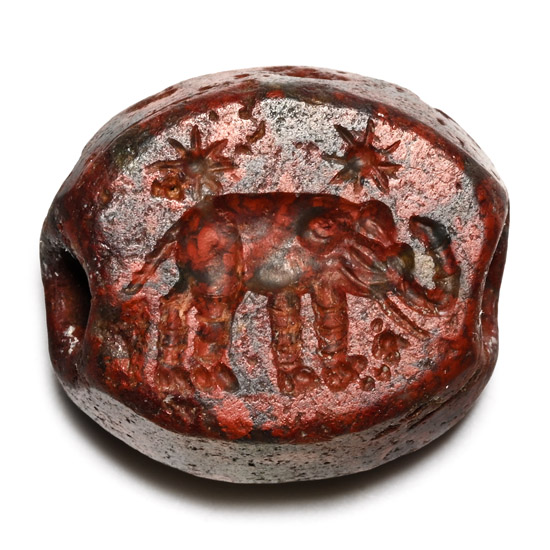
Roman Red Variegated Gemstone with Elephant
3rd century A.D.Sold for (Inc. bp): £1,040
Scaraboid type with incuse design to the underside of an elephant with stars above; supplied with a museum-quality impression. 3.04 grams, 17 mm
From the private collection of a European gentleman (1942-2024), formed since the 1970s.
The Romans first encountered elephants in Pyrrhos' army, and the representation of elephants in Roman art begins from this period. Victorious emperors like Caesar and Vespasian celebrated elephants on their coins. Apart from the celebration of elephants as ‘war machines’, the image of elephants was linked to other aspects in the Roman Imperial Period. Before becoming emperor, Elagabalus was one of the priests of Helios-Sun worship in Emesa. He had elephant depictions on his coins during his reign. The elephants raise their heads to the sun when the sun rises. Thus, the sun is represented on the gemstone together with the elephant.
