
Loading, please wait...
LOT 1086
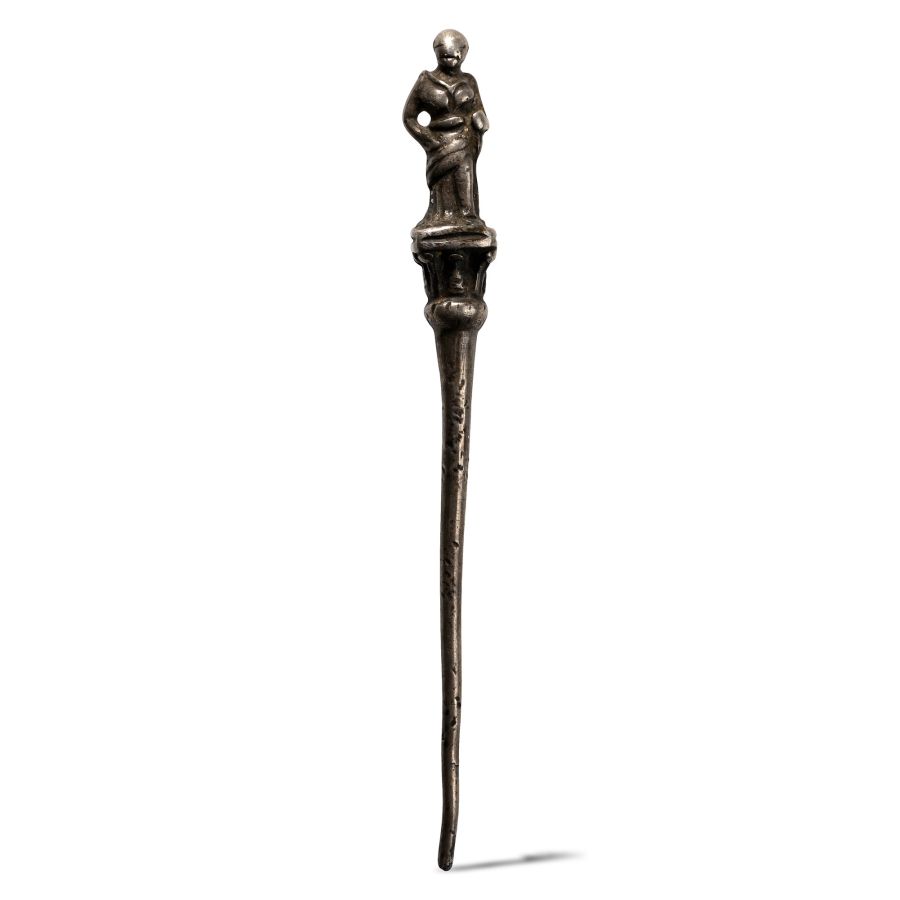
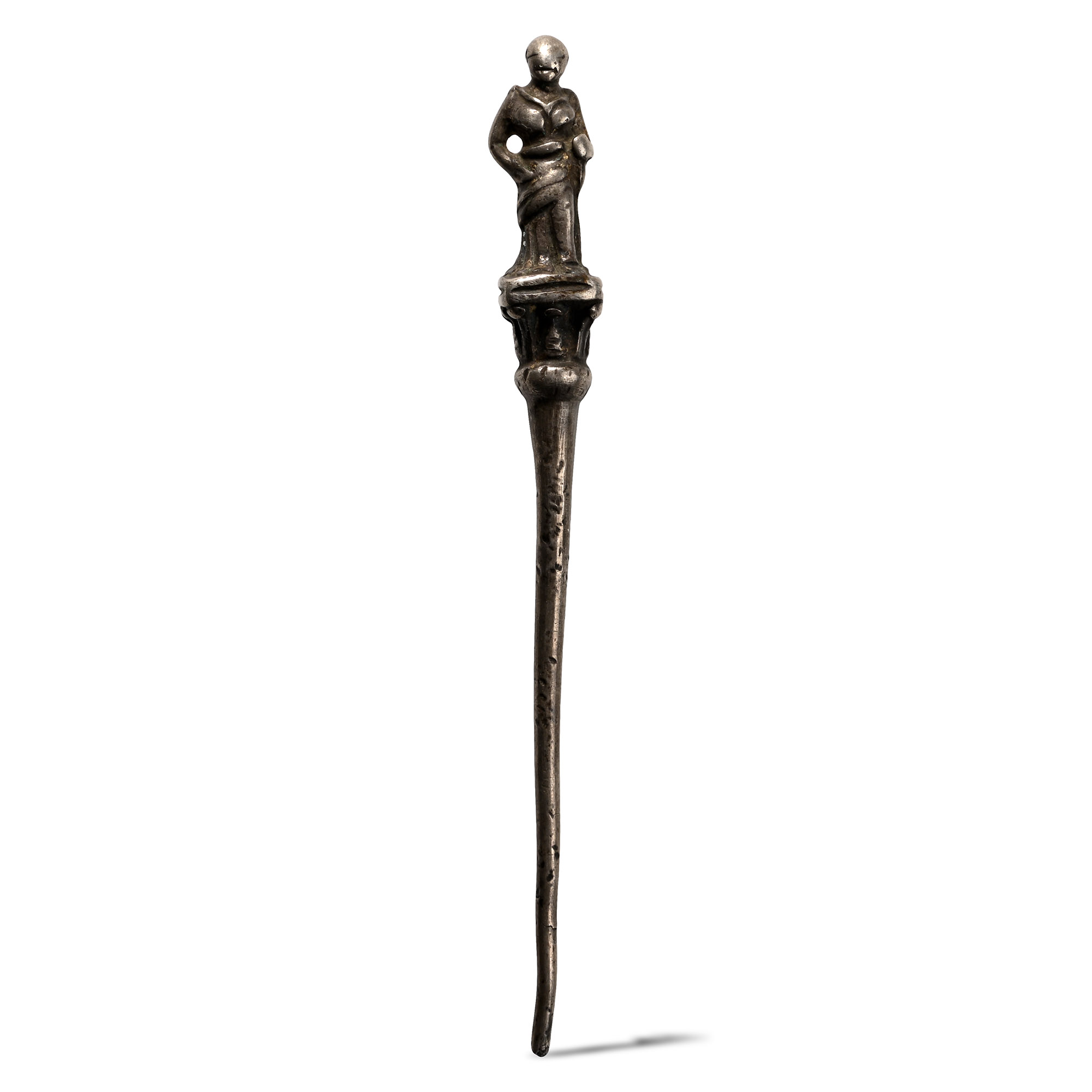
Roman Silver Pin with a Figure of a Standing Woman
2ND-3RD CENTURY A.D.
4 in. (16 grams, 98 mm).
Comprising a tapering body with a Corinthian capital finial, a standing female figure atop the capital, dressed in long robes.
ProvenanceAcquired in the 1980s.
Private collection, Switzerland, thence by descent.
Private collection, since the late 1990s.
Cf. Cool, H.E.M., ‘Roman Metal Hair Pins from Southern Britain’ in Archaeological Journal, 147 (1990) 148-182, fig.10, no.6, for a very similar specimen.
FootnotesThe pin seems to belong to the group 18 of the Cool's classification. The treatment of the figures in these pins varies greatly, including both the very 'Celtic' looking face on a pin from Cirencester and a Graeco-Roman figure type of Venus standing on a Corinthian capital from London. This great diversity of treatments clearly suggests that these pins were the occasional products of a wide variety of workshops.
CONDITIONTimeLine Auctions follows a vetting process to ensure the authenticity and legality of all items, reinforcing our commitment to integrity and responsible trading. Each antiquity, antique, and coin lot undergoes thorough examination by a vetting committee of at least ten external specialists, professional trade association members, scientists, and archaeologists: Our Vetting Process
AUCTIONS:
TimeLine is a leading auction house specialising in antiquities, ancient art, collectables, natural history, coins, medals, and books. Our auctions offer museums, collectors, historians, and enthusiasts the opportunity to acquire unique and historically significant pieces.
-
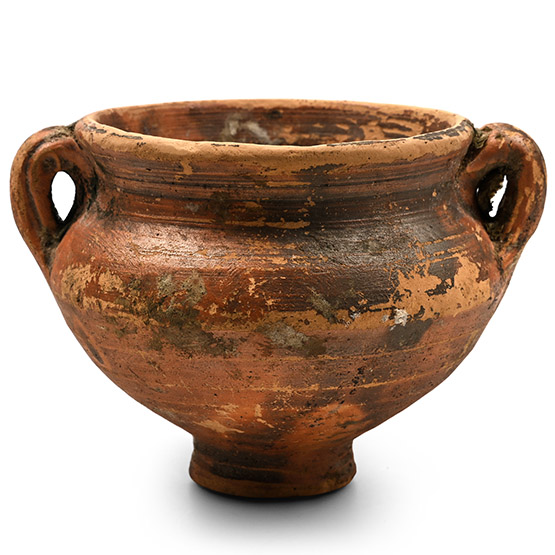
Roman Redware Two-Handled Cup
3rd-4th century A.D.Sold for (Inc. bp): £143
Squat body with a wide mouth and a narrow foot, two small strap handles above the shoulder. 97 grams, 95 mm
Ex German art market, 2000s. Acquired from an EU collector living in London. From the collection of a Surrey, UK, gentleman. -
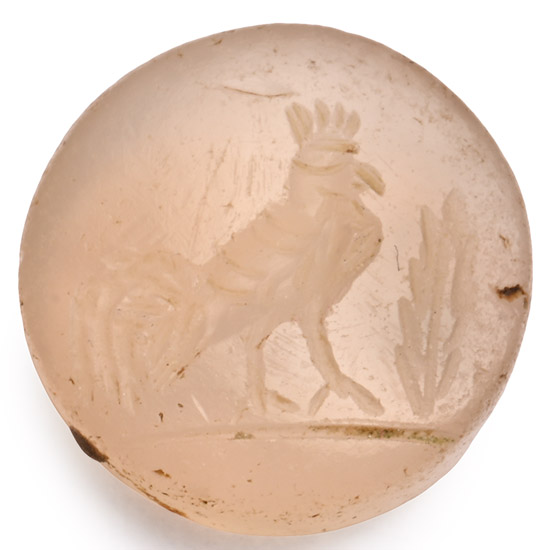
Roman Agate Gemstone with Bird
2nd-3rd century A.D.Sold for (Inc. bp): £65
With intaglio bird standing on a baseline; supplied with a museum-quality impression. 0.78 grams, 11.29 mm
From the private collection of a European gentleman (1942-2024), formed since the 1970s. -
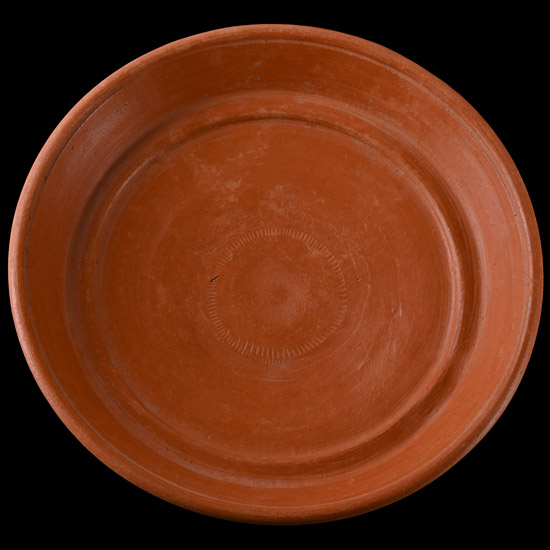
Roman Red Ware Decorated Dish
Circa 3rd-4th century A.D.Sold for (Inc. bp): £208
Shallow body with steep walls and thickened rim, circumferential groove beneath the rim and a hatched band at the centre. 210 grams, 16.2 cm
From the private collection of Mr Brian Edwards, New Malden, Surrey, UK, formed from the late 1970s-early 1980s; thence by descent. Accompanied by the original collector's data sheet with reference no.A28.
