
Loading, please wait...
LOT 0677
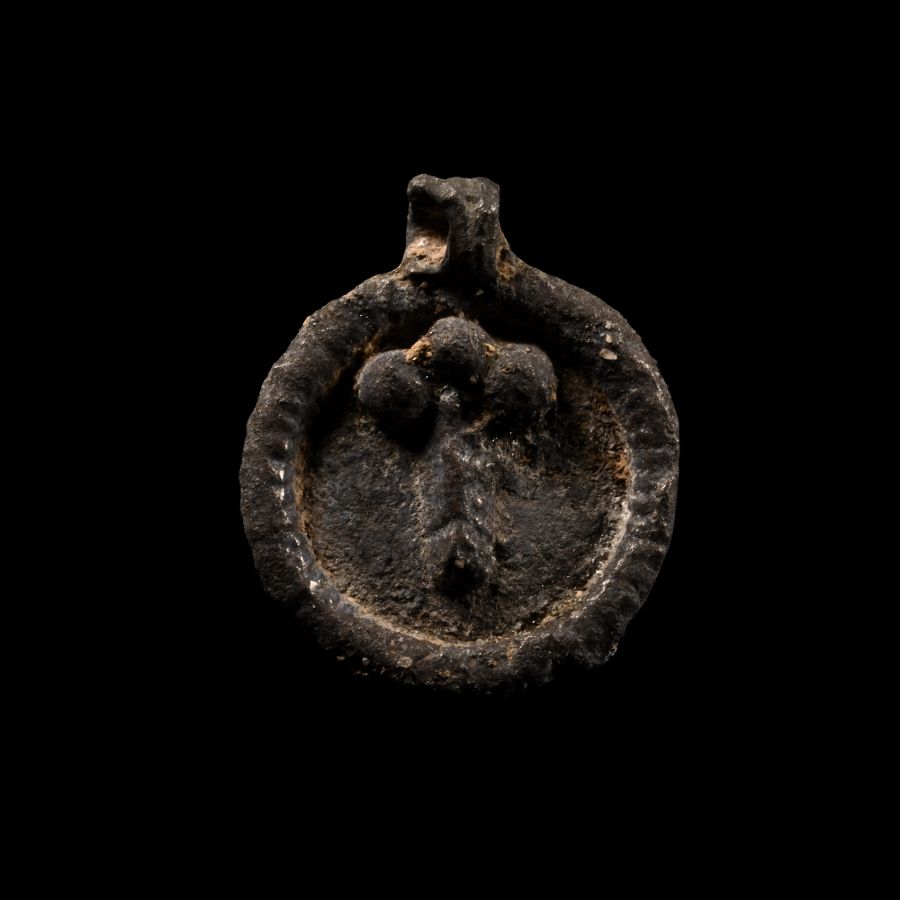
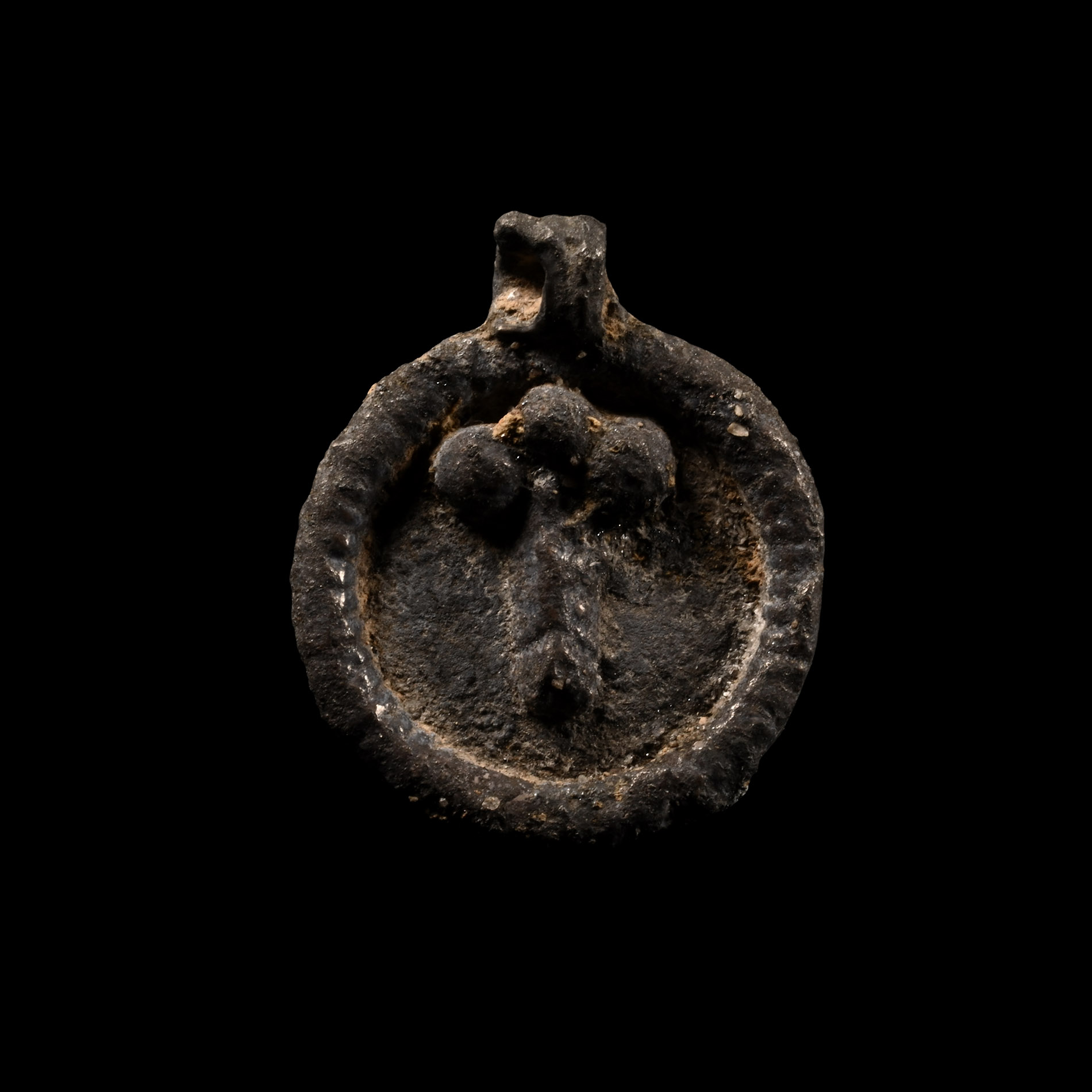
Roman Silver Pendant with Phallic
CIRCA 1ST CENTURY A.D.
3/4 in. (1.51 grams, 18 mm).
Disc-shaped with ribbed border and loop to the apex; to the obverse, a stylized phallus. [No Reserve]
ProvenanceUK art market, acquired prior to 1985.
Acquired on the UK art market in 2012.
Property of a Kent lady collector.
TimeLine Auctions follows a vetting process to ensure the authenticity and legality of all items, reinforcing our commitment to integrity and responsible trading. Each antiquity, antique, and coin lot undergoes thorough examination by a vetting committee of at least ten external specialists, professional trade association members, scientists, and archaeologists: Our Vetting Process
AUCTIONS:
TimeLine is a leading auction house specialising in antiquities, ancient art, collectables, natural history, coins, medals, and books. Our auctions offer museums, collectors, historians, and enthusiasts the opportunity to acquire unique and historically significant pieces.
-
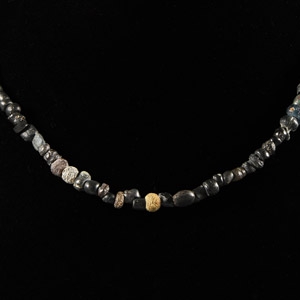
Roman Black Glass and Other Bead Necklace String
1st century A.D. and laterSold for (Inc. bp): £104
Comprising variously shaped beads; restrung. 12 grams, 40 cm long
UK gallery, early 2000s. -
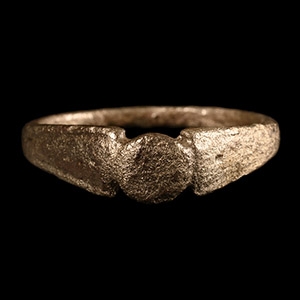
Roman Silver Ring with Expanding Shoulders
1st-4th century A.D.Sold for (Inc. bp): £33
With a D-section hoop; angular, expanding shoulders with pellet decoration supporting a round bezel. 1.43 grams, 19.68 mm overall, 17.15 mm internal diameter (approximate size British M, USA 6, Europe 12.46, Japan 12)
Acquired in the 1980s-1990s. Property of a Nottinghamshire gentleman. -
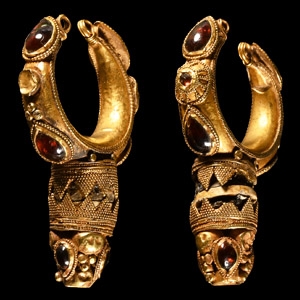
Large Eastern Roman Gold Earrings
2nd-3rd century A.D.Sold for (Inc. bp): £1,690
A hollow-formed hoop with lateral teardrop cells set with cabochon garnets and disc cells to the apex with bulbous central section; filigree and granulation detailing, cells with garnet cloisons; stepped columnar lower section with applied bosses and granulation; Eastern Empire or Parthian. 20.91 grams total, 47-48 mm
From a private collection formed in the 1990s. Ex London, UK, gallery.
