
Loading, please wait...
LOT 0651
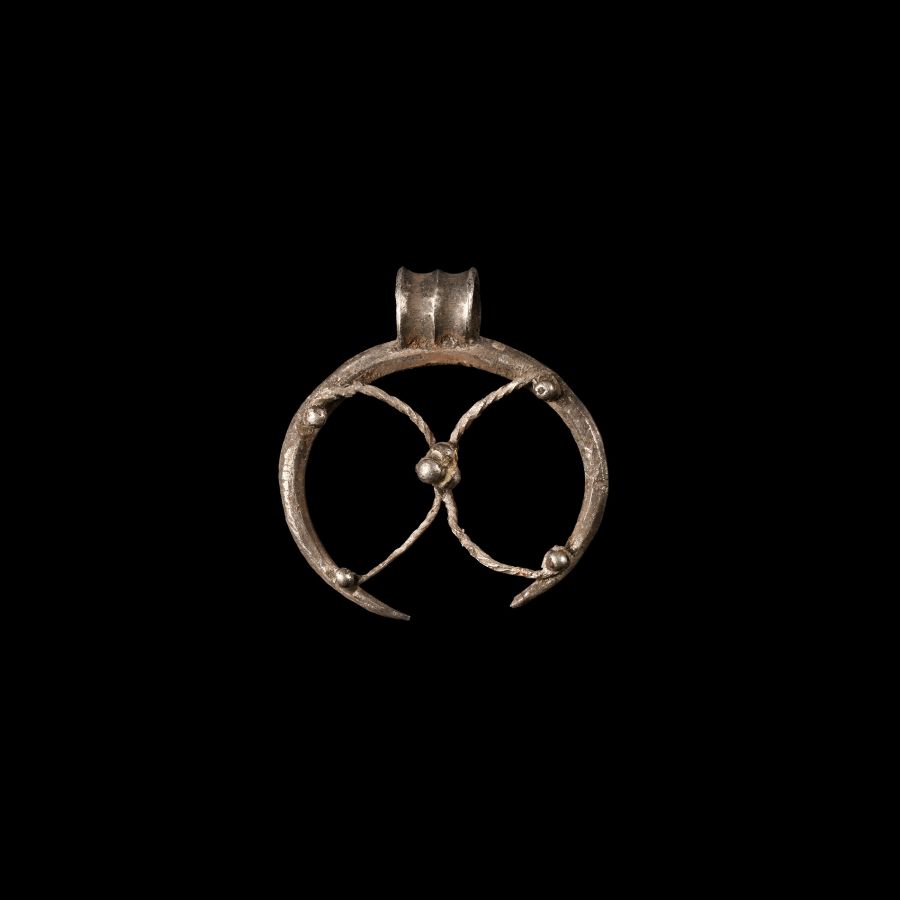
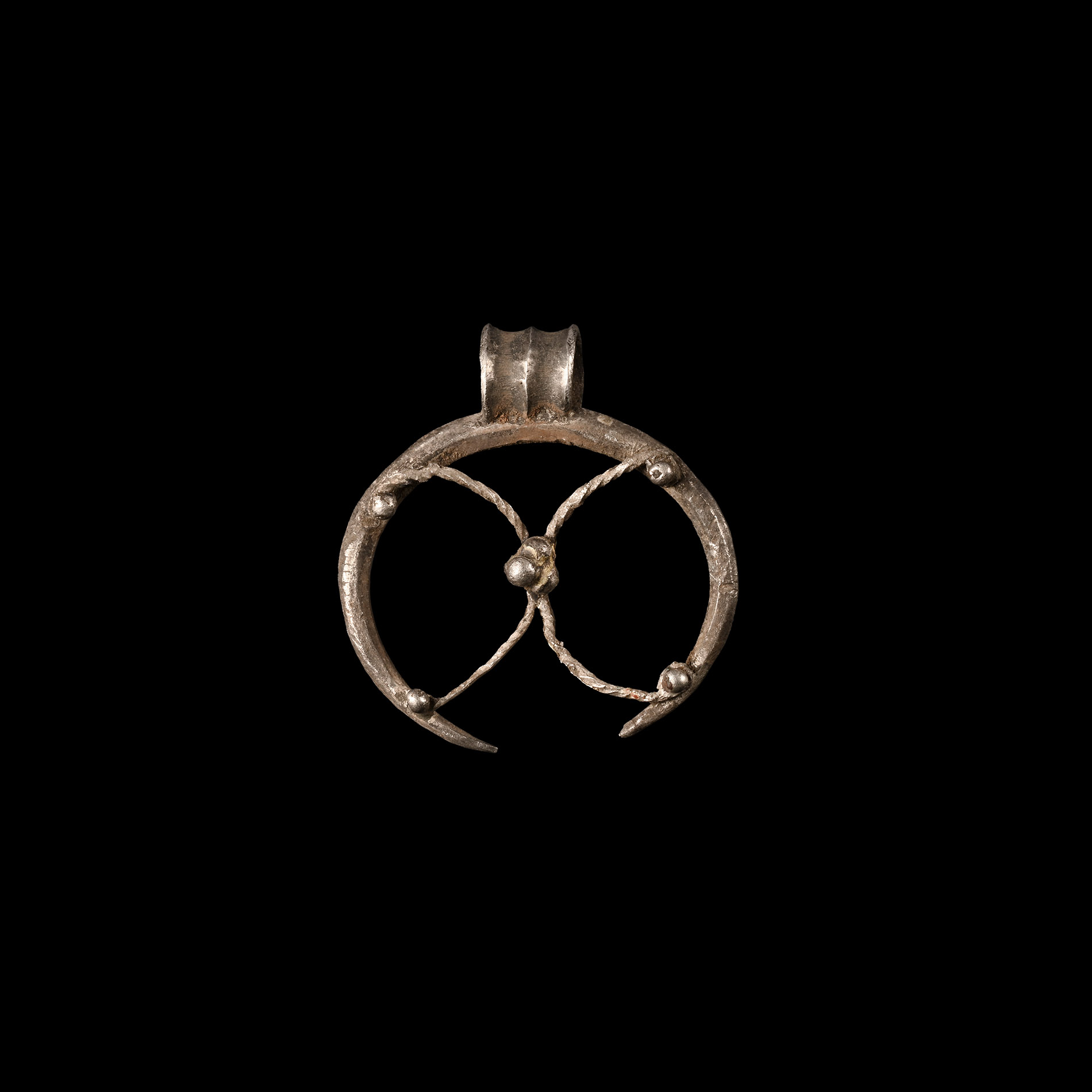
Roman Silver Openwork Lunar Pendant
2ND-3RD CENTURY A.D.
1 1/8 in. (3.77 grams, 29 mm).
A silver lunula pendant composed of a crescentic body straddled by a slender silver wire X-motif embellished with granules; ribbed suspension loop. [No Reserve]
ProvenanceAcquired before 2000.
From the collection of a European gentleman living in the UK.
TimeLine Auctions follows a vetting process to ensure the authenticity and legality of all items, reinforcing our commitment to integrity and responsible trading. Each antiquity, antique, and coin lot undergoes thorough examination by a vetting committee of at least ten external specialists, professional trade association members, scientists, and archaeologists: Our Vetting Process
AUCTIONS:
TimeLine is a leading auction house specialising in antiquities, ancient art, collectables, natural history, coins, medals, and books. Our auctions offer museums, collectors, historians, and enthusiasts the opportunity to acquire unique and historically significant pieces.
-
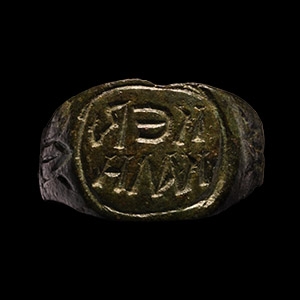
Post Roman Ring with Inscription
6th-7th century A.D.Sold for (Inc. bp): £169
A bronze finger ring with raised ellipsoid bezel, the shoulders decorated with engraved foliage, on the bezel incised in Greek letters the inscription 'ΚΕΡΙ ΚАΛΗ' (written backwards). 4.33 grams, 23.12 mm overall, 21.00 mm internal diameter (approximate size British U 1/2, USA 10 1/4, Europe 23.15, Japan 22)
Acquired in the late 1990s-2000. Property of an East London gentleman.
The ring corresponds to the 1d type of Hadjadj's classification. The Greek inscription is probably a barbaric interpretation of 'ΚΗΡΙ ΚАΛΗ' (kind-hearted). The Merovingian typology of the ring suggests a late Roman product under the Roman-Barbarian kingdoms of Gaul or the Iberian Peninsula. -
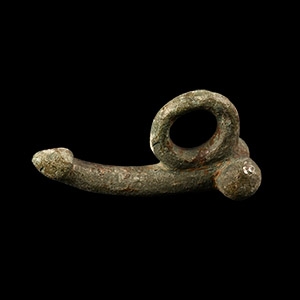
Roman Phallic Pendant
2nd-4th century A.D.Sold for (Inc. bp): £130
A copper-alloy phallic pendant with stylised anatomical detailing, integral suspension loop above. 11.4 grams, 37 mm
Acquired before 2000. From the collection of a European gentleman living in the UK. -
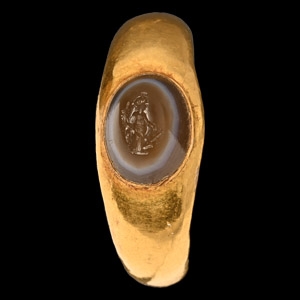
Roman Gold Ring with Fortuna Gemstone
1st-2nd century A.D.Estimate: £2,000 - 3,000 (‡+bp*)
Opening Bid: £1,000
A hollow-formed gold finger ring with inset banded agate cabochon, intaglio standing Fortuna. 2.22 grams, 21.90 mm overall, 15.21 mm internal diameter (approximate size British E 1/2, USA 2 1/2, Europe 3, Japan 3)
Acquired early 1990s. Ex private American collection; thence by descent. Private Swiss collection since 1998. This lot has been checked against the Interpol Database of stolen works of art and is accompanied by search certificate no.11619-199018.
