
Loading, please wait...


LOT 0113
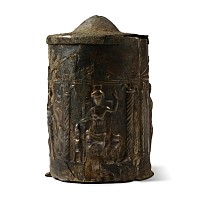
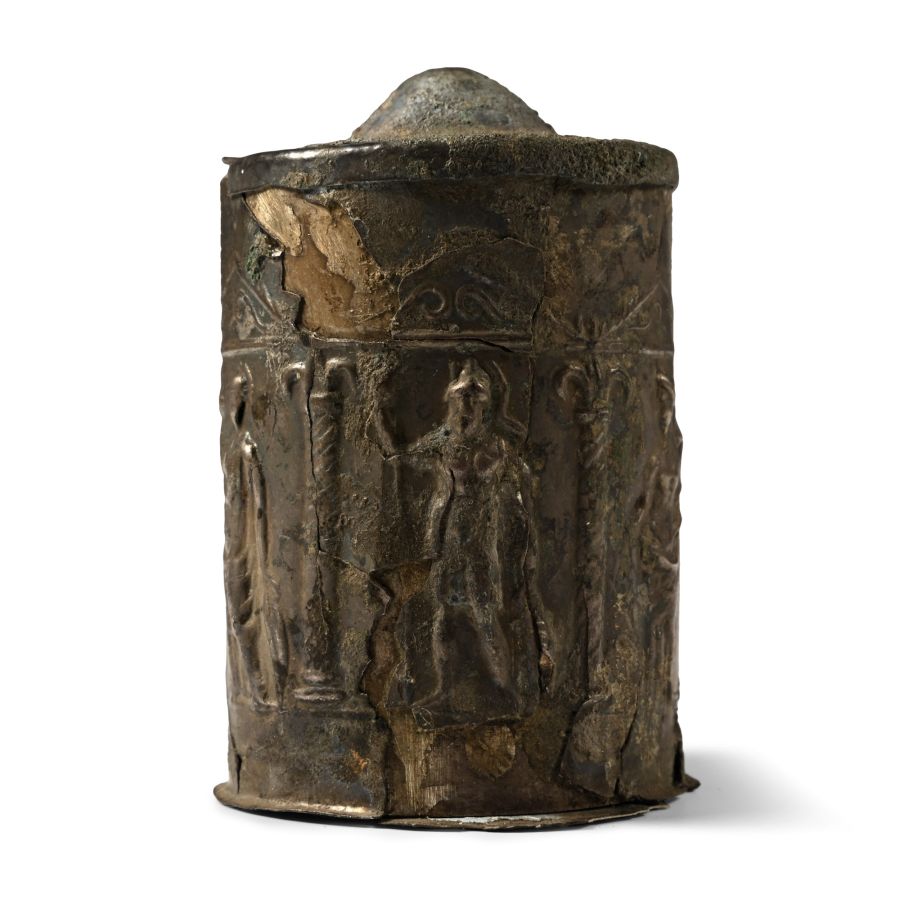
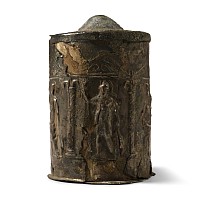
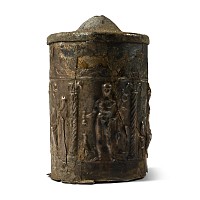
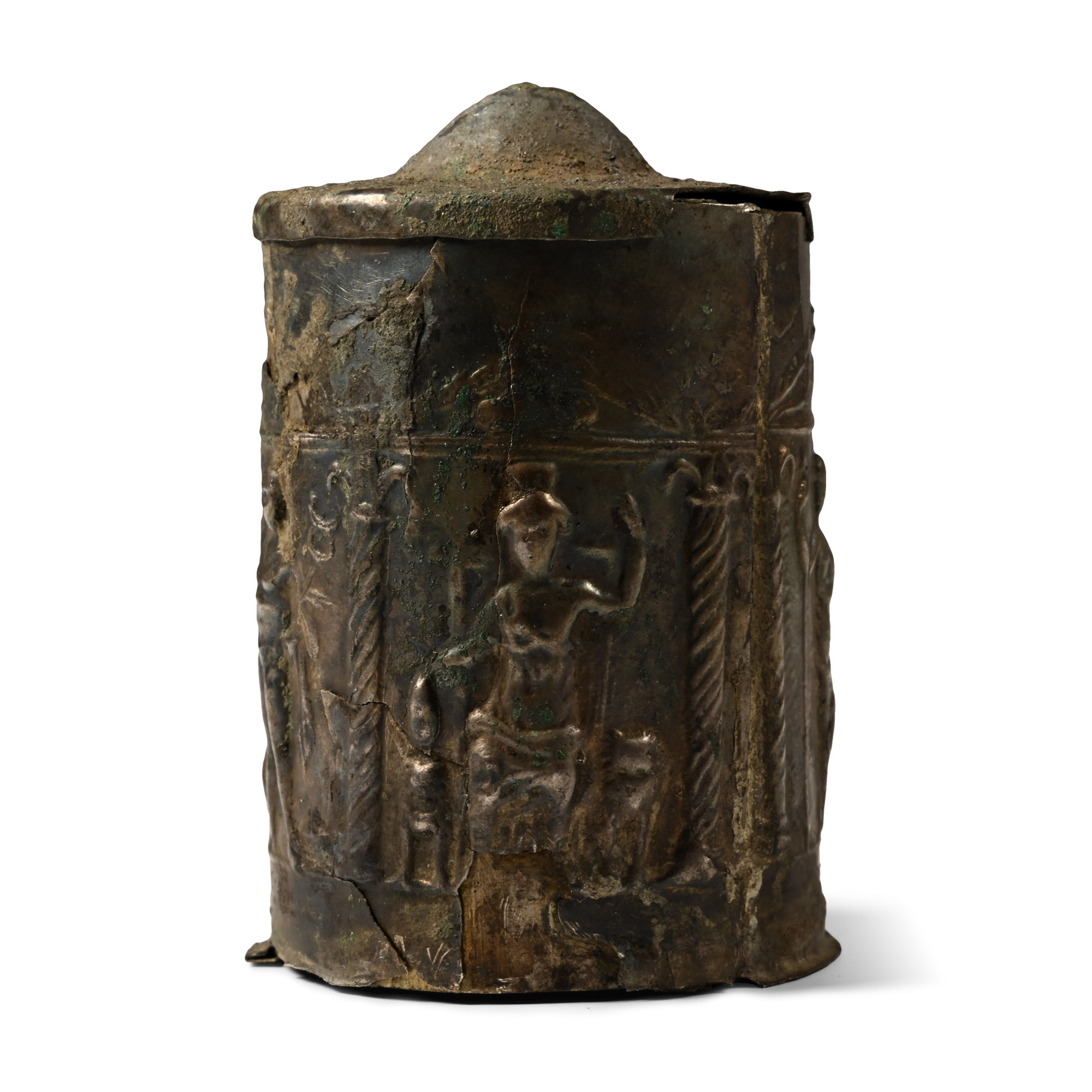
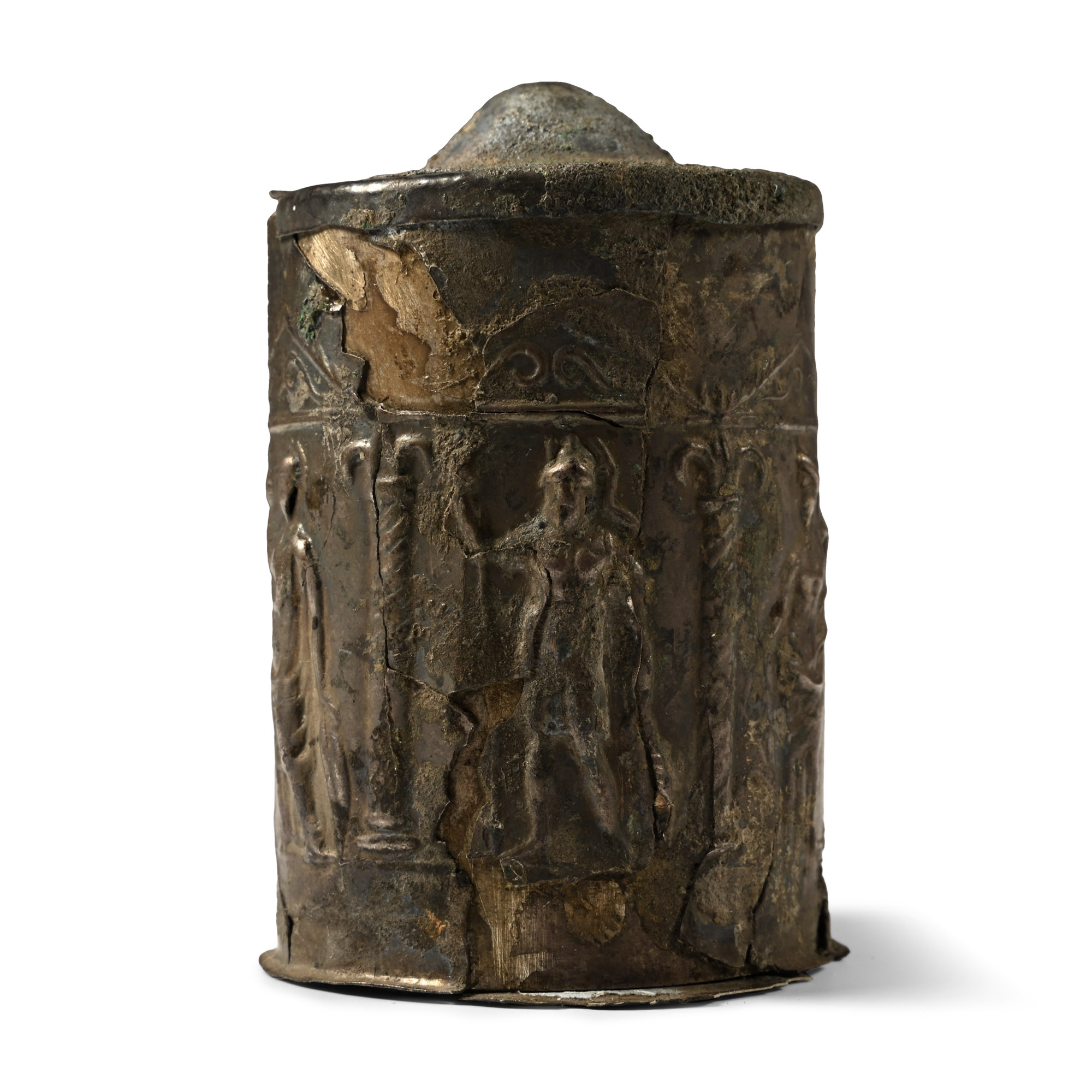
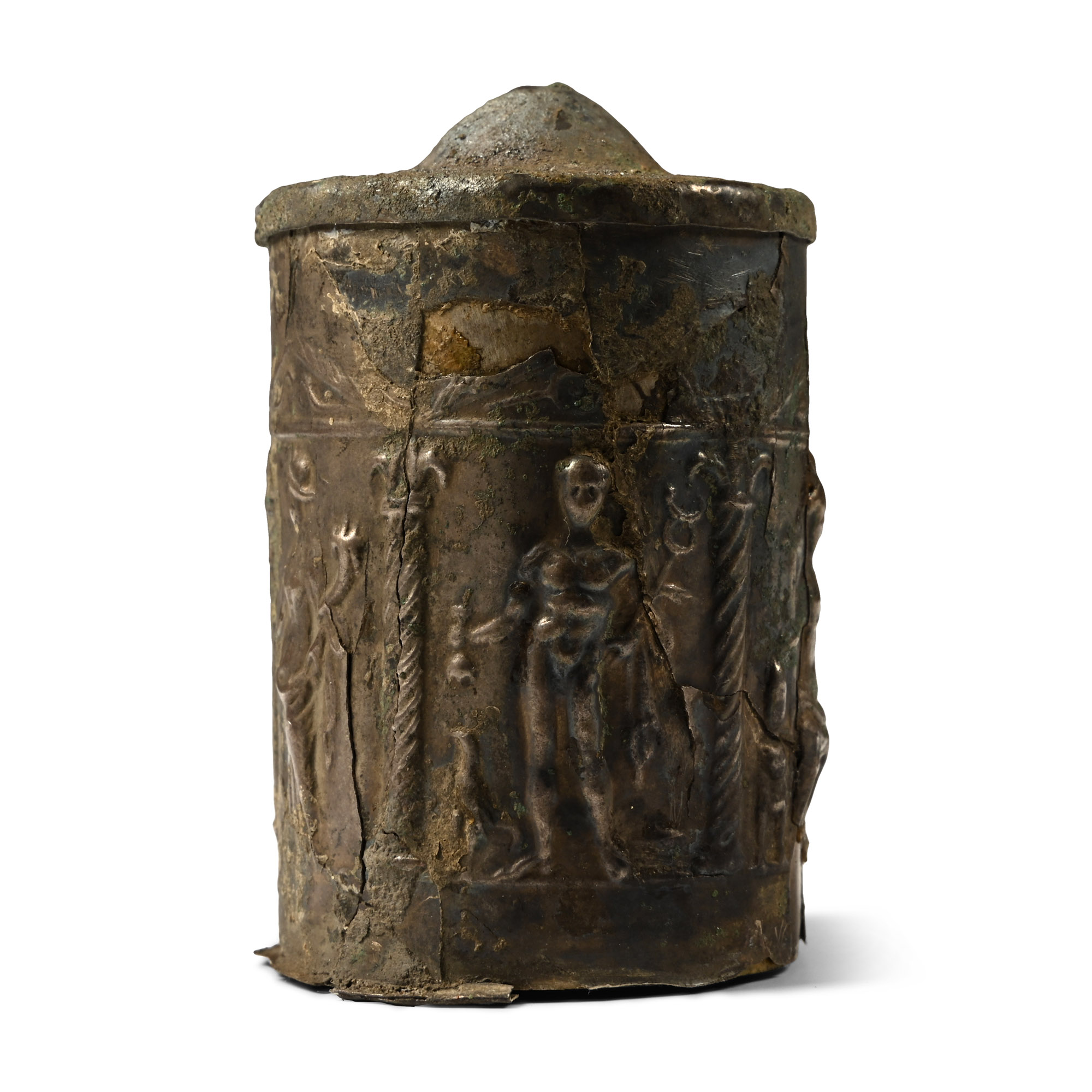
Roman Silver Lidded Pyxis with Mercury, Fortuna, Minerva, Juno and Mars
1ST-2ND CENTURY A.D.
2 5/8 in. (33 grams, 67 mm).
Tubular in construction with domed lid, sidewall with repoussé arcade frieze depicting Mercury with caduceus, Fortuna with cornucopia, Mars with spear, Minerva with helmet, shield and spear, Juno enthroned; some restoration.
ProvenanceAcquired from Trinity Antiques, UK, before 2009.
Property of a Bedfordshire, UK, private collector.
Accompanied by an illustrated collector's identification tag.
This lot has been cleared against the Art Loss Register database, and is accompanied by an illustrated lot declaration signed by the Head of the Antiquities Department, Dr Raffaele D’Amato.
Cf. similar item (lacking decoration) in the collection of the British Museum, London, under accession no.1982,0729.305.
CONDITIONTimeLine Auctions follows a vetting process to ensure the authenticity and legality of all items, reinforcing our commitment to integrity and responsible trading. Each antiquity, antique, and coin lot undergoes thorough examination by a vetting committee of at least ten external specialists, professional trade association members, scientists, and archaeologists: Our Vetting Process
AUCTIONS:
TimeLine is a leading auction house specialising in antiquities, ancient art, collectables, natural history, coins, medals, and books. Our auctions offer museums, collectors, historians, and enthusiasts the opportunity to acquire unique and historically significant pieces.
LOT 0113
Roman Silver Lidded Pyxis with Mercury, Fortuna, Minerva, Juno and Mars
Sold for (Inc. bp): £1,690
-
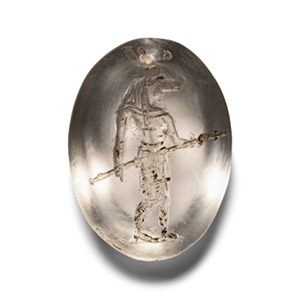
Roman Rock Crystal Gemstone with Sobek
1st century A.D.Sold for (Inc. bp): £975
Lentoid in section with engraved image of the crocodile-headed god Sobek, wearing a broad collar and pleated kilt, advancing with a spear, wearing the Pa-sekhemty crown; supplied with a museum-quality impression. 1.24 grams, 15 mm
From the Fadel family collection, London, UK, 1970s. This lot is accompanied by an illustrated lot declaration signed by the Head of the Antiquities Department, Dr Raffaele D’Amato.
The primary centres of worship for Sobek during the Roman Period were Medinet el-Fayum (ancient Shedet) in the Fayum region and Kom Ombo in Upper Egypt, where live crocodiles were kept within the temple precincts. Sobek was associated with other deities and the pharaoh, symbolising procreative and vegetative fertility, as well as strength and power. -
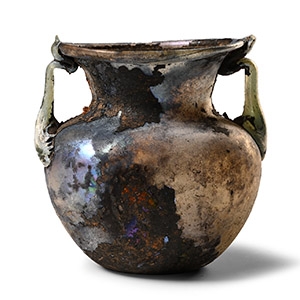
Roman Glass Double-Handled Iridescent Flask
4th century A.D.Estimate: £600 - 800 (+bp*)
Opening Bid: £333
With squat bulbous body, dimple base, flared trumpet neck; applied trails to the shoulder, applied strap handles to the shoulders. 47 grams, 72 mm
From an important London, UK, collection, 1970-1990s. This lot is accompanied by an illustrated lot declaration signed by the Head of the Antiquities Department, Dr Raffaele D’Amato. -
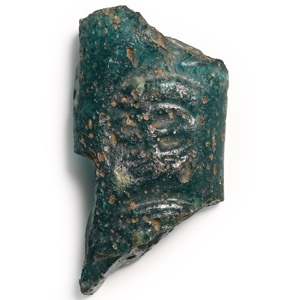
Roman Glass Bracelet Fragment with Menorah Stamp
1st-4th century A.D.Estimate: £100 - 140 (+bp*)
Opening Bid: £50
Plano-convex in section with stamped detail to the outer face, arcade with menorah. 1.56 grams, 22 mm
Acquired 1979-1999. London collection of the late Mr S.M., thence by descent. This lot is accompanied by an illustrated lot declaration signed by the Head of the Antiquities Department, Dr Raffaele D’Amato.
