
Loading, please wait...
LOT 0640
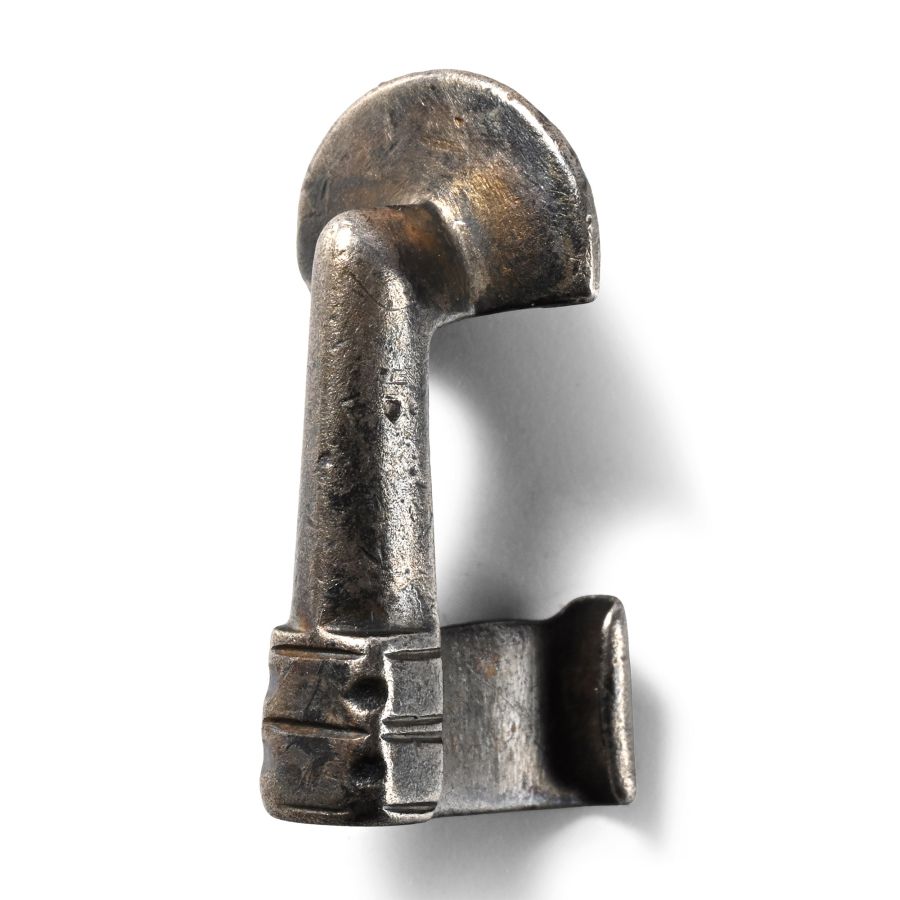
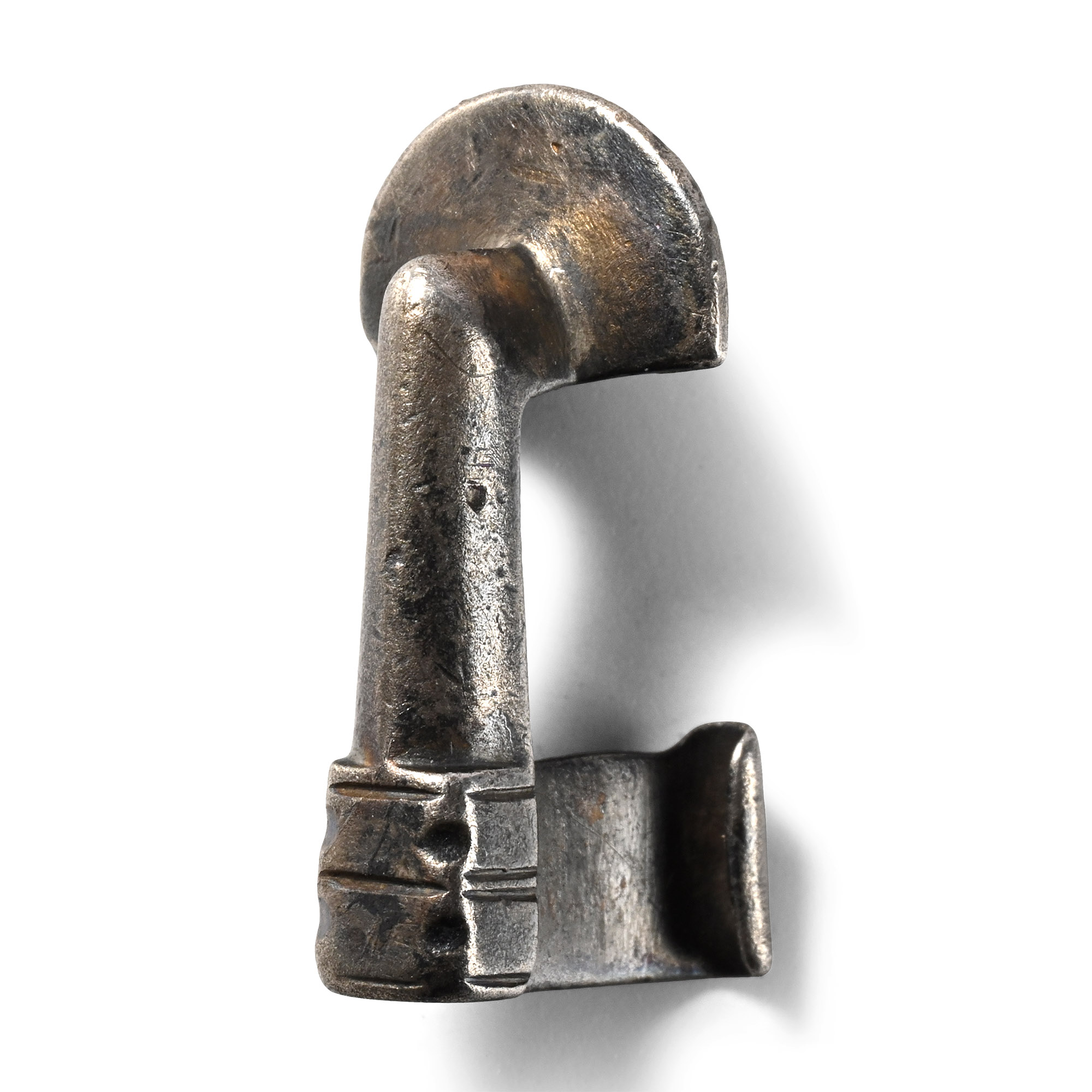
Roman Silver Knee Brooch
2ND-3RD CENTURY A.D.
1 in. (6.67 grams, 26 mm).
With transverse bar, D-shaped headplate, D-section body, sleeve finial, extended catch and hinge to the reverse. [No Reserve]
ProvenanceFrom a continental European collection.
From a UK collection formed in the 1980s.
Property of an Essex, UK, gentleman.
Cf. Mackreth, D.F., Brooches in Late Iron Age and Roman Britain, Oxford, 2011, item 7513.
CONDITIONTimeLine Auctions follows a vetting process to ensure the authenticity and legality of all items, reinforcing our commitment to integrity and responsible trading. Each antiquity, antique, and coin lot undergoes thorough examination by a vetting committee of at least ten external specialists, professional trade association members, scientists, and archaeologists: Our Vetting Process
AUCTIONS:
TimeLine is a leading auction house specialising in antiquities, ancient art, collectables, natural history, coins, medals, and books. Our auctions offer museums, collectors, historians, and enthusiasts the opportunity to acquire unique and historically significant pieces.
-
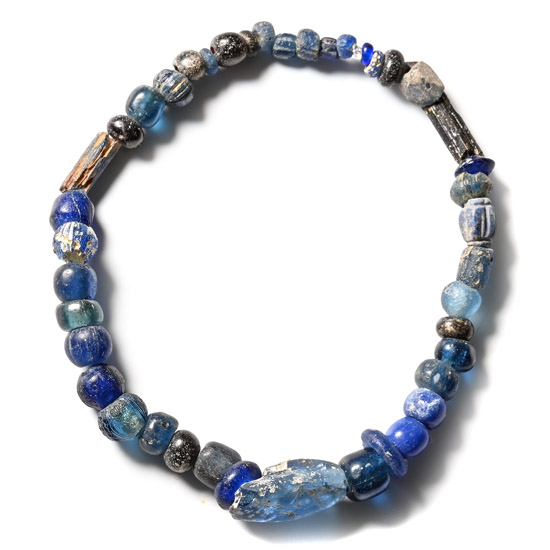
Roman Dark Blue Glass Bead Bracelet
1st-4th century A.D. and laterSold for (Inc. bp): £59
Composed mainly of oblate, spherical and tubular beads, restrung with an elasticated string. 6.46 grams, 17 mm
Ex Ancient Art Shop, Windsor, UK, 1990s. Ex private collection. -
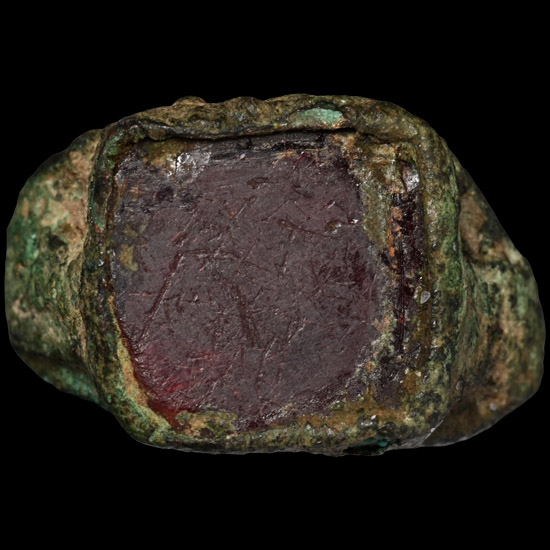
Late Roman Bronze Ring with Flatbed Garnet Gemstone
5th-6th century A.D.Sold for (Inc. bp): £59
D-section hoop with flared shoulders and square cell, inset cloison. 5.13 grams, 24.16 mm overall, 18.27 x 16.05 mm internal diameter (approximate size British L, USA 5 3/4, Europe 11.24, Japan 10)
From the private collection of Mr Brian Edwards, New Malden, Surrey, UK, formed from the late 1970s-early 1980s; thence by descent. Accompanied by the original collector's data sheet(s) with reference no.A42. -
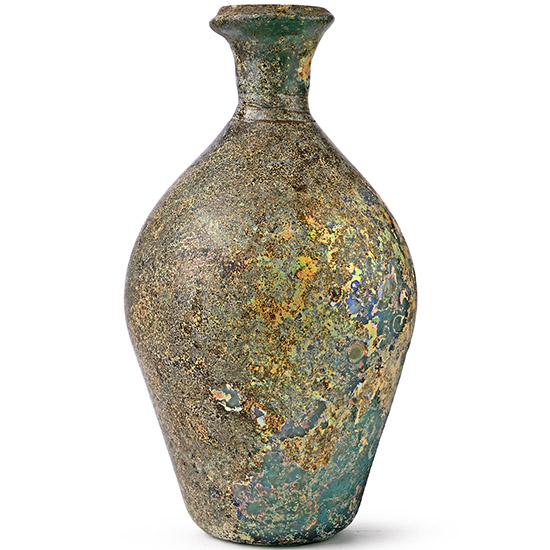
Very Large Eastern Roman Blue Glass Bottle with Iridescence
2nd-3rd century A.D.Sold for (Inc. bp): £3,120
Piriform in profile with a narrow neck and flared mouth with a chamfered rim, dimple base. 949 grams, 29.1 cm
From the Xavier Guerrand-Hermès private collection. with Artcurial, Paris, 25 March 2014, no.39. Private collection, London, UK. This lot has been checked against the Interpol Database of stolen works of art and is accompanied by search certificate number no.12959-245241.
On ancient glass, iridescence is the soft play of colour that develops as the surface ages and becomes silica-rich. Minute layers form over time and break light into shifting blues, greens and golds. It is not a modern finish but something time has drawn out of the material itself, so the pattern and palette are unique to each piece. Collectors prize good, stable iridescence because it lifts the form: ribs read more crisply, profiles glow, and simple vessels take on depth and movement. Museums now tend to preserve these surfaces rather than polish them away, recognising both their beauty and what they tell us about an object’s long life (though it is not, by itself, a dating test). For display, iridescent glass performs brilliantly under gentle, directional light, where the colours “turn” as the vessel is moved. Well-preserved, even iridescence of this quality is not common and adds materially to the presence and desirability of the piece.
