
Loading, please wait...
LOT 0126
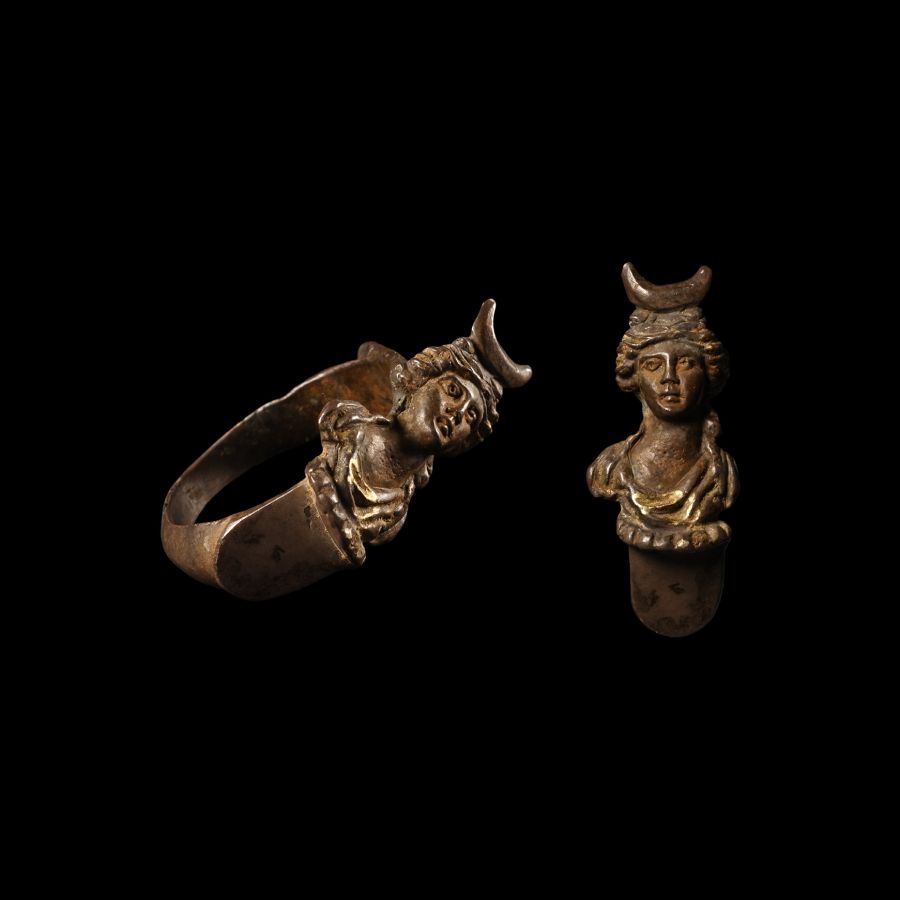
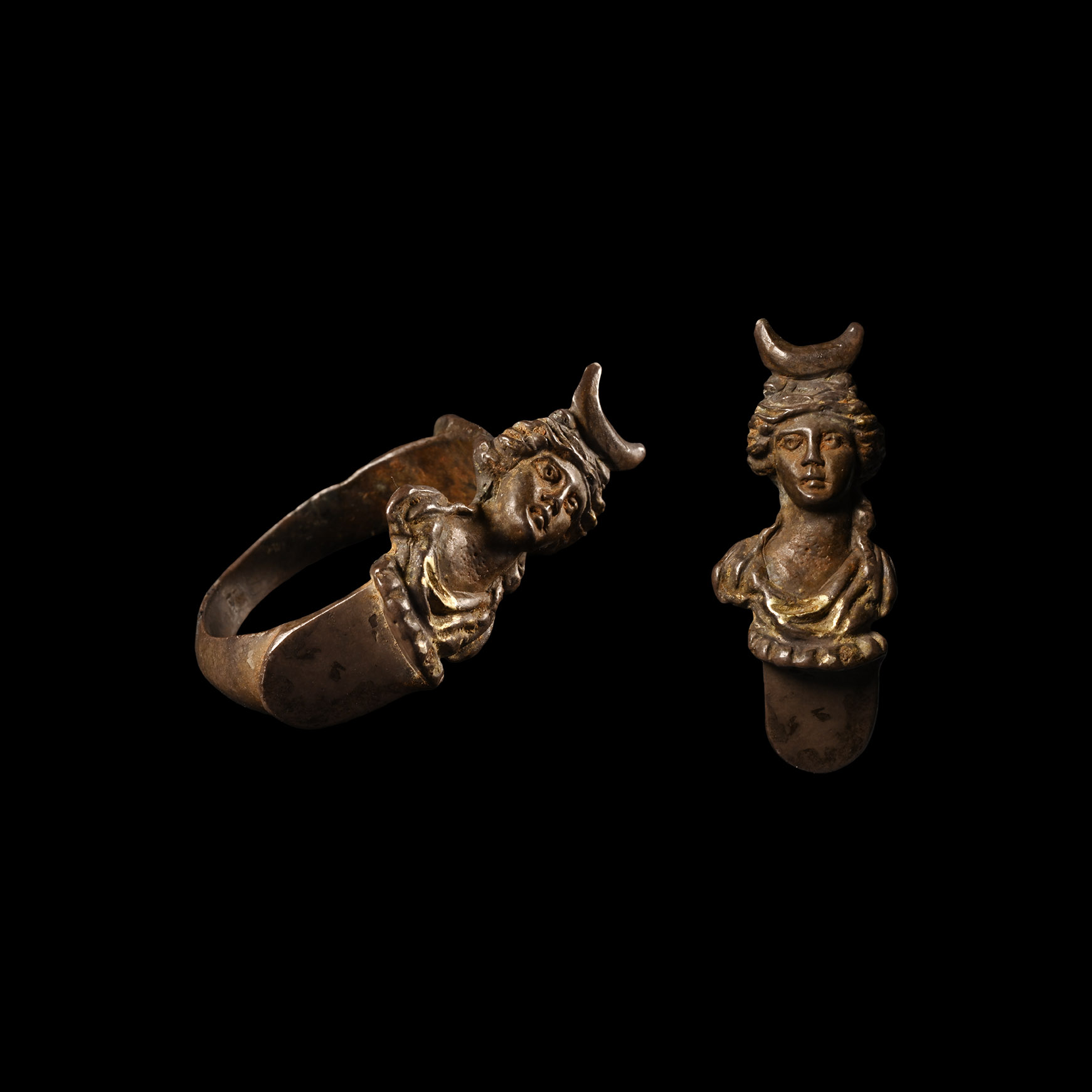
Roman Silver-Gilt Ring with Bust of Goddess
2ND-3RD CENTURY A.D.
1 3/8 in. (12.63 grams, 34.40 mm overall, 21.27 mm internal diameter (approximate size British V, USA 10 1/2, Europe 23.77, Japan 22)).
Composed of a large hoop with raised tongue-shaped plaques at the shoulders, bezel formed as the bust of goddess Selene wearing a crescentic crown; trace remains of gilding.
ProvenanceAcquired on the German art market around 2000s.
From the collection of an EU gentleman living in the UK.
TimeLine Auctions follows a vetting process to ensure the authenticity and legality of all items, reinforcing our commitment to integrity and responsible trading. Each antiquity, antique, and coin lot undergoes thorough examination by a vetting committee of at least ten external specialists, professional trade association members, scientists, and archaeologists: Our Vetting Process
AUCTIONS:
TimeLine is a leading auction house specialising in antiquities, ancient art, collectables, natural history, coins, medals, and books. Our auctions offer museums, collectors, historians, and enthusiasts the opportunity to acquire unique and historically significant pieces.
-
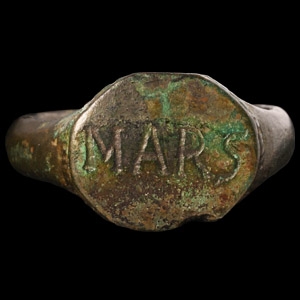
Roman Bronze Ring with Inscription
1st-4th century A.D.Sold for (Inc. bp): £494
The hoop with convex outer face and rounded octagonal bezel, later inscribed 'MARS'. 4.54 grams, 23.00 mm overall, 16.93 mm internal diameter (approximate size British N, USA 6 1/2, Europe 13.72, Japan 13)
Acquired on the German art market around 2000s. From the collection of an EU gentleman living in the UK. -
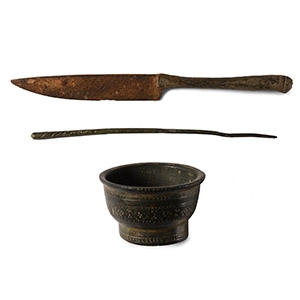
Roman Bronze Artefact Collection
1st-4th century A.D.Estimate: £200 - 300 (+bp*)
Opening Bid: £111
Comprising a bowl with incised geometric decoration; knife with single-edged iron blade and decoratively incised pommel; and a pin with tapering round-section body, shallow conical finial and decoratively incised head. 106 grams total, 4.8-13.5 cm
Acquired before 2000. From the collection of a European gentleman living in the UK. -
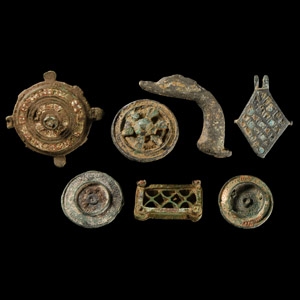
Roman Bronze Brooch and Other Artefact Collection
2nd-4th century A.D.Sold for (Inc. bp): £143
The group comprising: brooches, a seal box lid and zoomorphic mount; including examples with trace remains of gilding, polychrome and millefiori enamelling and other decorative techniques; four accompanied by PAS record ids. 62 grams total, 21-45 mm
Found Berkshire, UK.
