
Loading, please wait...
LOT 0110
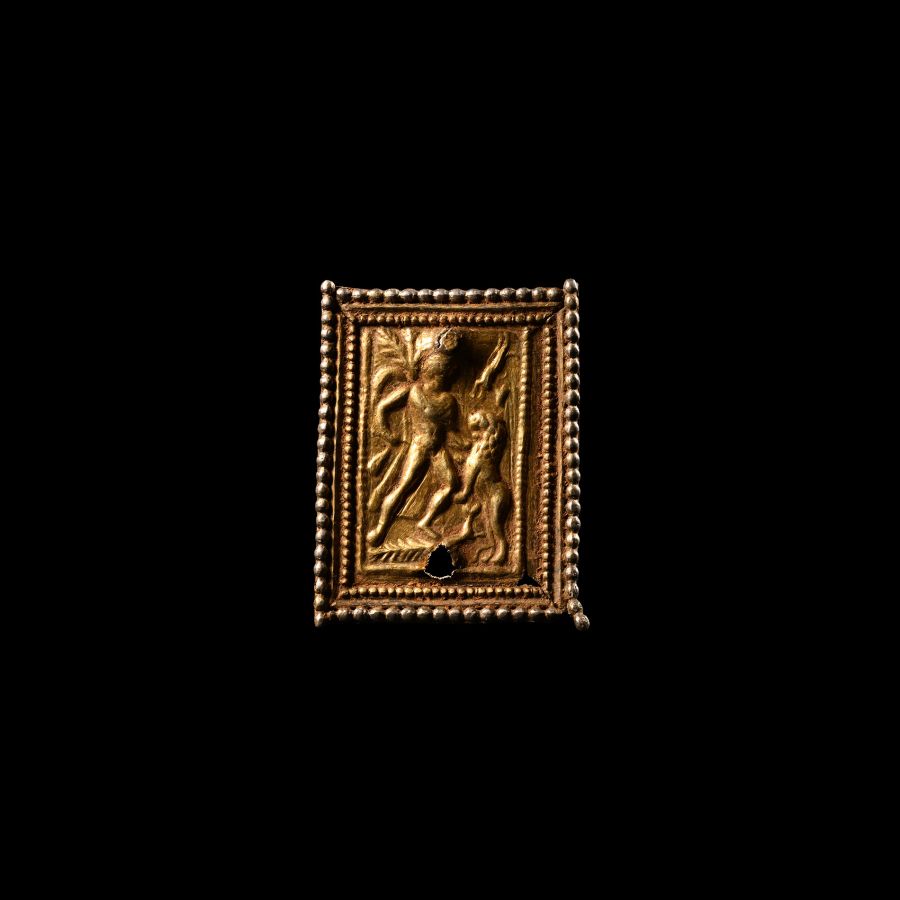
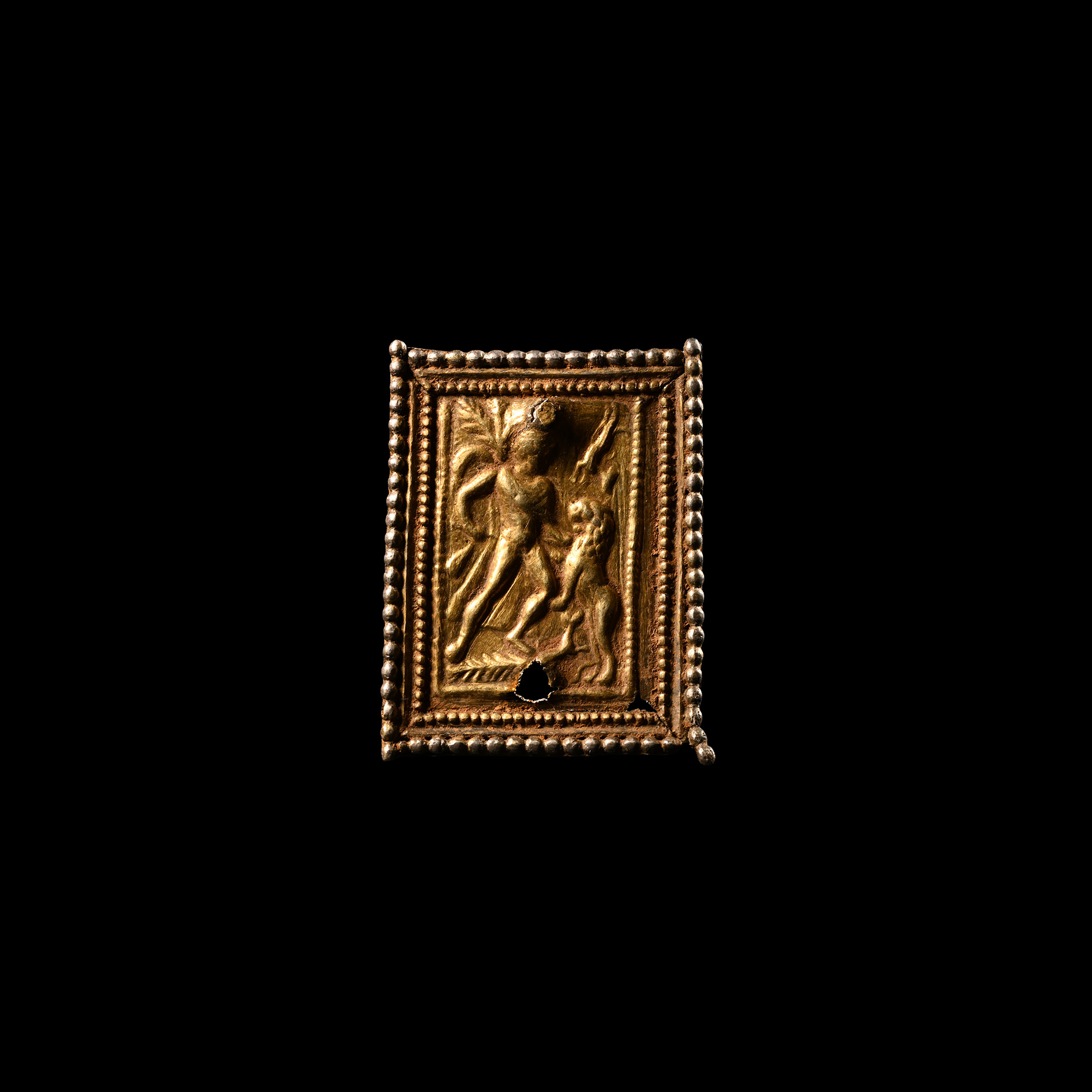
Roman Silver-Gilt Military Belt Plate with Hercules Killing the Nemean Lion
4TH CENTURY A.D.
2 1/8 in. (18.5 grams, 53 mm).
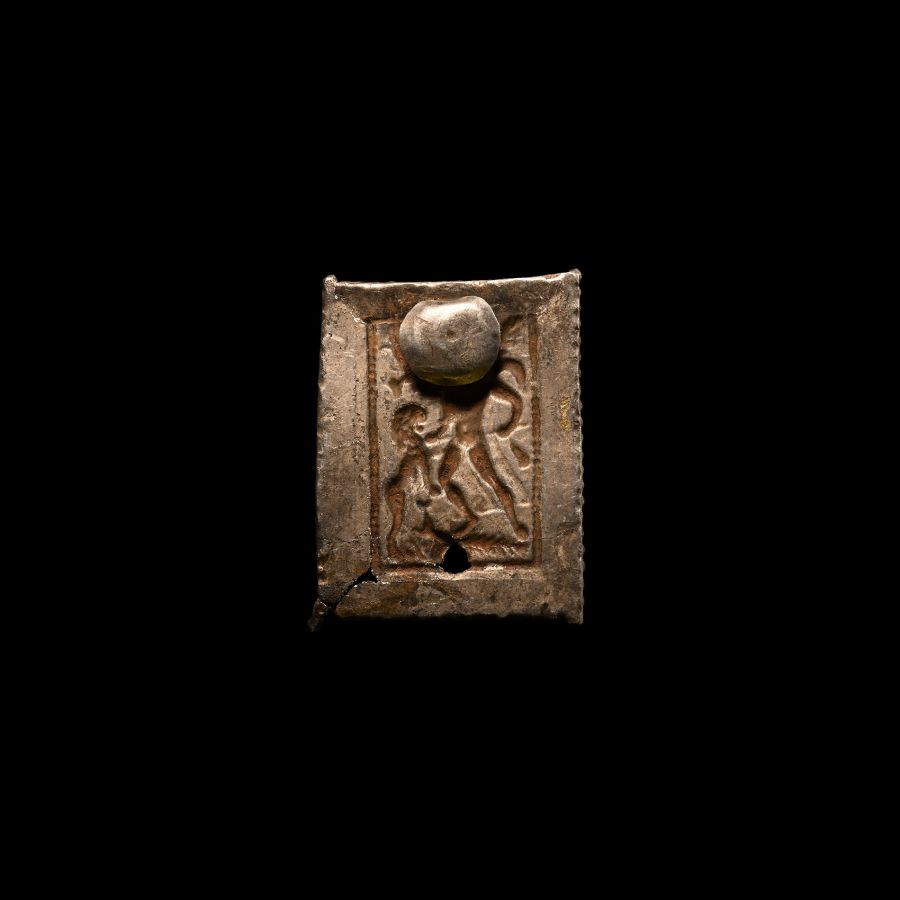
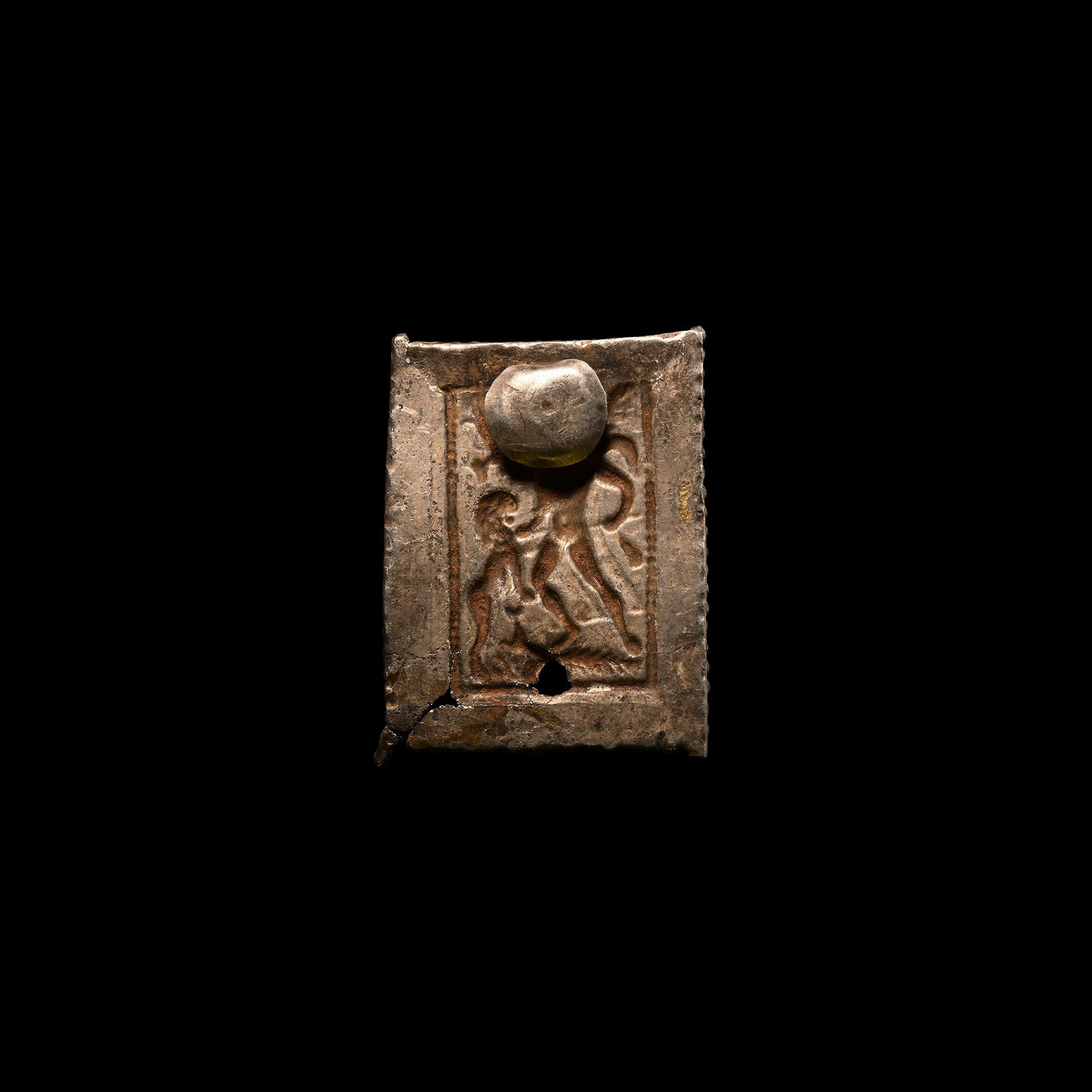
A silver-gilt strap tongue from military belt, rectangular shape with soldered bead on the back, a repoussé work representing Hercules, naked and covered only by a mantle, killing the Nemean lion, a palm of victory under the feet of the hero, a dog attacking the lion from above, foliage around the scene.
ProvenanceAcquired 1980-2015.
Ex Abelita family collection.
See Sommer, M., Die Gürtel und Gürtelbeschläge des 4. und 5. Jahrhunderts im römischen Reich, Bonner Hefte zur Vorgeschichte, 22, Bonn, 1980 (1984), pl.54, 11.
FootnotesThe belt fitting finds parallels with parts of belt from Asia Minor, today at the British Museum, inv. EC 252-254. These kind of plates, decorative and engraved with classical scenes, can be dated possibly to the age of Theodosius I. The quality of decoration can support the thesis of their belonging to officers of the Comitatus (the Imperial mobile army).
CONDITIONTimeLine Auctions follows a vetting process to ensure the authenticity and legality of all items, reinforcing our commitment to integrity and responsible trading. Each antiquity, antique, and coin lot undergoes thorough examination by a vetting committee of at least ten external specialists, professional trade association members, scientists, and archaeologists: Our Vetting Process
AUCTIONS:
TimeLine is a leading auction house specialising in antiquities, ancient art, collectables, natural history, coins, medals, and books. Our auctions offer museums, collectors, historians, and enthusiasts the opportunity to acquire unique and historically significant pieces.
LOT 0110
Roman Silver-Gilt Military Belt Plate with Hercules Killing the Nemean Lion
Sold for (Inc. bp): £1,040
-
Roman Silver Brooch with Dedicatory Inscription
4th century A.D.Estimate: £600 - 800 (+bp*)
Opening Bid: £325
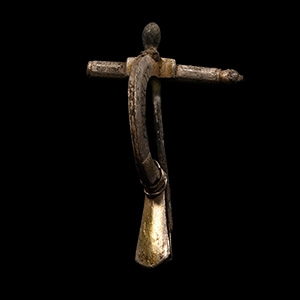
A silver military crossbow fibula with rounded knobs, the bow with a dedicatory inscription in Latin letters 'VTER FELIX IURE VICTO'. 19.5 grams, 62 mm
Acquire in the 1990s. Ex Cambridgeshire, UK, collection.
The dedicatory inscription 'VTERE FELIX', 'use it with good luck' or 'with happiness' is often found on Roman military artefacts, like belt fittings, brooches, and armlets; but it is rarely accompanied by 'IURE VICTO' inscription ([being the] rightful winner). The inscription is typical of the late Roman military world, but it can also refer to people using the brooch in civil duties, these fibulae being ordinarily gifted to the militia armata and non armata. -
.jpg)
Roman Bronze Bear Fitting
1st-4th century A.D.Estimate: £500 - 700 (+bp*)
Opening Bid: £278
A bronze furniture fitting formed as a square base with gusseted profile, a bear cub crouching on the upper face with one forepaw raised; open to the rear and underside. 108 grams, 53 mm
Acquired in the 1990s. Collection of a Suffolk, UK, gentleman. -

Roman Glass Pilgrim's Flask
Circa 4th century A.D.Estimate: £1,500 - 2,000 (+bp*)
Opening Bid: £750
A pale green lentoid glass flask with tubular neck and everted rim; mounted on a custom-made display stand. 252 grams, 22 cm high (481 grams total, 31.5 cm high including stand)
French collection, 1960s-early 2000s. From an important Paris gallery, France.
