
Loading, please wait...
_900x900.jpg "Roman Silver-Gilt Brooch with Diana")
_200x200.jpg "Roman Silver-Gilt Brooch with Diana")
.jpg "Roman Silver-Gilt Brooch with Diana")
LOT 0103
Roman Silver-Gilt Brooch with Diana
1ST-2ND CENTURY A.D.
1 1/2 in. (14.09 grams, 40 mm).
Modelled in the half-round figure of Diana reaching behind her shoulder to draw an arrow, her left hand reaching towards a hound; catch and spring-plate to the reverse.
ProvenanceAcquired in the late 1980s-early 1990s.
Private collection, London, UK.
This lot is accompanied by an illustrated lot declaration signed by the Head of the Antiquities Department, Dr Raffaele D'Amato.
TimeLine Auctions follows a vetting process to ensure the authenticity and legality of all items, reinforcing our commitment to integrity and responsible trading. Each antiquity, antique, and coin lot undergoes thorough examination by a vetting committee of at least ten external specialists, professional trade association members, scientists, and archaeologists: Our Vetting Process
AUCTIONS:
TimeLine is a leading auction house specialising in antiquities, ancient art, collectables, natural history, coins, medals, and books. Our auctions offer museums, collectors, historians, and enthusiasts the opportunity to acquire unique and historically significant pieces.
LOT 0103
Roman Silver-Gilt Brooch with Diana
Estimate £1,000 - 1,400€1,160 - 1,620 (for guidance only)$1,350 - 1,890 (for guidance only)
-
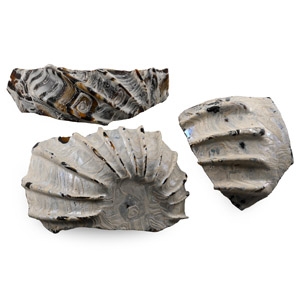
Roman Marbled Glass Fragments
2nd century A.D.Sold for (Inc. bp): £52
Including portions of patella cup, and other types. 134 grams total, 7.4-10.4 mm
Acquired on the UK art market, 1977-1979. Private collection, London. This lot is accompanied by an illustrated lot declaration signed by the Head of the Antiquities Department, Dr Raffaele D'Amato. -

Roman Bronze Key
1st-4th century A.D.Sold for (Inc. bp): £98
Comprising a broad ring and cranked shank, bits cut into the leading edge of the ward. 33.9 grams, 59 mm
Ex London, UK, gentleman 1980-1990s. This lot is accompanied by an illustrated lot declaration signed by the Head of the Antiquities Department, Dr Raffaele D'Amato. -
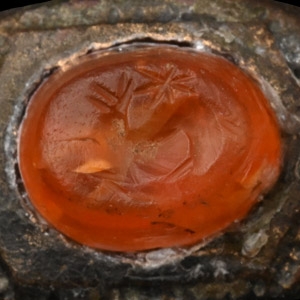
Roman Silver Ring with Carnelian Dolphin Gemstone
2nd-3rd century A.D.Sold for (Inc. bp): £234
With hexagonal panel to the bezel and inset carnelian intaglio, incuse dolphin with starburst. 5.09 grams, 21.95 mm overall, 16.71 mm internal diameter (approximate size British I 1/2, USA 4 1/2, Europe 8.07, Japan 7)
Ex German art market, 2000s. Acquired from an EU collector living in London. From the collection of a Surrey, UK, gentleman. This lot is accompanied by an illustrated lot declaration signed by the Head of the Antiquities Department, Dr Raffaele D'Amato.
