
Loading, please wait...

LOT 0625
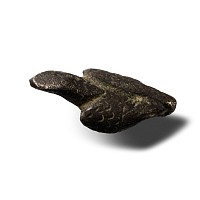
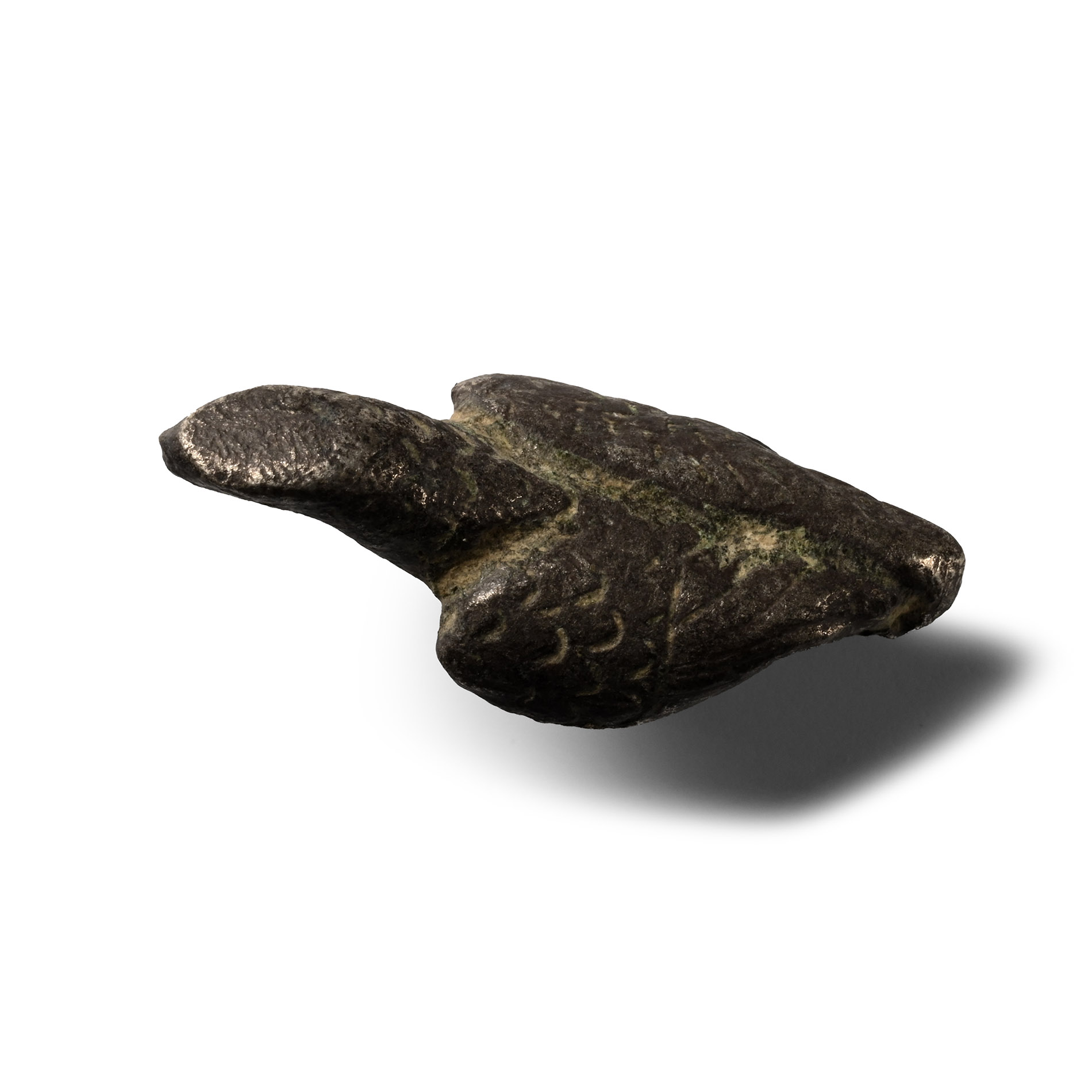
Roman Silver Eagle Statuette
1ST-4TH CENTURY A.D.
1 1/4 in. (6.48 grams, 30 mm).
Modelled in the round with wings folded flat against the sides, legs bent, feet absent. [No Reserve]
ProvenanceFrom an English collection formed before 2000.
This lot is accompanied by an illustrated lot declaration signed by the Head of the Antiquities Department, Dr Raffaele D’Amato.
Possibly a fitting from a vessel.
CONDITIONTimeLine Auctions follows a vetting process to ensure the authenticity and legality of all items, reinforcing our commitment to integrity and responsible trading. Each antiquity, antique, and coin lot undergoes thorough examination by a vetting committee of at least ten external specialists, professional trade association members, scientists, and archaeologists: Our Vetting Process
AUCTIONS:
TimeLine is a leading auction house specialising in antiquities, ancient art, collectables, natural history, coins, medals, and books. Our auctions offer museums, collectors, historians, and enthusiasts the opportunity to acquire unique and historically significant pieces.
-
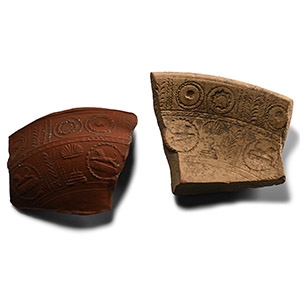
Romano-British Potter's Bowl Mould Fragment with Lions
3rd-4th century A.D.Sold for (Inc. bp): £260
Fragment of a potter's mould for the production of decorative tableware, with upper band of rosettes, fronds and other motifs within frilled borders, and on the angled body frond, shell and repeated motif of a leaping lion on a base with 'M·C·M' legend; supplied with a modern impression from the mould. 227 grams total, 10.4-11 cm
Found Suffolk, UK. From an old English collection. Ian Wilkinson collection, Nottinghamshire, UK, formed since 1985. This lot is accompanied by an illustrated lot declaration signed by the Head of the Antiquities Department, Dr Raffaele D’Amato.
The lion was also the badge of several Roman legions, such as XVI Flavia Firma, XIII Gemina, XVI Gallica. -
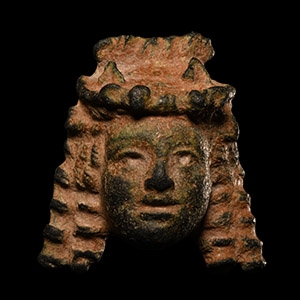
Roman Bronze Mask Appliqué
2nd century B.C.-1st century A.D.Sold for (Inc. bp): £338
With rounded fleshy face and hair in tiered bands, sockets to the eyes to accept silver inserts; diadem to the brow with foliage detailing; hollow to the reverse. 56 grams, 42 mm
Private collection of Mr S.A., Switzerland, 1990s, thence by descent. This lot is accompanied by an illustrated lot declaration signed by the Head of the Antiquities Department, Dr Raffaele D’Amato. -
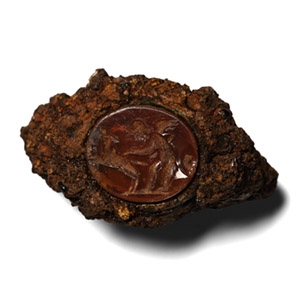
Roman Carnelian Gemstone with Cupid and Dog
2nd-3rd century A.D.Sold for (Inc. bp): £169
Fragment of iron hoop and bezel, inset carnelian cloison with intaglio scene of a putto restraining a barking dog. 2.49 grams, 22 mm
From the Fadel family collection, London, UK, 1970s. This lot is accompanied by an illustrated lot declaration signed by the Head of the Antiquities Department, Dr Raffaele D’Amato.
