
Loading, please wait...
LOT 0154
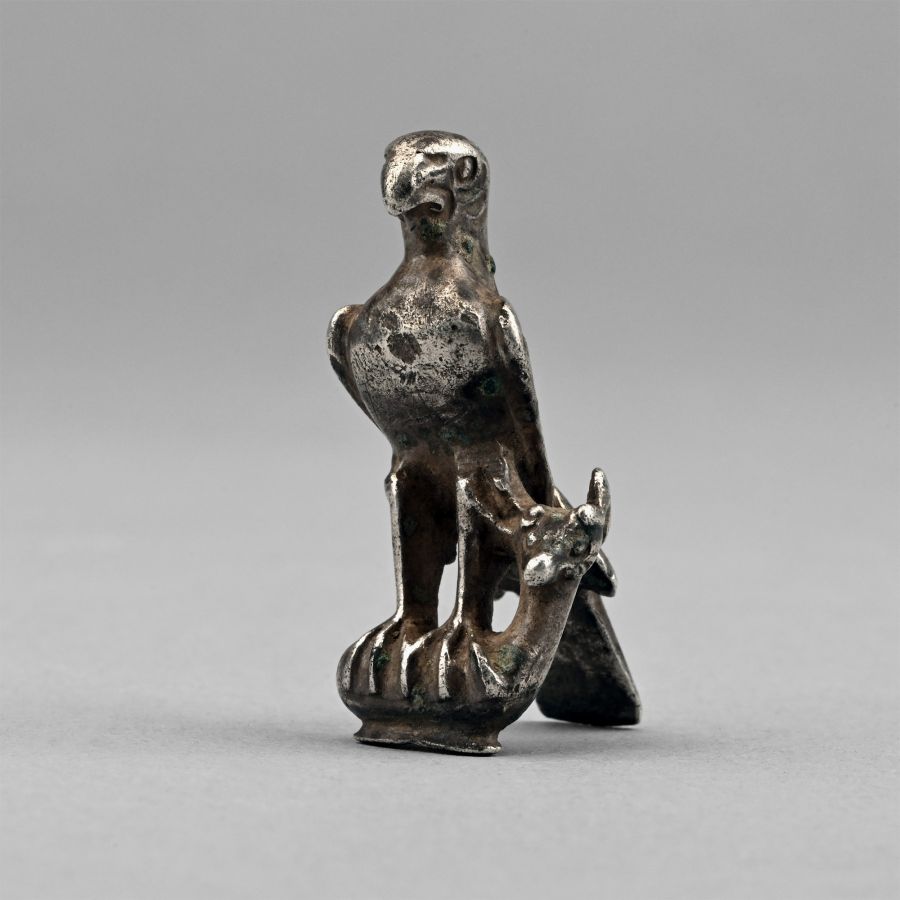
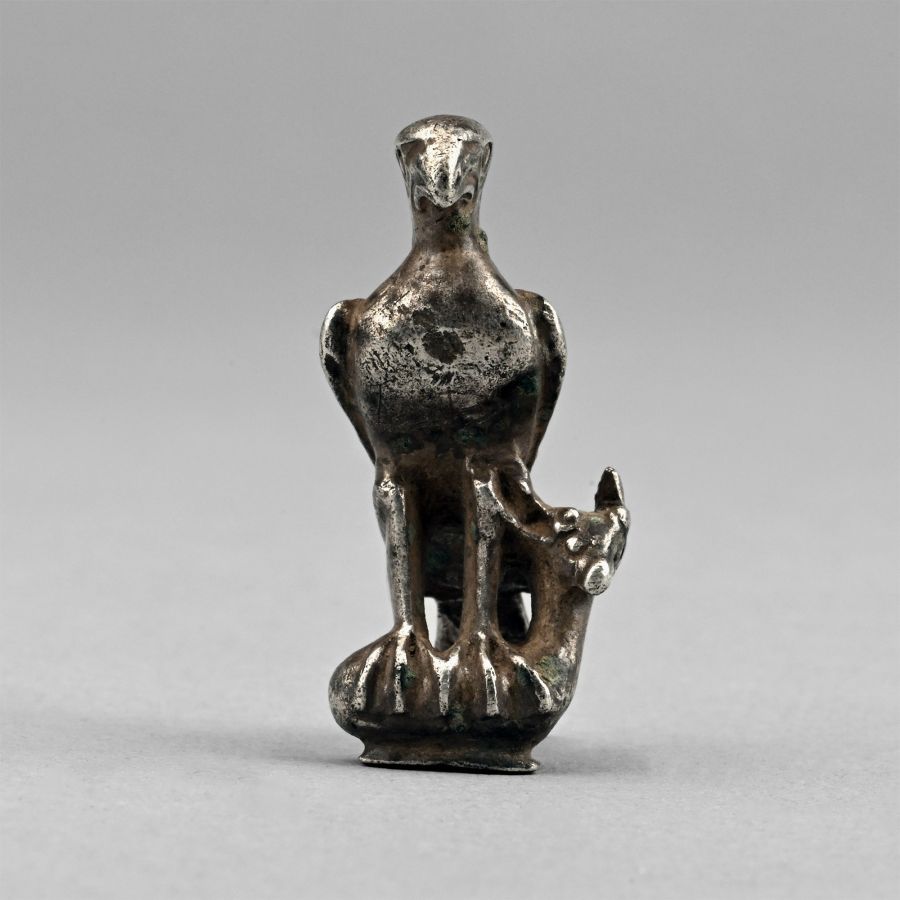
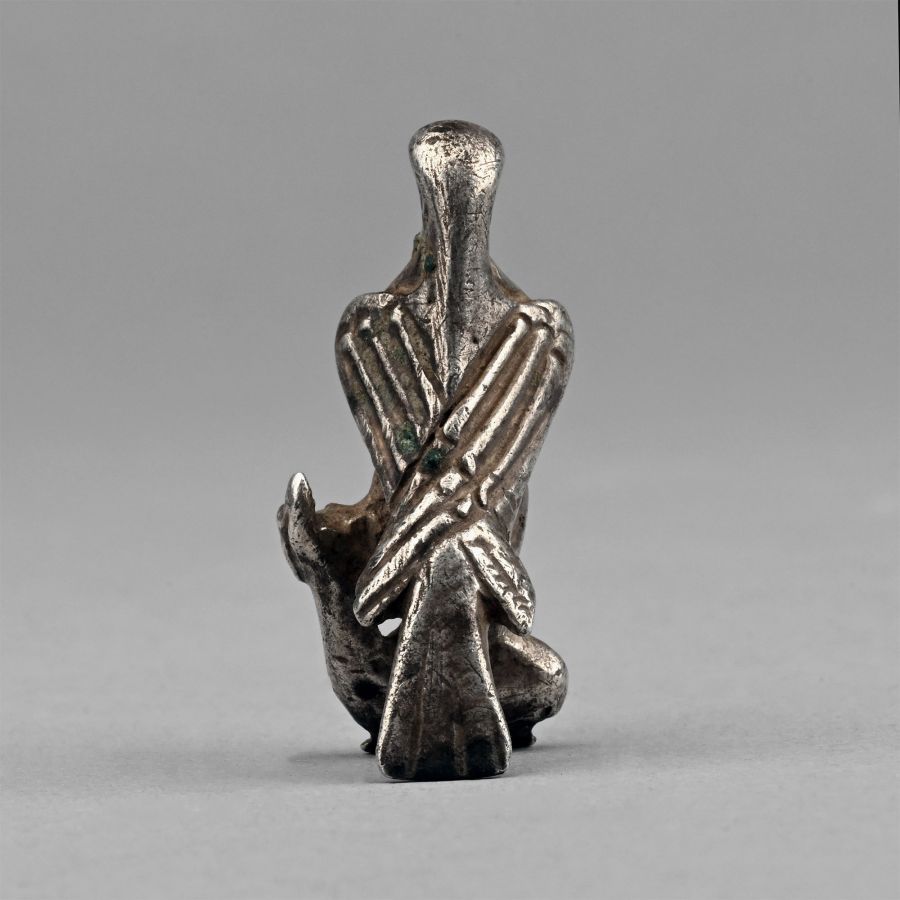
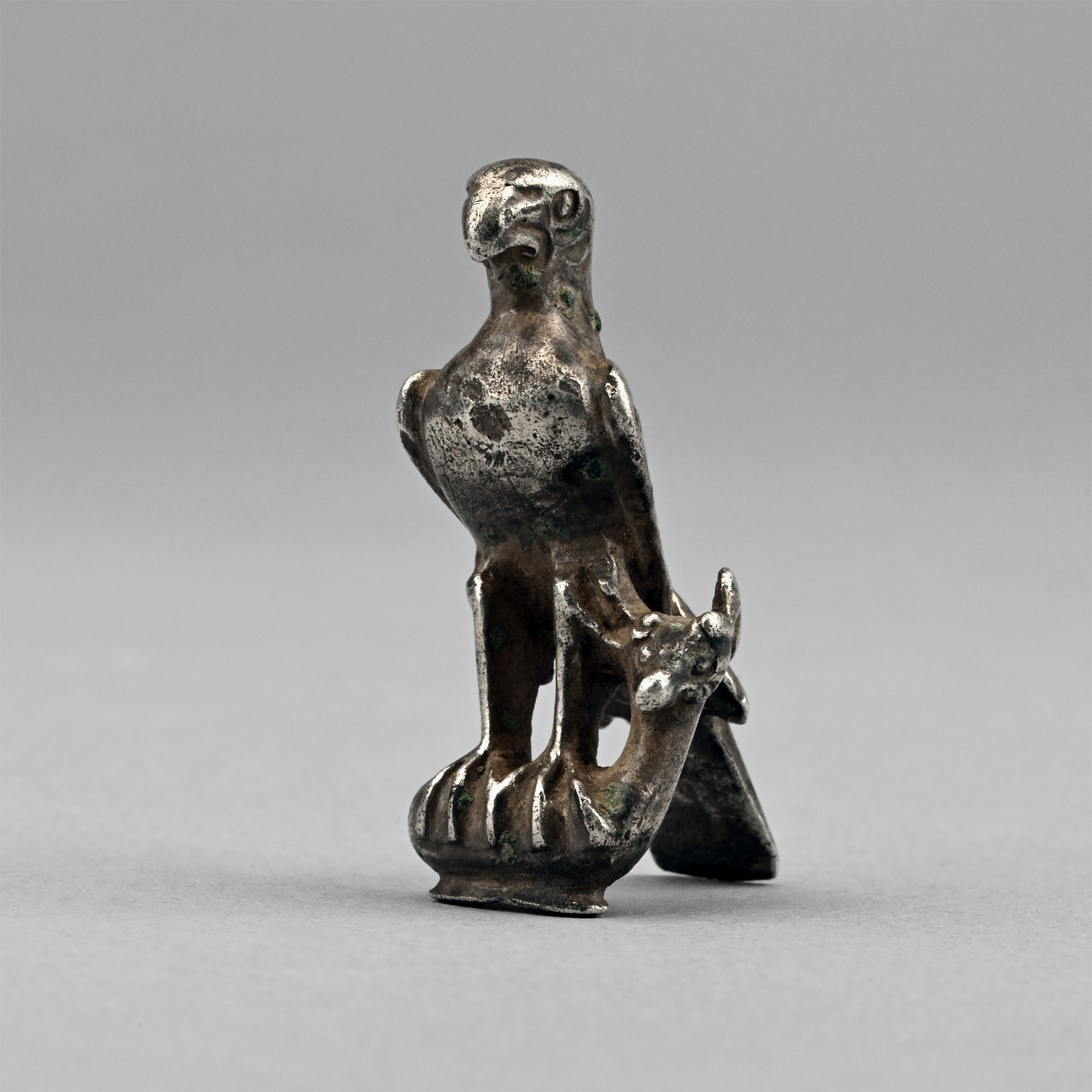
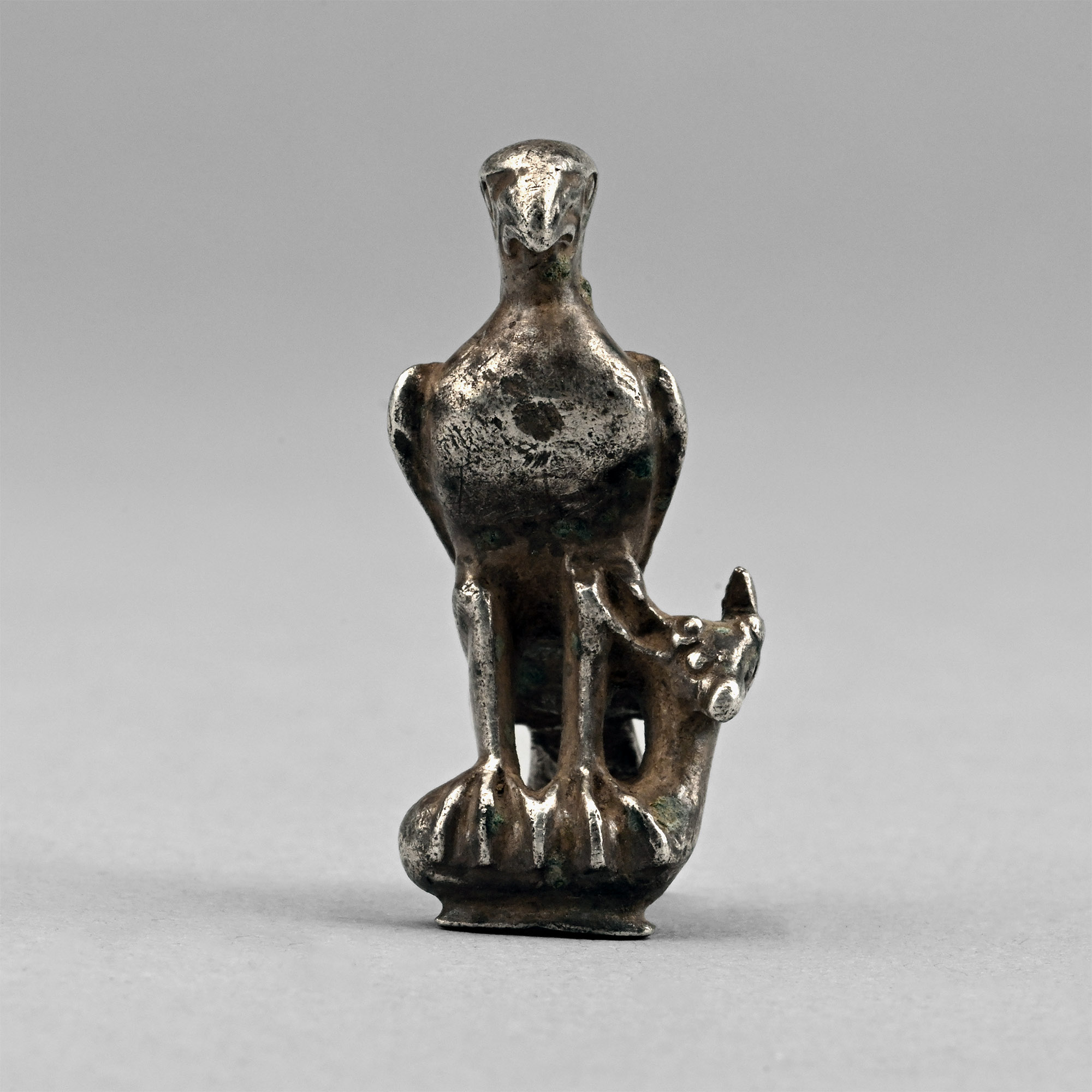
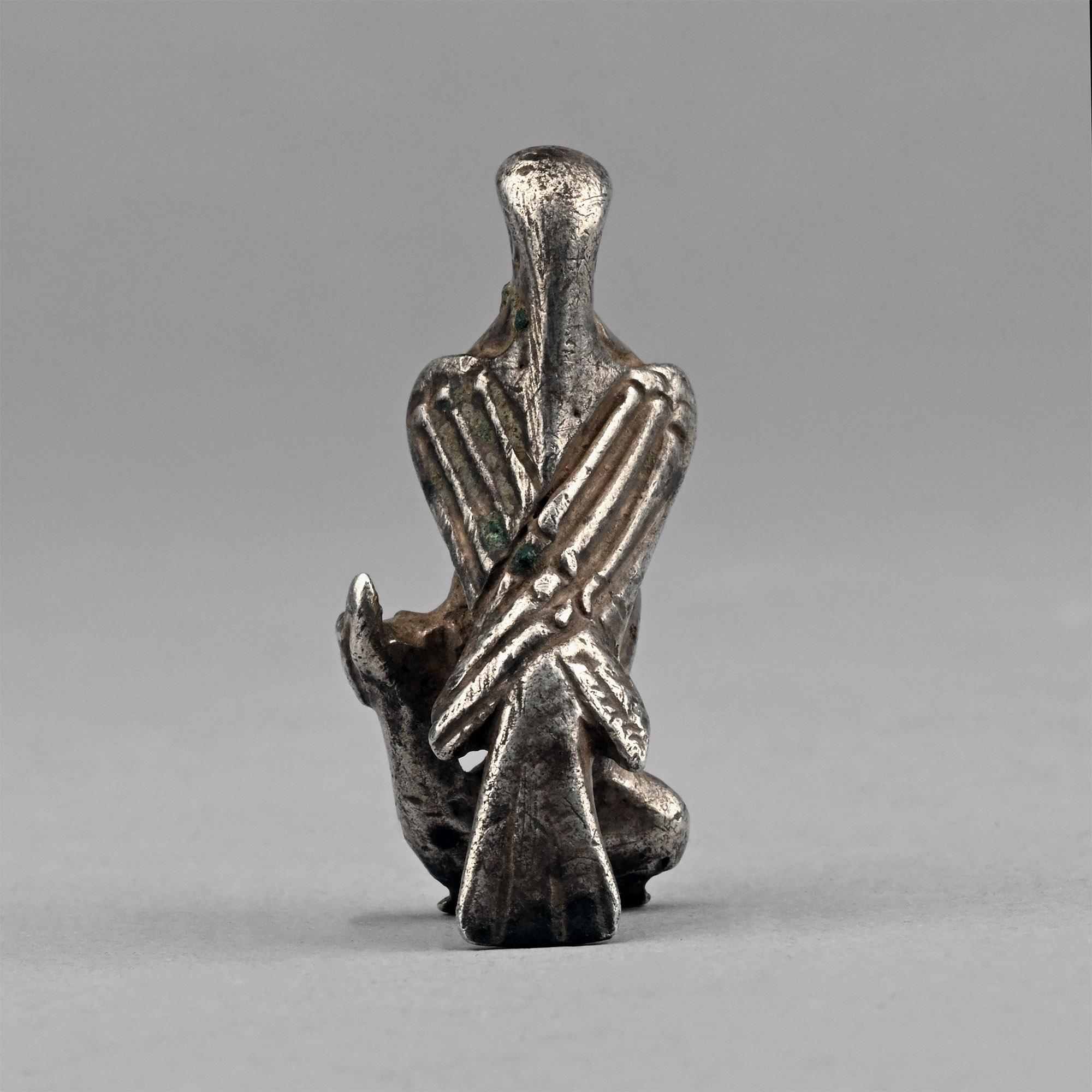
Roman Silver Eagle Holding a Deer
2ND-3RD CENTURY A.D.
1 1/2 in. (21.5 grams, 38 mm high).
The eagle standing with its wings folded, erect head with natural facial detailing, claws gripping the body of a reclining doe with raised head and pricked ears.
ProvenanceAcquired in the 1980s.
Private collection, Switzerland, thence by descent.
Private collection, since the late 1990s.
Cf. statuette in bronze of the same typology in Getty Museum, inventory no. 78.AC.336.
FootnotesThe motif of an eagle and a stag or a deer is typically associated with the God Jupiter/Zeus Dolichenus and his wife Juno Dolichena, name derived from his sanctuary in Doliche, Anatolia. Jupiter Dolichenus was a soldier god, usually portrayed wearing full military attire and standing on a bull, while his consort would have been shown standing on a deer or stag.
CONDITIONTimeLine Auctions follows a vetting process to ensure the authenticity and legality of all items, reinforcing our commitment to integrity and responsible trading. Each antiquity, antique, and coin lot undergoes thorough examination by a vetting committee of at least ten external specialists, professional trade association members, scientists, and archaeologists: Our Vetting Process
AUCTIONS:
TimeLine is a leading auction house specialising in antiquities, ancient art, collectables, natural history, coins, medals, and books. Our auctions offer museums, collectors, historians, and enthusiasts the opportunity to acquire unique and historically significant pieces.
-
Roman Bronze Crossbow Brooch
4th century A.D.Sold for (Inc. bp): £117
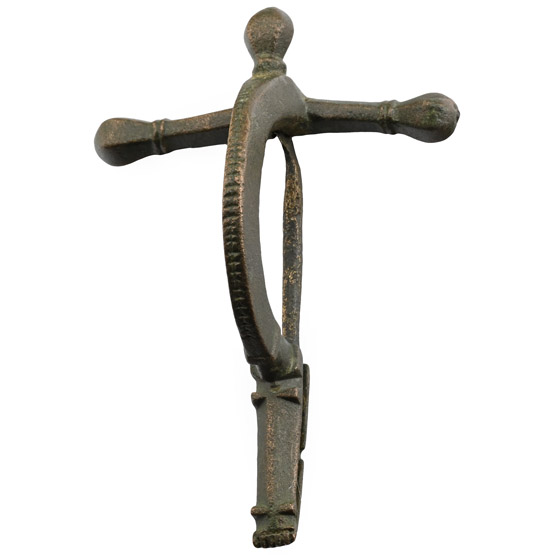
Early type with lemon-shaped knop above the square-section crossbar, facetted bow with impressed triangles to the outer edge and faceted knop finials, D-section footplate with lateral chamfered edges and catchplate to reverse, hinged pin behind the crossbar. 23.7 grams, 68 mm
Ex German art market, 2000s. Acquired from an EU collector living in London. From the collection of a Surrey, UK, gentleman. -
Roman Bronze Figure of Aphrodite Holding a Severed Swan's Head
1st-3rd century A.D.Sold for (Inc. bp): £1,105
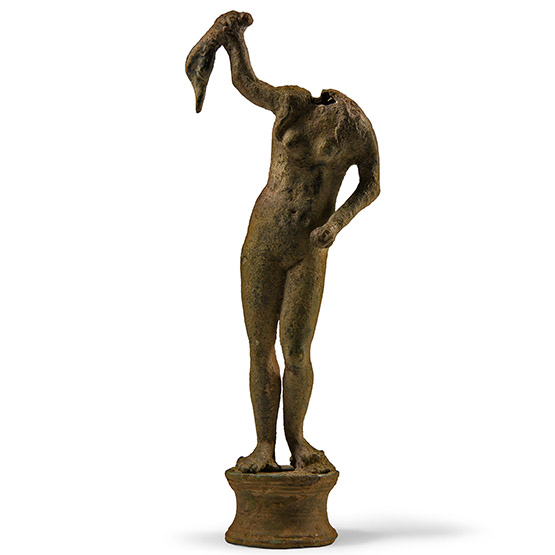
Modelled in the round nude and and raising her right arm, holding the neck of the swan (her animal attribute); left arm descending towards her pubis, legs in contrapposto stance; gusseted drum-shaped base; repaired. 327 grams, 19.5 cm
Acquired in the mid 1980s-1990s. From the family collection of Mr S.A., Switzerland, thence by descent. Private collection since the late 1990s. This lot has been checked against the Interpol Database of stolen works of art and is accompanied by a search certificate number no.12099-218223.
Although the presence of the swan in this position is rather rare, iconographically, this image is part of the abundant series of statuettes of Aphrodite/Venus widely distributed during the Roman Imperial era. -
Roman Green Glass Flask
Circa 1st-4th century A.D.Sold for (Inc. bp): £208
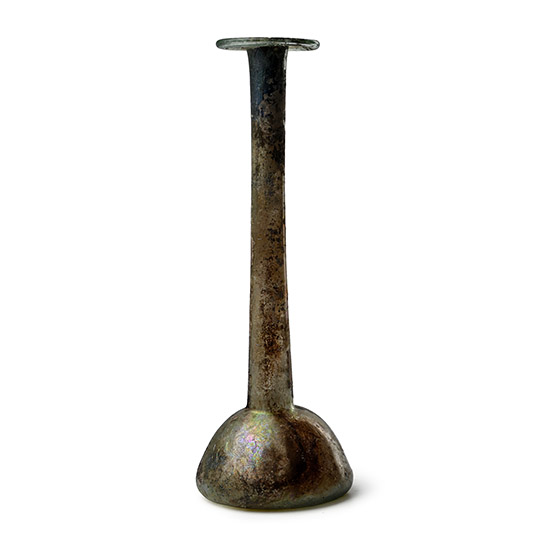
With domed body and discoid base, tall neck with everted rolled rim; some iridescence. 50 grams, 20.7 cm
From a London, UK, collection of glass, 1970-2000s.
