
Loading, please wait...
LOT 0125
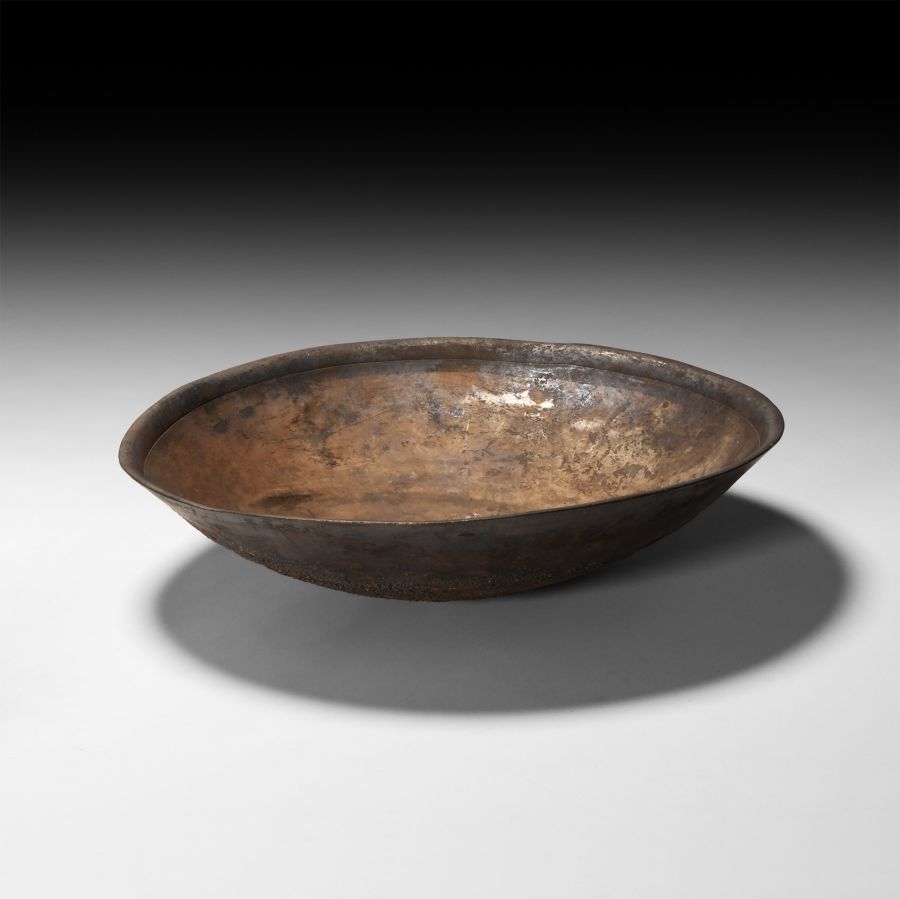
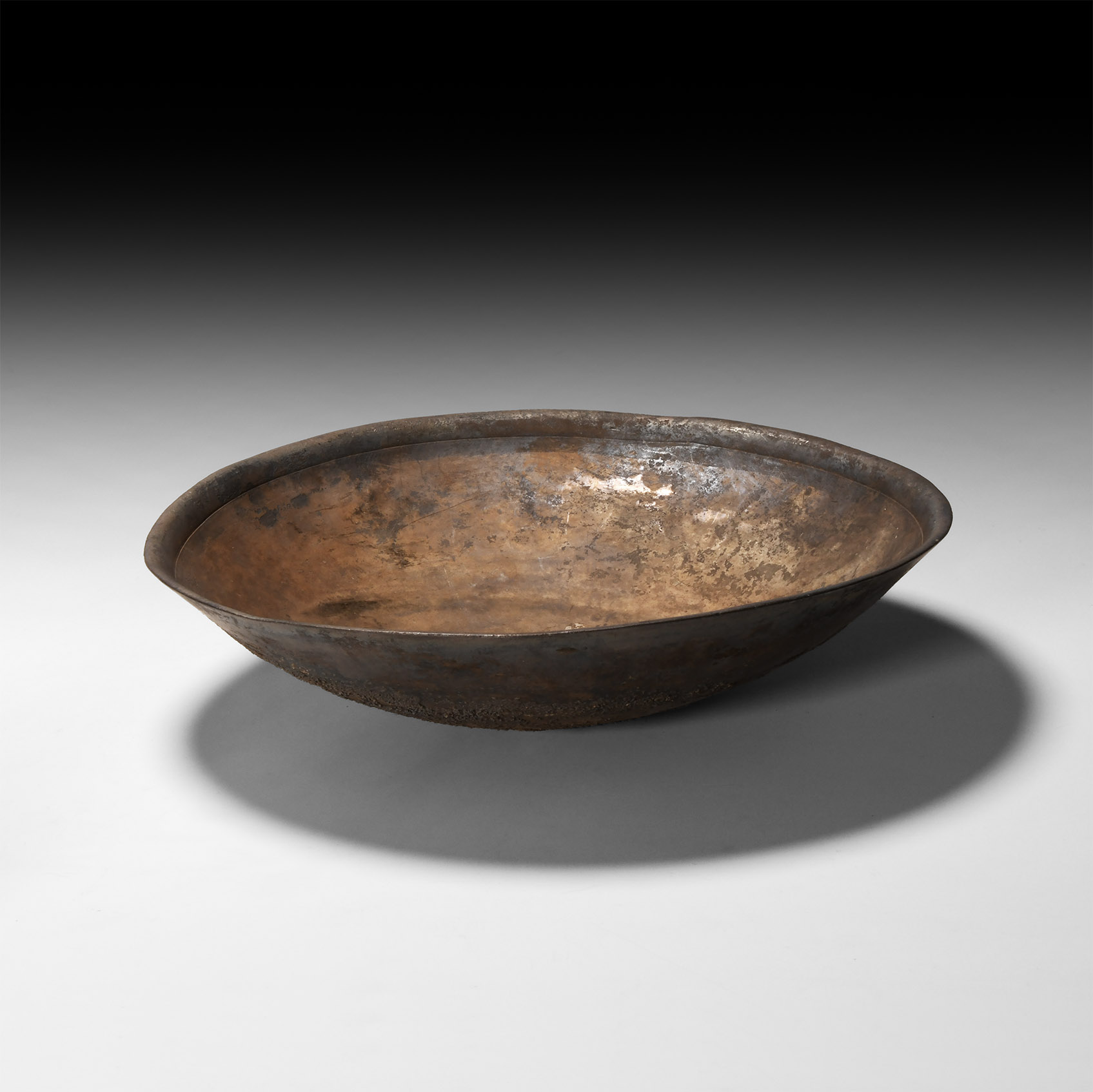
Roman Silver Dish with Marine Encrustations
1ST-3RD CENTURY A.D.
8 1/4 in. (396 grams, 21 cm wide).
A sheet silver dish, shallow with thickened rim; marine encrustations to the outer face.
ProvenanceAcquired early 1990s.
Ex private American collection; thence by descent.
Private Swiss collection since 1998.
This lot has been checked against the Interpol Database of stolen works of art and is accompanied by search certificate no.11631-199032.
Cf. a similar bowl in the British Museum, London, under accession number 1926,0406.11.
CONDITIONTimeLine Auctions follows a vetting process to ensure the authenticity and legality of all items, reinforcing our commitment to integrity and responsible trading. Each antiquity, antique, and coin lot undergoes thorough examination by a vetting committee of at least ten external specialists, professional trade association members, scientists, and archaeologists: Our Vetting Process
AUCTIONS:
TimeLine is a leading auction house specialising in antiquities, ancient art, collectables, natural history, coins, medals, and books. Our auctions offer museums, collectors, historians, and enthusiasts the opportunity to acquire unique and historically significant pieces.
LOT 0125
Roman Silver Dish with Marine Encrustations
Estimate £2,000 - 3,000€2,320 - 3,480 (for guidance only)$2,700 - 4,050 (for guidance only)
-
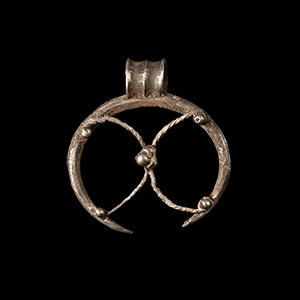
Roman Silver Openwork Lunar Pendant
2nd-3rd century A.D.Sold for (Inc. bp): £143
A silver lunula pendant composed of a crescentic body straddled by a slender silver wire X-motif embellished with granules; ribbed suspension loop. 3.77 grams, 29 mm
Acquired before 2000. From the collection of a European gentleman living in the UK. -
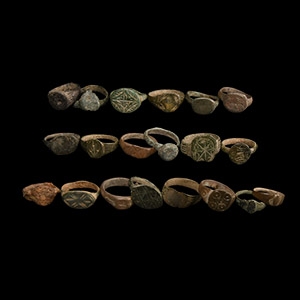
Roman and Later Ring Collection
1st-19th century A.D.Sold for (Inc. bp): £195
A mixed group of copper-alloy finger rings of various types and sizes, including examples with incised geometric motifs, stars, plants, ring-and-dot motifs. 76 grams total, 17-24 mm
Acquired before 2000. From the collection of a European gentleman living in the UK. -
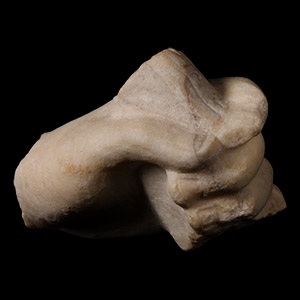
Roman Marble Hand Holding Rope
1st-2nd century A.D.Sold for (Inc. bp): £260
A marble left hand modelled in the round gripping a sinuous object, likely a rope; semi-naturalistic detailing to the nails and palm. 738 grams, 12 cm
New York art market, 1992.
