
Loading, please wait...
LOT 0664
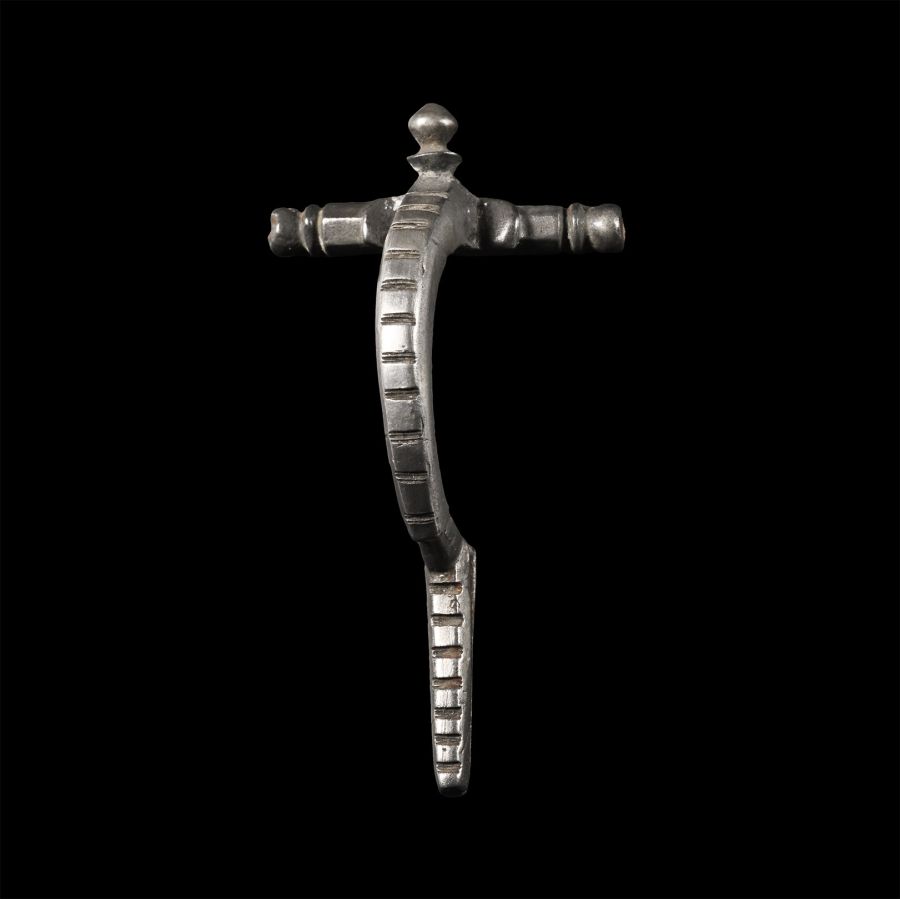
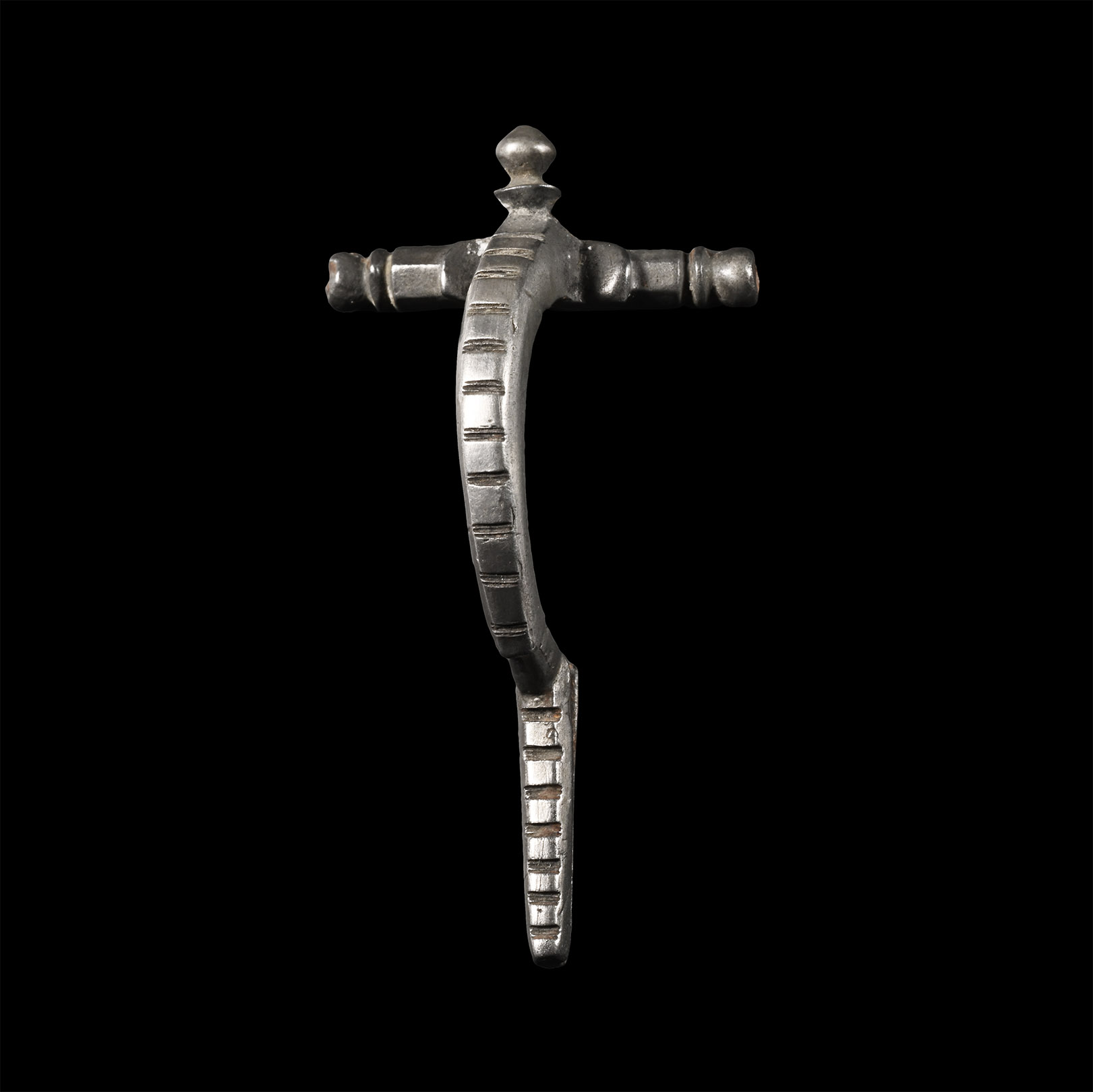
Roman Silver Crossbow Brooch
CIRCA 4TH CENTURY A.D.
1 7/8 in. (6.48 grams, 48 mm).
With balustered arms ending in knops and third knop above the bow, remains of hinged pin; deep bow with hatched outer face extending to the tapering footplate with catch to the reverse. [No Reserve]
ProvenanceAcquired at a London Coin Fair in the 1980s.
Property of an Essex collector.
Cf. Heeren, S. & van der Feijst, L., Fibulae uit de Lage Landen. Beschrijving, Analyse en Interpretatie van een Archeologische Vondstcategorie, Amersfoort, 2017, item NL-0414-02a-157, for type.
CONDITIONTimeLine Auctions follows a vetting process to ensure the authenticity and legality of all items, reinforcing our commitment to integrity and responsible trading. Each antiquity, antique, and coin lot undergoes thorough examination by a vetting committee of at least ten external specialists, professional trade association members, scientists, and archaeologists: Our Vetting Process
AUCTIONS:
TimeLine is a leading auction house specialising in antiquities, ancient art, collectables, natural history, coins, medals, and books. Our auctions offer museums, collectors, historians, and enthusiasts the opportunity to acquire unique and historically significant pieces.
-
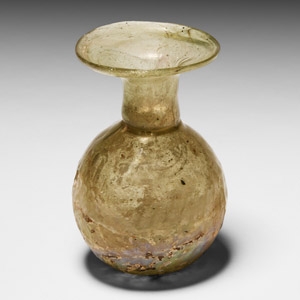
Roman Pale Green Mould Blown Glass Flask
3rd-5th century A.D.Estimate: £250 - 350 (+bp*)
Opening Bid: £125
With bulbous-bodied bearing a chevron motif in relief to the body; the vessel has a short cylindrical neck and broad flange rim; iridescent surfaces. 55 grams, 91 mm high
Fine condition.
Paris collection, 1990s. From an important Paris gallery, France. Ex private Parisian collection. -
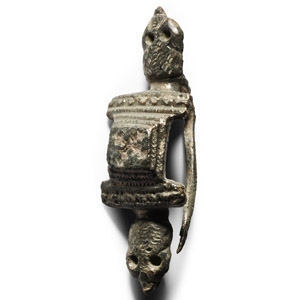
Roman Bronze Plate Brooch with Animal Heads
Circa 2nd-3rd century A.D.Sold for (Inc. bp): £104
With stepped profile to the rectangular vow, pelletted bars and beast-head finials; pin, pin-lugs and pierced catchplate to the underside. 10.5 grams, 45 mm
From the collection of a High Wycombe, Buckinghamshire, UK, gentleman, circa 2000. -
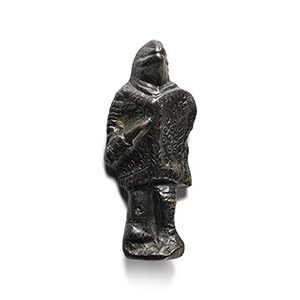
Roman Bronze Gladiator Mount
Circa 1st-2nd century A.D.Sold for (Inc. bp): £338
Modelled in the half-round with hollow reverse and fixing stud; gladiator advancing with a gladius short-sword drawn in right hand, holding a rectangular shield (scutum) and wearing greaves (ocreae); the arm protected by an armoured manica. 48 grams, 62 mm
From the French collection of M Garcia, 1990s.
The gladiator represented here belongs to the class of the scutarii (wearers of big shields) of the familia of the secutor or provocatores. The secutor was the chronological evolution of samnite gladiators. The title of secutor appears historically only in the imperial era and is closely linked to the title of contraretiarius, the retiarius being his true and only opponent. The secutor's armament consisted of the gladius and a large shield, a short ocrea on the left leg and a padded or armoured sleeve with chiroteca to protect his arm and hand.
