
Loading, please wait...


LOT 0865
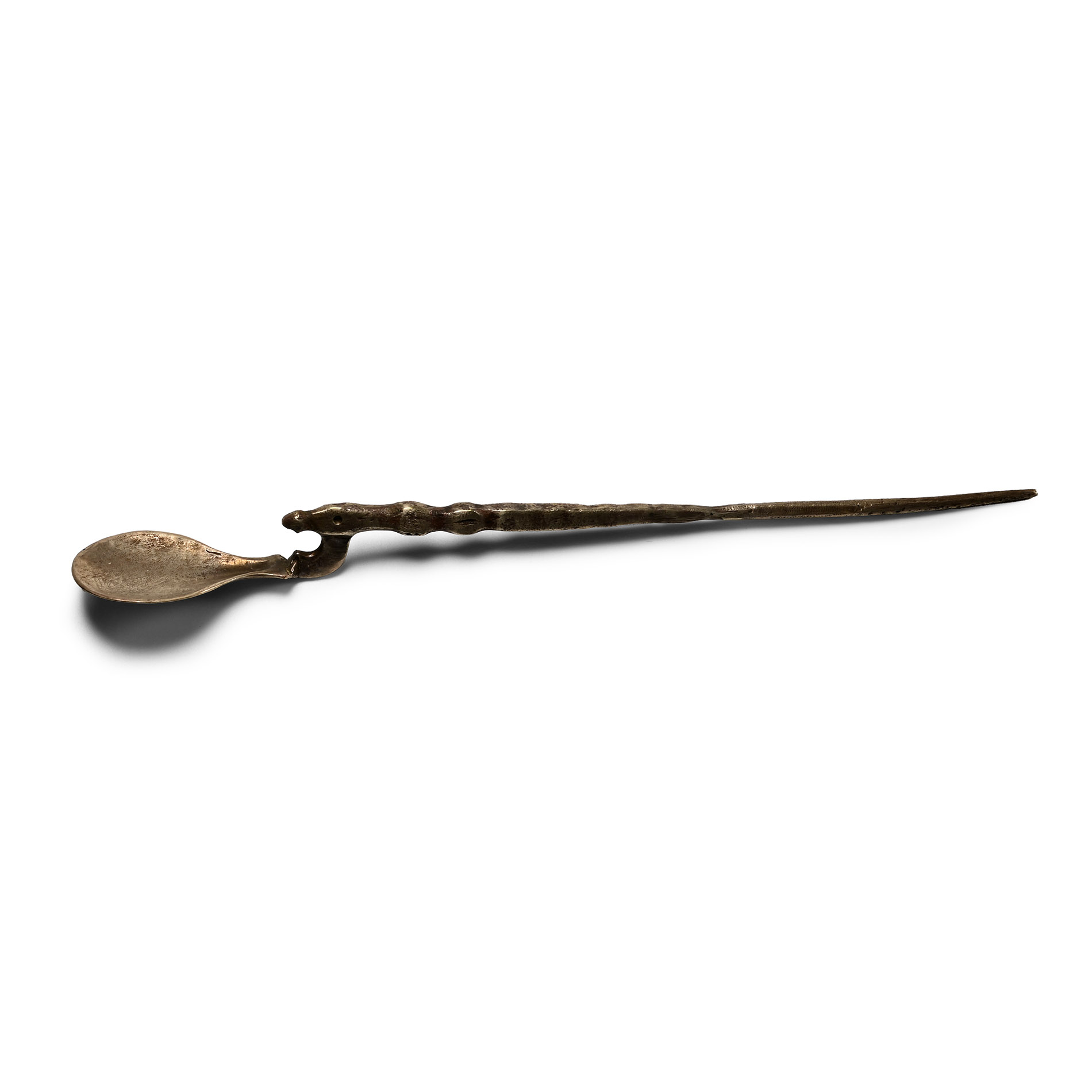
Roman Silver Cochlearium Spoon
2ND-4TH CENTURY A.D.
6 7/8 in. (19.7 grams, 17.5 cm).
With 'swan-neck' junction; facetted, round-section tapering shank; shallow bowl shaped like a flask in profile.
ProvenanceProperty of a Bedfordshire, UK, private collector.
Accompanied by an illustrated collector's identification tag.
This lot is accompanied by an illustrated lot declaration signed by the Head of the Antiquities Department, Dr Raffaele D’Amato.
Cf. Riha, E., & Stern, W.B., Die Römischen Löffel aus Augst und Kaiseraugst, Forschungen, in Augst 5, 1982, for discussion; cf. Jackson, C.J., The Spoon and its History, in Archaeologia, vol.53.
FootnotesThe spoon's shaft tapers to a point; it was used for extracting seafood or snails from their shells. Spoons executed in precious metals were highly valued items in this period in history, so much so that historians and classicists see them recorded in inventories compiled for noble households. Cochlearia like this one have even been discovered in treasure hoards. The absence of Christian symbolism or of a Christian inscription on this spoon might suggest that it dates from a pre-Christian era, or that its owner/commissioner was pagan.
CONDITIONTimeLine Auctions follows a vetting process to ensure the authenticity and legality of all items, reinforcing our commitment to integrity and responsible trading. Each antiquity, antique, and coin lot undergoes thorough examination by a vetting committee of at least ten external specialists, professional trade association members, scientists, and archaeologists: Our Vetting Process
AUCTIONS:
TimeLine is a leading auction house specialising in antiquities, ancient art, collectables, natural history, coins, medals, and books. Our auctions offer museums, collectors, historians, and enthusiasts the opportunity to acquire unique and historically significant pieces.
-
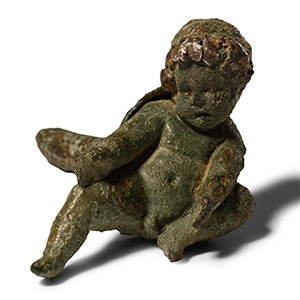
Roman Bronze Figure of Young Dionysus with Silver Inlays
1st century A.D.Estimate: £1,500 - 2,000 (‡+bp*)
Opening Bid: £833
Modelled in the round, a male infant with arms and right leg extended, left leg bent and raised; head looking downwards, with applied silver scales imitating a wreath; sturdy mounting peg to the reverse. 70.1 grams, 61 mm
Acquired on the German art market, 2002. European private collection. This lot has been checked against the Interpol Database of stolen works of art and is accompanied by search certificate no.12053-211904. This lot has been cleared against the Art Loss Register database, and is accompanied by an illustrated lot declaration signed by the Head of the Antiquities Department, Dr Raffaele D’Amato.
The model appears to form part of a figural group. -
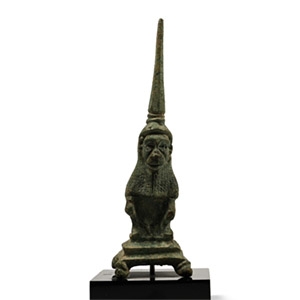
Roman Bronze Pricket Candlestick
2nd-4th century A.D.Sold for (Inc. bp): £1,300
Pricket formed as a baboon crouching on a tiered base with bun feet; the animal wearing a pounced hood with tall octagonal-section spike above; mounted on a custom-made stand. 95.7 grams total, 99 mm including stand
From a Cambridgeshire, UK, collection, 1990s. This lot is accompanied by an illustrated lot declaration signed by the Head of the Antiquities Department, Dr Raffaele D’Amato. -
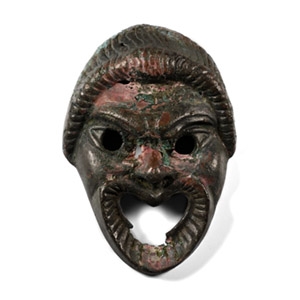
Roman Bronze Actor's Mask Mount
1st-2nd century A.D.Sold for (Inc. bp): £624
Depicting tragic mask with pierced eyes and open mouth, furrowed brow and neatly dressed hair; hollow reverse. 84.5 grams, 83 mm
Ex German art market, 2000s. Acquired from an EU collector living in London. From the collection of Surrey, UK, gentleman. This lot is accompanied by an illustrated lot declaration signed by the Head of the Antiquities Department, Dr Raffaele D’Amato.
