
Loading, please wait...
LOT 0134
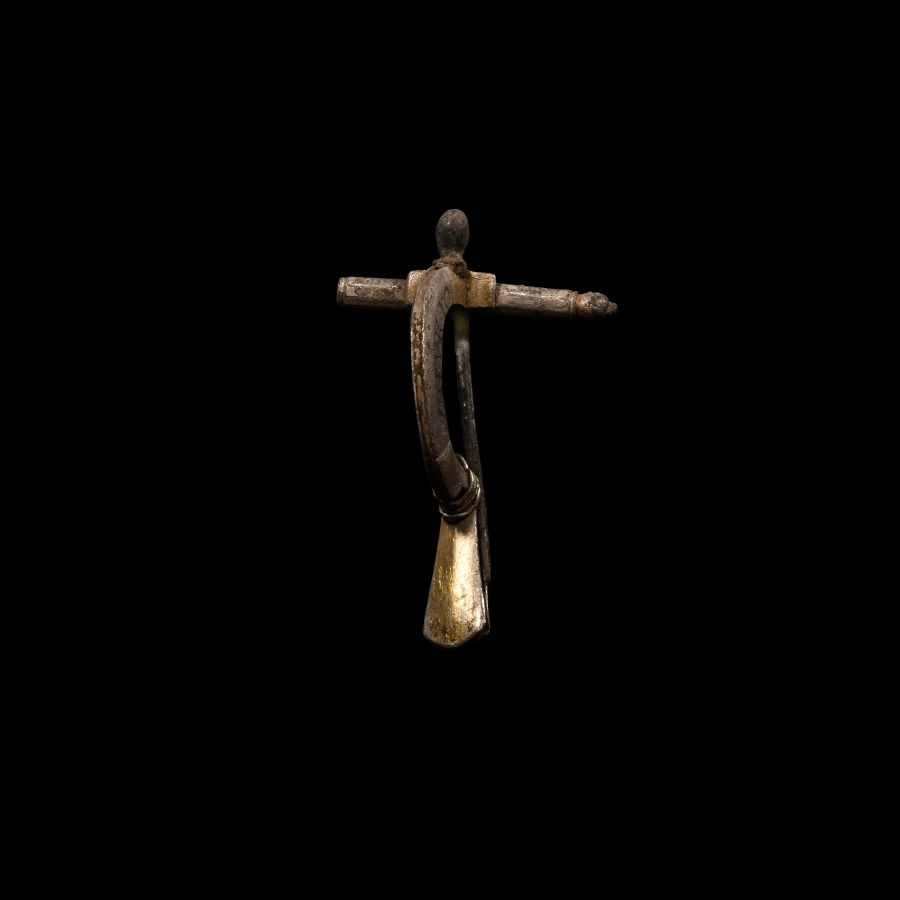
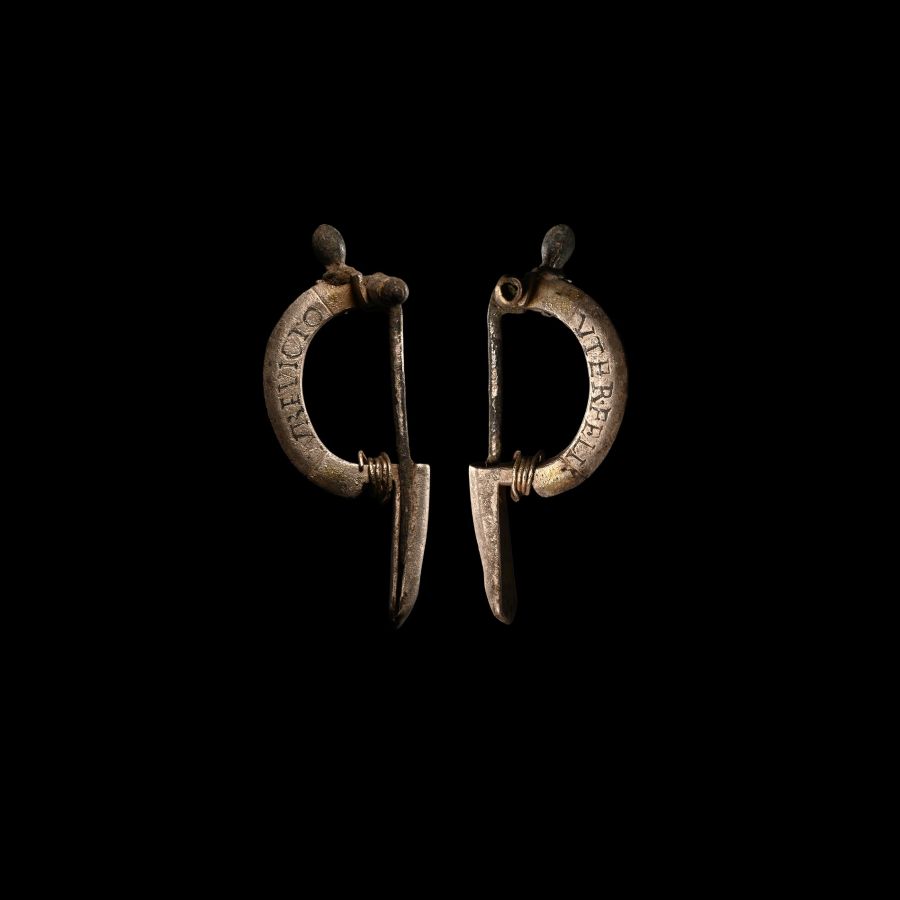
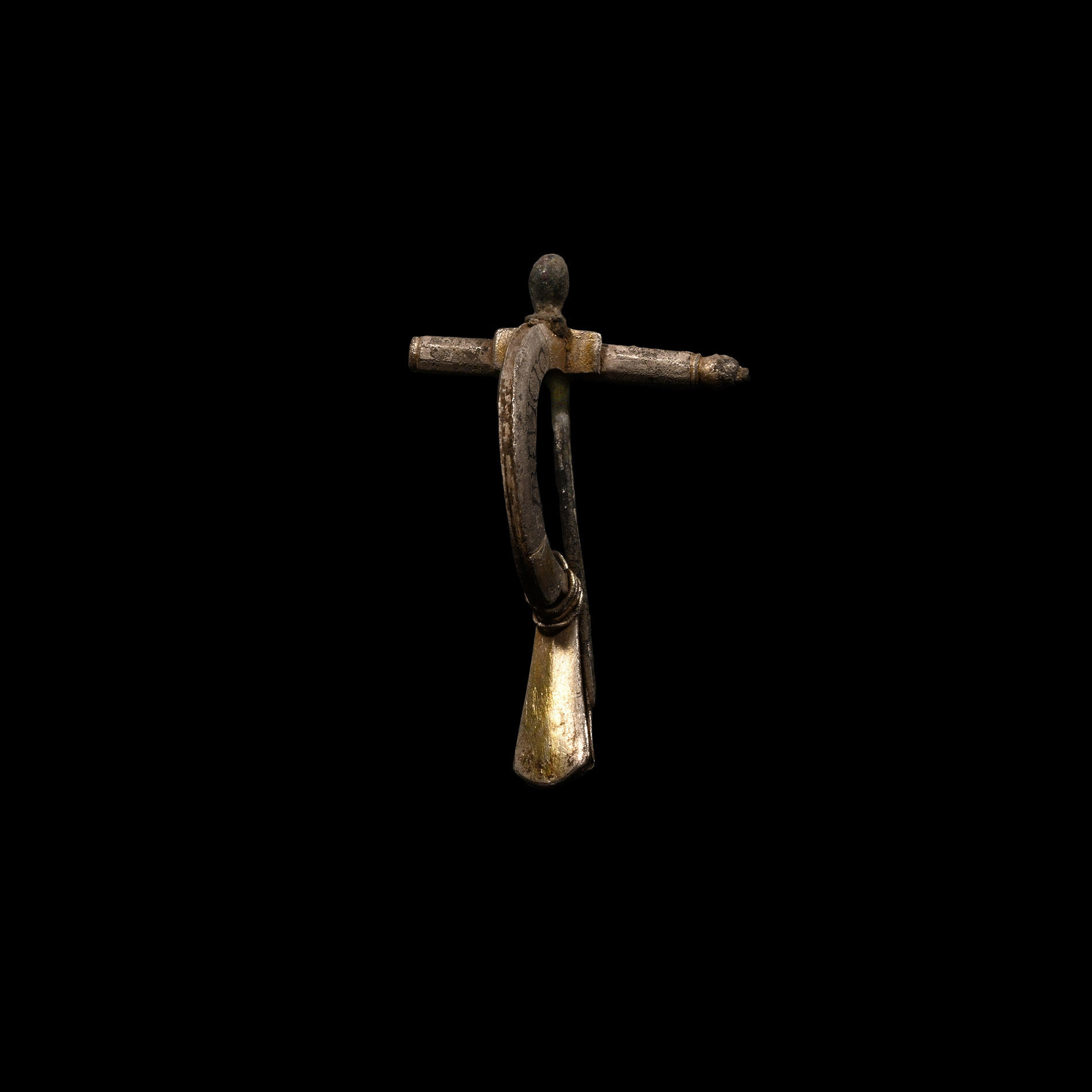
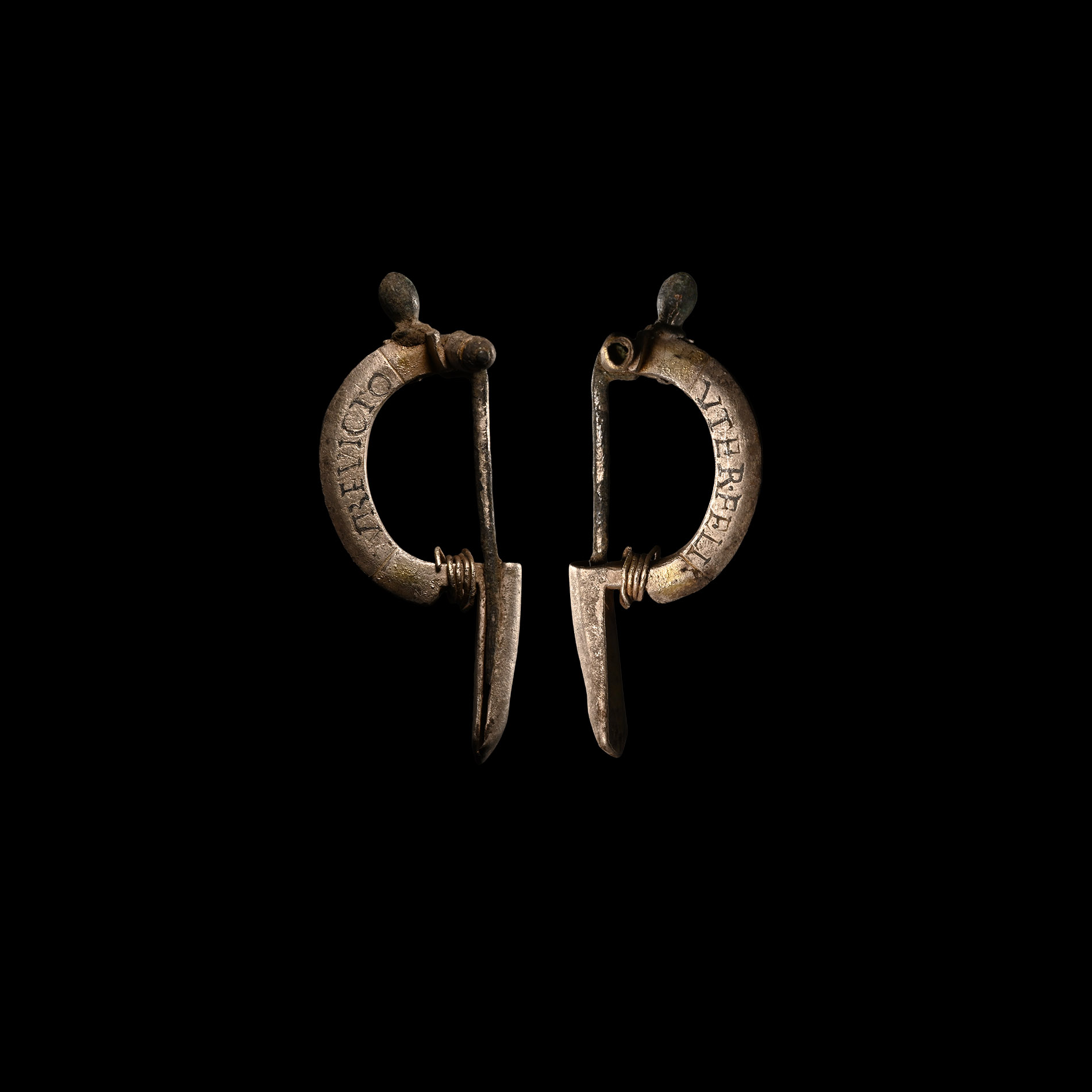
Roman Silver Brooch with Dedicatory Inscription
4TH CENTURY A.D.
2 3/8 in. (19.5 grams, 62 mm).
A silver military crossbow fibula with rounded knobs, the bow with a dedicatory inscription in Latin letters 'VTER FELIX IURE VICTO'.
ProvenanceAcquire in the 1990s.
Ex Cambridgeshire, UK, collection.
Cf. Shelton, K.J., The Esquiline Treasure, London, 1981, fig.50, for a very similar brooch.
FootnotesThe dedicatory inscription 'VTERE FELIX', 'use it with good luck' or 'with happiness' is often found on Roman military artefacts, like belt fittings, brooches, and armlets; but it is rarely accompanied by 'IURE VICTO' inscription ([being the] rightful winner). The inscription is typical of the late Roman military world, but it can also refer to people using the brooch in civil duties, these fibulae being ordinarily gifted to the militia armata and non armata.
CONDITIONTimeLine Auctions follows a vetting process to ensure the authenticity and legality of all items, reinforcing our commitment to integrity and responsible trading. Each antiquity, antique, and coin lot undergoes thorough examination by a vetting committee of at least ten external specialists, professional trade association members, scientists, and archaeologists: Our Vetting Process
AUCTIONS:
TimeLine is a leading auction house specialising in antiquities, ancient art, collectables, natural history, coins, medals, and books. Our auctions offer museums, collectors, historians, and enthusiasts the opportunity to acquire unique and historically significant pieces.
LOT 0134
Roman Silver Brooch with Dedicatory Inscription
Estimate £600 - 800€700 - 930 (for guidance only)$810 - 1,080 (for guidance only)
-
Roman Medical Implements and Palette
1st-4th century A.D.Estimate: £600 - 800 (+bp*)
Opening Bid: £300
A copper-alloy medical instrument group comprising: a bowl with incised geometric decoration; a rectangular palette with bevelled edges; knife with single-edged iron blade and decoratively incised pommel; spoon with circular bowl, collared stem with expanded waist and finial formed as a probe; pin with tapering round-section body, shallow conical finial and decoratively incised head; a scoop probe with remains of elongated shallow scoop, expanded neck with collars, slender ribbed stem and bulbous probe to terminal; scoop with leaf-shaped bowl and balustered stem. 332 grams total, 4.8-17 cm
Acquired before 2000. From the collection of a European gentleman living in the UK. -
Gallo-Roman Mercury Statuette
1st-3rd century A.D.Estimate: £700 - 900 (+bp*)
Opening Bid: £278
A bronze votive figure of Mercury modelled standing nude with stylised anatomical detailing, stylised wings on the head, right hand shrouded beneath a flattened area with horizontal grooves holding the purse, the other clenched into a fist. 43 grams, 59 mm
Fine condition.
Acquired 1970s. Ex UK collection. Property of a Portsmouth, UK gentleman.
Likely an ex-voto figure representing Mercury (Greek Hermes) holding a purse, clearly offered by someone to ask or give thanks for successful vows. -
.jpg)
Roman Bronze Bear Fitting
1st-4th century A.D.Estimate: £500 - 700 (+bp*)
Opening Bid: £278
A bronze furniture fitting formed as a square base with gusseted profile, a bear cub crouching on the upper face with one forepaw raised; open to the rear and underside. 108 grams, 53 mm
Acquired in the 1990s. Collection of a Suffolk, UK, gentleman.
