Loading, please wait...

Use mousewheel to zoom in and out, click to enlarge

Details

LOT 0796

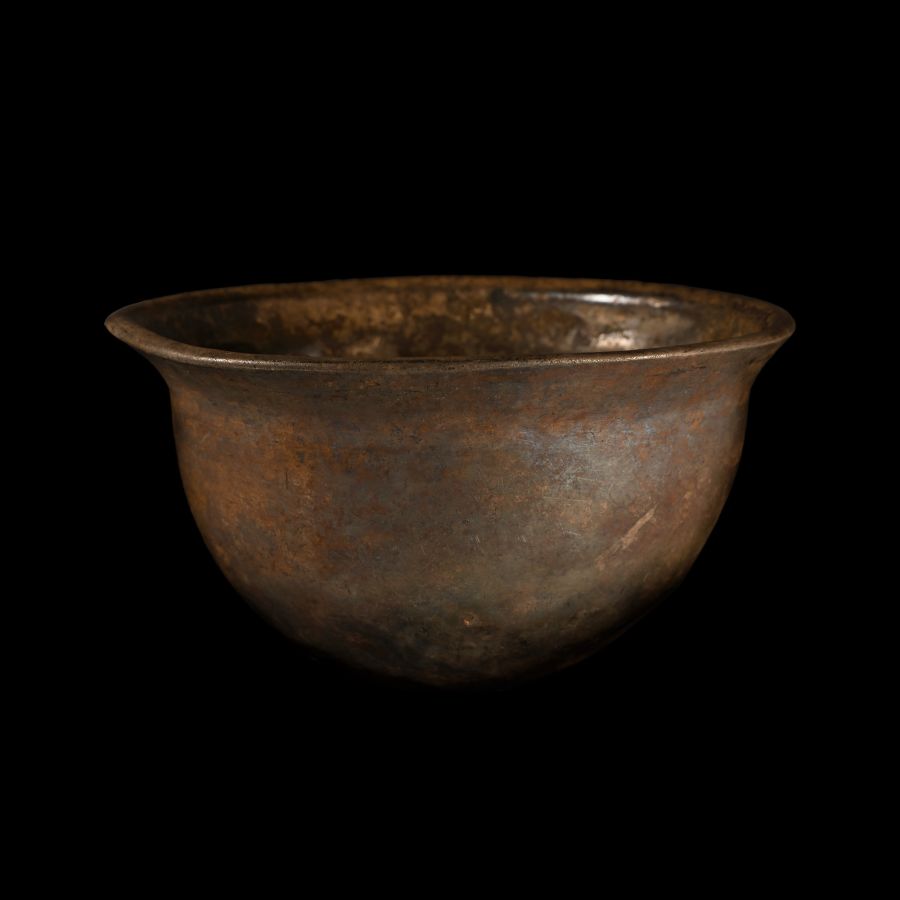
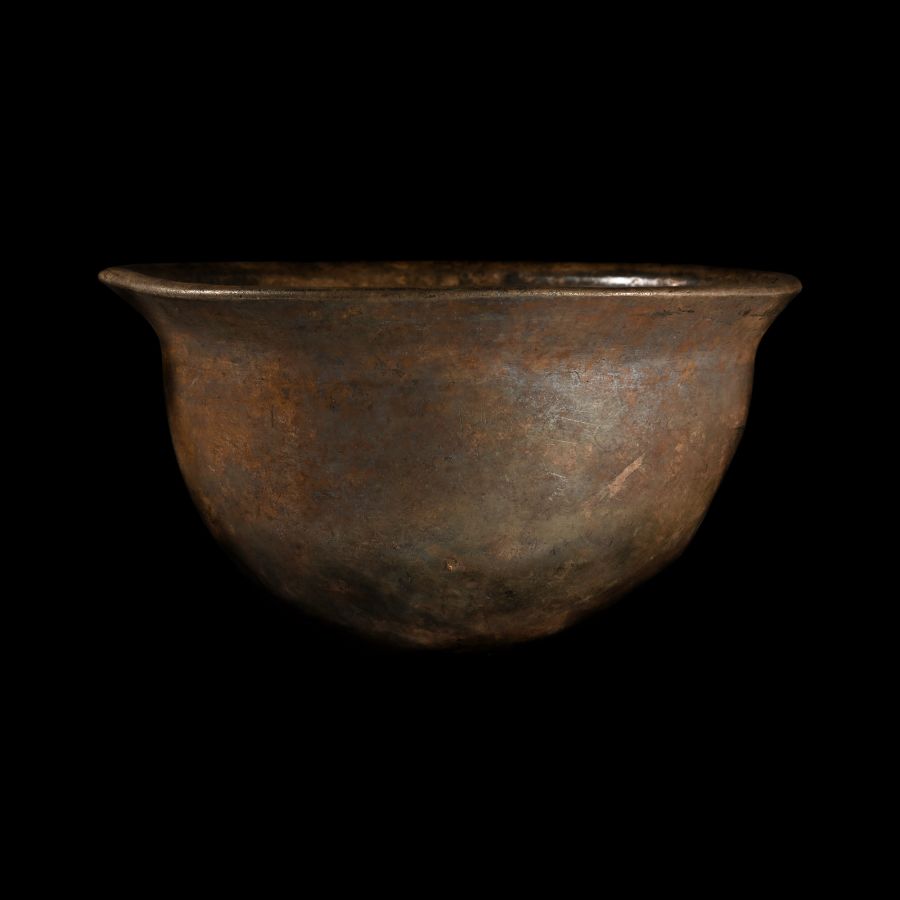
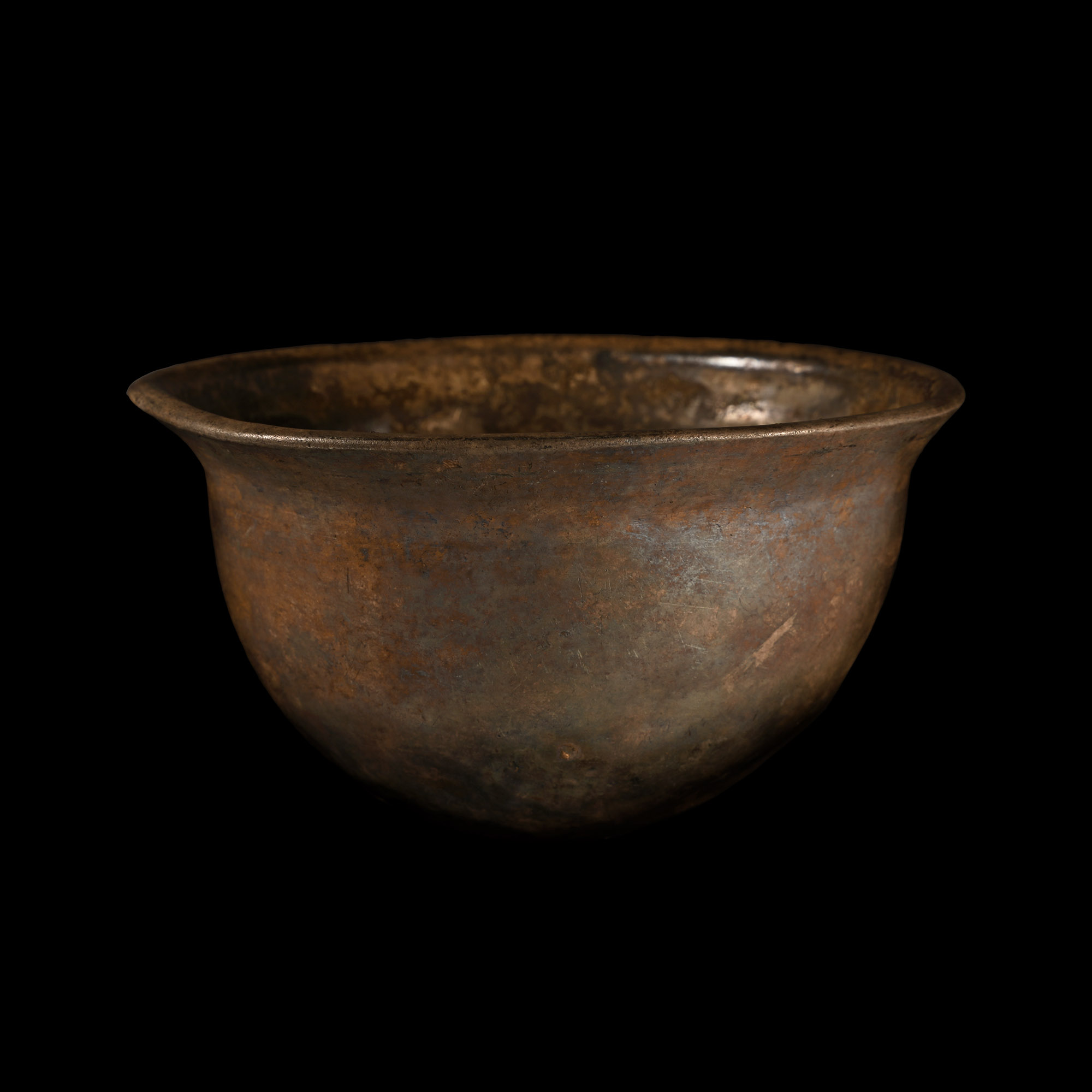
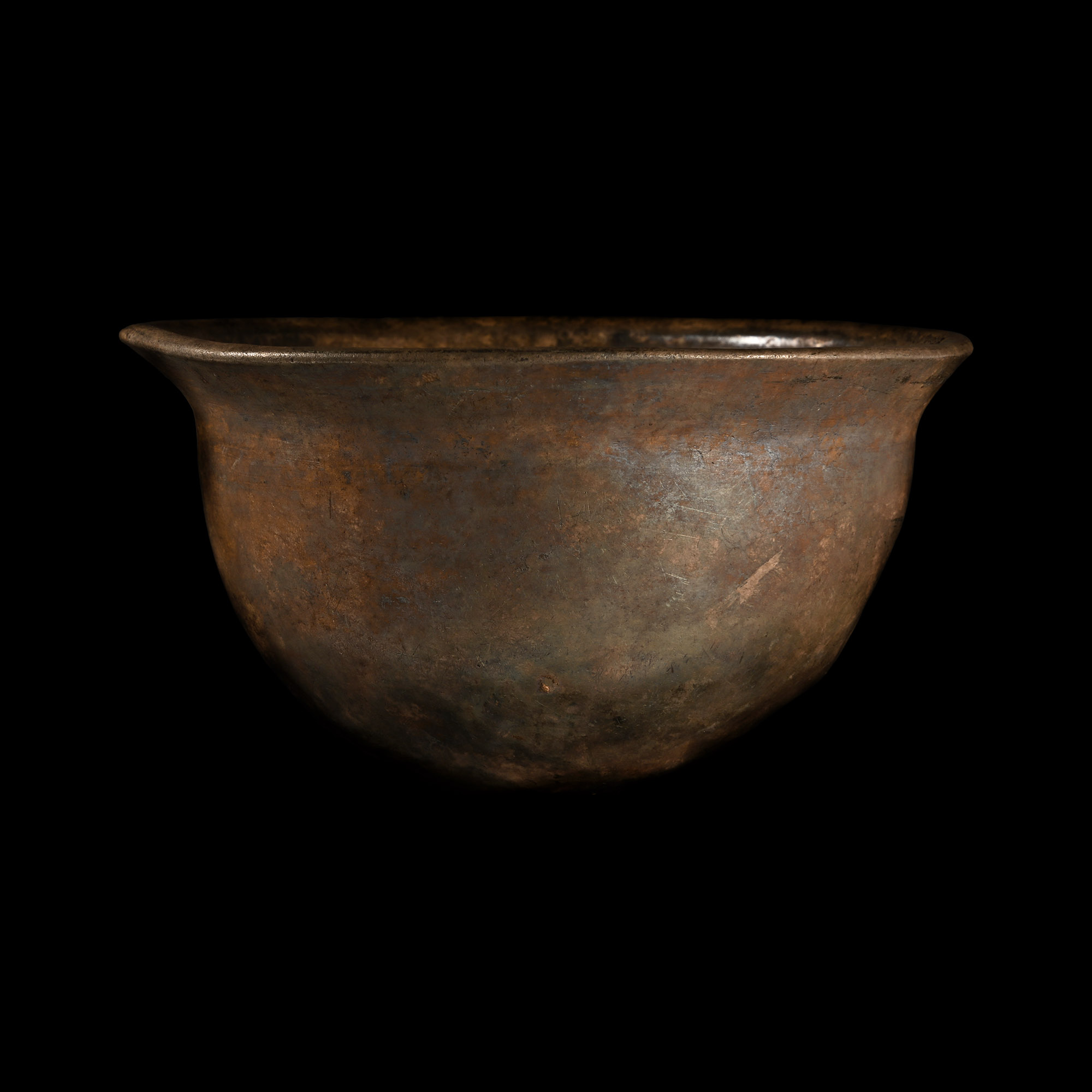
Roman Silver Bowl

2ND CENTURY A.D.

5 1/4 in. (322 grams, 13.2 cm wide).

Bell-shaped with thickened rim and rounded underside.

Provenance

Acquired early 1990s.
Ex private American collection; thence by descent.
Private Swiss collection since 1998.

Literature

Cf. bowl of similar profile in the British Museum, London, under accession number 1989,0724.1.

CONDITION

VETTING:

TimeLine Auctions follows a vetting process to ensure the authenticity and legality of all items, reinforcing our commitment to integrity and responsible trading. Each antiquity, antique, and coin lot undergoes thorough examination by a vetting committee of at least ten external specialists, professional trade association members, scientists, and archaeologists: Our Vetting Process


AUCTIONS:

TimeLine is a leading auction house specialising in antiquities, ancient art, collectables, natural history, coins, medals, and books. Our auctions offer museums, collectors, historians, and enthusiasts the opportunity to acquire unique and historically significant pieces.

LOT 0796

Roman Silver Bowl

Sold for (Inc. bp): £650

Print page

RELATED LOTS

  • Eastern Roman Gold Hoop Earrings with Stone Inlays
    Eastern Roman Gold Hoop Earrings with Stone Inlays
    3rd-4th century A.D.

    Sold for (Inc. bp): £1,300

    Each with a hollow-formed crescentic hoop, piriform plaque with inset glass panel and granulated border, hollow-bulb cluster beneath with three applied piriform plaques and granule finial. 9.26 grams total, 37-38 mm


    Acquired in the mid 1980s-1990s. Private collection, Switzerland, thence by descent. Private collection, since the late 1990s. This lot has been checked against the Interpol Database of stolen works of art and is accompanied by a search certificate number no.12393-226929.

    As a result of the expansion of the Roman Empire, jewellery became more and more elaborate in its designs and materials used, such as precious and semi-precious gemstones. This pair of earrings represent a highly baroque evolution of the boat-shaped type, already visible in Etruscan jewellery and certainly in Roman jewellery, as demonstrated by the excavations of Herculaneum. Using the body of the boat-shaped earrings, the late Imperial artist added decorative clusters and applications of pearled borders and precious stones, according to the taste of Eastern Hellenism rooted for centuries in the provinces of the Black Sea and Roman Asia.

    Lot Details

  • Roman Bronze Ring with Corn Stalks
    Roman Bronze Ring with Corn Stalks
    1st-4th century A.D.

    Sold for (Inc. bp): £52

    Featuring a D-section hoop with substantial angled shoulders, a small circular bezel with a pair of corn stalks(?). 6.84 grams, 29.26 mm overall, 13.90 x 17.39 mm internal diameter (approximate size British H 1/2, USA 4, Europe 6.81, Japan 6)


    From the private collection of a European gentleman (1942-2024), formed since the 1970s.

    Lot Details

  • Romano-Egyptian Terracotta Figure of a Slave with Fruit Basket
    Romano-Egyptian Terracotta Figure of a Slave with Fruit Basket
    1st century A.D.

    Sold for (Inc. bp): £221

    Hollow-formed figure of a servant with grotesque facial features, pointed cap and a short tunic, carrying a pouch in the right hand and shoulders an overflowing fruit basket on the left; a large recess between his legs may be for the insertion of an oversized model phallus; pierced lug to rear of neck for suspension. 286 grams, 17.5 cm


    Acquired from Galerie Puhze, Freiburg, between 2002 and 2010. From the collection of R. L., Lower Saxony. Ex Gorny & Mosch, auction 300, Munich, no.75. Accompanied by a certificate from Galerie Günter Puhze and a German export licence.

    Grotesque and exaggerated figurines were produced in late Hellenistic times, especially in Alexandria. The artisans, fascinated with realism, started to reproduce scenes and figures from daily life, and seemed to have a preference for emphasis on ill and deformed persons. The characters with caricature features are usually referred to as grotesques.

    Lot Details

Stay up-to-date with the latest from TimeLine Auctions by joining our mailing list