
Loading, please wait...
LOT 0121
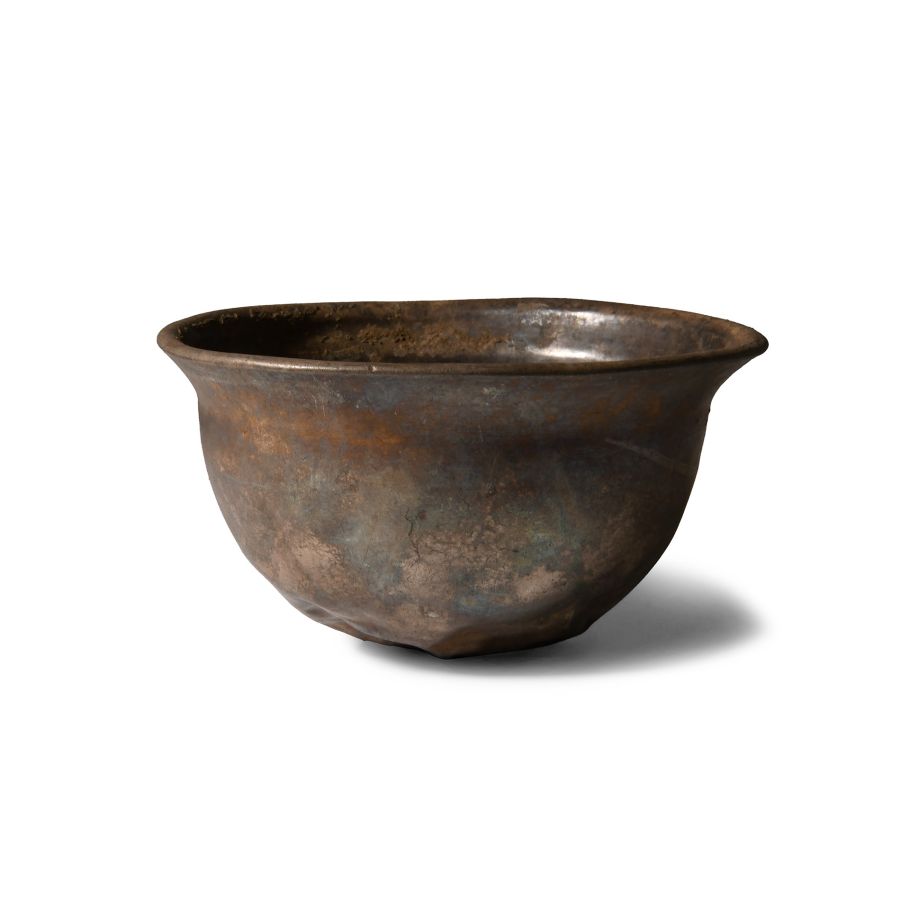
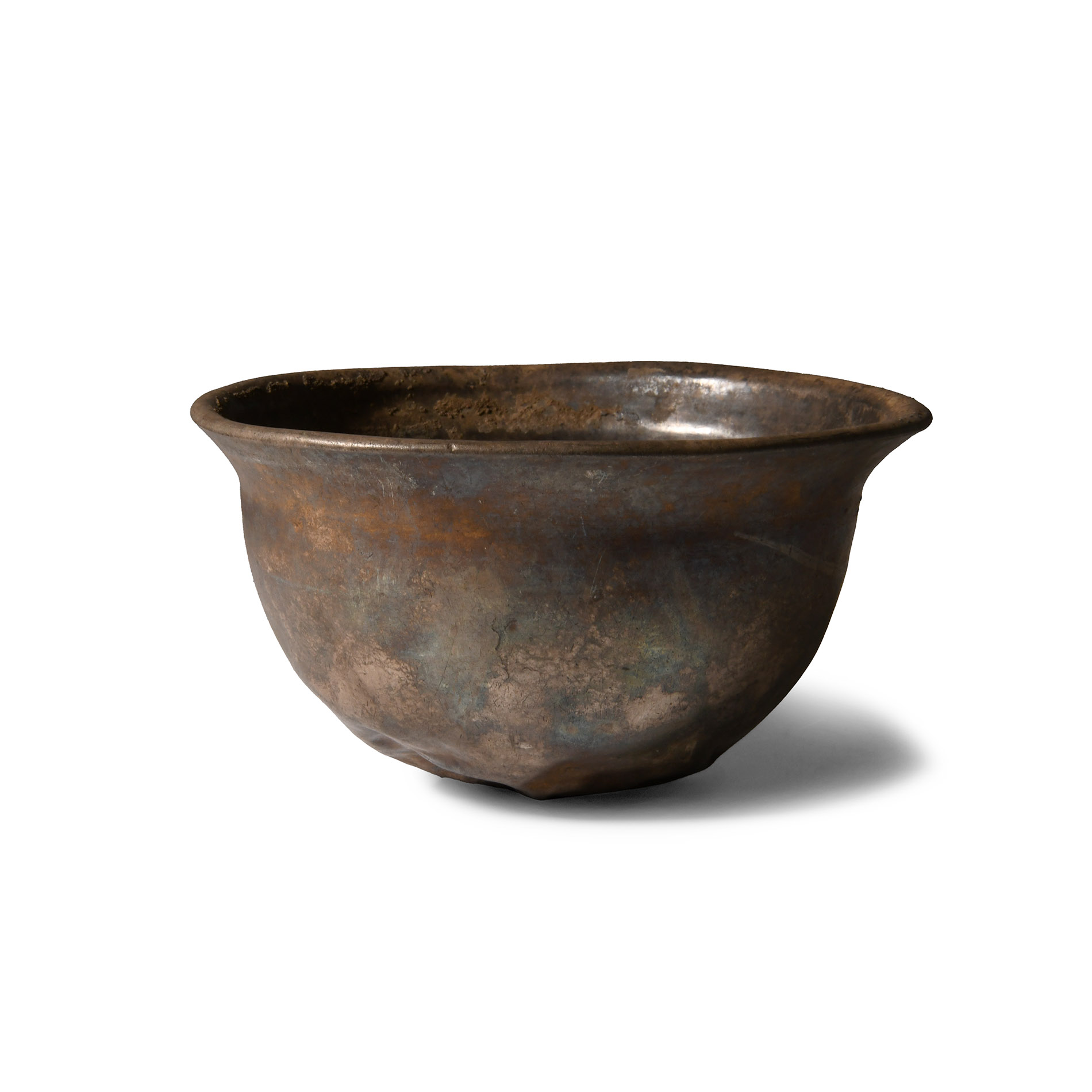
Roman Silver Bowl
2ND CENTURY A.D.
5 1/4 in. (322 grams, 13.2 cm wide).
Bell-shaped with thickened rim and rounded underside.
ProvenanceAcquired early 1990s.
Ex private American collection; thence by descent.
Private Swiss collection since 1998.
Cf. bowl of similar profile in the British Museum, London, under accession number 1989,0724.1.
CONDITIONTimeLine Auctions follows a vetting process to ensure the authenticity and legality of all items, reinforcing our commitment to integrity and responsible trading. Each antiquity, antique, and coin lot undergoes thorough examination by a vetting committee of at least ten external specialists, professional trade association members, scientists, and archaeologists: Our Vetting Process
AUCTIONS:
TimeLine is a leading auction house specialising in antiquities, ancient art, collectables, natural history, coins, medals, and books. Our auctions offer museums, collectors, historians, and enthusiasts the opportunity to acquire unique and historically significant pieces.
LOT 0121
Roman Silver Bowl
Estimate £1,000 - 1,400€1,160 - 1,620 (for guidance only)$1,350 - 1,890 (for guidance only)
-
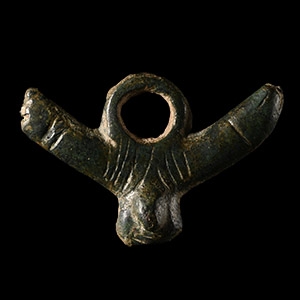
Roman Bronze Phallic Pendant
2nd-3rd century A.D.Sold for (Inc. bp): £169
Comprising a crescent formed from a phallus and an arm with the hand in the fica gesture, loop above and male genitals below. 35.4 grams, 67 mm
Property of a London gentleman, 1990s. -
.jpg)
Roman Vase Intaglio Gemstone
Circa 2nd century A.D.Sold for (Inc. bp): £195
Carnelian with intaglio vase with vegetation cascading to each side; supplied with a museum-quality impression. 0.64 grams, 10 mm
From the collection of a Swiss gentleman formed in Europe from 1970-1980s; thence by descent from the family in London. -
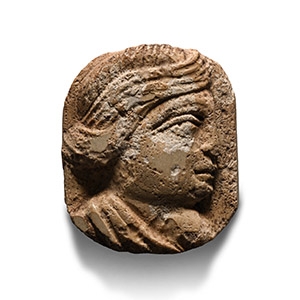
Roman Fitting in the Form of a Female Bust
Coptic, 4th-6th century A.D.Estimate: £300 - 400 (+bp*)
Opening Bid: £150
Carved bone with concave reverse; profile female bust with neatly dressed hair, himation at the shoulder; old collector's label '10' to the reverse. 17.81 grams, 49 mm
European collection formed in the early 1980s. with Bonhams London, 27 April 2006, lot 356. Accompanied by a copy of an IADAA Interpol search certificate. Accompanied by a copy of the relevant Bonham's catalogue pages.
