
Loading, please wait...
LOT 0124
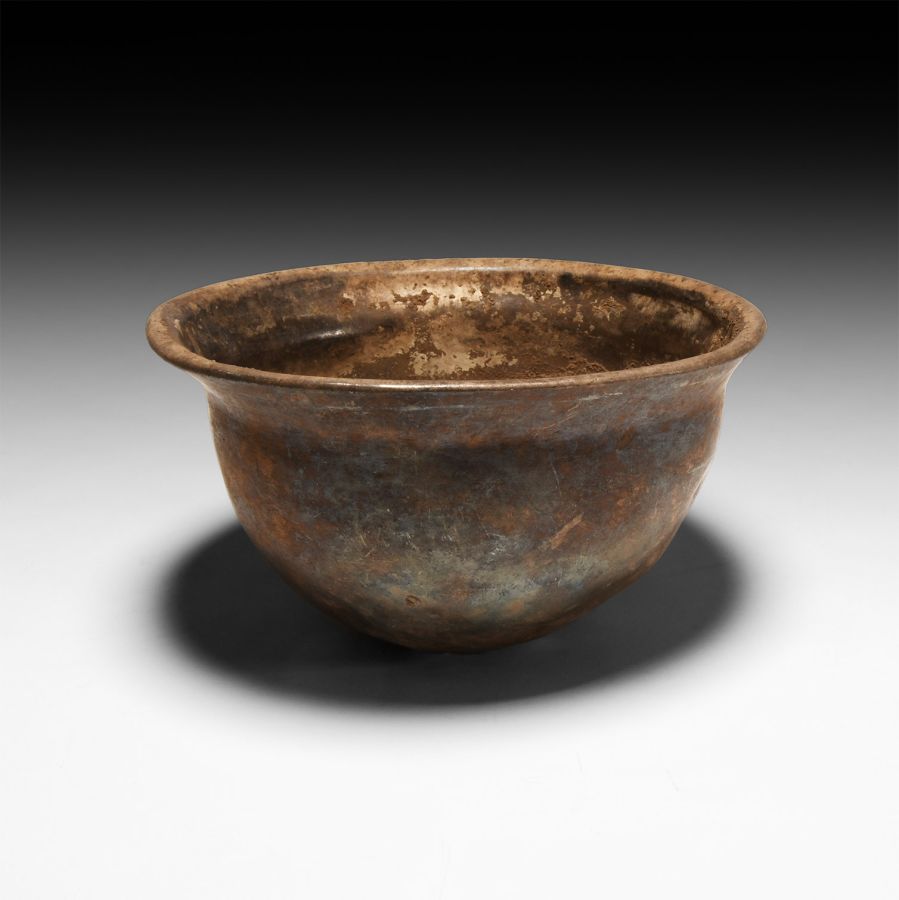
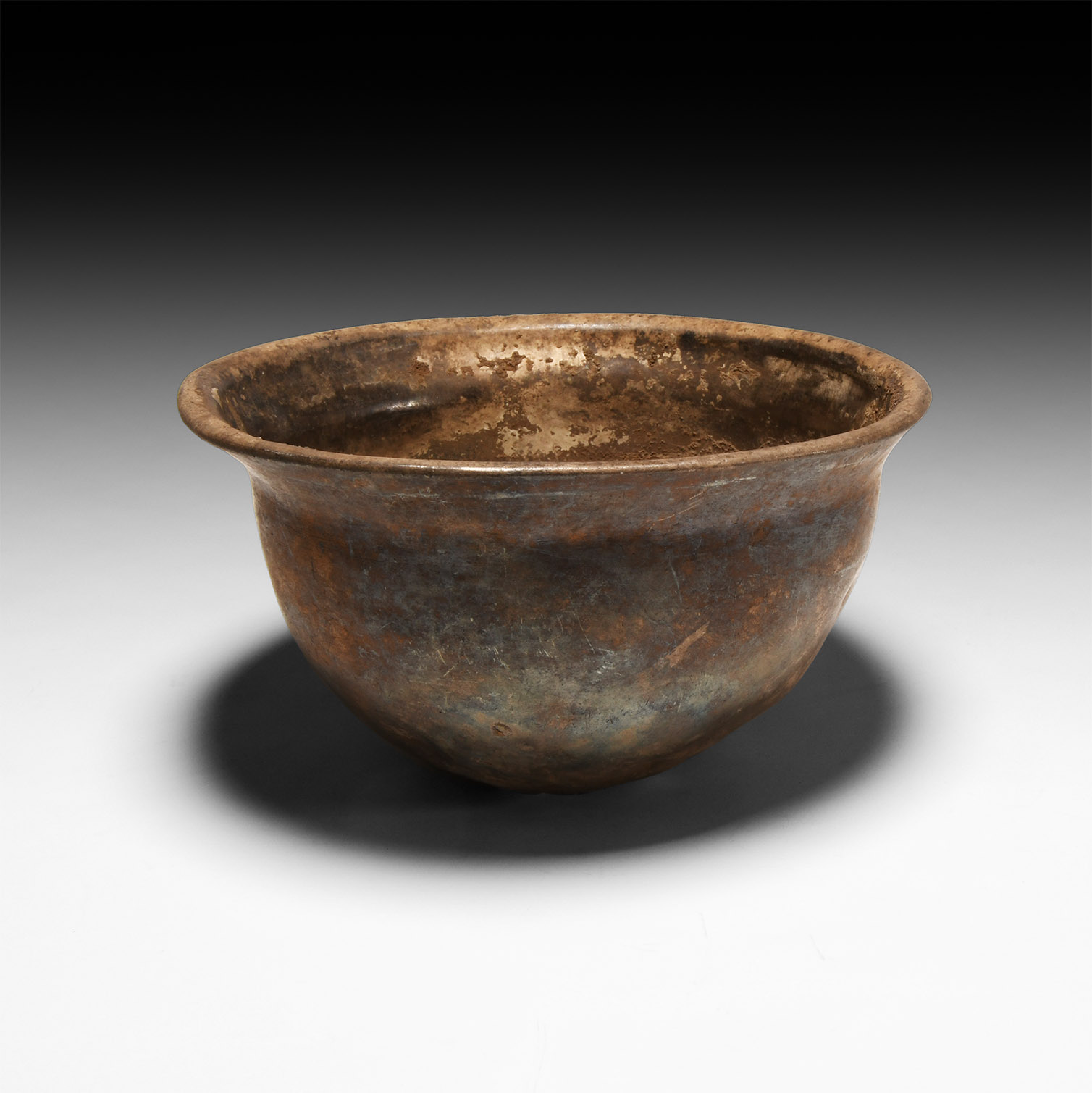
Roman Silver Bowl
2ND CENTURY A.D.
5 1/4 in. (322 grams, 13.2 cm wide).
A deep bell-shaped silver bowl with thickened rim and rounded underside.
ProvenanceAcquired early 1990s.
Ex private American collection; thence by descent.
Private Swiss collection since 1998.
Cf. bowl of similar profile in the British Museum, London, under accession number 1989,0724.1.
CONDITIONTimeLine Auctions follows a vetting process to ensure the authenticity and legality of all items, reinforcing our commitment to integrity and responsible trading. Each antiquity, antique, and coin lot undergoes thorough examination by a vetting committee of at least ten external specialists, professional trade association members, scientists, and archaeologists: Our Vetting Process
AUCTIONS:
TimeLine is a leading auction house specialising in antiquities, ancient art, collectables, natural history, coins, medals, and books. Our auctions offer museums, collectors, historians, and enthusiasts the opportunity to acquire unique and historically significant pieces.
LOT 0124
Roman Silver Bowl
Estimate £1,500 - 2,000€1,740 - 2,320 (for guidance only)$2,030 - 2,700 (for guidance only)
-
Roman Plate Brooch Collection
1st-4th century A.D.Sold for (Inc. bp): £338
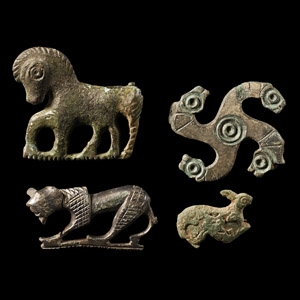
A group of four bronze plate brooches: a horse walking left on a corded groundline, pin lug, pin and catchplate to reverse; a lioness in a stalking posture standing on a groundline, with incised face and mane detailing; pin lug to reverse; a hare bounding right with two recessed panels to the body also in the form of hares, pin lug, pin and catchplate to reverse; whorl brooch with central ring-and-dot ornament with four arms radiating outwards, each with a beast-head terminal, pin lug and catchplate to reverse. 41.3 grams total, 21-36 mm
Acquired before 2000. From the collection of a European gentleman living in the UK. -
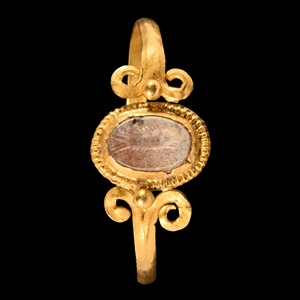
Roman Gold Ring with Fish Gemstone
2nd-3rd century A.D.Sold for (Inc. bp): £468
A slender gold finger ring with loops and granule to each shoulder, beaded wire rim to the cell, inset agate cloison with intaglio fish. 2.38 grams, 24.55 mm overall, 23.14 mm internal diameter (approximate size British W, USA 11, Europe 25, Japan 24)
English private collection. -
.jpg)
Roman Tragic Mask Applique
1st century A.D. or laterSold for (Inc. bp): £130
A rectangular slate mount showing the head of a tragic mask with angular eyes, straight nose and a clownish, down-turned mouth. 3 grams, 16.2 mm
Very fine condition.
Acquired from Galerie Jean Phillipe Mariaud de Serres, 1990-2000. Property of a French collector.
Small appliqués like this one were common in Roman furniture. In the Graeco-Roman world, comic and tragic masks played an important role in Greek drama, commonly performed in the Roman Empire. The actors had the ability to easily play more than one character in succession with a simple change of masks, and the characters of the masks became popular objects in the material culture.
