
Loading, please wait...
LOT 0626
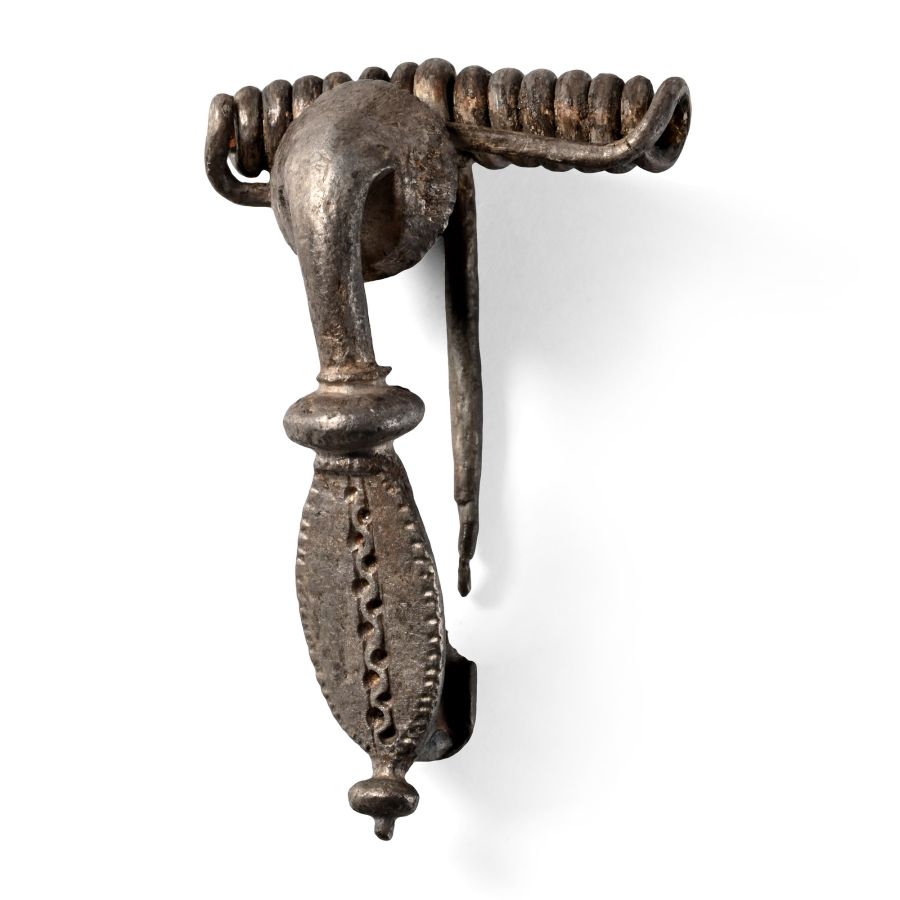
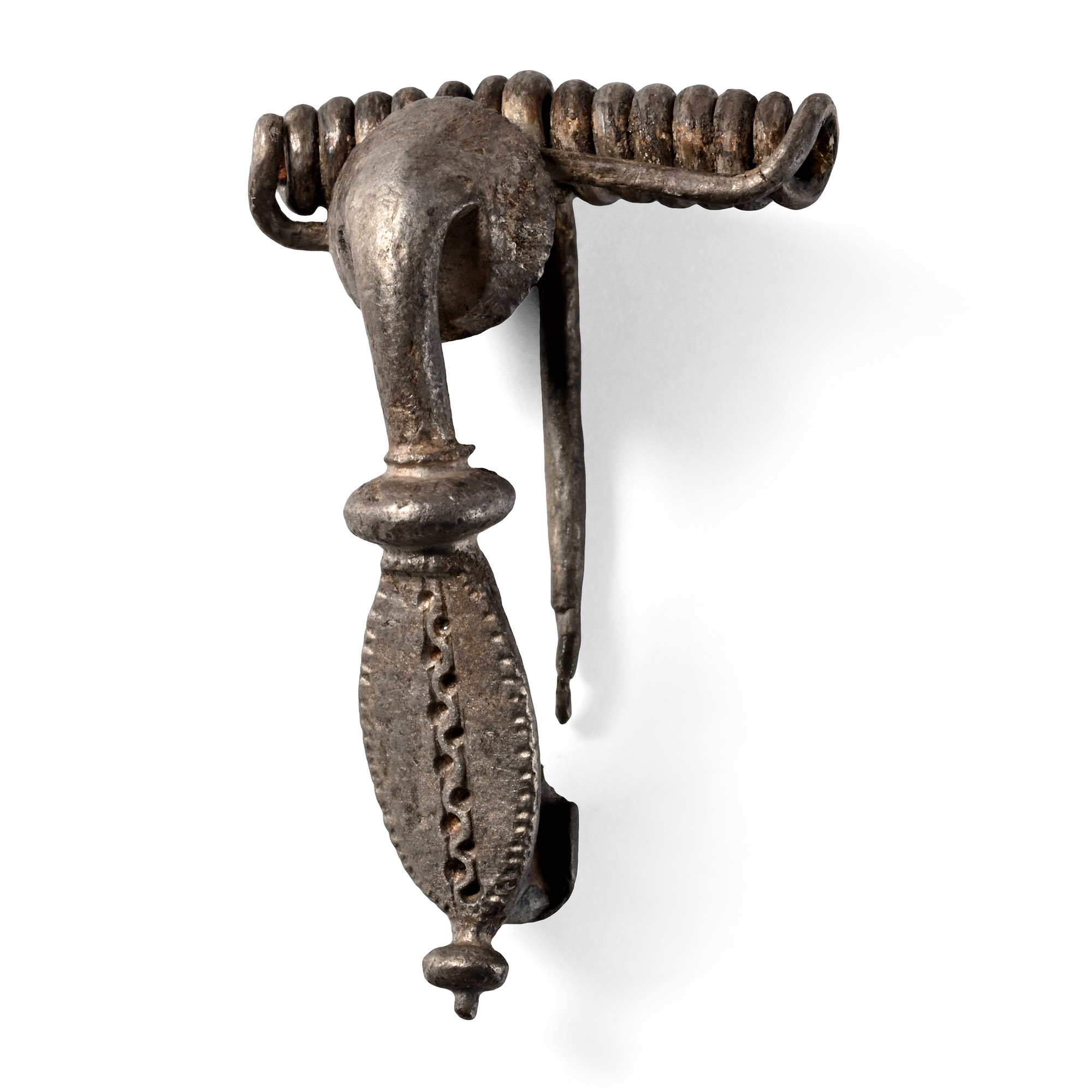
Roman Silver Bow Brooch
1ST-2ND CENTURY A.D.
1 1/4 in. (4.46 grams, 32 mm).
With chord, spring and pin attached to the trumpet-shaped headplate; collar to bow and lentoid panel below with notched edges and reserved meander to the vertical axis; catchplate projecting from the reverse. [No Reserve]
ProvenanceAcquired London, UK, circa 1974.
Property of an Essex, UK, gentleman.
Cf. Hattatt, R., Brooches of Antiquity, Oxford, 1987, item 1396, for type.
CONDITIONTimeLine Auctions follows a vetting process to ensure the authenticity and legality of all items, reinforcing our commitment to integrity and responsible trading. Each antiquity, antique, and coin lot undergoes thorough examination by a vetting committee of at least ten external specialists, professional trade association members, scientists, and archaeologists: Our Vetting Process
AUCTIONS:
TimeLine is a leading auction house specialising in antiquities, ancient art, collectables, natural history, coins, medals, and books. Our auctions offer museums, collectors, historians, and enthusiasts the opportunity to acquire unique and historically significant pieces.
-
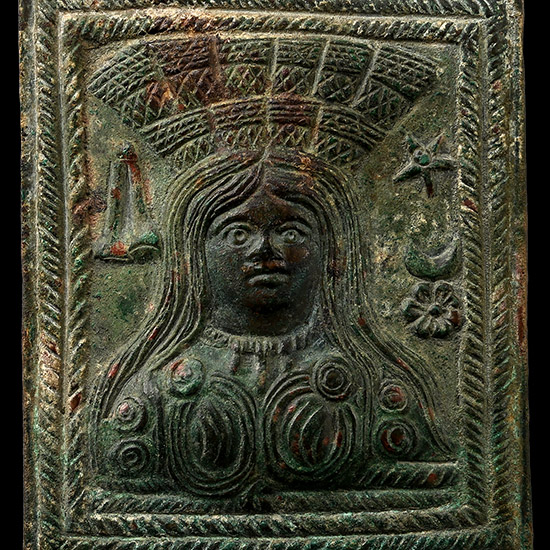
Roman Bronze Plaque with Goddess Cybele
3rd century A.D.Sold for (Inc. bp): £2,340
Rectangular plaque with stepped herringbone border, facing bust of Cybele with flaring turret-crown and cascading hair, symbols in the field. 430 grams, 94 mm
From the collection of a European gentleman living in South London; acquired 1970-1980. This lot has been checked against the Interpol Database of stolen works of art and is accompanied by search certificate number no.13307-258227.
Cybele was the great Phrygian mother of the gods, and goddess of motherhood, fertility and the mountain wilds. -
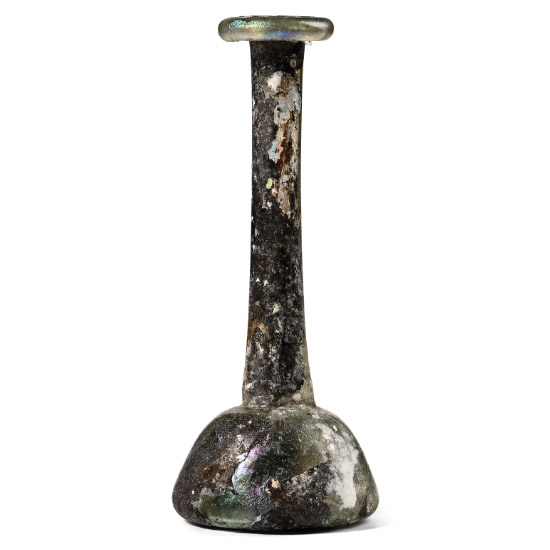
Roman Iridescent Glass Candlestick Unguentarium
1st-2nd century A.D.Sold for (Inc. bp): £117
With a low conical body and a slightly convex wall, a tall cylindrical neck flaring to the mouth with a rolled rim. 32.9 grams, 12.9 cm
Acquired in the 1990s from London dealerships and auction houses. From the Lonson collection. -
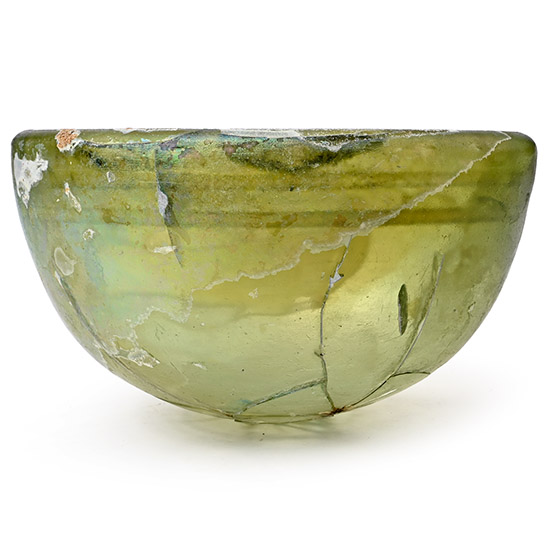
Roman Green Glass Bowl
150-50 B.C.Sold for (Inc. bp): £468
Hemispherical body with a wheel-cut decoration on the inside rim. 280 grams, 12.8 cm wide
From an important London, UK, collection 1980-2020.
Such bowls were mainly produced in the Eastern Mediterranean and diffused in Rome since the 2nd century B.C., when the sea was becoming a Mare Nostrum for the Res Publica. They were characterised by a hemispherical body with a round and convex bottom, but especially by concentric circular grooves.
