
Loading, please wait...
LOT 0799
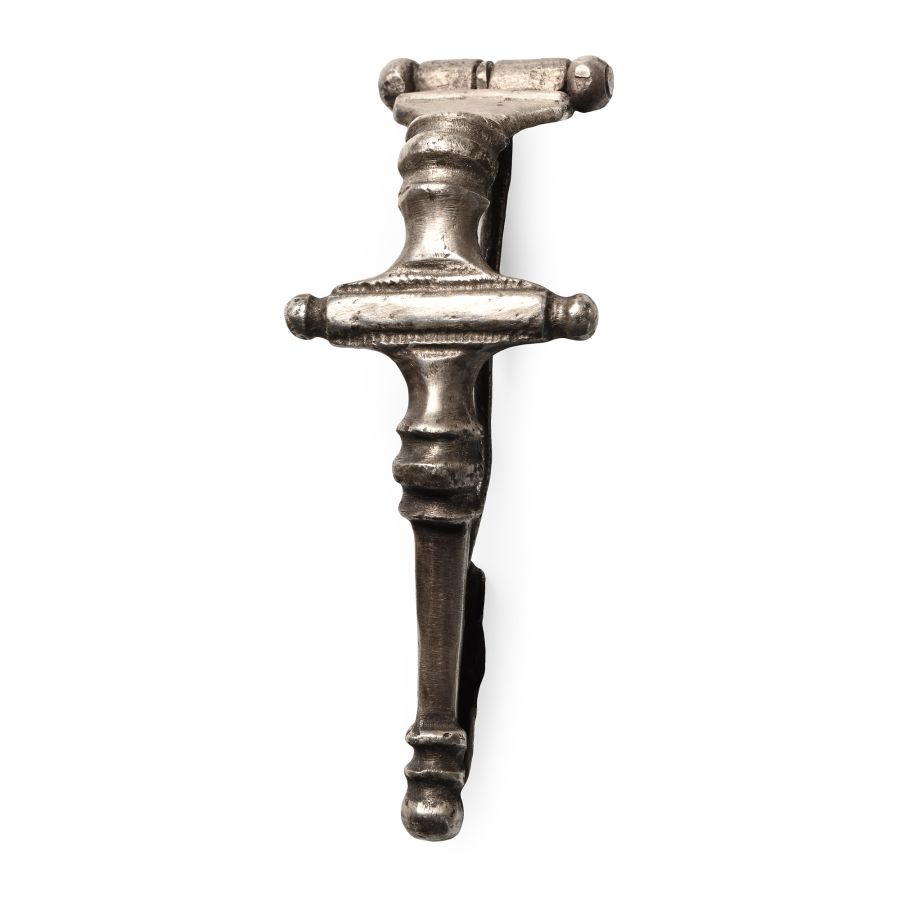
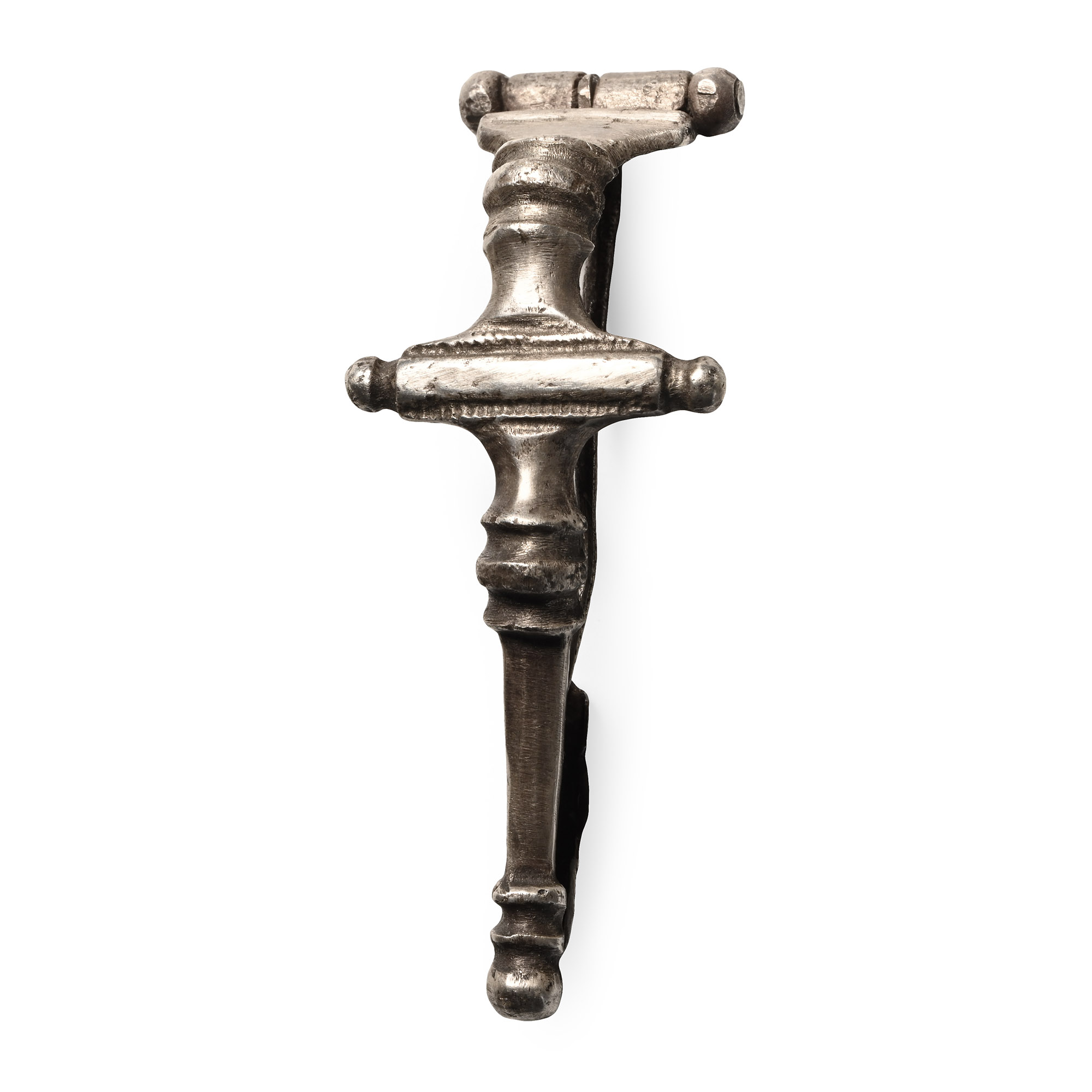
Roman Silver Bow Brooch
1ST-2ND CENTURY A.D.
2 1/8 in. (11.5 grams, 54 mm).
Of kräftig profilierte type with D-section ribbed bow, tubular collar and central flat plate with knop finials, catchplate and pin to the reverse. [No Reserve]
ProvenanceEx property of an Essex, UK, gentleman collector.
From the private collection of a Colchester, UK, gentleman.
TimeLine Auctions follows a vetting process to ensure the authenticity and legality of all items, reinforcing our commitment to integrity and responsible trading. Each antiquity, antique, and coin lot undergoes thorough examination by a vetting committee of at least ten external specialists, professional trade association members, scientists, and archaeologists: Our Vetting Process
AUCTIONS:
TimeLine is a leading auction house specialising in antiquities, ancient art, collectables, natural history, coins, medals, and books. Our auctions offer museums, collectors, historians, and enthusiasts the opportunity to acquire unique and historically significant pieces.
-
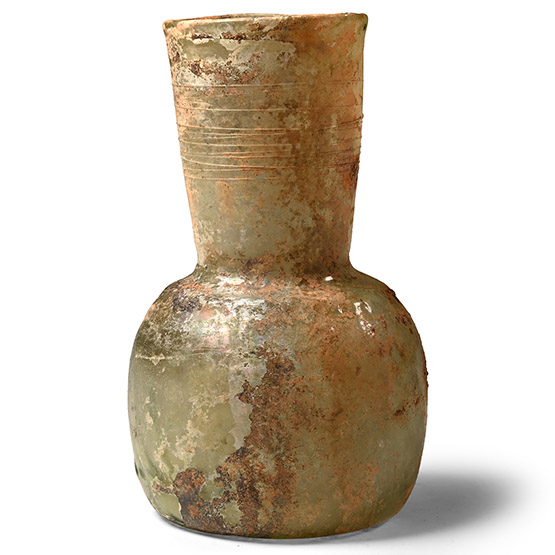
Roman Glass Flask with Everted Spout
4th century A.D.Sold for (Inc. bp): £65
Piriform in profile in aqua glass with broad flared neck; applied trails to the neck, dimple base; areas of iridescence. 38 grams, 98 mm
From a London, UK, collection, 1990s.
The flask is a common Late Roman type, especially diffused in Syria and Palestine. Hayes suggested that examples with straight necks are relatively early in date, while those with necks having a bulge at the top and are narrow below were produced slightly later. -
.jpg)
Roman Nicolo Gemstone of the Bust of an Ephebos in Grand Tour Gold Ring
2nd century A.D.Sold for (Inc. bp): £1,690
Nicolo cloison with profile bust of an adolescent (Greek ephebos) with tousled hair; set in a later gold ring; supplied with a museum-quality impression. 3.84 grams, 21.26 mm overall, 17.32 mm internal diameter (approximate size British L 1/2, USA 6, Europe 11.87, Japan 11)
Private collection, England. -
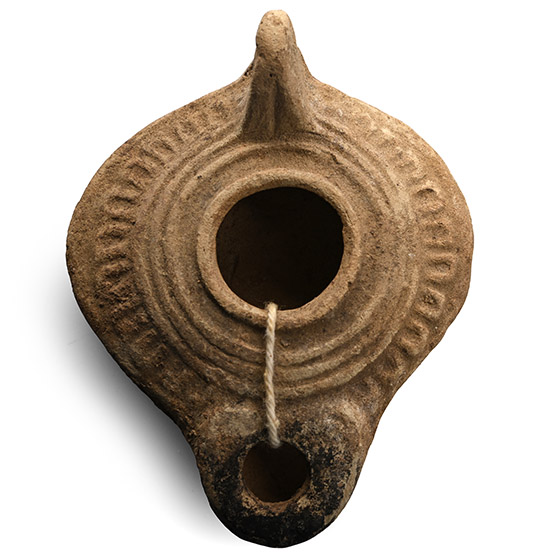
Roman Round Nozzle Terracotta Oil Lamp
4th-5th century A.D.Sold for (Inc. bp): £104
Discoid body with large central filler hole and lug handle behind; broad shoulder with radiating scales, concentric rings to the rim; incised basal ring; with old auction house tag '455 2'. 46 grams, 92 mm
Ex Weschler's Auctioneers, Washington, D.C., USA, in 1982, no.455. Accompanied by a copy of a receipt dated 26th September 1982.
