
Loading, please wait...
LOT 0778
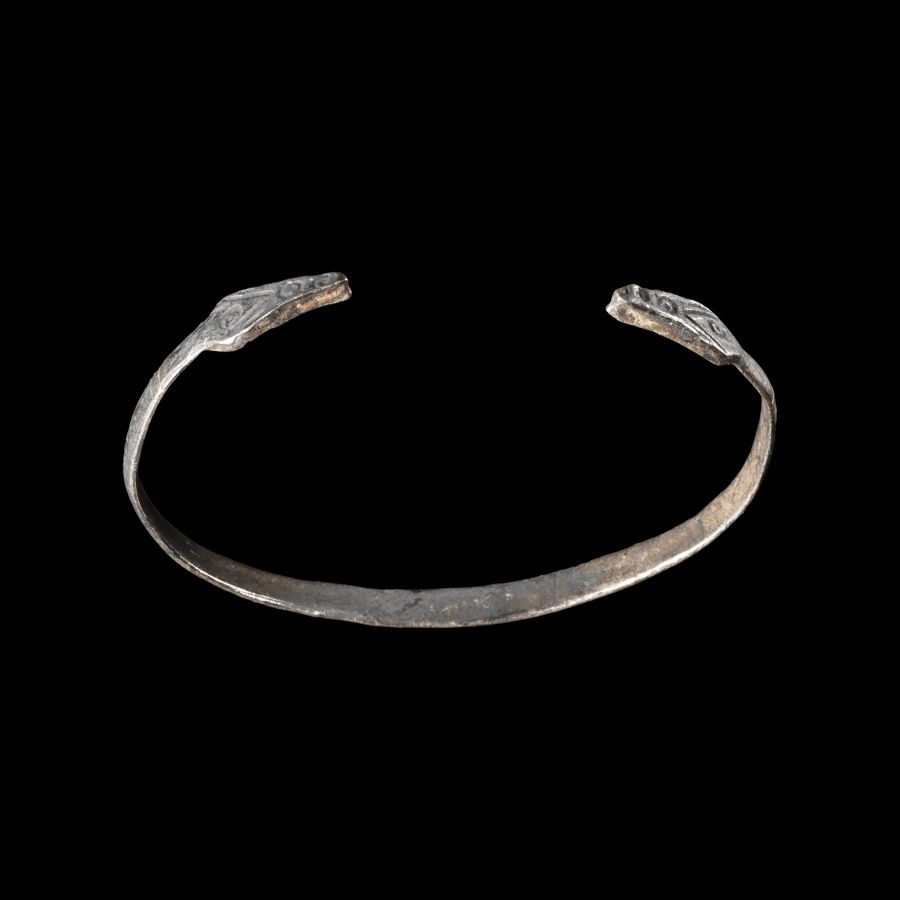
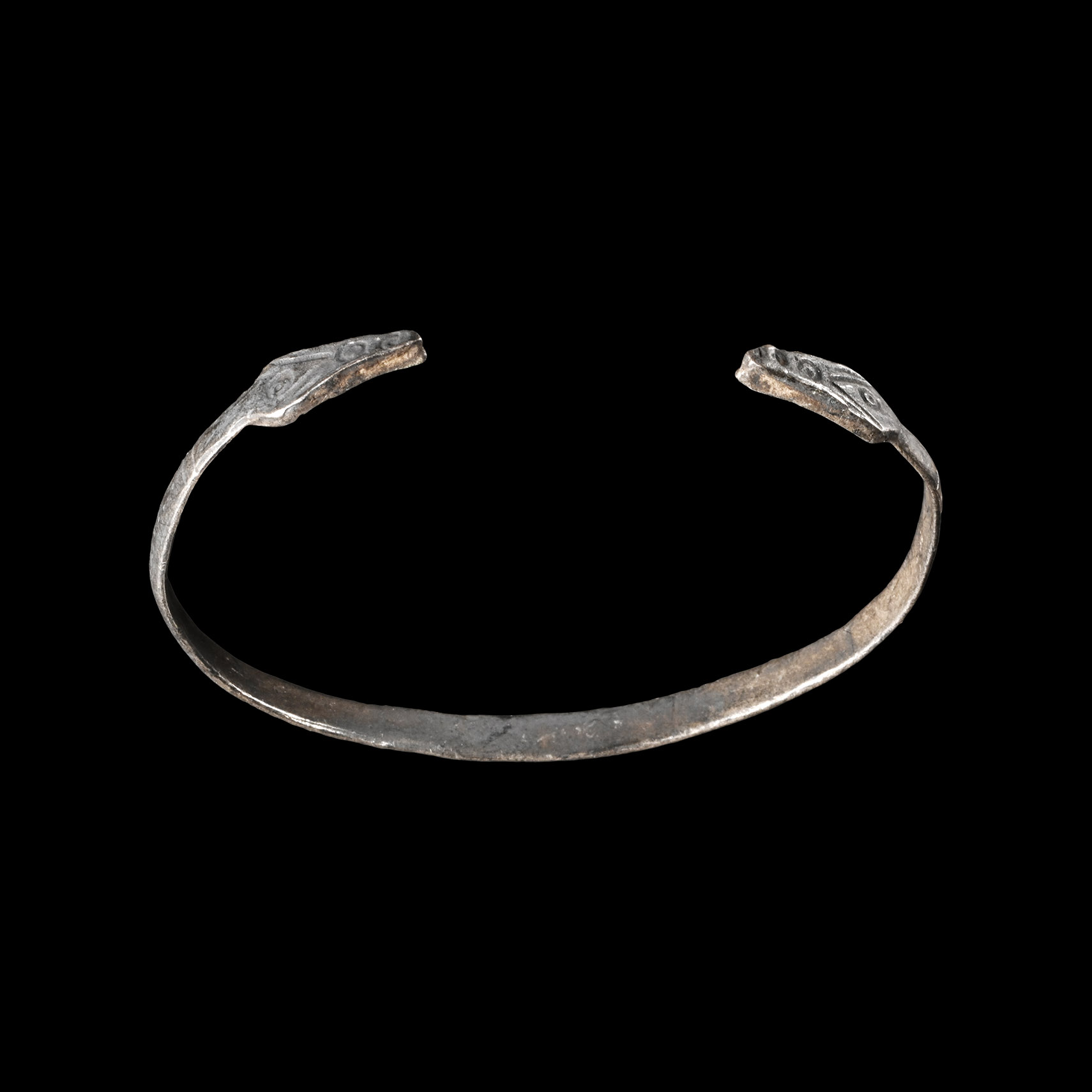
Roman Silver Armilla Snake Bracelet
2ND-3RD CENTURY A.D.
2 5/8 in. (8 grams, 66 mm).
Penannular in form with kite-shaped terminals representing serpents' heads, punched ring-and-dot and pricked dot ornament forming the stylised head and scale detailing. [No Reserve]
ProvenanceEx North American private collection.
Acquired privately on the European art market in the 1990s.
Property of a Buckinghamshire, UK, gentleman.
TimeLine Auctions follows a vetting process to ensure the authenticity and legality of all items, reinforcing our commitment to integrity and responsible trading. Each antiquity, antique, and coin lot undergoes thorough examination by a vetting committee of at least ten external specialists, professional trade association members, scientists, and archaeologists: Our Vetting Process
AUCTIONS:
TimeLine is a leading auction house specialising in antiquities, ancient art, collectables, natural history, coins, medals, and books. Our auctions offer museums, collectors, historians, and enthusiasts the opportunity to acquire unique and historically significant pieces.
-
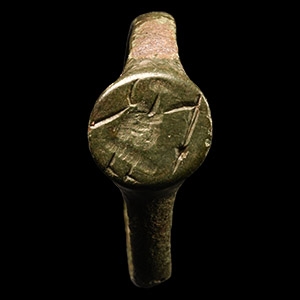
Roman Bronze Ring with Armed Warrior
4th-5th century A.D.Sold for (Inc. bp): £104
The hoop expanded slightly at the shoulders, circular bezel engraved with what is possibly a stylised warrior figure wielding a spear. 2.25 grams, 22.55 mm overall, 19.38 mm internal diameter (approximate size British P, USA 7 1/2, Europe 16/23, Japan 15)
Private collection formed since the 1940s. UK art market. Property of an Essex gentleman. -
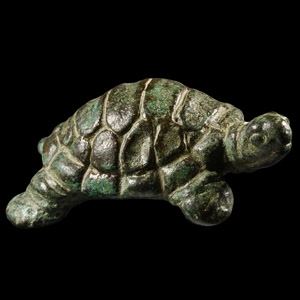
Roman Bronze Tortoise Figure
2nd-3rd century A.D.Sold for (Inc. bp): £910
Modelled in the round with semi-naturalistic detailing, head raised and turned slightly to the right. 30.1 grams, 37 mm
Ex UK private collection. Acquired at the London Coin Fair in the early 1990s. Property of a Buckinghamshire, UK, gentleman. -
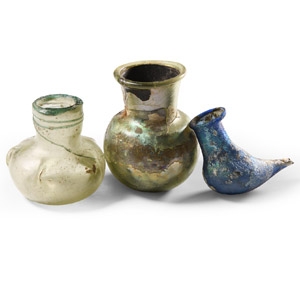
Roman Glass Vessel Collection
1st-4th century A.D.Sold for (Inc. bp): £260
Including a cobalt blue feeder bottle. 68 grams total, 46 -59 mm
Acquired 1970s-1996. Property of a North American collector. London collection, 2016.
