
Loading, please wait...
LOT 0159
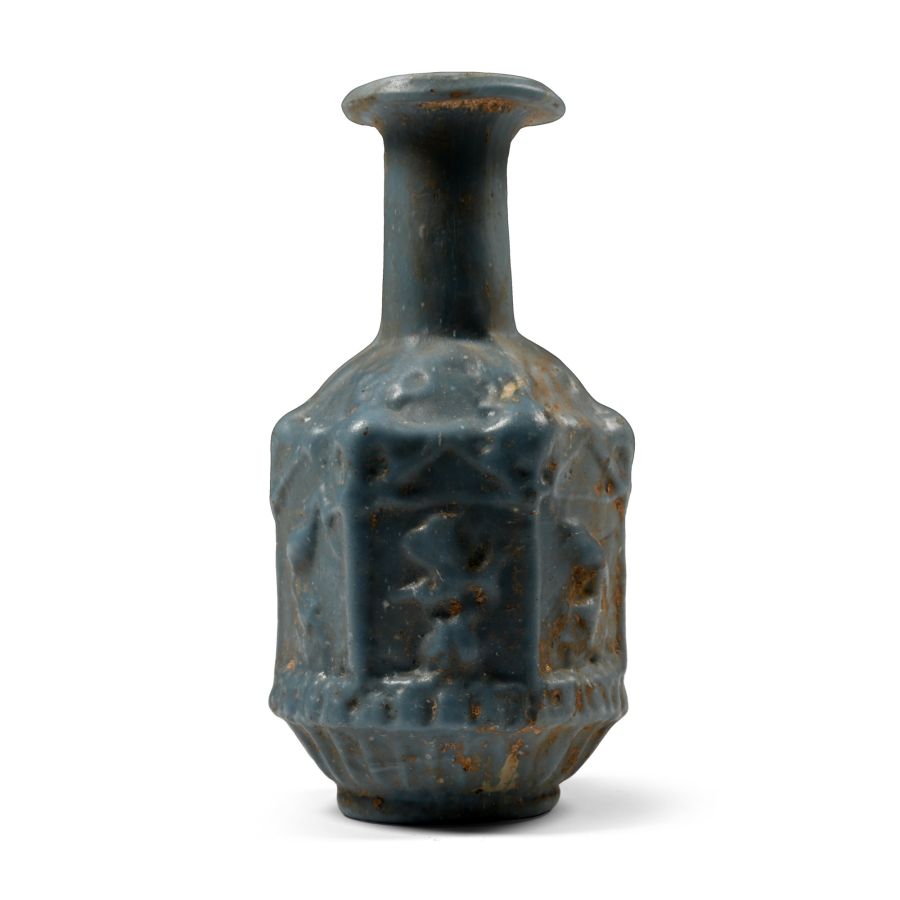
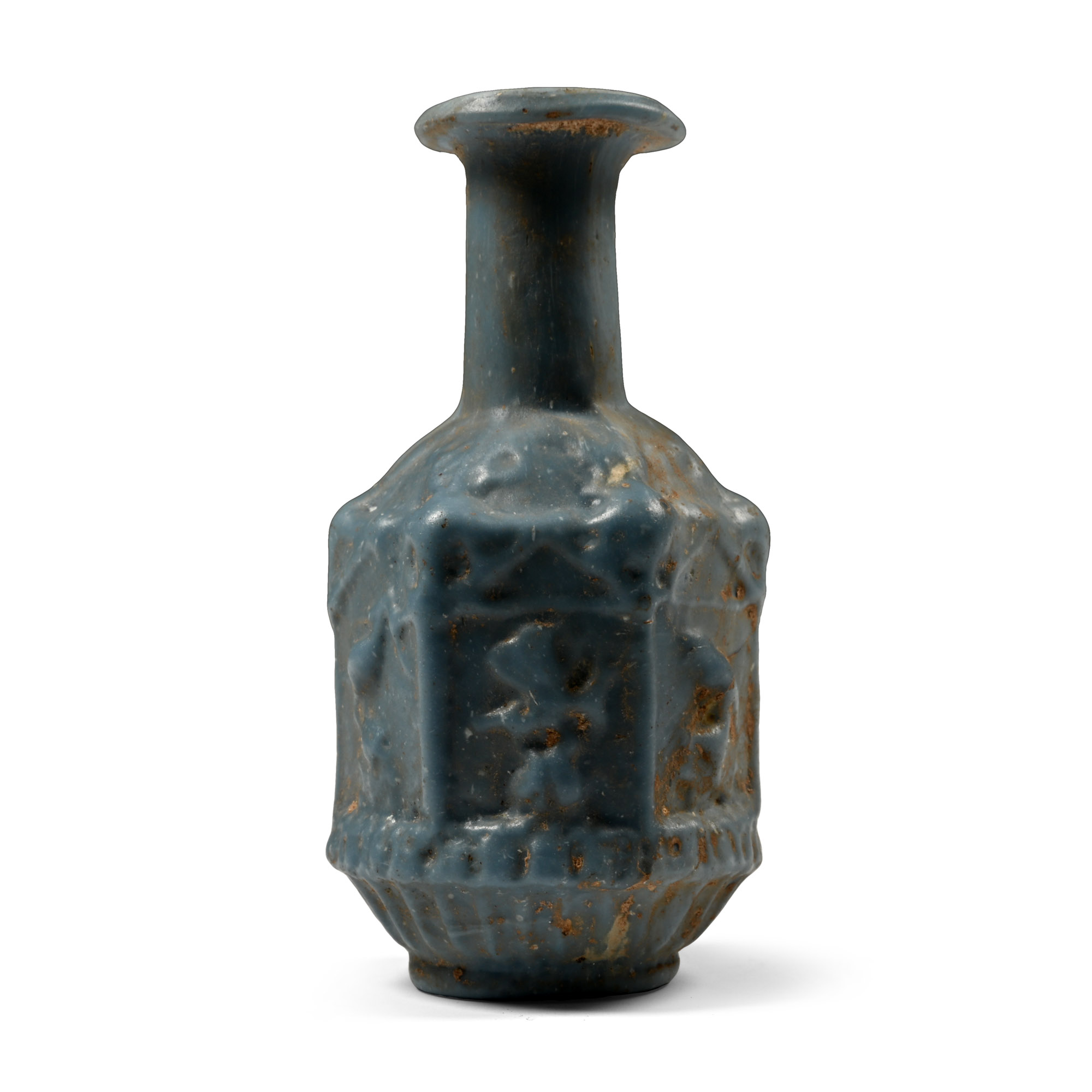
Roman Sidonian Opaque Light Blue Glass Flask
1ST CENTURY A.D.
3 1/8 in. (31 grams, 80 mm).
Hexagonal in plan with tall tubular neck and flared and folded rim, disc base with moulding seams; broad sloping shoulder above a sidewall of panels each with a low-relief avian image (bird in flight, bird perching on a branch, etc.).
ProvenanceEx private collection, Israel.
Acquired from Archaeological Center, Auction 60, no.204.
Private collection.
Accompanied by a copy of the relevant Archaeological Center online catalogue page.
This lot has been checked against the Interpol Database of stolen works of art and is accompanied by a search certificate number no.12530-232177.
This lot has been cleared against the Art Loss Register database, and is accompanied by an illustrated lot declaration signed by the Head of the Antiquities Department, Dr Raffaele D'Amato.
TimeLine Auctions follows a vetting process to ensure the authenticity and legality of all items, reinforcing our commitment to integrity and responsible trading. Each antiquity, antique, and coin lot undergoes thorough examination by a vetting committee of at least ten external specialists, professional trade association members, scientists, and archaeologists: Our Vetting Process
AUCTIONS:
TimeLine is a leading auction house specialising in antiquities, ancient art, collectables, natural history, coins, medals, and books. Our auctions offer museums, collectors, historians, and enthusiasts the opportunity to acquire unique and historically significant pieces.
LOT 0159
Roman Sidonian Opaque Light Blue Glass Flask
Estimate £3,000 - 4,000€3,480 - 4,640 (for guidance only)$4,050 - 5,400 (for guidance only)
-
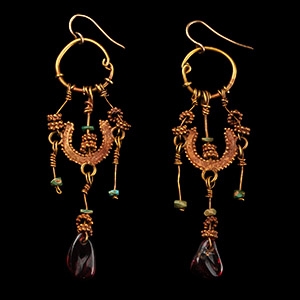
Roman Gold Earring Pair with Gemstone Drops
2nd-3rd century A.D.Estimate: £2,000 - 3,000 (‡+bp*)
Opening Bid: £1,000
Matched pair, each a hoop and suspension hook; a crescent plaque supported by filigree wires with granulated collars, lateral dangles with turquoise seed beads and median longer dangle with granulated collars and gemstone finial. 9.32 grams total, 60-62 mm
Acquired in 1995. Private collection, thence by descent. Private collection, since the late 1990s. This lot has been checked against the Interpol Database of stolen works of art and is accompanied by a search certificate number no.12863-241727. This lot has been cleared against the Art Loss Register database, and is accompanied by an illustrated lot declaration signed by the Head of the Antiquities Department, Dr Raffaele D'Amato. -
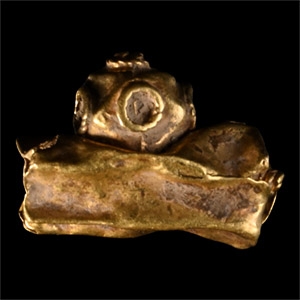
Roman Gold Amulet Case
4th-5th century A.D.Sold for (Inc. bp): £195
Composed of a cylindrical body with a domed cap to one end, spherical suspension loop with filigree decoration. 0.64 grams, 12 mm
From the collection of a late Japanese collector, 1970s. This lot is accompanied by an illustrated lot declaration signed by the Head of the Antiquities Department, Dr Raffaele D'Amato.
This jewel clearly shows the late-Antique taste for elaboration and bright colour which had been evolving since the 3rd century AD. Most of these items were the products of a single workshop, quite possibly in provinces like Britain. -
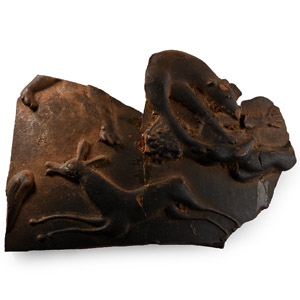
Roman Pottery Sherd with Hunting Dog Scene
1st century A.D.Sold for (Inc. bp): £124
Fragment of the curved shoulder of a vessel with high-relief scene depicting a dog attacking a human (child?) lying nude and supine, a deer or fawn running past below. 53 grams, 11.1 cm
Found Colchester, Essex. From the private collection of a Colchester, UK, lady, since the 1980s. This lot is accompanied by an illustrated lot declaration signed by the Head of the Antiquities Department, Dr Raffaele D'Amato.
