
Loading, please wait...

LOT 0129
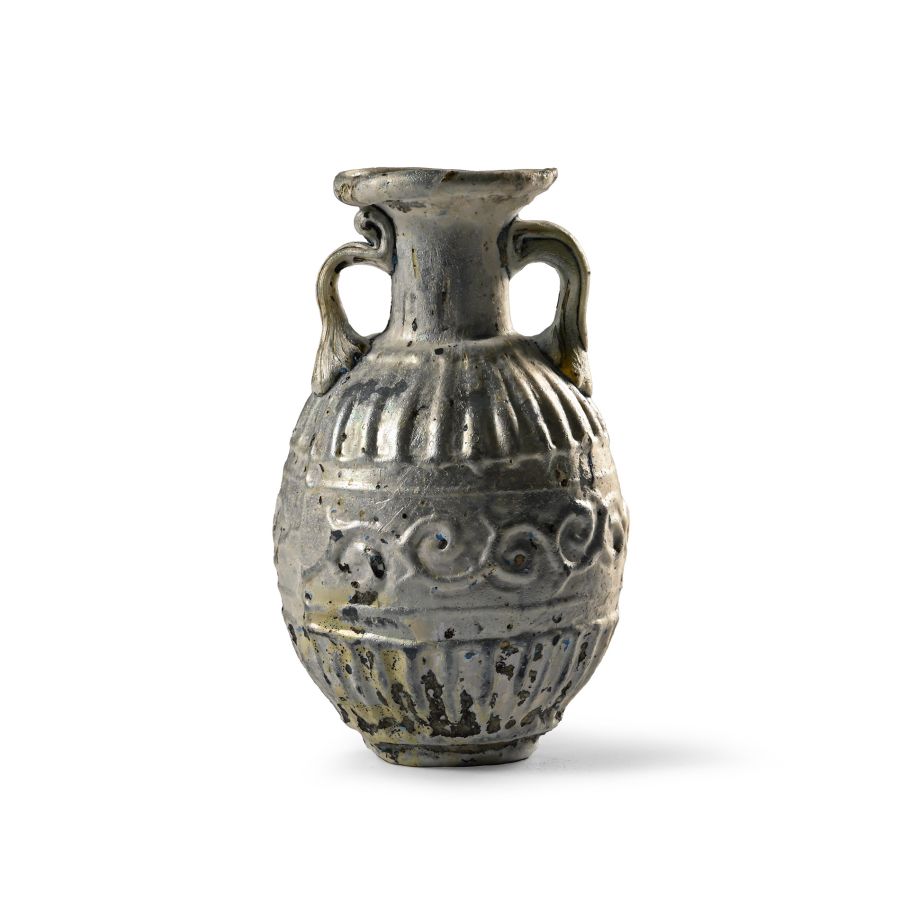
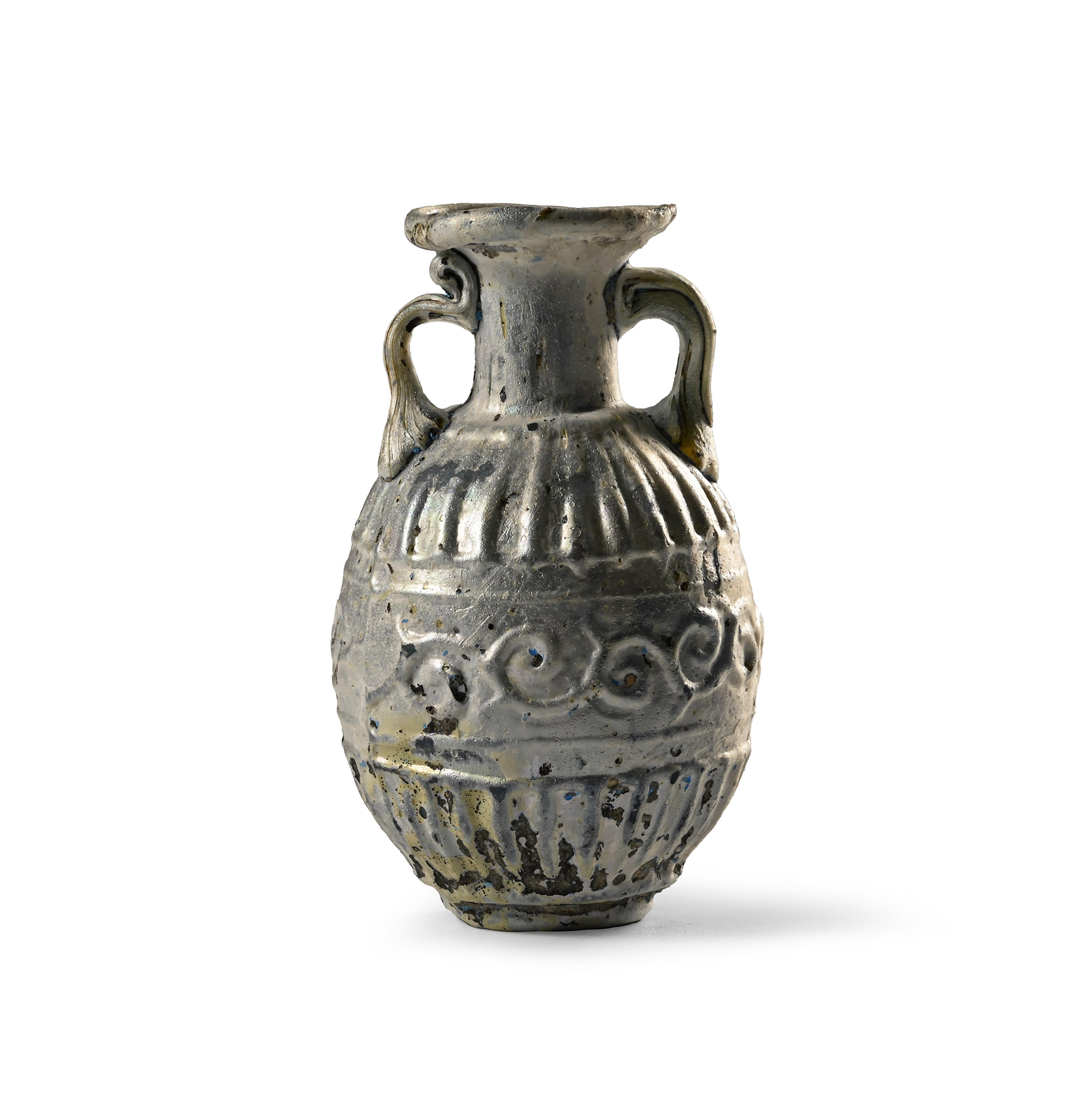
Roman Sidonian Mould-Blown Two-Handled Flask with Silver Iridescence
2ND-4TH CENTURY A.D.
3 in. (20 grams, 75 mm).
With barrel-shaped body, trumpet-shaped mouth and two applied strap handles to the shoulder; band of scrolled tendrils to the equator, vertically ribbed bands above and below.
ProvenanceFrom an important London, UK, collection, 1970-1990s.
This lot has been checked against the Interpol Database of stolen works of art and is accompanied by search certificate number no.12236-222279.
Cf. Whitehouse, D., Roman Glass in the Corning Museum of Glass, vol.2, New York, 2001, items 522-523, for examples of mould-blown glassware.
CONDITIONTimeLine Auctions follows a vetting process to ensure the authenticity and legality of all items, reinforcing our commitment to integrity and responsible trading. Each antiquity, antique, and coin lot undergoes thorough examination by a vetting committee of at least ten external specialists, professional trade association members, scientists, and archaeologists: Our Vetting Process
AUCTIONS:
TimeLine is a leading auction house specialising in antiquities, ancient art, collectables, natural history, coins, medals, and books. Our auctions offer museums, collectors, historians, and enthusiasts the opportunity to acquire unique and historically significant pieces.
LOT 0129
Roman Sidonian Mould-Blown Two-Handled Flask with Silver Iridescence
Estimate £2,000 - 3,000€2,320 - 3,480 (for guidance only)$2,700 - 4,050 (for guidance only)
-
Roman Glass Pendant
1st-4th century A.D.Sold for (Inc. bp): £39
Discoid with integral loop, reserved female profile bust, 1.53 grams, 20 mm
Ex property of the late Mr S.M., London, UK, 1969-1999, thence by descent. -
Hellenistic or Roman Bronze Grotesque Figure
Alexandria, 1st century B.C.-3rd century A.D.Sold for (Inc. bp): £338
Modelled standing nude in a contorted pose with left arm raised and right hand on the hip, head tilted; mounted on a custom-made stand. 257 grams total, 11.5cm including stand
From a collection acquired on the UK art market from various auction houses and collections mostly before 2000. From an important Cambridgeshire estate; thence by descent.
Rolland (p.104) notes that such grotesque 'pygmy' figures may have been intended as caricatures. They were already produced in Alexandria since the 1st century B.C., and considered to be charms against the evil eye. Beautiful statuettes of this typology are well known from the Roman period, perhaps produced in the workshops of Alexandria, Egypt, on the occasion of the visit of the Emperor Caracalla. -
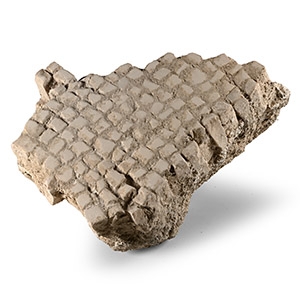
Roman Floor Mosaic Section
1st-4th century A.D.Sold for (Inc. bp): £124
An irregular panel of floor with opus caementicium substrate and white stone tesserae embedded in horizontal rows in the upper layer. 856 grams, 16.5 cm
From the collection of a late East Anglian teacher and antiquarian who retired to the Isle of Wight in Hampshire, UK. He amassed a large collection of objects between the 1960s-1980s.
