
Loading, please wait...


LOT 0976
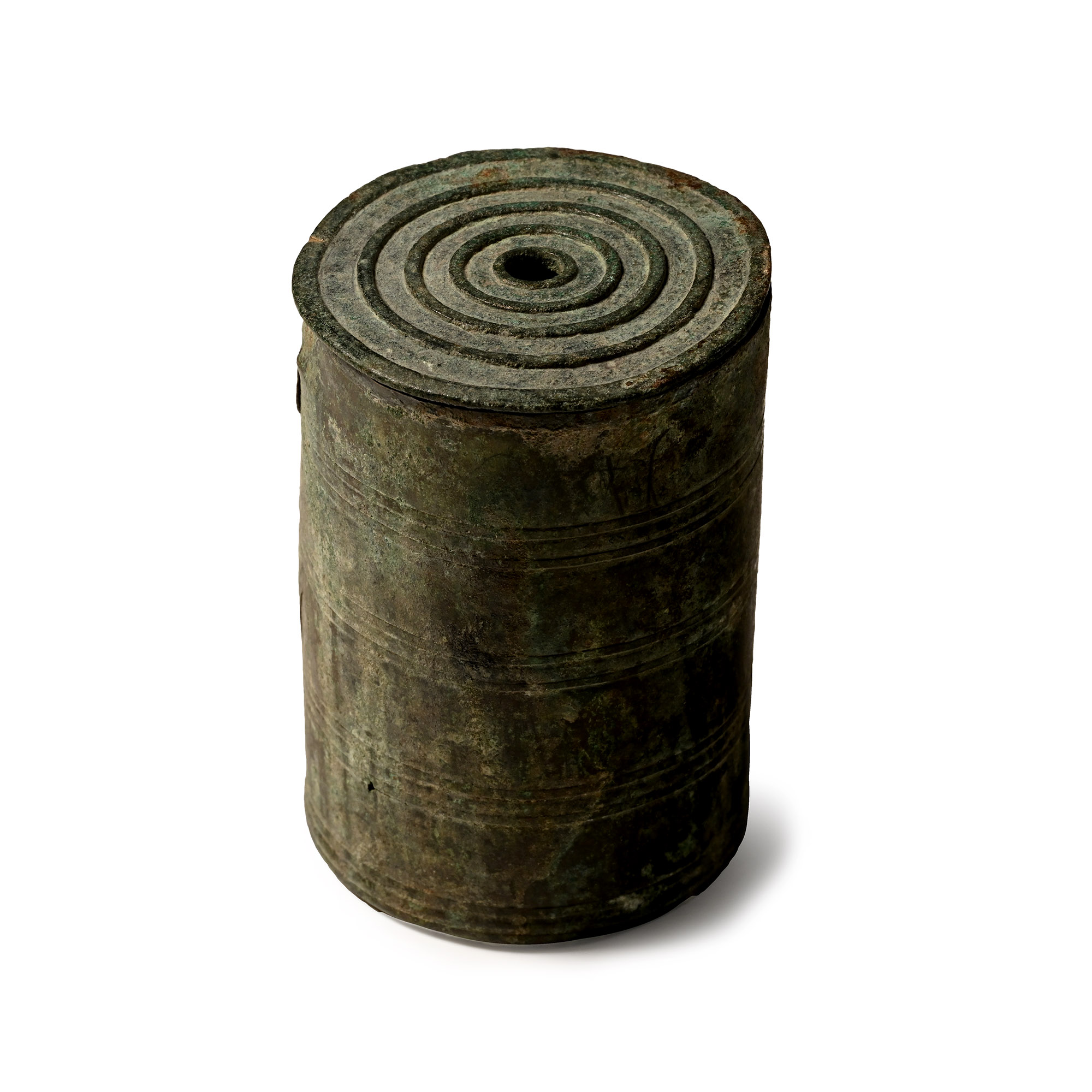
Roman Sheet Bronze Lidded Pyxis
2ND-3RD CENTURY A.D.
2 1/4 in. (32 grams, 59 mm high).
Tubular in construction with concentric rings to base and in groups on the sidewall, lid with rings and central vent. [No Reserve]
ProvenanceAcquired from Alan Cherry, Bournemouth, UK, circa 2006.
Ian Wilkinson collection, Nottinghamshire, UK, formed since 1985.
This lot is accompanied by an illustrated lot declaration signed by the Head of the Antiquities Department, Dr Raffaele D’Amato.
See Cipriano, S., 'L’inumazione ad Altino in età alto e medio-imperiale,' in Rivista di Archeologia, XXXVI, 2012, pp.97-118.
CONDITIONTimeLine Auctions follows a vetting process to ensure the authenticity and legality of all items, reinforcing our commitment to integrity and responsible trading. Each antiquity, antique, and coin lot undergoes thorough examination by a vetting committee of at least ten external specialists, professional trade association members, scientists, and archaeologists: Our Vetting Process
AUCTIONS:
TimeLine is a leading auction house specialising in antiquities, ancient art, collectables, natural history, coins, medals, and books. Our auctions offer museums, collectors, historians, and enthusiasts the opportunity to acquire unique and historically significant pieces.
-
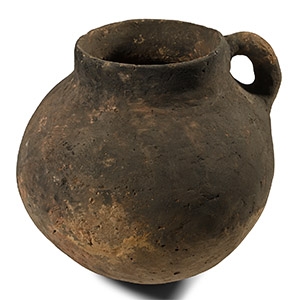
Roman Round-Bottomed Terracotta Jar
1st-4th century A.D.Sold for (Inc. bp): £130
With bulbous body and broad shoulder, low neck, loop handle; domestic ware. 1.15 kg, 17.5 cm high
From a London, UK, gentleman's collection of ancient pottery and artefacts, 1990s. This lot is accompanied by an illustrated lot declaration signed by the Head of the Antiquities Department, Dr Raffaele D’Amato. -
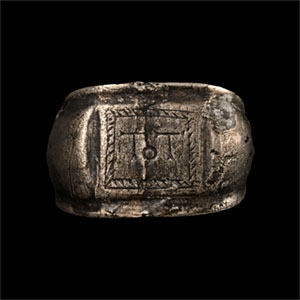
Roman Silver 'TOT' Toutatis Ring
1st-2nd century A.D.Sold for (Inc. bp): £624
With a wide, grooved hoop expanding at the shoulders, rectangular plaque with ropework border enclosing amuletic inscription 'ToT, an abbreviation for the name of the Celtic god Toutatis. 5.02 grams, 23.37 mm overall, 19.65 mm internal diameter (approximate size British P, USA 7 1/2, Europe 16.23, Japan 15)
Ex private collection, 1970s. Property of a Nottinghamshire gentleman. This lot is accompanied by an illustrated lot declaration signed by the Head of the Antiquities Department, Dr Raffaele D’Amato.
A number of rings have been found in eastern Roman Britain inscribed with the word TOT. It is thought that they refer to the Celtic deity Toutatis, later associated by the Romans with Mars and Mercury. The rings have been found mainly in the area corresponding to the native British tribe of the Corieltauvi who may have worshipped Toutatis as their primary tribal deity. The likelihood of the presence of his cult is strengthened by several inscriptions found in Britain mentioning this deity. However, his origin may be sought in the religion of the Continental Celtae, as the Roman writer Lucan in the 1st century AD mentioned the worship of 'Teutatis' together with two other deities, Esus and Taranis. -
.jpg)
Roman Bronze Ring with Bust
3rd-4th century A.D.Sold for (Inc. bp): £104
Square bezel with beaded border, profile bust with vexillum. 2.12 grams, 22.18 mm overall, 20.22 mm internal diameter (approximate size British T, USA 9 1/2, Europe 21.26, Japan 20)
Acquired on the London art market in the late 1980s-1990s. From the family collection of an East London, UK, gentleman. This lot is accompanied by an illustrated lot declaration signed by the Head of the Antiquities Department, Dr Raffaele D’Amato.
