
Loading, please wait...
LOT 0193
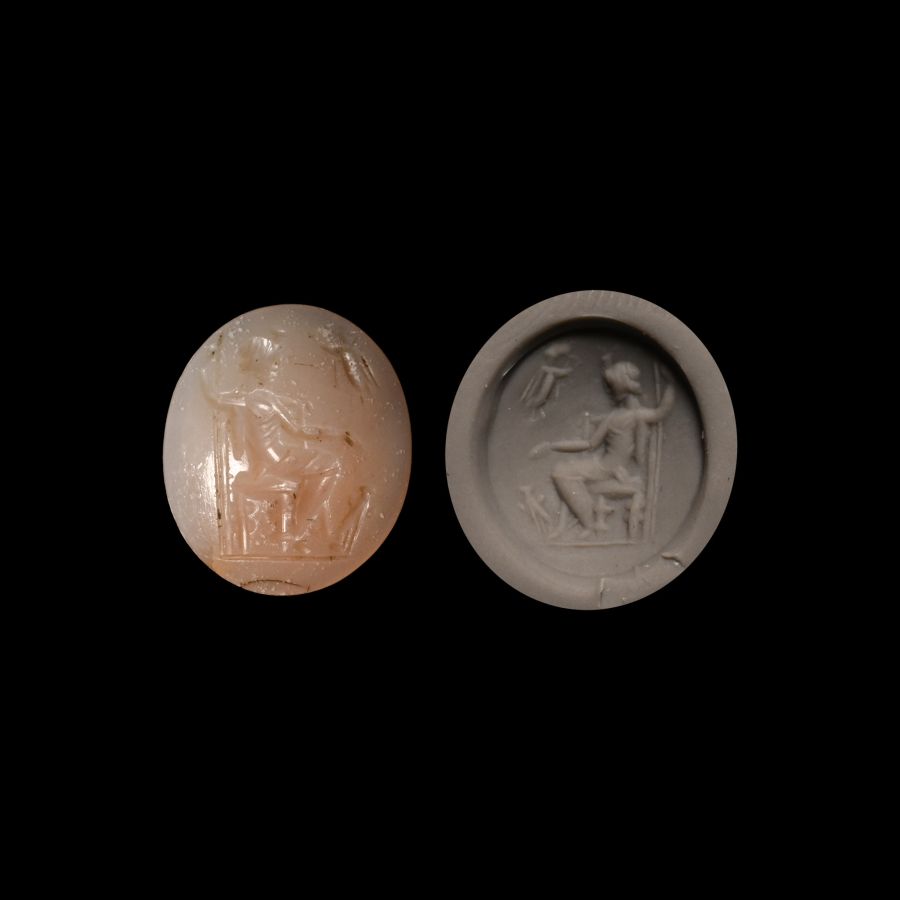
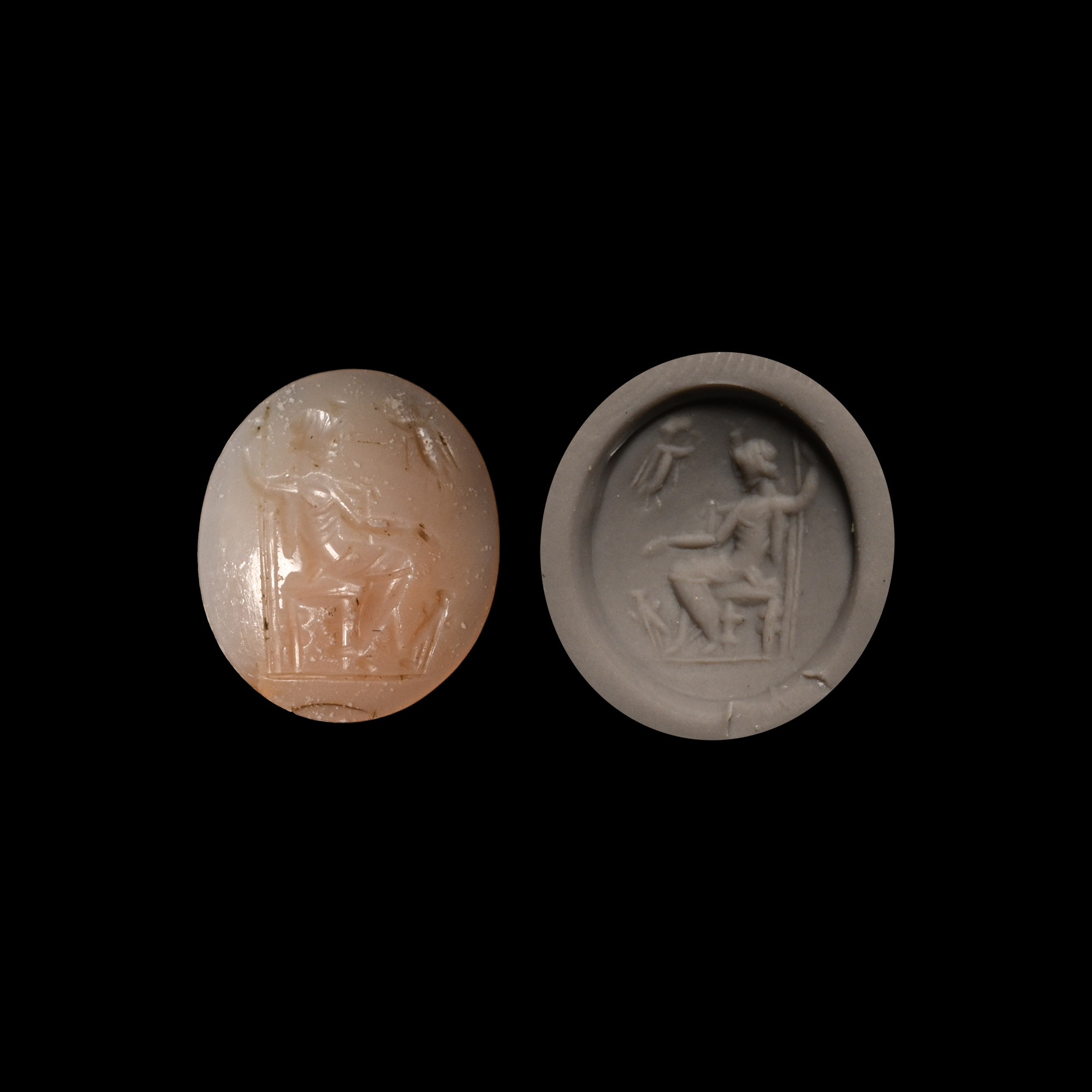
Roman Serapis Gemstone
CIRCA 1ST-2ND CENTURY A.D.
1/2 in. (0.81 grams, 12 mm).
With intaglio image of Serapis seated holding his spear, birds in the field; supplied with a museum-quality impression.
ProvenanceFrom the collection of a Swiss gentleman formed in Europe from 1970-1980s; thence by descent from the family in London.
CONDITIONTimeLine Auctions follows a vetting process to ensure the authenticity and legality of all items, reinforcing our commitment to integrity and responsible trading. Each antiquity, antique, and coin lot undergoes thorough examination by a vetting committee of at least ten external specialists, professional trade association members, scientists, and archaeologists: Our Vetting Process
AUCTIONS:
TimeLine is a leading auction house specialising in antiquities, ancient art, collectables, natural history, coins, medals, and books. Our auctions offer museums, collectors, historians, and enthusiasts the opportunity to acquire unique and historically significant pieces.
LOT 0193
Roman Serapis Gemstone
Estimate £500 - 700€580 - 810 (for guidance only)$680 - 950 (for guidance only)
-
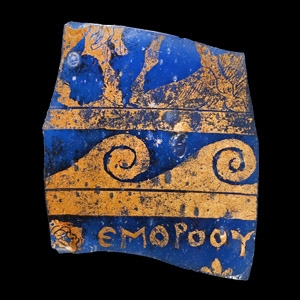
Roman Gold Foiled Glass with Inscription
4th century A.D.Sold for (Inc. bp): £338
Fragment of dark blue glass with applied gold-foil decoration: figural scene above a band of running scrolls; Greek script legend 'ЄΜΟΡΟΟΥ[...]'. 2.19 grams, 25 mm
From a European collection, 1970s.
The fragment has a shallow curvature as if it was once part of a large drinking vessel. The Greek text 'εμορο ογ' appears to be derived from the verb εἵμαρται 'to be fatal' or 'to be destined by fate', so '[it was] not fatal'. -
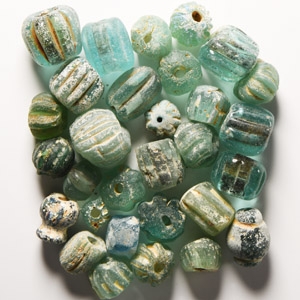
Roman Turquoise Blue Glass Melon and Other Bead Collection
1st-2nd century A.D.Sold for (Inc. bp): £208
Comprising mainly melon-shaped beads, one collared bead, including some Hebron glass. 101 grams total, 10-20 mm
UK gallery, early 2000s. -
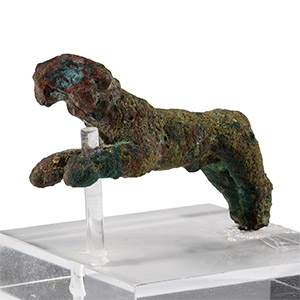
Roman Bronze Panther Statuette
Circa 3rd-4th century A.D.Sold for (Inc. bp): £124
Depicted in a leaping pose with the beast's foreleg extended and the head turned slightly right with open jaws; mounted on a custom-made display stand. 53.6 grams total, 47 mm including stand
Found near Newark/Lincoln, Nottinghamshire, UK. Acquired from Ancient & Oriental, Nottingham, UK, 2002. Property of a Nottinghamshire gentleman.
