
Loading, please wait...
LOT 0183
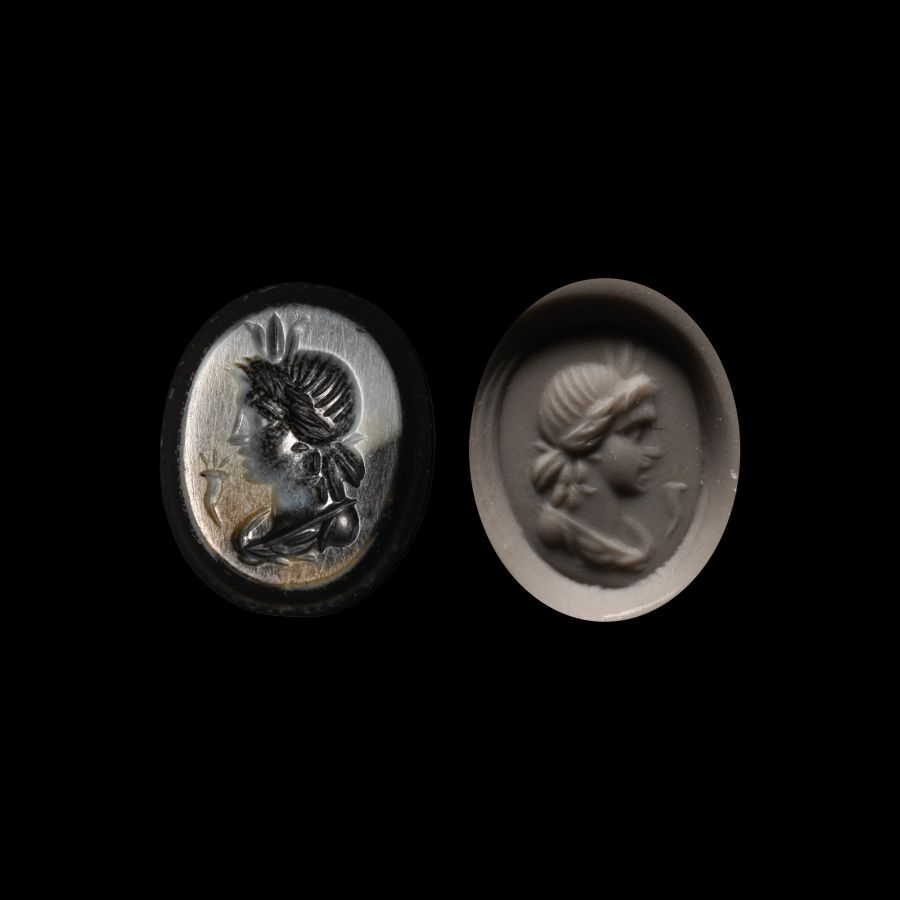
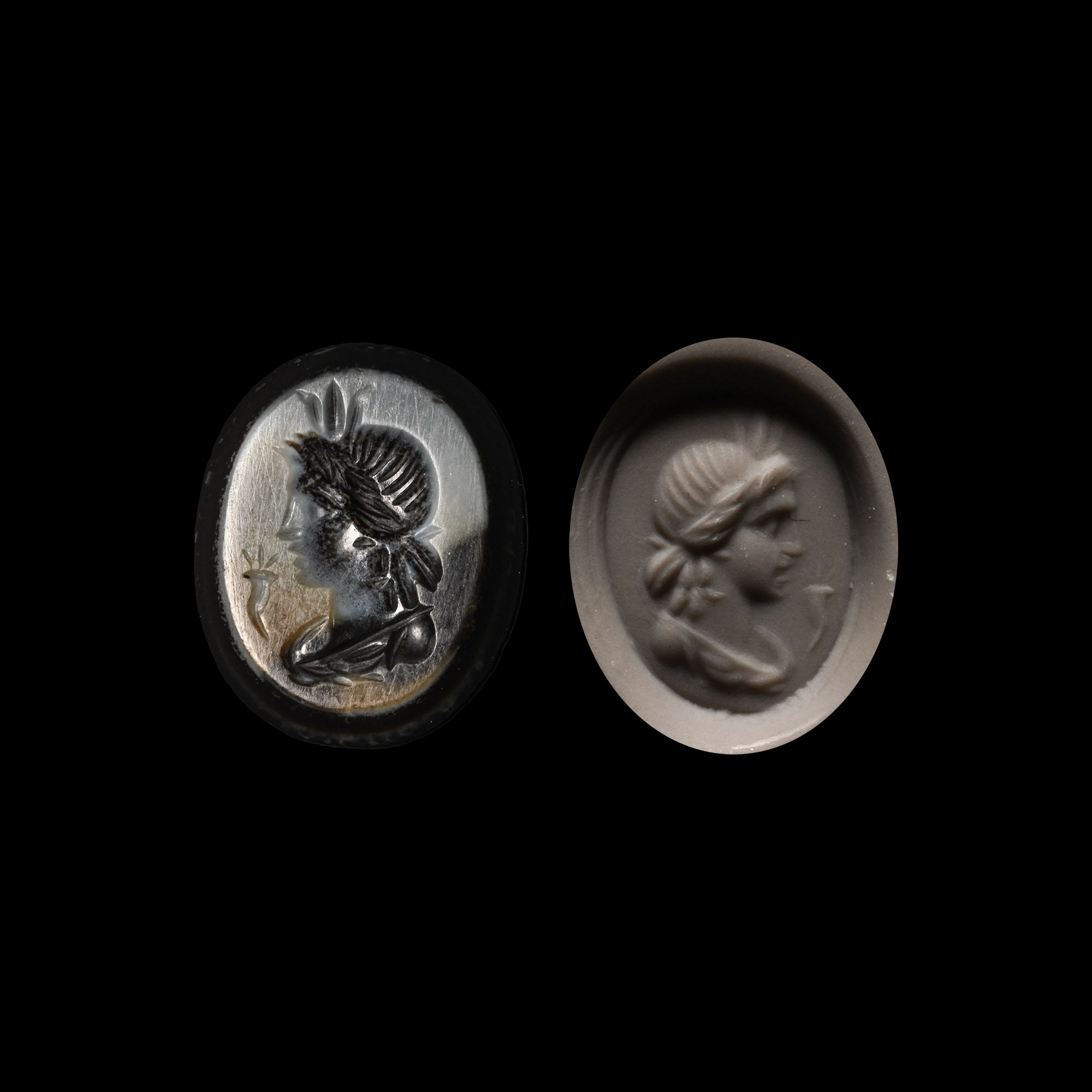
Roman Sardonyx Isis Gemstone
CIRCA 1ST-2ND CENTURY A.D.
1/2 in. (0.91 grams, 14 mm).
With intaglio profile bust of Isis with Hathor crown and cornucopia; supplied with a museum-quality impression.
ProvenanceFrom the collection of a Swiss gentleman formed in Europe from 1970-1980s; thence by descent from the family in London.
CONDITIONTimeLine Auctions follows a vetting process to ensure the authenticity and legality of all items, reinforcing our commitment to integrity and responsible trading. Each antiquity, antique, and coin lot undergoes thorough examination by a vetting committee of at least ten external specialists, professional trade association members, scientists, and archaeologists: Our Vetting Process
AUCTIONS:
TimeLine is a leading auction house specialising in antiquities, ancient art, collectables, natural history, coins, medals, and books. Our auctions offer museums, collectors, historians, and enthusiasts the opportunity to acquire unique and historically significant pieces.
-
.jpg)
Roman 'The Wakefield' Bronze Founding of Rome Commemorative Military Phalera
1st century B.C.-1st century A.D.Estimate: £1,000 - 1,400 (+bp*)
Opening Bid: £500
With high-relief image depicting a she-wolf in profile advancing beneath a tree, with an infant or boy (Romulus?) on its back, nude and looking up towards the tree. 39 grams, 62 mm
Mostly intact, good condition.
Believed to have been found in Wakefield, UK, in the 1960s. From the Roman 'Invasion Period' private collection of Brian Riley, Wakefield, UK, 1960s-2007. Acquired from Brian Riley, Yorkshire, UK, circa 2007. Property of a Stowmarket, UK, gentleman. Accompanied by an academic report by Dr Raffaele D’Amato.
Military phalerae usually depicted heads of the gods, spirits of the underworld, birds and lions. The higher officers in the Roman army had the custom of wearing a rich suite of phalerae with its straps directly attached to leather garments or doublets, worn over their armour. These decorations were awarded in sets, commonly of nine, although sources confirm that this was not an always the case. -
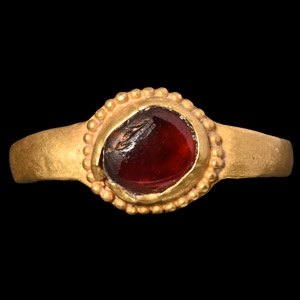
Roman Gold Ring with Garnet
3rd-4th century A.D.Sold for (Inc. bp): £416
Comprising a slender hoop with discoid bezel and central cell surrounded by a beaded wire collar, inset garnet cabochon 1.56 grams, 17.01 mm overall, 13.30 x 15.50 mm internal diameter (approximate size British G, USA 3 1/4, Europe 4.92, Japan 4)
From a late Japanese specialist collector, 1970-2000s. -
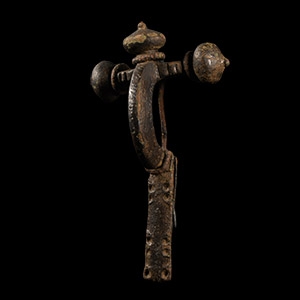
Roman 'Midlands' Bronze Decorated Crossbow Brooch
4th-5th century A.D.Sold for (Inc. bp): £169
With onion-knop terminals, carinated bow with linear decoration and a separate collar to the base of the bow; wide footplate with pellet decoration; catch-plate and repaired pin to the reverse. 78.6 grams, 92 mm
Found UK. Acquired from Stonegate Antiques, York, 2008. Property of a Nottinghamshire gentleman.
