
Loading, please wait...
_900x900.jpg "Roman Sardonyx Gemstone in Silver Ring")
_200x200.jpg "Roman Sardonyx Gemstone in Silver Ring")


.jpg "Roman Sardonyx Gemstone in Silver Ring")
LOT 0179
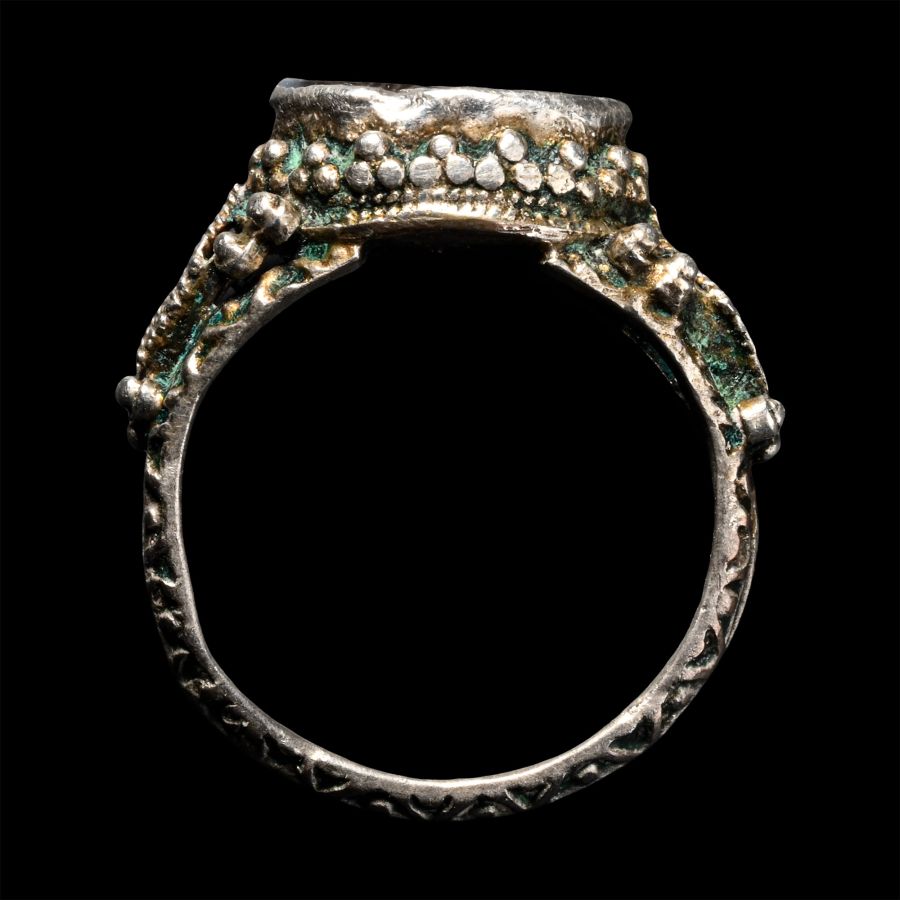
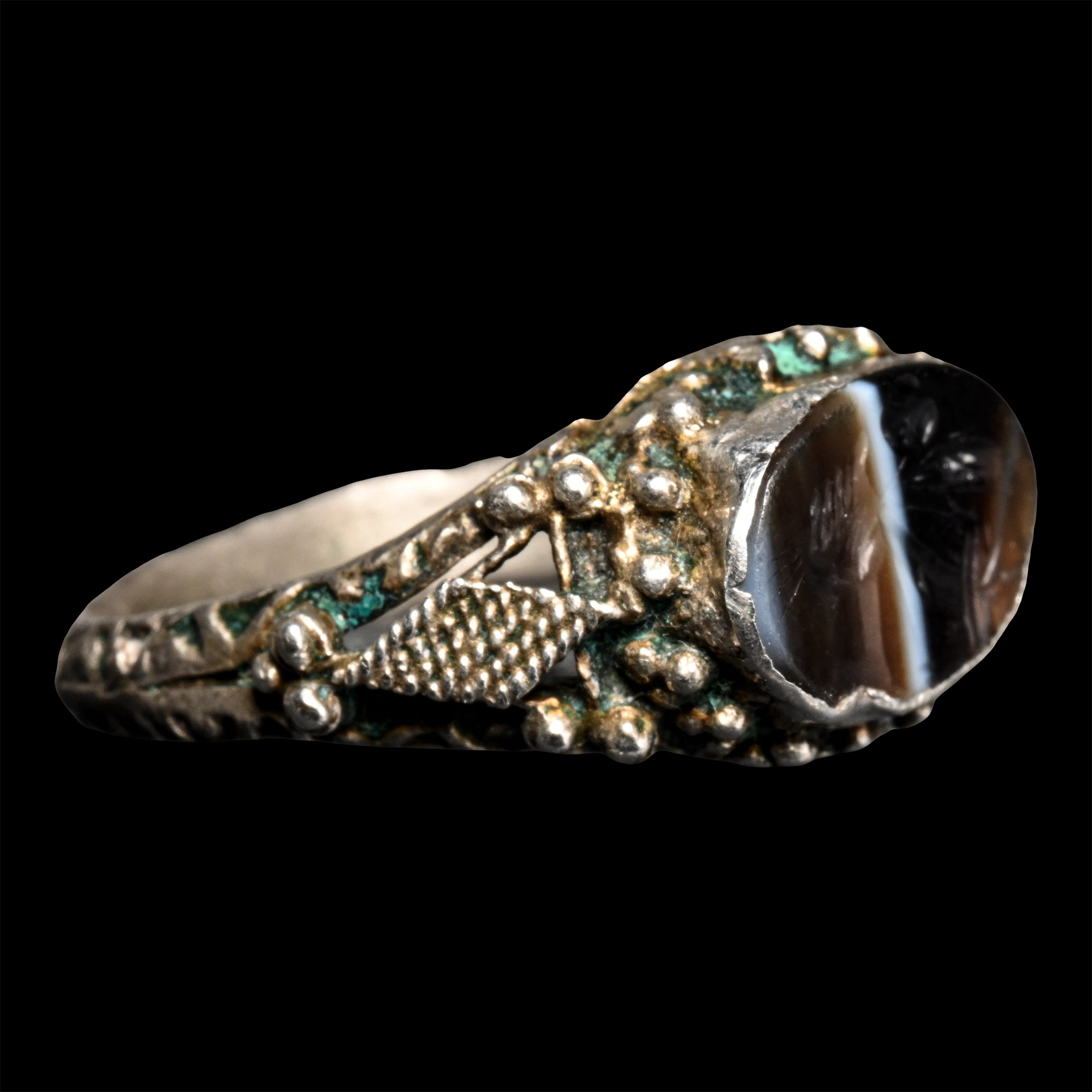
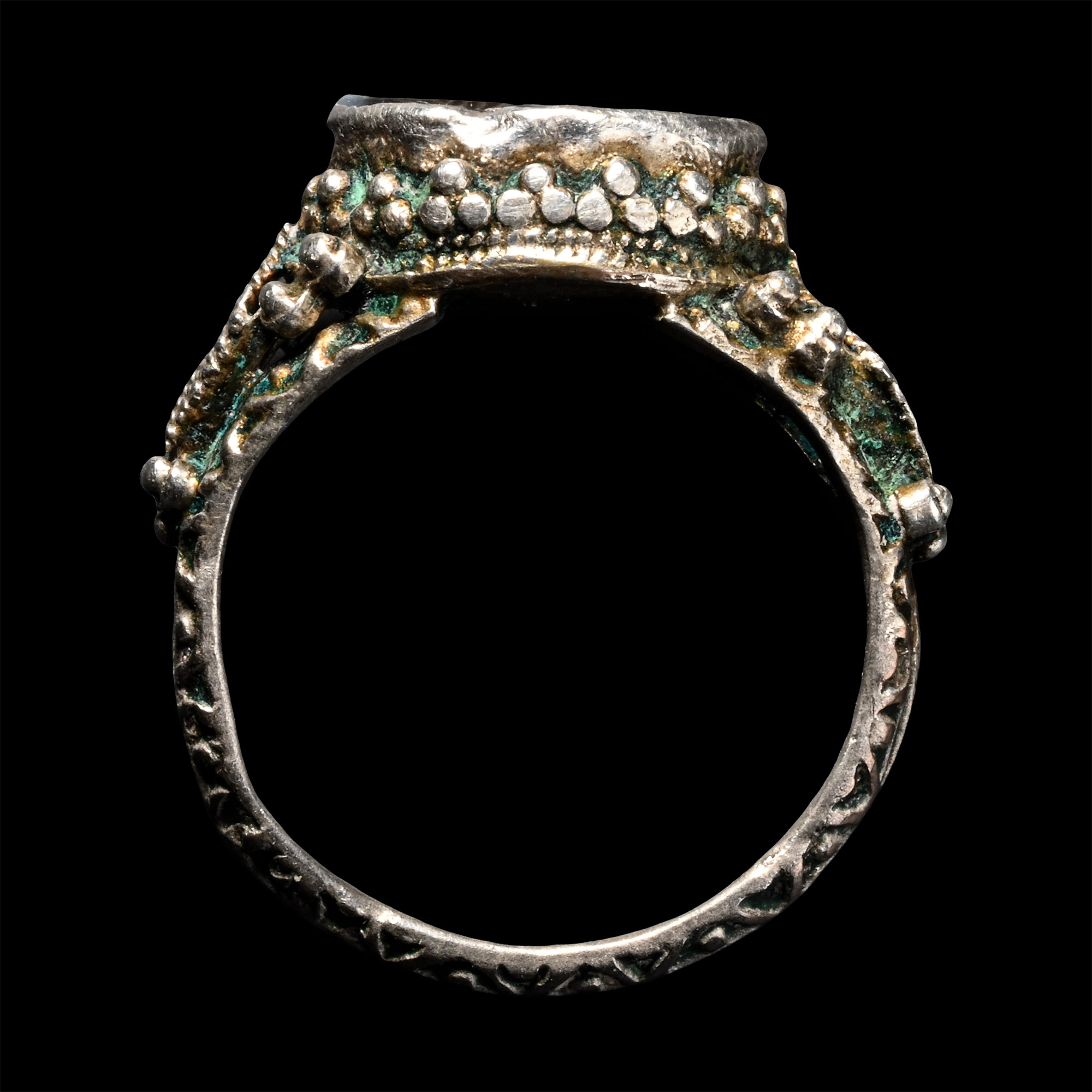
Roman Sardonyx Gemstone in Silver Ring
1ST CENTURY B.C.
1 in. (3.37 grams, 23.00 mm overall, 16.66 mm internal diameter (approximate size British L 1/2, USA 6, Europe 11.87, Japan 11)).
An oval intaglio showing a hand with summum bonum: cornucopia and poppy ear, set in a later ring with granulation; supplied with a museum-quality impression.
ProvenanceAcquired on the European art market.
CONDITIONTimeLine Auctions follows a vetting process to ensure the authenticity and legality of all items, reinforcing our commitment to integrity and responsible trading. Each antiquity, antique, and coin lot undergoes thorough examination by a vetting committee of at least ten external specialists, professional trade association members, scientists, and archaeologists: Our Vetting Process
AUCTIONS:
TimeLine is a leading auction house specialising in antiquities, ancient art, collectables, natural history, coins, medals, and books. Our auctions offer museums, collectors, historians, and enthusiasts the opportunity to acquire unique and historically significant pieces.
LOT 0179
Roman Sardonyx Gemstone in Silver Ring
Estimate £400 - 600€460 - 700 (for guidance only)$540 - 810 (for guidance only)
-
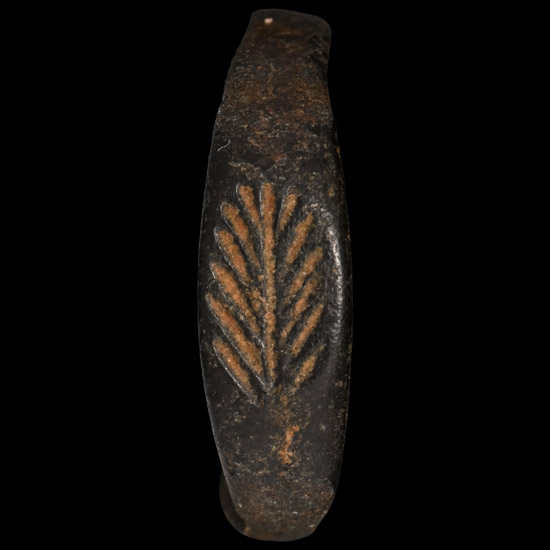
Roman Bronze Ring with Palm Branch
3rd-4th century A.D.Sold for (Inc. bp): £72
Featuring a flat-section hoop and a narrow bezel with a palm leaf. 1.12 grams, 17.64 mm overall, 15.62 mm internal diameter (approximate size British H 1/2, USA 4, Europe 6.81, Japan 6)
From the private collection of a European gentleman (1942-2024), formed since the 1970s. -
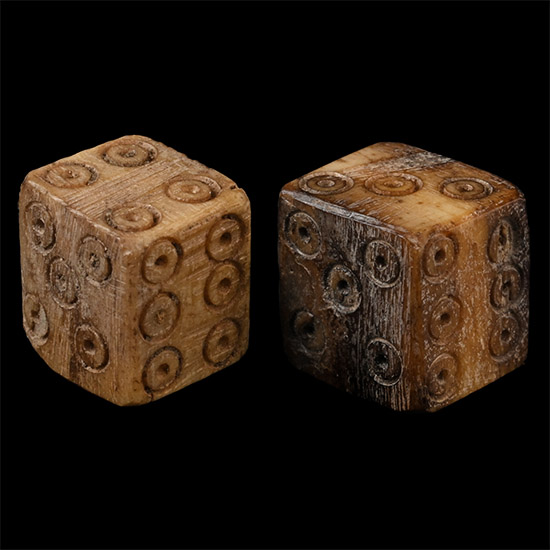
Roman Bone Gaming Dice Pair
Circa 1st-4th century A.D.Sold for (Inc. bp): £286
Two cuboid dice with ring-and-dot markings disposed 1:6,2:5, 3:4. 2.31 grams total, 8-9 mm
Ex gentleman collector of antique and antiquity games from Berkshire, UK, having collected for over 20 years. -
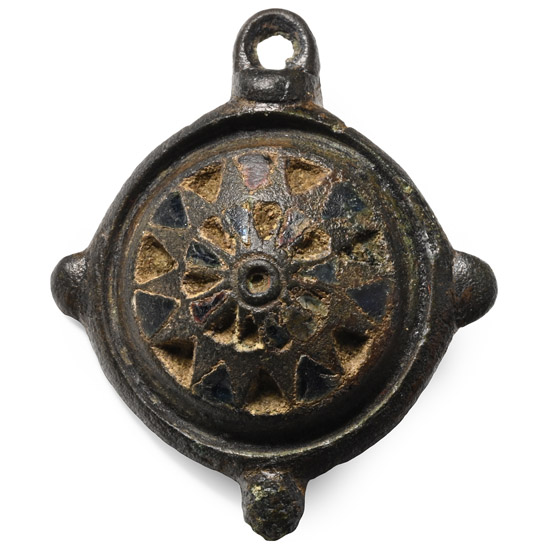
Roman Enamelled Bronze Umbonate Brooch
2nd century A.D.Sold for (Inc. bp): £104
Domed body decorated with two concentric circles of narrow, inward-pointing triangles with traces of blue enamel, small bosses and a loop to the outer rim; pin-lugs and a pin on the reverse, and an inked collector's number 'L1986.3 109'. 7.9 grams, 33 mm
From the private coin collection of a West London, UK, gentleman, formed since the mid 1980s.
