
Loading, please wait...
LOT 0018
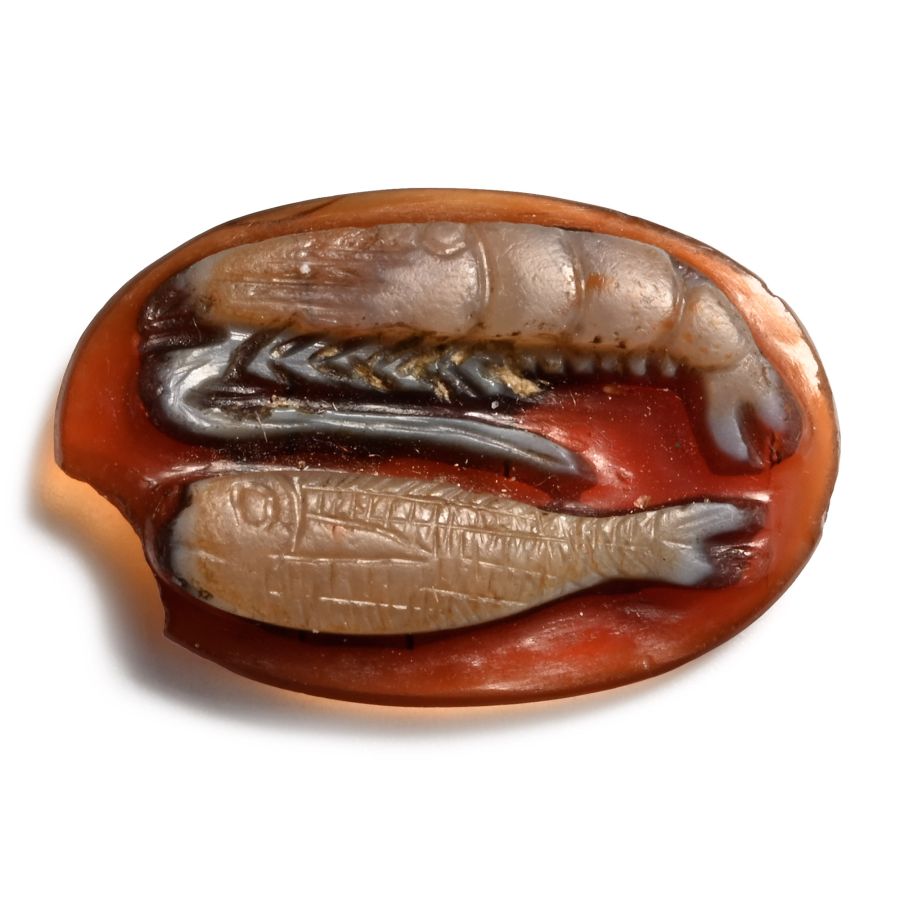
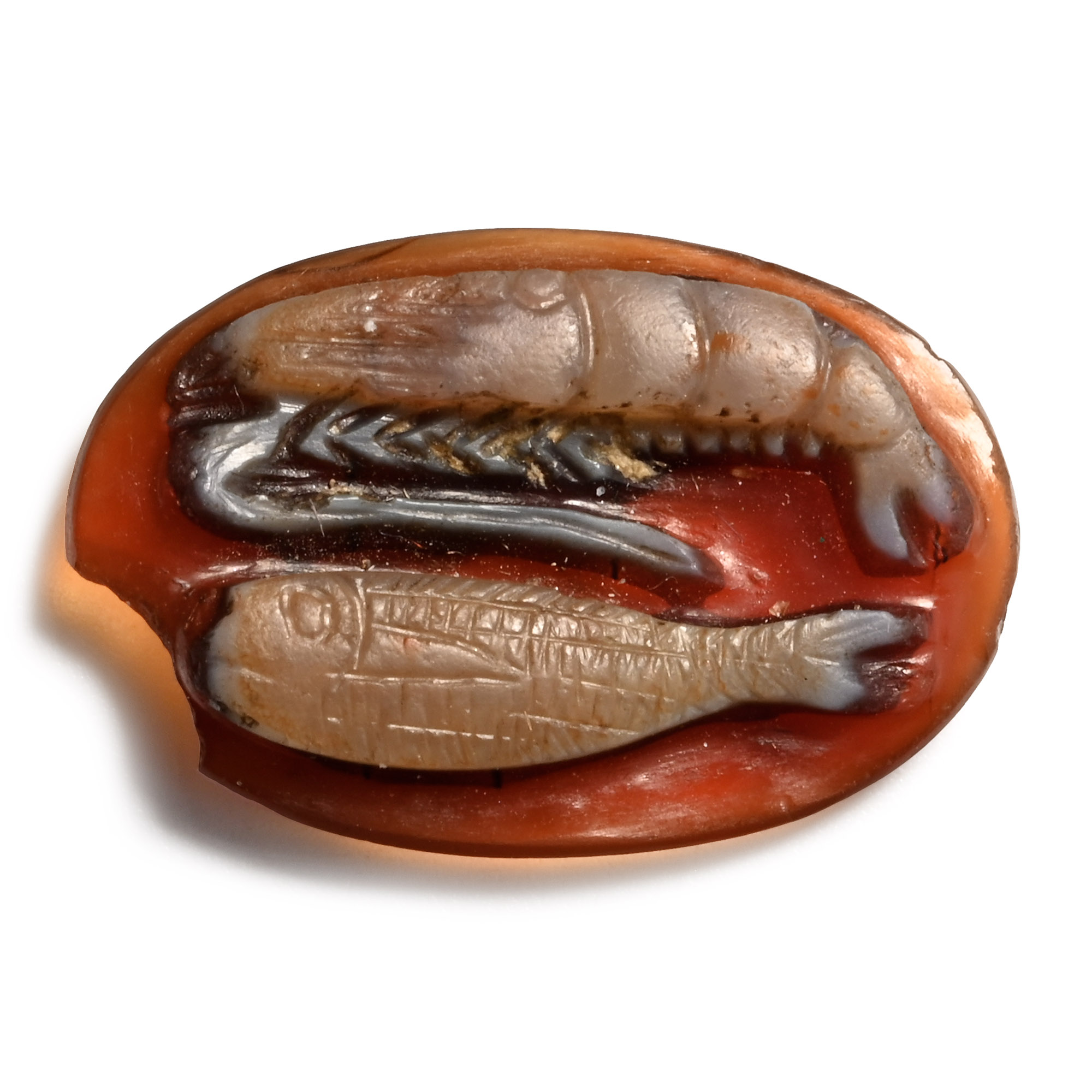
Roman Sardonyx Cameo of Fish and Shrimp
2ND-4TH CENTURY A.D.
5/8 in. (0.90 grams, 17 mm).
Ellipsoid plaque with reserved fish with scale detailing to the flank, shrimp with segmented body.
ProvenancePrivate English collection, formed between the late 1970s and early 1990s.
Private collection, London, UK.
TimeLine Auctions follows a vetting process to ensure the authenticity and legality of all items, reinforcing our commitment to integrity and responsible trading. Each antiquity, antique, and coin lot undergoes thorough examination by a vetting committee of at least ten external specialists, professional trade association members, scientists, and archaeologists: Our Vetting Process
AUCTIONS:
TimeLine is a leading auction house specialising in antiquities, ancient art, collectables, natural history, coins, medals, and books. Our auctions offer museums, collectors, historians, and enthusiasts the opportunity to acquire unique and historically significant pieces.
-

Roman Banded Agate 'Eye' Pendant Inlay
1st century B.C.-1st century A.D.Sold for (Inc. bp): £130
Conical in section with flat top; repaired. 10.6 grams, 33 mm
Acquired by the previous owner, 1970s. Private collection, England. -
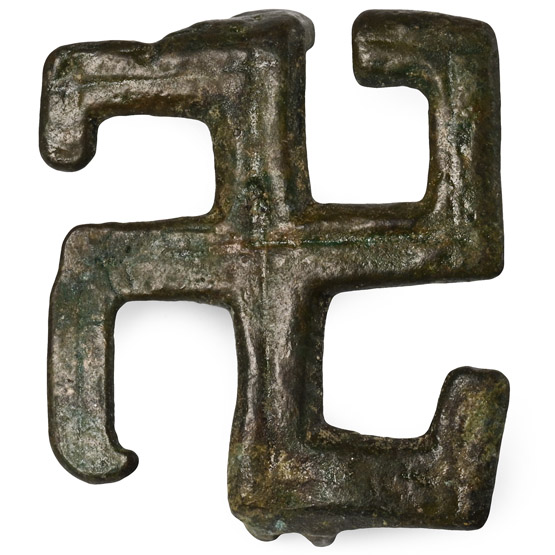
Roman Bronze Fylfot Brooch
4th century A.D. or laterSold for (Inc. bp): £85
Plate brooch formed as a gammadion with four spurs at the hub, hinged pin and catch to the reverse. 8.19 grams, 32 mm
Ex German art market, 2000s. Acquired from an EU collector living in London. From the collection of a Surrey, UK, gentleman. -

Roman Agate Gemstone with Minerva Holding Nike in Gold Ring
2nd century A.D.Sold for (Inc. bp): £1,300
Intaglio image of Minerva standing on a baseline holding spear and shield, supporting a victoriola in her extended hand; set into a later gold ring; supplied with a museum-quality impression. 7.59 grams, 27.22 mm overall, 18.18 mm internal diameter (approximate size British P, USA 7 1/2, Europe 16.23, Japan 15)
Private collection, Europe. Acquired on the English art market.
The specimen of agate used by the engraver was undoubtedly used for its apotropaic ‘eye’ like qualities, which were used as amulets for protection against the evil eye.
