
Loading, please wait...
LOT 0876
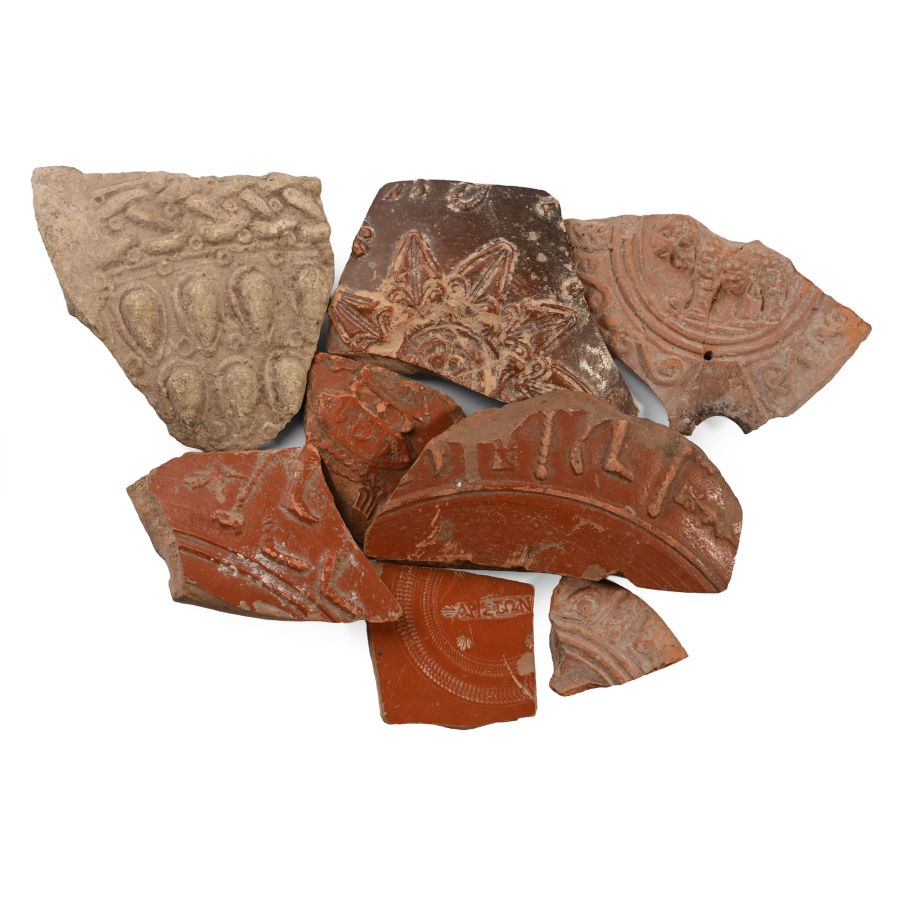
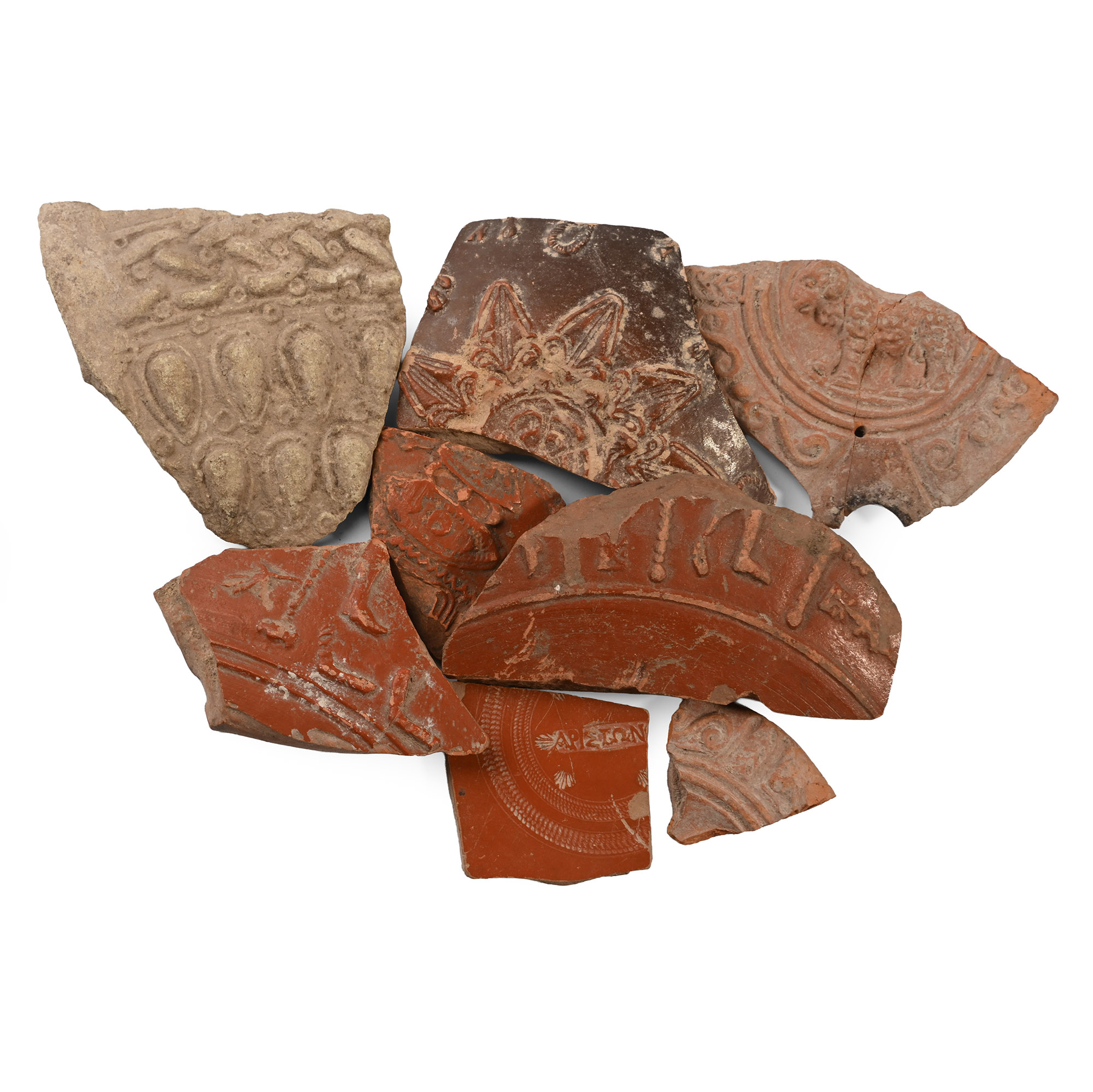
Roman Samian Ware and Other Pottery Collection
3RD-4TH CENTURY A.D.
1 1/2 - 3 1/4 in. (144 grams total, 38-82 mm).
Comprising: an oil lamp discus with a standing ram; a Samian ware fragment with maker's mark; and other fragments with low-relief decoration. [7, No Reserve]
ProvenanceFrom a deceased estate, UK.
Acquired on the UK art market.
This lot is accompanied by an illustrated lot declaration signed by the Head of the Antiquities Department, Dr Raffaele D'Amato.
Cf. similar fragments in Ridgeway, V., Taylor, J., Biddulph, E., A Bath House, Settlement and Industry on Roman Southwark‘s North Island: Excavations along the route of Thameslink Borough Viaduct and at London Bridge Station London, 2019, figs.A5,A8,A9,A10.
FootnotesOne of the pottery of this collection reports the Greek name APIΣΤΩΝ (Ariston), maybe the producer of the vessel. Another one shows an aries (ram), animal sacred to the war god Mars. One of the fragments is decorated by ‘ovuli’, typical ornamentation of the Samian pottery.
CONDITIONTimeLine Auctions follows a vetting process to ensure the authenticity and legality of all items, reinforcing our commitment to integrity and responsible trading. Each antiquity, antique, and coin lot undergoes thorough examination by a vetting committee of at least ten external specialists, professional trade association members, scientists, and archaeologists: Our Vetting Process
AUCTIONS:
TimeLine is a leading auction house specialising in antiquities, ancient art, collectables, natural history, coins, medals, and books. Our auctions offer museums, collectors, historians, and enthusiasts the opportunity to acquire unique and historically significant pieces.
-
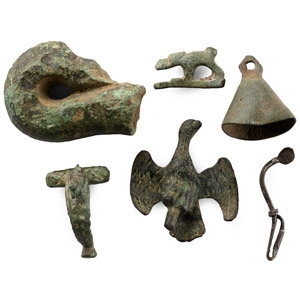
Roman Bronze Artefact Collection
1st-4th century A.D.Sold for (Inc. bp): £59
Comprising: an eagle statuette; a bell; a dog-shaped knife pommel; two brooch fragments; a furniture mount in the shape of a swan head. 161 grams total, 25-48 mm
Acquired on the UK art market. Property of an East Anglia, UK, gentleman. This lot is accompanied by an illustrated lot declaration signed by the Head of the Antiquities Department, Dr Raffaele D'Amato. -
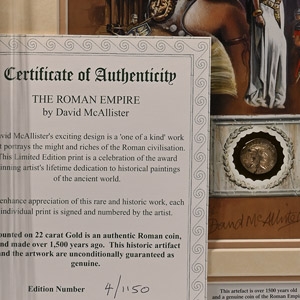
Silver Roman Coin and Framed Limited Edition Print
3rd century A.D. and laterSold for (Inc. bp): £52
The coin of Constantine the Great (272-337 A.D.) mounted on 22 carat gold foil, framed with an art print signed by the artist David McAllister, depicting scenes of Roman military activity; limited edition number 4/1150. 1.26 kg, 49.5 x 37.5 cm
UK gallery, early 2000s. Accompanied by a previous certificate of authenticity. This lot is accompanied by an illustrated lot declaration signed by the Head of the Antiquities Department, Dr Raffaele D'Amato.
David McAllister's exciting design is a 'one of a kind' work that portrays the might and riches of the Roman civilisation. This limited edition print is a celebration of the award winning artist's lifetime dedication to historical paintings of the ancient world. To enhance appreciation of this rare and historic work, each individual print is signed and numbered by the artist. -
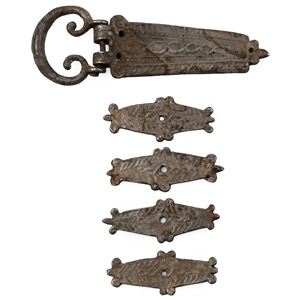
Roman Silver Military Belt Buckle with Mounts
2nd-3rd century A.D.Sold for (Inc. bp): £234
Comprising: triangular buckle plate with median guilloche between hatched bands, scrolled loop; four lozengiform plaques, each with hatched border and median guilloche. 32.6 grams total, 36-79 mm
Ex German art market, 2000s. Acquired from an EU collector living in London. From the collection of a Surrey, UK, gentleman. This lot is accompanied by an illustrated lot declaration signed by the Head of the Antiquities Department, Dr Raffaele D'Amato.
