
Loading, please wait...
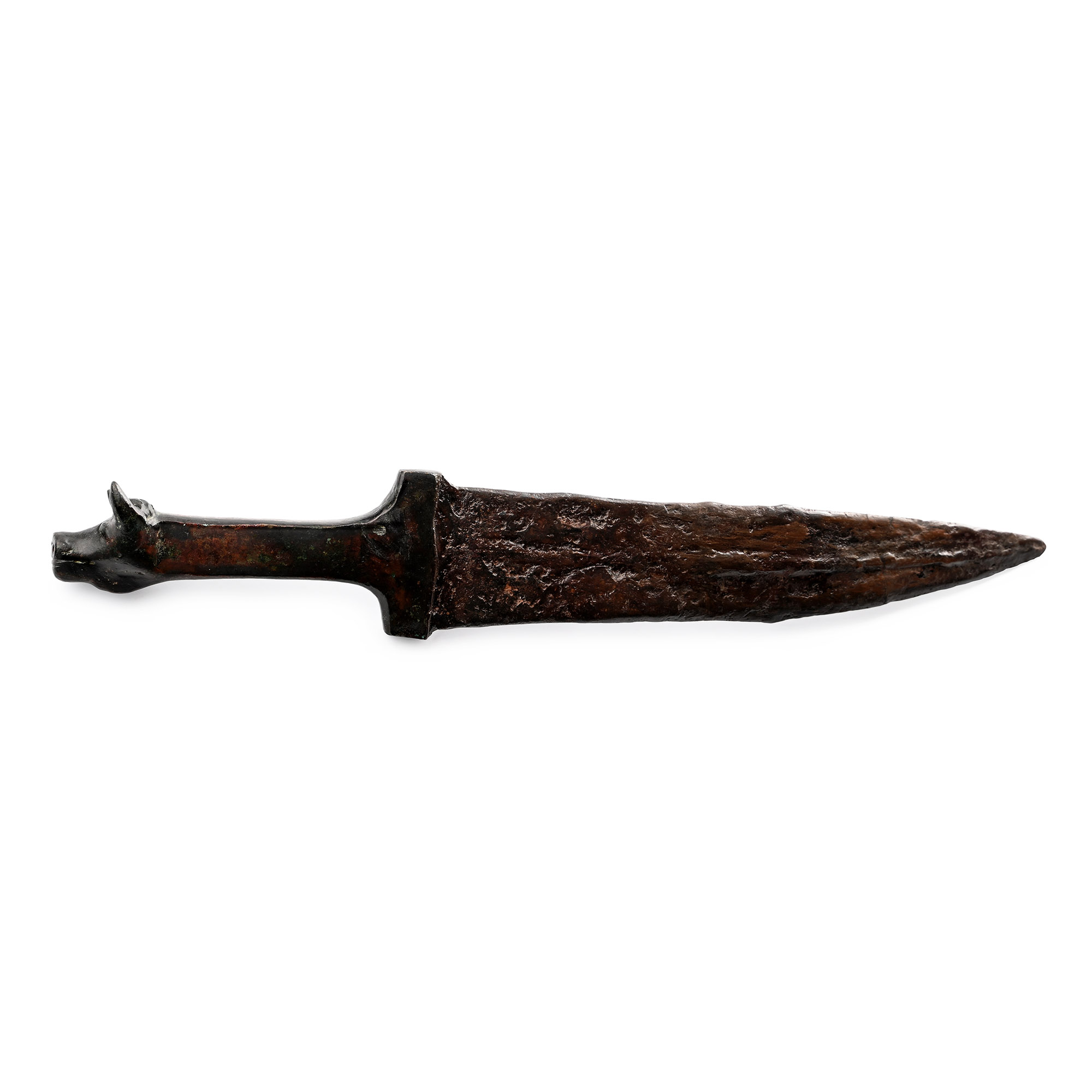
LOT 0896
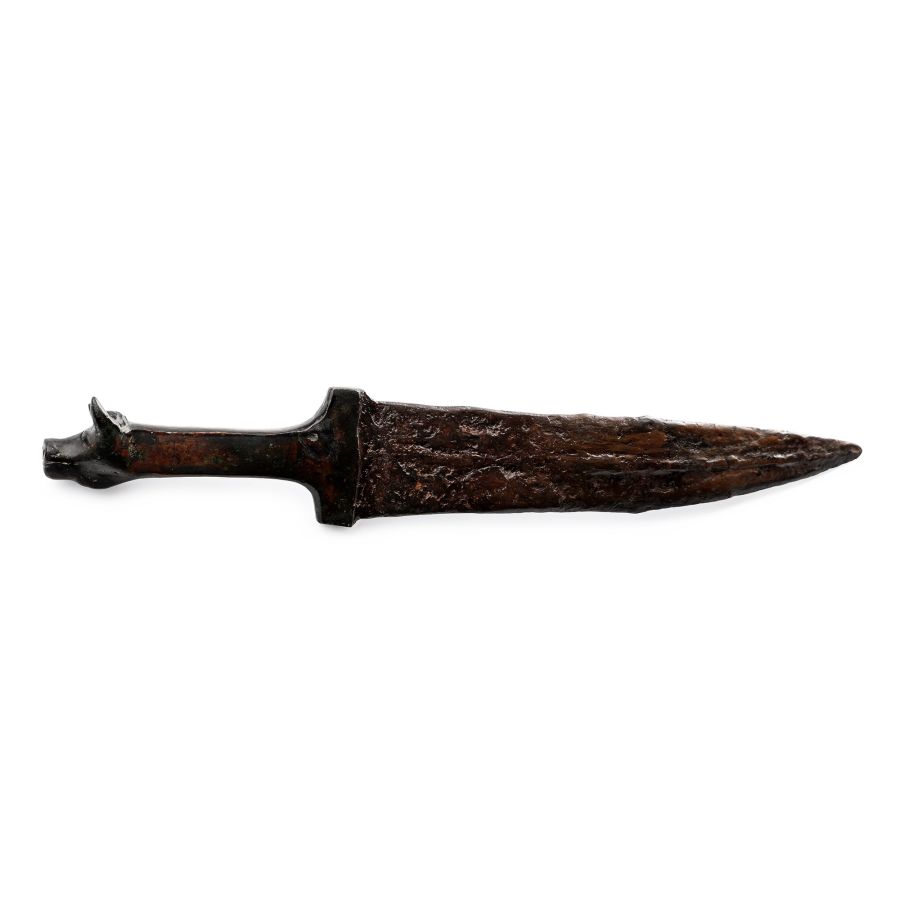
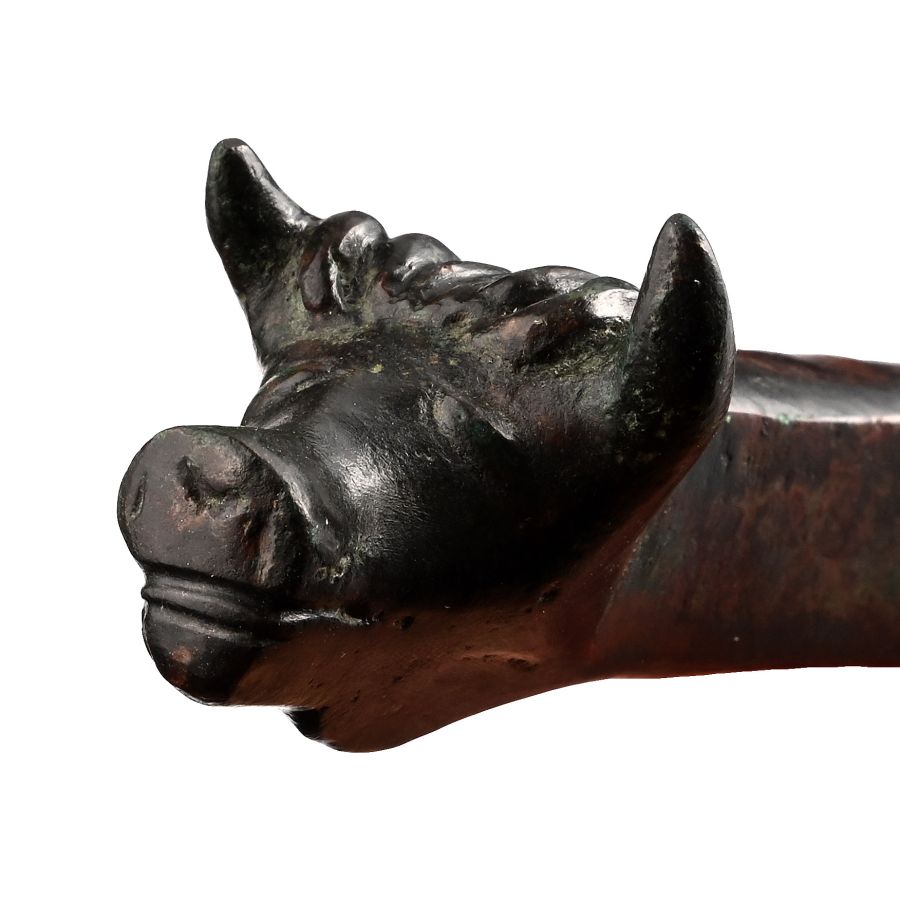
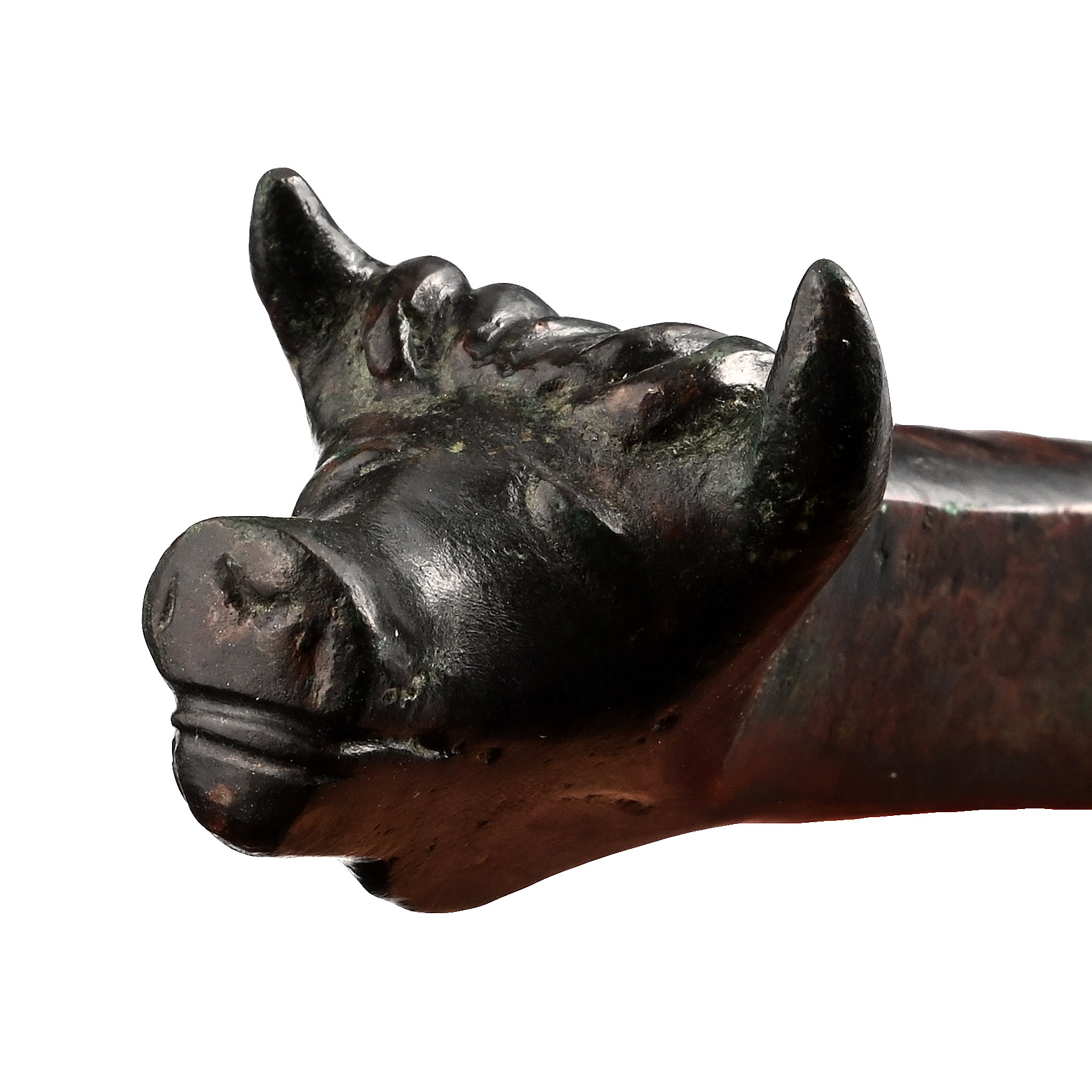
Roman Sacrificial Iron Dagger with Bronze Bull-Headed Hilt
1ST-2ND CENTURY A.D.
11 in. (218 grams, 28 cm).
Comprising a single-edged triangular blade, with midrib; integral baluster and grip with bull-head finial; the blade tip restored.
ProvenanceEx German art market, 2000s.
Acquired from an EU collector living in London.
From the collection of a Surrey, UK, gentleman.
This lot is accompanied by an illustrated lot declaration signed by the Head of the Antiquities Department, Dr Raffaele D'Amato.
TimeLine Auctions follows a vetting process to ensure the authenticity and legality of all items, reinforcing our commitment to integrity and responsible trading. Each antiquity, antique, and coin lot undergoes thorough examination by a vetting committee of at least ten external specialists, professional trade association members, scientists, and archaeologists: Our Vetting Process
AUCTIONS:
TimeLine is a leading auction house specialising in antiquities, ancient art, collectables, natural history, coins, medals, and books. Our auctions offer museums, collectors, historians, and enthusiasts the opportunity to acquire unique and historically significant pieces.
LOT 0896
Roman Sacrificial Iron Dagger with Bronze Bull-Headed Hilt
Sold for (Inc. bp): £1,105
-
.jpg)
Roman Green Glazed Terracotta Cup with Signature
1st-2nd century A.D.Sold for (Inc. bp): £3,380
Barrel-shaped in profile with low flared foot, stepped inner rim, two loop handles below the rim with palmette detailing; sidewall with applied motifs: clusters of discs, rosette, seated bearded man in long robe, winged female in profile, human foot - one with neatly incised retrograde legend '[T]POKOΛ' (abbreviated maker's name). 273 grams, 16.2 cm
UK private collection before 2000. Acquired on the UK art market. Private collection, London, UK. This lot has been checked against the Interpol Database of stolen works of art and is accompanied by a search certificate number no.12833-240780. This lot has been cleared against the Art Loss Register database, and is accompanied by an illustrated lot declaration signed by the Head of the Antiquities Department, Dr Raffaele D'Amato. -
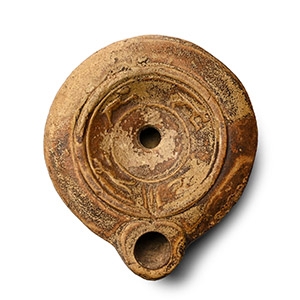
Roman Terracotta Oil Lamp with Running Dogs
2nd century A.D.Sold for (Inc. bp): £195
Discoid in plan with short nozzle, broad shoulder, discus with frieze of four chasing hounds. 48 grams, 85 mm
From the private collection of a Canadian gentleman living in Essex, UK, formed since the 1920s-circa 1990. Property of an Essex lady until the late 1990s; thence by descent. From the private collection of an Essex gentleman since the late 1990s. This lot is accompanied by an illustrated lot declaration signed by the Head of the Antiquities Department, Dr Raffaele D'Amato.
The lamp seems to belong to the type Bussière form D I 3, related to the Claudian to Trajanic period. Scholars collocated such lamps in this category due to the absence of a handle. They are all mould made, with a central filling hole and flat shoulders. -
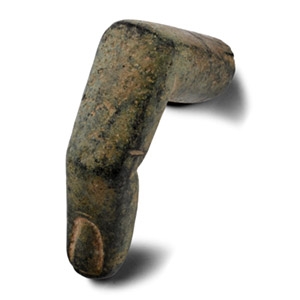
Roman Bronze Bent Finger
1st-4th century A.D.Sold for (Inc. bp): £176
From a life-sized statue, slender forefinger bent in gripping configuration. 63.7 grams, 43 mm
From the collection of a gentleman, acquired on the London art market in the 1990s. This lot is accompanied by an illustrated lot declaration signed by the Head of the Antiquities Department, Dr Raffaele D'Amato.
