
Loading, please wait...

LOT 0679
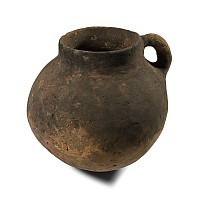
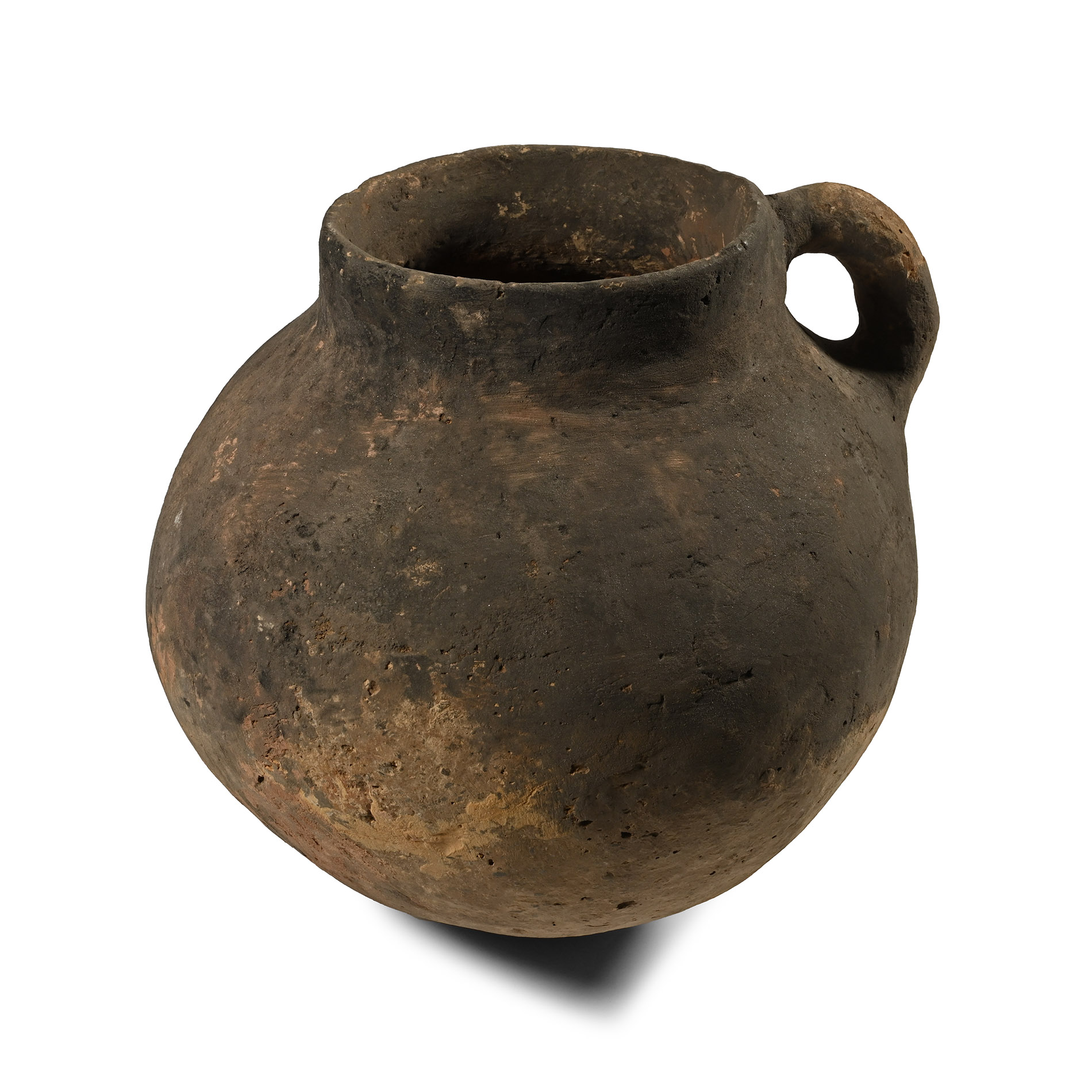
Roman Round-Bottomed Terracotta Jar
1ST-4TH CENTURY A.D.
6 7/8 in. (1.15 kg, 17.5 cm high).
With bulbous body and broad shoulder, low neck, loop handle; domestic ware. [No Reserve]
ProvenanceFrom a London, UK, gentleman's collection of ancient pottery and artefacts, 1990s.
This lot is accompanied by an illustrated lot declaration signed by the Head of the Antiquities Department, Dr Raffaele D’Amato.
TimeLine Auctions follows a vetting process to ensure the authenticity and legality of all items, reinforcing our commitment to integrity and responsible trading. Each antiquity, antique, and coin lot undergoes thorough examination by a vetting committee of at least ten external specialists, professional trade association members, scientists, and archaeologists: Our Vetting Process
AUCTIONS:
TimeLine is a leading auction house specialising in antiquities, ancient art, collectables, natural history, coins, medals, and books. Our auctions offer museums, collectors, historians, and enthusiasts the opportunity to acquire unique and historically significant pieces.
-
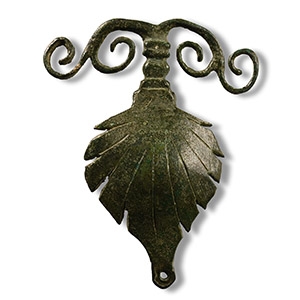
Roman Bronze Military Mount From a Pompeii Gladius Scabbard
1st century A.D.Sold for (Inc. bp): £130
Comprising a domed vine-leaf with notched edge and incised veins, finial with lateral scrolled tendrils; pierced for attachment. 6.12 grams, 50 mm
Acquired on the London art market in the late 1980s-1990s. From the family collection of an East London, UK, gentleman. This lot is accompanied by an illustrated lot declaration signed by the Head of the Antiquities Department, Dr Raffaele D’Amato.
The sword of Pompeii typology was the main side weapon of the Roman legionary from the second half of the 1st century A.D. until the end of the 2nd century A.D. In the Flavian Age, the scabbard was decorated with various bronze appliques: openwork decorated copper-alloy plates and chape, and over the chape, this distinctive bronze foliage mount, used only for these typologies of scabbards. -
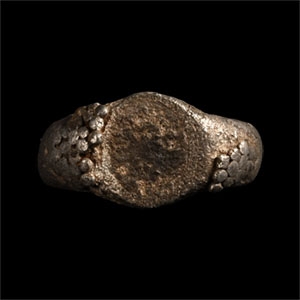
Roman Silver Ring with Plain Bezel
2nd-3rd century A.D.Sold for (Inc. bp): £117
With a wide D-section hoop, expanding shoulders with applied pellets, discoid bezel. 5.28 grams, 20.66 mm overall, 16.51 mm internal diameter (approximate size British G 1/2, USA 3 1/2, Europe 5.55, Japan 5)
From an English collection formed before 2000. This lot is accompanied by an illustrated lot declaration signed by the Head of the Antiquities Department, Dr Raffaele D’Amato. -
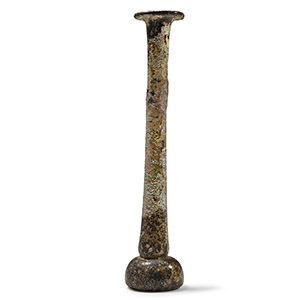
Roman Tall Glass Unguentarium
2nd-3rd century A.DSold for (Inc. bp): £104
Tall iridescent vessel with wide foot and dimpled base, tapering stem and flared rim, two small holes, repaired. 12.5 grams, 14.5 cm
Ex London art market 1990s. From a London, UK, collection. This lot is accompanied by an illustrated lot declaration signed by the Head of the Antiquities Department, Dr Raffaele D’Amato.
