
Loading, please wait...
LOT 0583
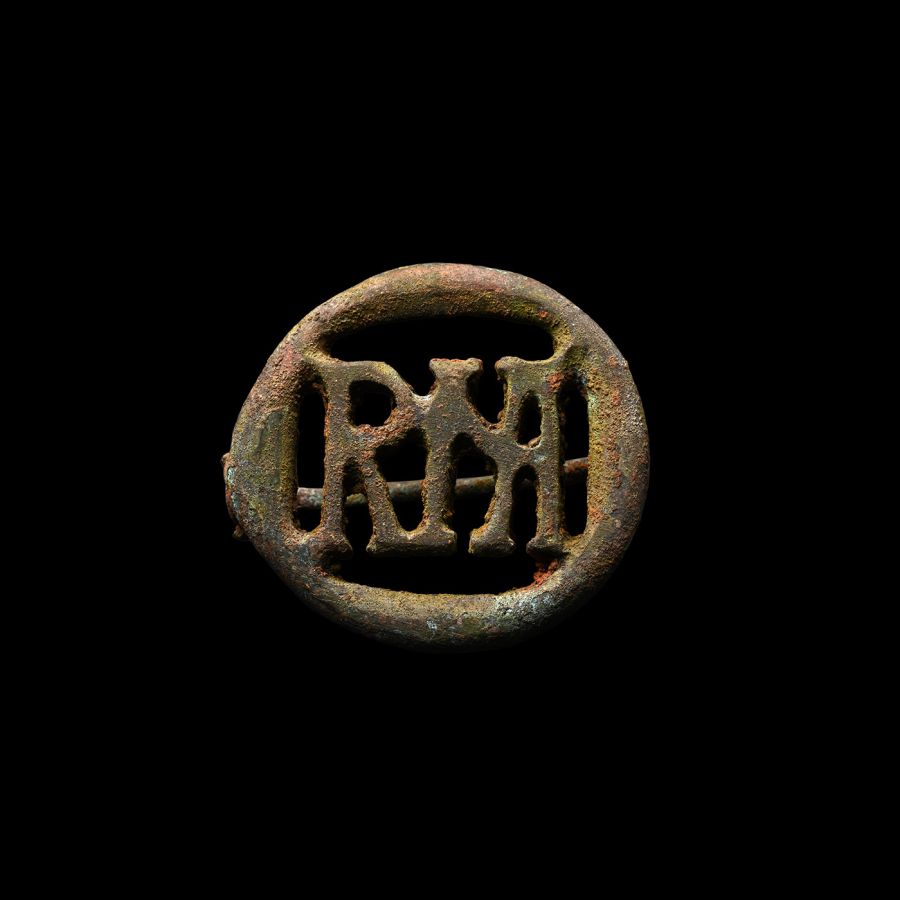
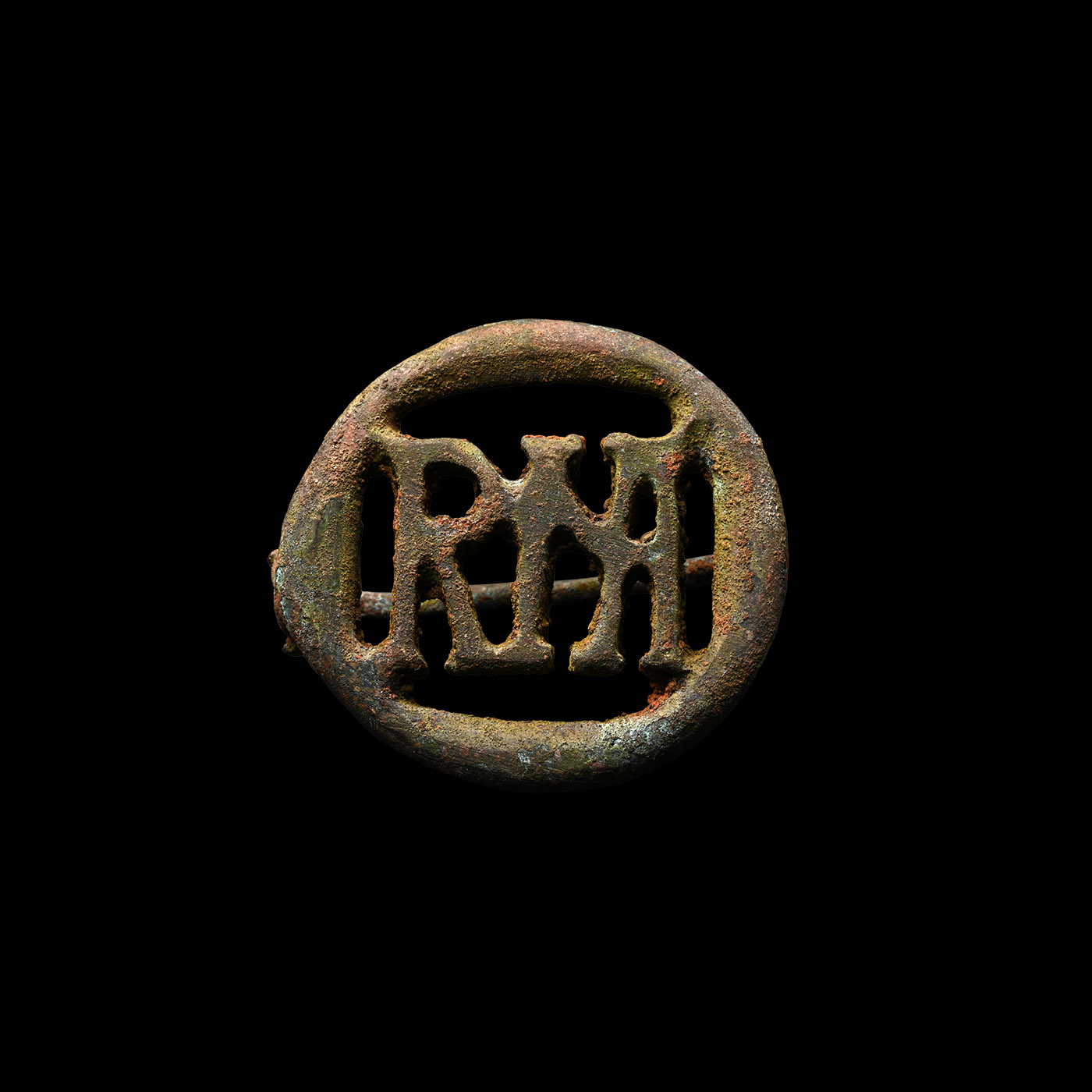
Roman ROMA Plate Brooch
2ND-3RD CENTURY A.D.
1 1/4 in. (10.2 grams, 31 mm).
A bronze discoid plate brooch with openwork monogram of 'ROMA', hinged pin and catchplate to the reverse.
ProvenanceAcquired before 2000.
From the collection of a European gentleman living in the UK.
See The Portable Antiquities Scheme, record id IOW-DA5661, for a similar example.
FootnotesThe brooch is engraved with the stylised letters ‘RMA’. When viewed from the obverse, RMA and the framing circle form a monogram for ‘Roma’. Roma refers to both the city and its divine personification, the Dea Roma. If RMA is read from right to left (or the brooch is viewed from the opposite side), the letters form a monogram for ‘AMOR’, the Latin name for Cupid, the god of love. The phrase pertains to Roma-Amor, a widely recognised palindrome espousing Roman wordplay in the ancient times.
CONDITIONTimeLine Auctions follows a vetting process to ensure the authenticity and legality of all items, reinforcing our commitment to integrity and responsible trading. Each antiquity, antique, and coin lot undergoes thorough examination by a vetting committee of at least ten external specialists, professional trade association members, scientists, and archaeologists: Our Vetting Process
AUCTIONS:
TimeLine is a leading auction house specialising in antiquities, ancient art, collectables, natural history, coins, medals, and books. Our auctions offer museums, collectors, historians, and enthusiasts the opportunity to acquire unique and historically significant pieces.
-
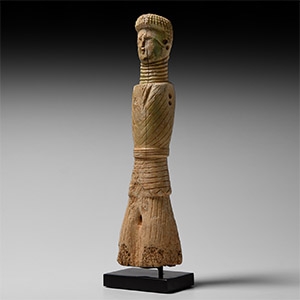
Roman Female Bone Doll
3rd-4th century A.D.Estimate: £500 - 700 (+bp*)
Opening Bid: £250
A Roman or Parthian bone figurine of a female with holes to accept pegs for separate articulated arms, hatching to the piled hairstyle, incised facial features, tiered collar, slender body with drape detailing to the bodice, belt and skirt; pierced ears to accept earrings; mounted on a custom-made stand. 214 grams total, 18 cm including stand
Fine condition.
Family collection since the 1960s. with Christie's, London, 29 April 2010, lot 373. Property of a Brussels gentleman. Accompanied by copies of the relevant Christie's catalogue pages.
The doll was made of a carved bone figure of woman with separate arms attached to the body, and pieces for the ears. All the surface shows extensive marks of working by a saw, knife or a file. The body is made from bone, and the style of the doll is typical of Roman Britain. The separate parts were attached with pins or string. On the doll are still visible the little holes for the connecting string. -
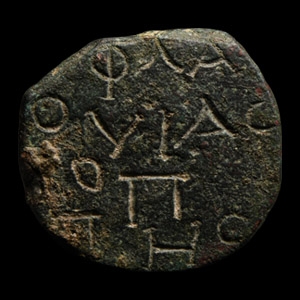
Late Roman Double-Sided Bulla with Inscription
4th-5th century A.D.Sold for (Inc. bp): £130
A bronze discoid bulla, cut from a larger bronze plaque in antiquity with fragments of Greek inscription; Side A: 'ΦΛΑ [..]/ΟΥΙΑC/ YΟΠΠΗC[..]'; Side B: '[..]N[..]ENΤΙΟΥ/EΠΙCΚOΠΟΥ'. 165 grams, 58 mm
Acquired 1969-1999. London collection of the late S.M., thence by descent.
The bulla probably belonged to a bishop, probably to a certain Vinkentios (N[..]ENΤΙΟΥ/EΠΙCΚOΠΟΥ = of Vincentius Bishop) and as well as a woman named Flavia from Joppa (ΦΛΑ [..]/ΟΥΙΑC/ YΟΠΠΗC), probably his servant. It could have been used as a weight or as a personal sign to fulfil various activities in the name of the owner. -
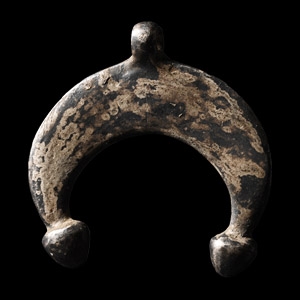
Roman Silver Lunar Pendant
3rd-4th century A.D.Sold for (Inc. bp): £85
A silver lunulate pendant of crescentic form with conical knops to the terminals; integral suspension loop. 6.2 grams, 30 mm
Acquired in the late 1990s-2000. Property of an East London gentleman.
