
Loading, please wait...
LOT 0742
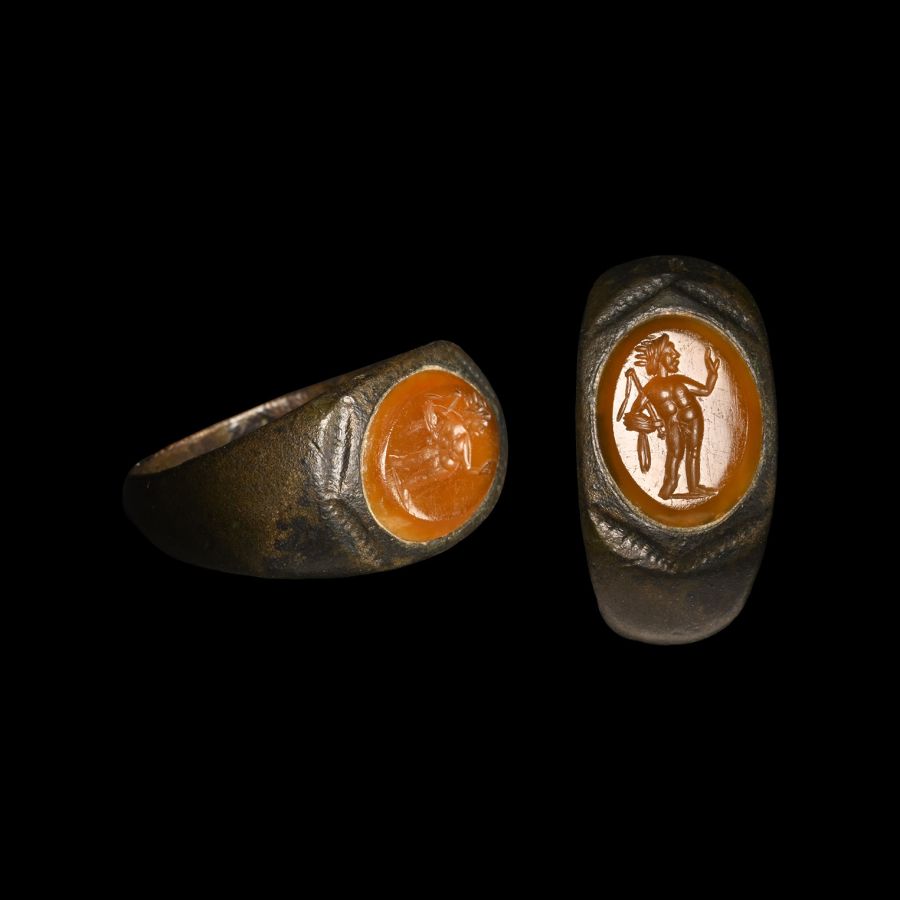
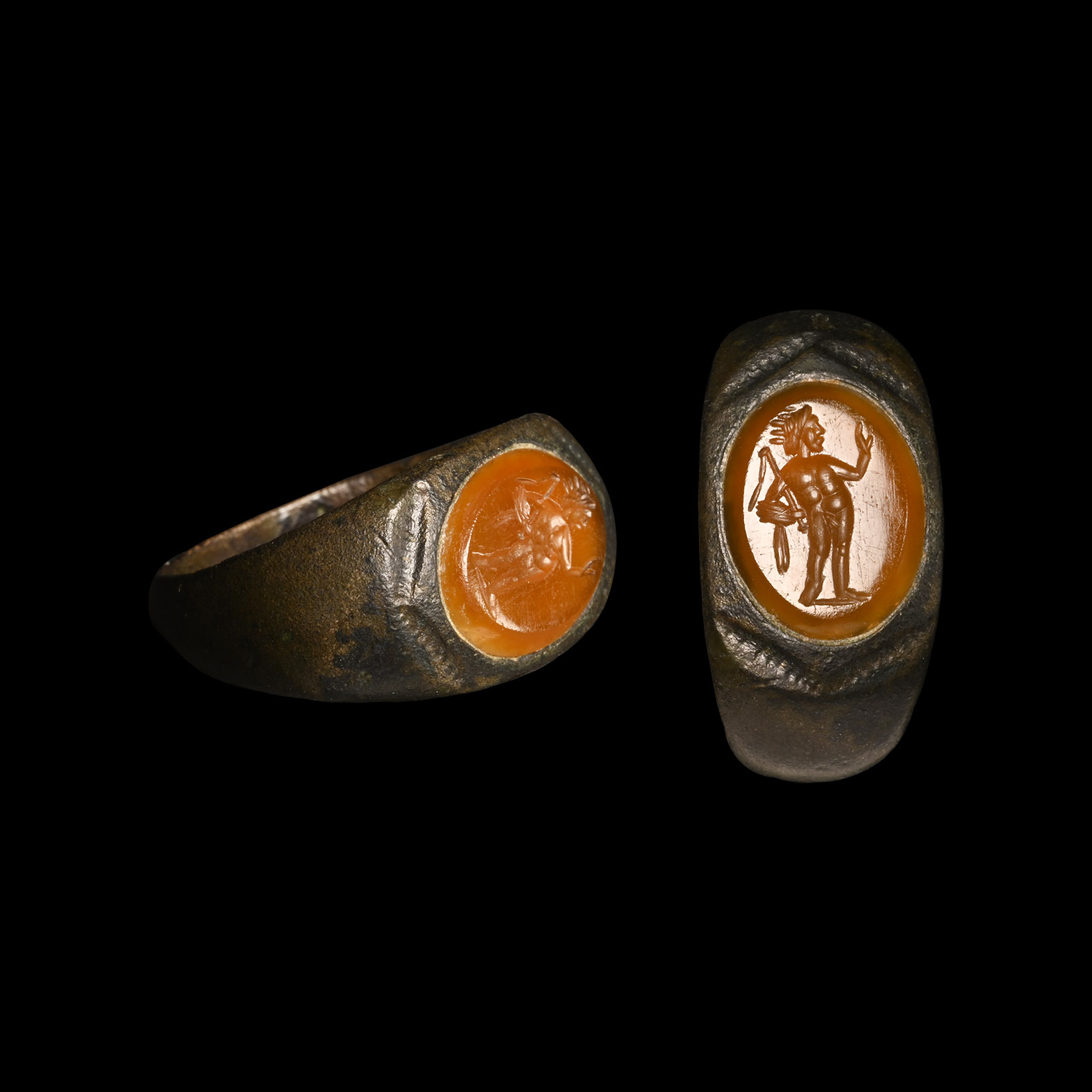
Roman Ring with Sol Gemstone
CIRCA 1ST CENTURY B.C.-3RD CENTURY A.D.
3/4 in. (5.17 grams, 20.88 mm overall, 17.37 mm internal diameter (approximate size British L, USA 5 3/4, Europe 11.24, Japan 10)).
A bronze finger ring with inset carnelian cloison, intaglio Sol standing with whip.
ProvenanceAcquired before 2000.
From the collection of a European gentleman living in the UK.
Cf. Chadour, A.B., Rings. The Alice and Louis Koch Collection, volume I, Leeds, 1994, item 137, for type.
CONDITIONTimeLine Auctions follows a vetting process to ensure the authenticity and legality of all items, reinforcing our commitment to integrity and responsible trading. Each antiquity, antique, and coin lot undergoes thorough examination by a vetting committee of at least ten external specialists, professional trade association members, scientists, and archaeologists: Our Vetting Process
AUCTIONS:
TimeLine is a leading auction house specialising in antiquities, ancient art, collectables, natural history, coins, medals, and books. Our auctions offer museums, collectors, historians, and enthusiasts the opportunity to acquire unique and historically significant pieces.
-
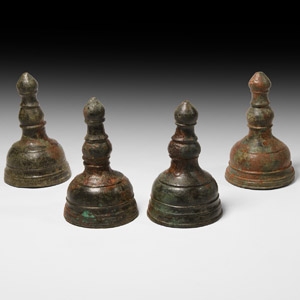
Roman Triclinium Finial Set
1st-4th century A.D.Estimate: £400 - 600 (+bp*)
Opening Bid: £200
A set of four copper-alloy triclinium (bed) finials, each with a bell-shaped body and baluster style finial; hollow to base. 1.18 kg total, 9.6-10.1 cm
Acquired before 2000. From the collection of a European gentleman living in the UK.
The Romans, like the Greeks, ate whilst reclined on beds. The eating bed (lectus triclinaris) was a luxury furniture item crafted by carpenters. From the 2nd century B.C., Romans started to create 'lecti aerati, inargentati, inaurati, eborati, testudinei,' i.e. beds made of wood and covered with bronze, silver, gold and ivory fittings (as in our specimens) or with scales of other precious material. Such elements were sometimes sculpted in the shape of an animal protome, or were simply bell-shaped, like our specimens. -
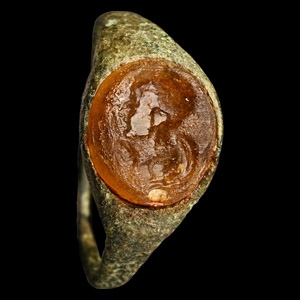
Roman Ring with Julius Caesar Intaglio
1st century B.C.Sold for (Inc. bp): £234
A copper-alloy finger ring with an oval-shaped bezel, set with a glass intaglio with profile bust left, probably Julius Caesar. 1.71 grams, 21.79 mm overall, 17.31 mm internal diameter (approximate size British L 1/2, USA 6, Europe 11.87, Japan 11)
Acquired in the 1970s. Important European collection. -
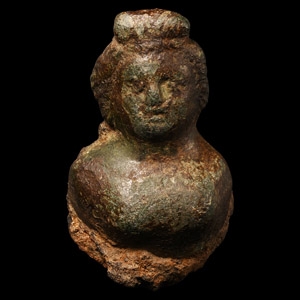
Roman Empress Steelyard Weight
1st-4th century A.D.Sold for (Inc. bp): £234
A copper-alloy steelyard weight in the form of an empress with an elaborate hairstyle, worn facial detailing. 175 grams, 70 mm
Acquired early 2000s. Property of a Birmingham, UK, collector. Property of an Essex, UK, gentleman.
