
Loading, please wait...
LOT 0692
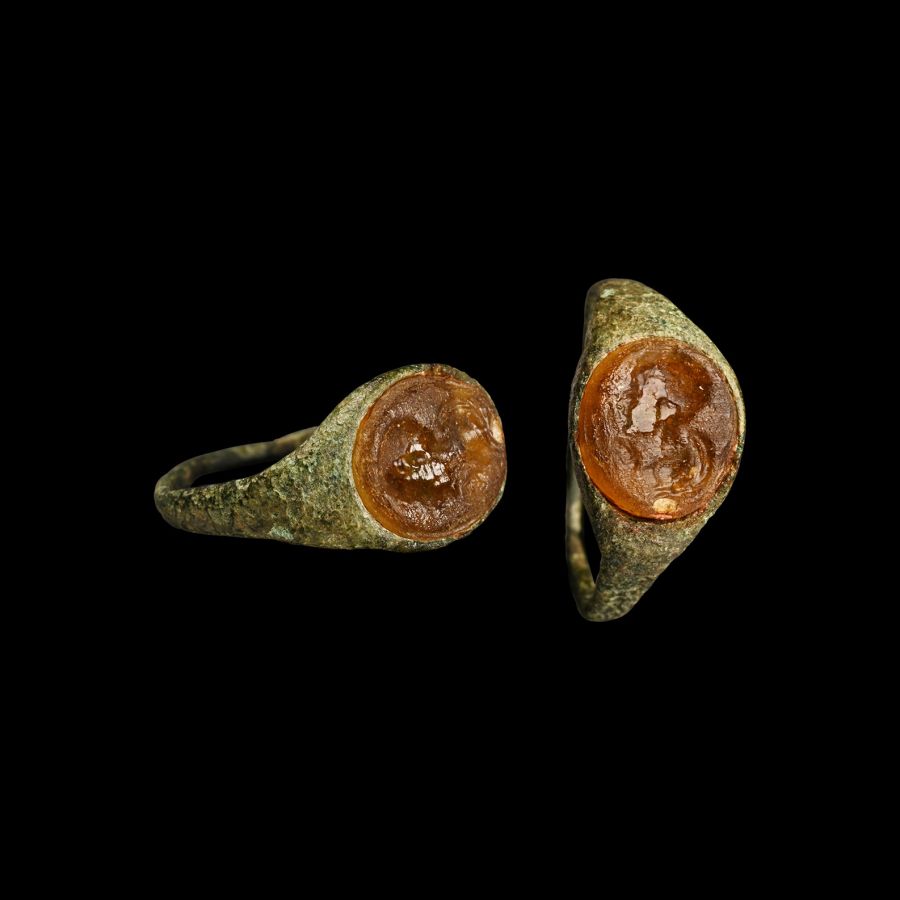
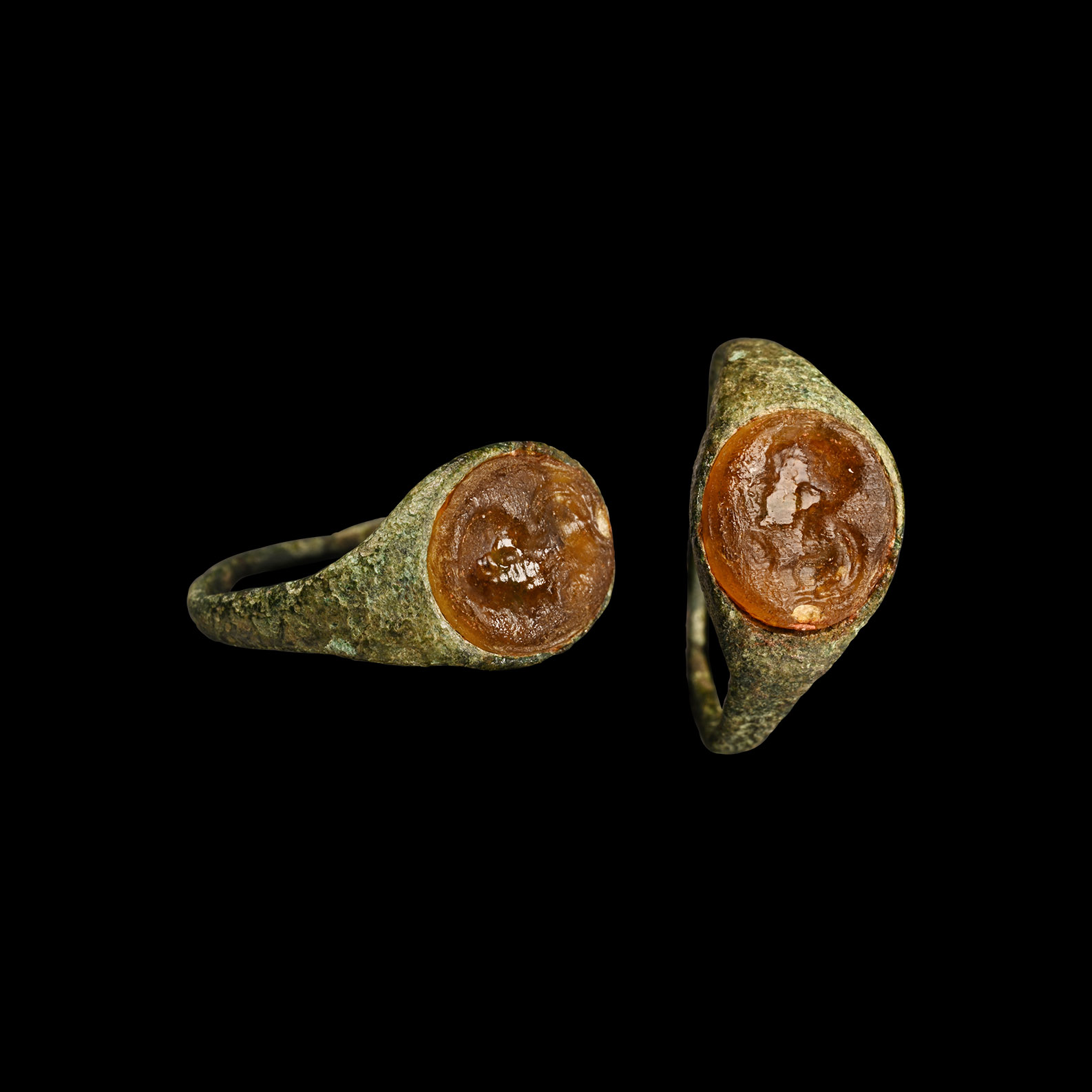
Roman Ring with Julius Caesar Intaglio
1ST CENTURY B.C.
3/4 in. (1.71 grams, 21.79 mm overall, 17.31 mm internal diameter (approximate size British L 1/2, USA 6, Europe 11.87, Japan 11)).
A copper-alloy finger ring with an oval-shaped bezel, set with a glass intaglio with profile bust left, probably Julius Caesar. [No Reserve]
ProvenanceAcquired in the 1970s.
Important European collection.
TimeLine Auctions follows a vetting process to ensure the authenticity and legality of all items, reinforcing our commitment to integrity and responsible trading. Each antiquity, antique, and coin lot undergoes thorough examination by a vetting committee of at least ten external specialists, professional trade association members, scientists, and archaeologists: Our Vetting Process
AUCTIONS:
TimeLine is a leading auction house specialising in antiquities, ancient art, collectables, natural history, coins, medals, and books. Our auctions offer museums, collectors, historians, and enthusiasts the opportunity to acquire unique and historically significant pieces.
-
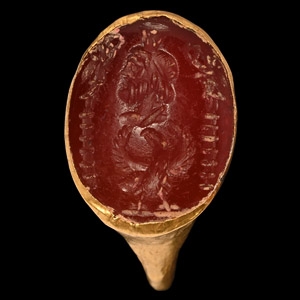
Roman Gold Ring with Serapis Gemstone
1st century A.D.Estimate: £1,500 - 2,000 (‡+bp*)
Opening Bid: £750
A hollow-formed gold finger ring with inset carnelian gemstone engraved with a profile bust of Serapis above a perching eagle flanked by fronds, possibly a marriage. 3.15 grams, 26.98 mm overall, 13.22 mm internal diameter (approximate size British D, USA 1 3/4, Europe 1.15, Japan 1)
Acquired early 1990s. Ex private American collection; thence by descent. Private Swiss collection since 1998. -
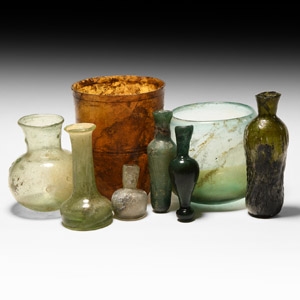
Roman Byzantine and Islamic Glass Vessel Collection
1st century A.D. and laterSold for (Inc. bp): £221
A group of eight glass vessels from the Roman, Byzantine and Islamic civilisations, of various types and dates: a pale green bulbous jar with a flared neck and rim, blobs to the neck and shoulder; a green bottle with waisted cylindrical body and short neck decorated with raised vertical ribs and hatching; a miniature piriform green bottle with globular foot and slightly flared neck; a clear glass miniature bottle of squat form, with a tubular neck and remains of iridescence to the internal surface; a pale green bottle with a squat body, long tubular neck and everted rim; a piriform green bottle with high shoulder and rounded base, tubular neck; a barrel-shaped pale blue vessel with inverted rim; an amber-brown coloured vessel of carinated form, wheel-cit bands to the equator and rim. 387 grams total, 40-97 mm
Acquired 1960s-1990s. From the late Alison Barker collection, a retired London barrister. -
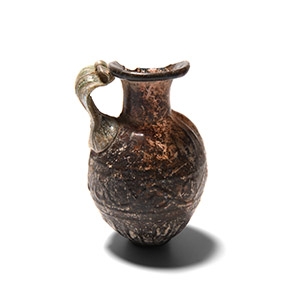
Roman Aubergine Mould Blown Amphoriskos
1st century A.D.Estimate: £300 - 400 (‡+bp*)
Opening Bid: £150
An aubergine-coloured miniature egg-shaped juglet with applied handle and integral foot, mould-blown decoration formed as a medial frieze of scrolling motifs and lines radiating upwards from the base; iridescent surfaces; chipped rim. 17.3 grams, 66 mm high
Acquired early 1990s. Ex private American collection; thence by descent. Private collection since 1998.
