
Loading, please wait...
LOT 0787
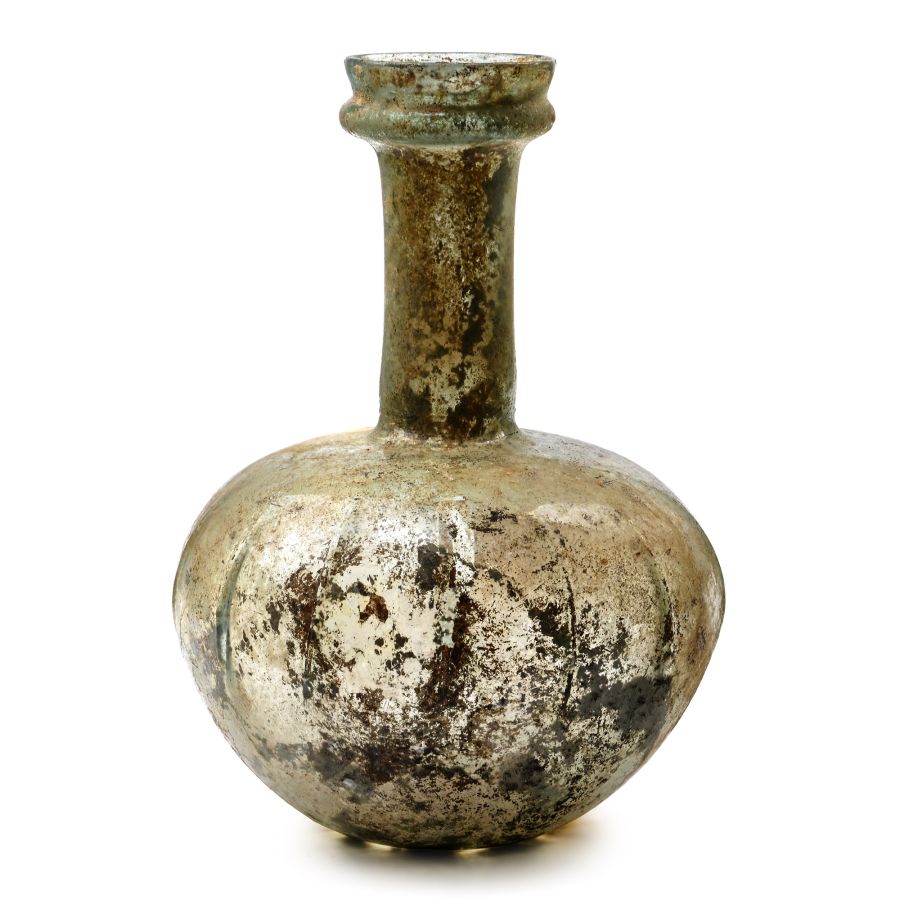
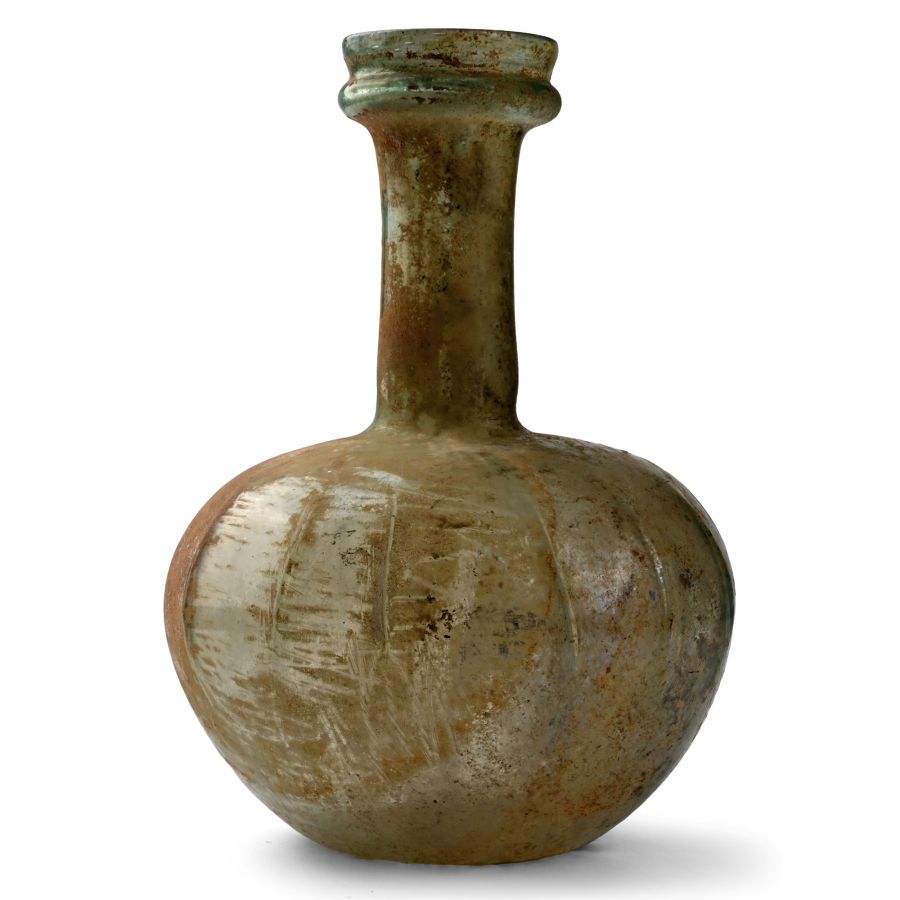
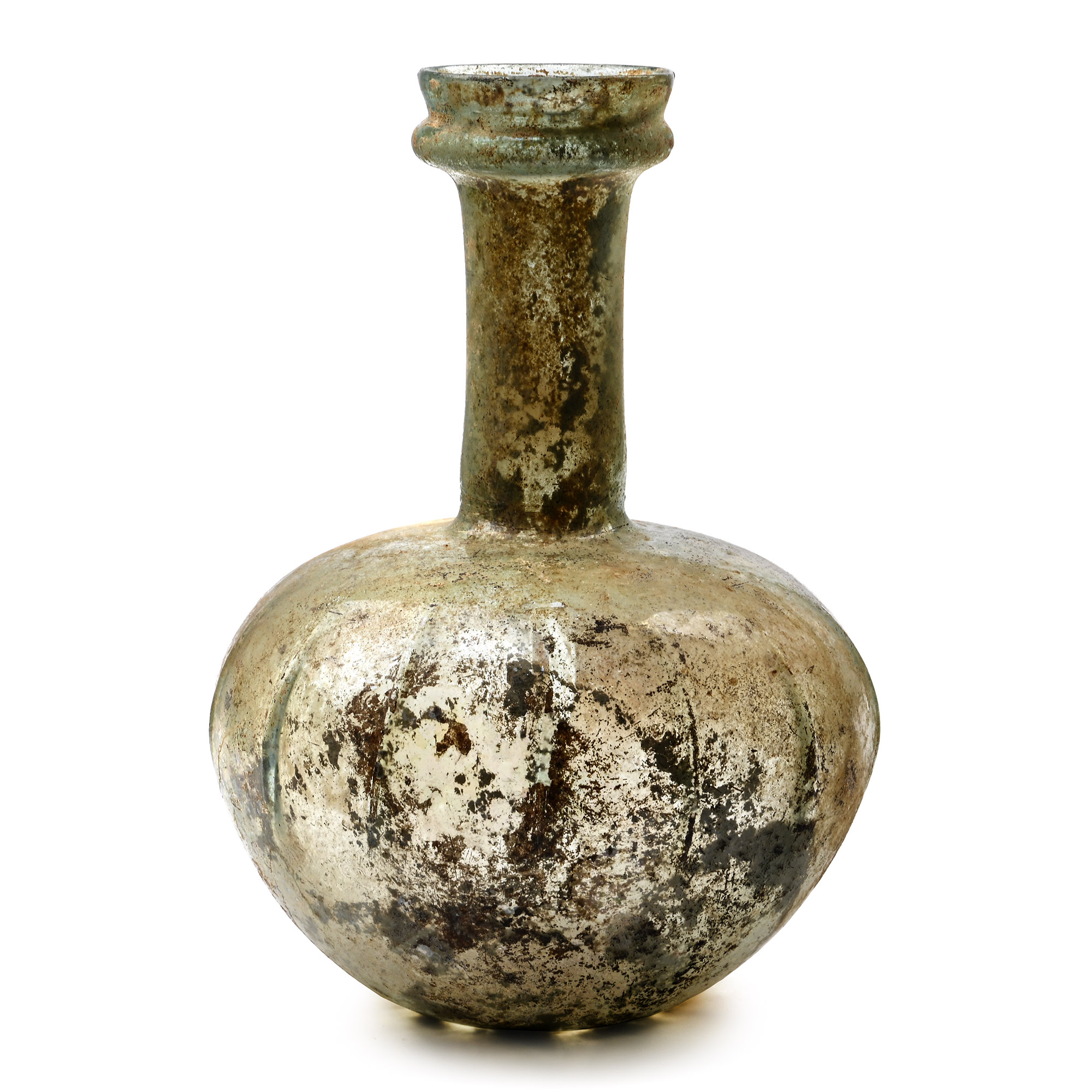
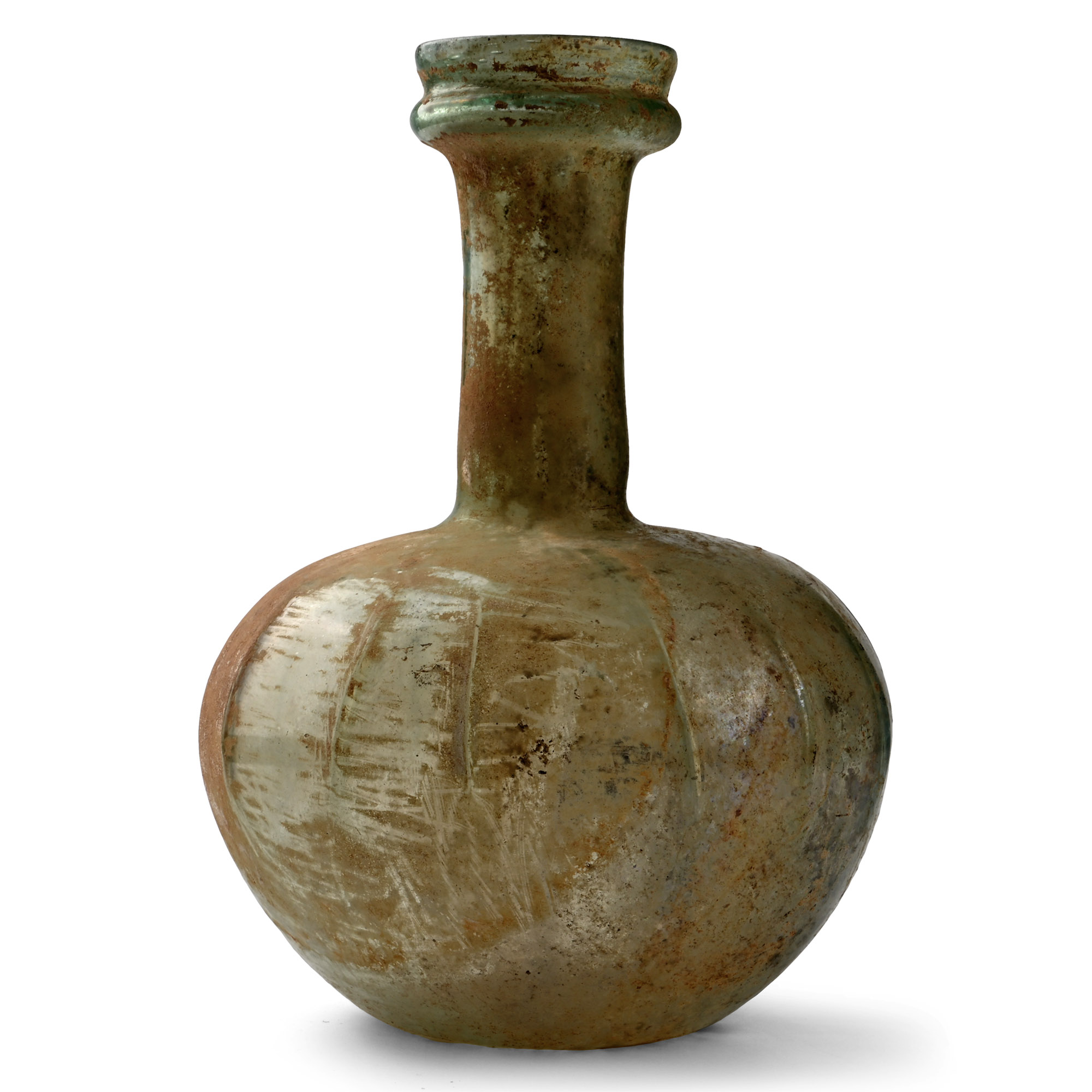
Roman Ribbed Glass Bottle
4TH-5TH CENTURY A.D.
7 1/2 in. (174 grams, 19 cm).
With globular body, dimple foot, slight vertical ribbing to body, broad funicular mouth with folded rim.
ProvenanceAcquired in the late 1980s.
Private collection, thence by descent.
Private collection, since the late 1990s.
Cf. Whitehouse, D., Roman Glass in the Corning Museum of Glass, vol.1, New York, 1997, item 312, for type.
FootnotesSimilar vessels (bottles) were found in 4th-5th century tombs at Beit Ras, Jordan, and from Samaria-Sebaste, Israel. The most recognisable characteristic of these bottles was the faint ribs on the body. The type survived until the Arab conquest in the 7th century A.D.
CONDITIONTimeLine Auctions follows a vetting process to ensure the authenticity and legality of all items, reinforcing our commitment to integrity and responsible trading. Each antiquity, antique, and coin lot undergoes thorough examination by a vetting committee of at least ten external specialists, professional trade association members, scientists, and archaeologists: Our Vetting Process
AUCTIONS:
TimeLine is a leading auction house specialising in antiquities, ancient art, collectables, natural history, coins, medals, and books. Our auctions offer museums, collectors, historians, and enthusiasts the opportunity to acquire unique and historically significant pieces.
LOT 0787
Roman Ribbed Glass Bottle
Estimate £400 - 600€460 - 700 (for guidance only)$540 - 810 (for guidance only)
-
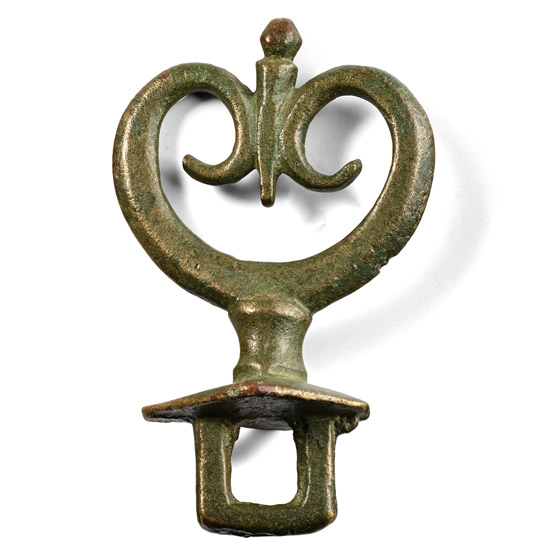
Roman Bronze Chariot Fitting
1st-4th century A.D.Sold for (Inc. bp): £91
Comprising a rectangular loop below a lozenge-shaped plaque, a large loop formed of volute scrolls above. 63.3 grams, 81 mm
Ex German art market, 2000s. Acquired from an EU collector living in London. From the collection of a Surrey, UK, gentleman. -
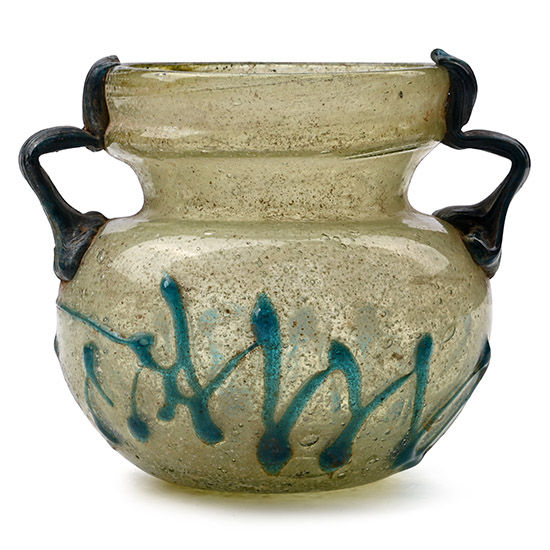
Roman Green Glass Jar with Blue Handles and Zig-Zag Trail
Circa 4th-5th century A.D.Sold for (Inc. bp): £1,170
Bulbous body with funicular neck and ribbed mouth, applied blue handles and trail decoration on the body. 98.9 grams, 95 mm wide
Acquired from Shirley Warren Antique Glass, Surrey, UK, in 1993 with reference no.4155/4083. From the collection of a Bedfordshire, UK, lady. Accompanied by an original Shirley Warren invoice no.2388 dated 18 September 1993.
This is a common form of jar with trailed ornaments, and numerous examples have been found in the Syro-Palestinian Region (Beit Fajjar, Jerusalem, Grave A at Ain Nabrud, etc). -
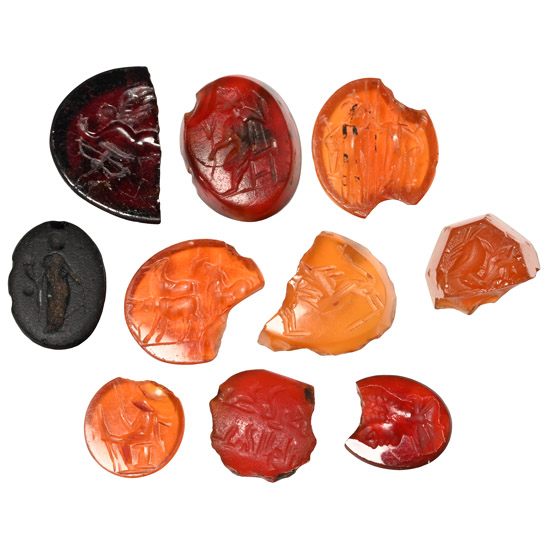
Roman Gemstone Group
2nd-3rd century A.D.Sold for (Inc. bp): £286
Including Cupid with bow, Mars with spear, Dioscouri and other types; each supplied with a museum-quality impression. 5.46 grams total, 9-14 mm
From the private collection of a European gentleman (1942-2024), formed since the 1970s.
