
Loading, please wait...
LOT 0149
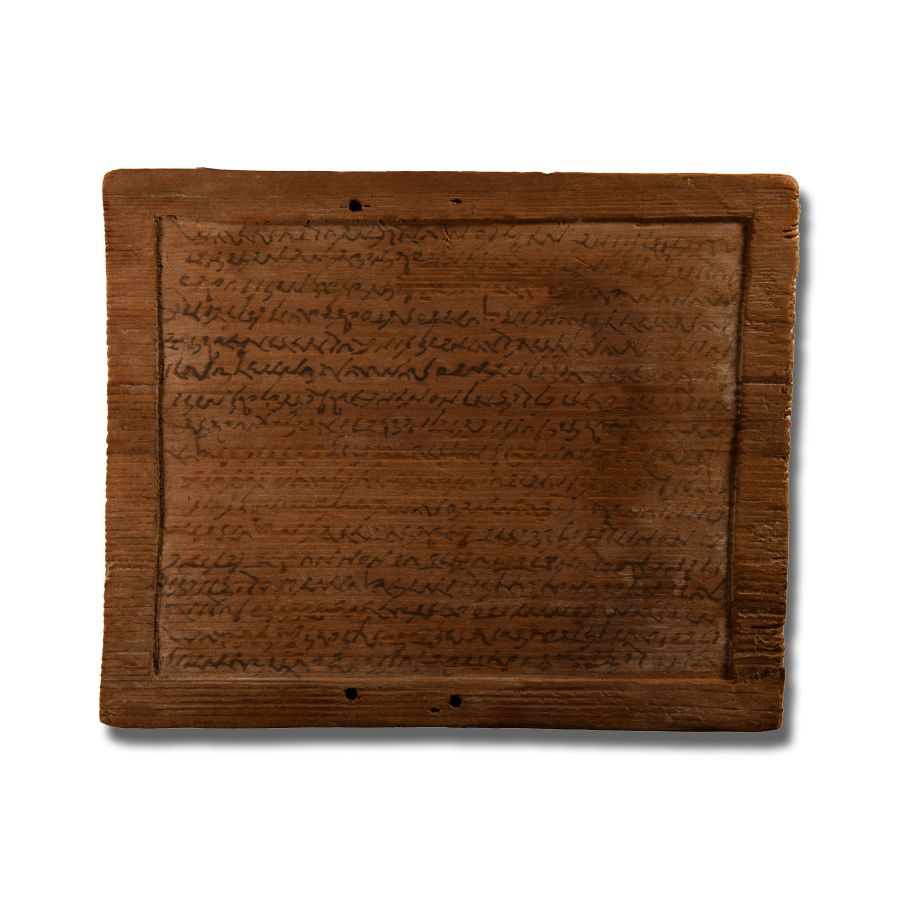
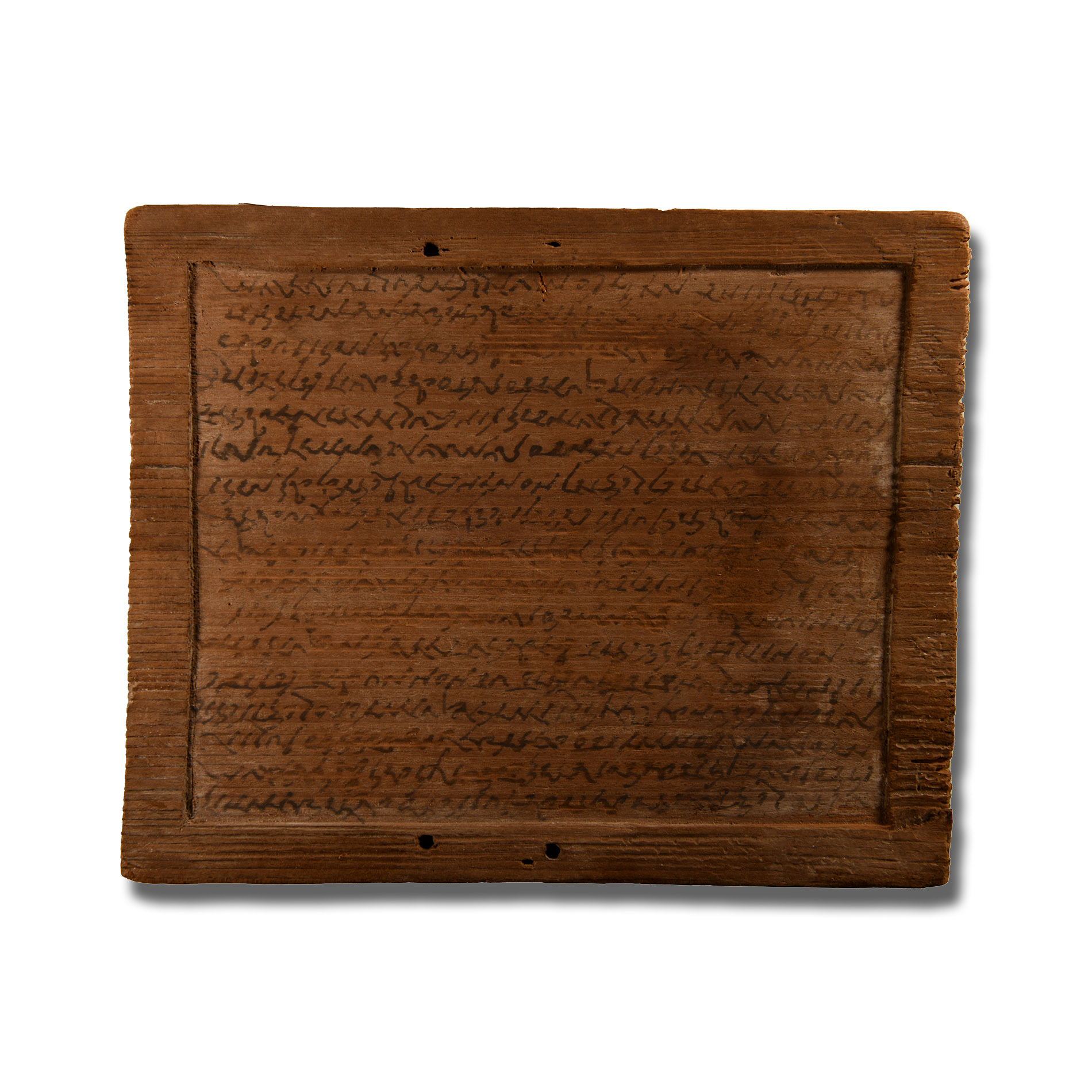
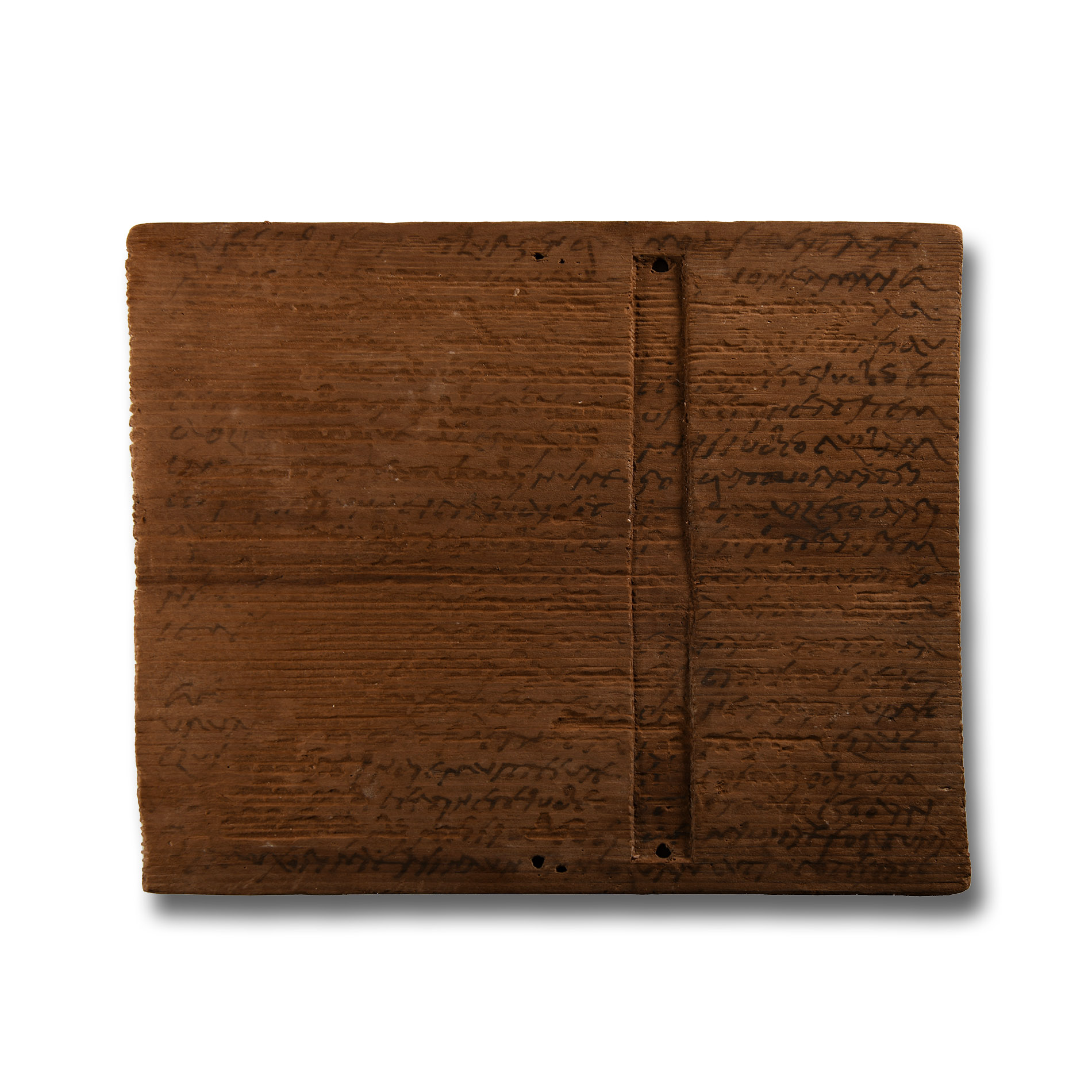
Roman Reused Inked Wooden Wax Tablet Relating to Sheep and Clothing
4TH CENTURY A.D.
7 5/8 x 6 3/8 in. (50 grams, 19.5 x 16 cm).
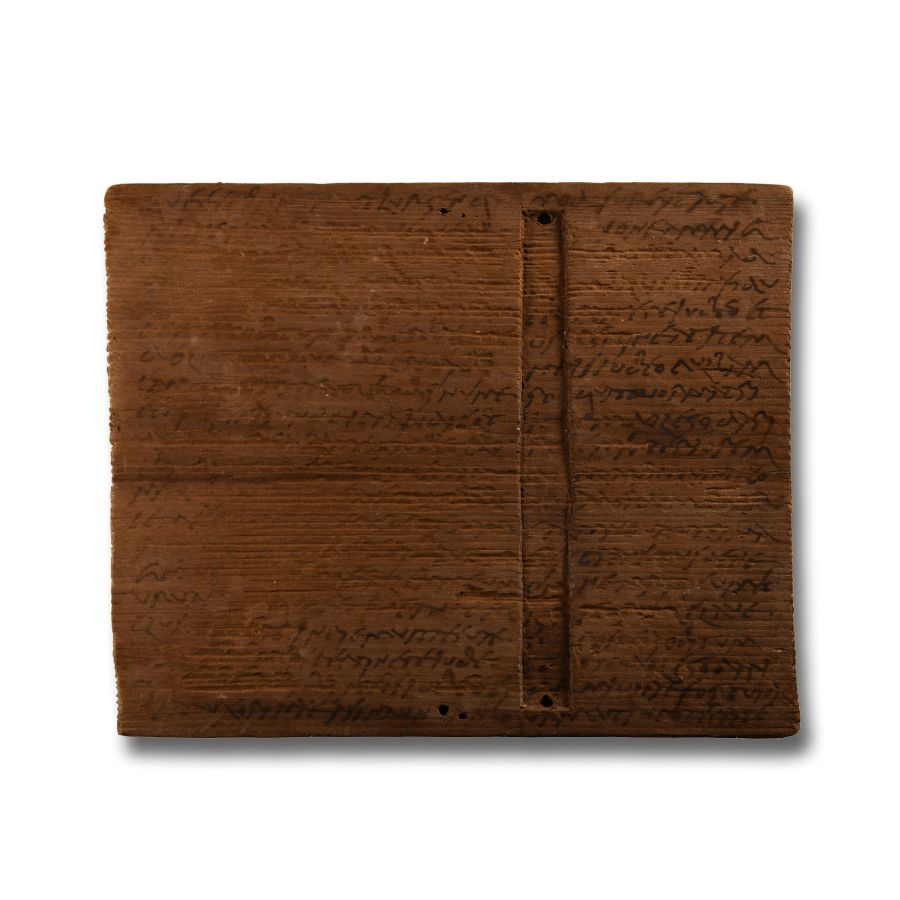
The shallow recessed panel displaying seventeen lines of hand-inked cursive text; reverse bearing twenty lines of hand-inked cursive text with a shallow rectangular vertical recess which once held wax seals; pierced twice on the upper and lower edges for attachment. [No Reserve]
ProvenanceFrom an important London collection since 1975.
PublishedRothenhoefer, P., Neue römische Rechtsdokumente aus dem Byzacena-Archiv / New Roman Legal Documents from the Byzacena Archive, (forthcoming).
LiteratureSee Thomas, J. D., Vindolanda: The Latin Writing Tablets, Britannia Monograph Series No 4, London, 1983, for examples of wooden tabulae re-used as writing surfaces; for examples of testamentary documents on wooden tablets that have survived, see FIRA III, p.47, for Anthony Silvanus from 142 AD, also see BGU VII 1695 for Safinnius Herminus; for another from Transfynydd, North Wales, see Arch. Camb. 150, pp.143-156.
FootnotesProf. Dr. Phil. Peter Rotenhoefer says: "The tablet is the second tabula of a testament consisting normally of three tablets (a tryptich). It contains in a highly formalistic legal language legacies for various persons (inter alia a Iulia) who receive certain items like e.g. sheep and clothes.
17 lines of cursive script on the first page, 20 lines on the rear."
TimeLine Auctions follows a vetting process to ensure the authenticity and legality of all items, reinforcing our commitment to integrity and responsible trading. Each antiquity, antique, and coin lot undergoes thorough examination by a vetting committee of at least ten external specialists, professional trade association members, scientists, and archaeologists: Our Vetting Process
AUCTIONS:
TimeLine is a leading auction house specialising in antiquities, ancient art, collectables, natural history, coins, medals, and books. Our auctions offer museums, collectors, historians, and enthusiasts the opportunity to acquire unique and historically significant pieces.
LOT 0149
Roman Reused Inked Wooden Wax Tablet Relating to Sheep and Clothing
Sold for (Inc. bp): £7,150
-
Roman Marble Head of Dionysus
Circa 2nd century A.D.Estimate: £30,000 - 40,000 (+bp*)
Opening Bid: £15,000
A Roman copy of a Greek original, wearing a crown of leaves and corymbs, hair falling in straight lines underneath the diadem; full beard composed of four rows of thick tufts with drilled holes; slightly open mouth with a fleshy lower lip; low cheekbones and hollow cheeks; large almond-shaped eyes with lachrymal duct; mounted on a custom-made display stand. 15.8 kg total, 48 cm high including stand
Ex private French collection, early 1960s. Acquired by the current owner in 2011. Accompanied by an academic report by Dr Marina Mattei and Dr Laura Maria Vigna. Accompanied by a copy of a French cultural passport no.129940. This lot has been checked against the Interpol Database of stolen works of art and is accompanied by search certificate number no.11791-206395
The head finds comparable parallels with a series of herms representing philosophers, lyricists and the god Hermes, deriving from Greek originals of the 5th century B.C. The reworking of these typologies in a cultured environment is due to the diffusion of sculptures linked to the idea of speculative otium and withdrawal into the bucolic world of which Dionysus was guardian and protector. The typology of the representation associates him with the concept of continuous rebirth and fertility of nature, typical of Dionysus Lenaeus. -
Roman Bronze Ring with Animal
3rd century A.D.Sold for (Inc. bp): £39
Composed of a D-section hoop with stepped shoulders and oval bezel displaying an animal, possibly a bird. 5.83 grams, 23.73 mm overall, 19.06 mm internal diameter (approximate size British O, USA 7, Europe 14.98, Japan 14)
Ex old English collection. London art market, 1980s. -
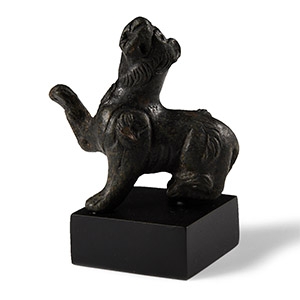
Roman Bronze Lioness Figure
1st-2nd century A.D.Estimate: £600 - 800 (+bp*)
Opening Bid: £333
Modelled in the round crouching with one forepaw held aloft, stylised detailing to the animal's coat, head, face and paws. 130 grams, 54 mm
‘The Ancient Menagerie Collection’ formerly the property of a Cambridgeshire lady, collected since the 1990s and acquired from auctions and dealers throughout Europe and the USA, now ex London collection.
