
Loading, please wait...
LOT 0679
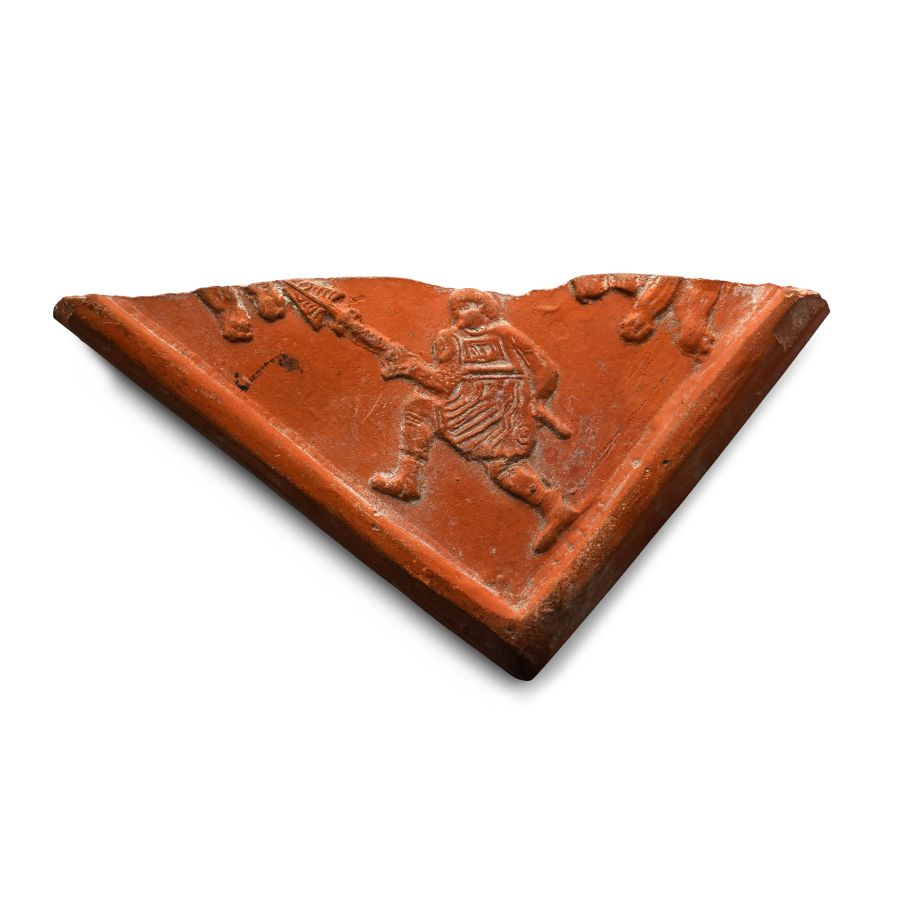
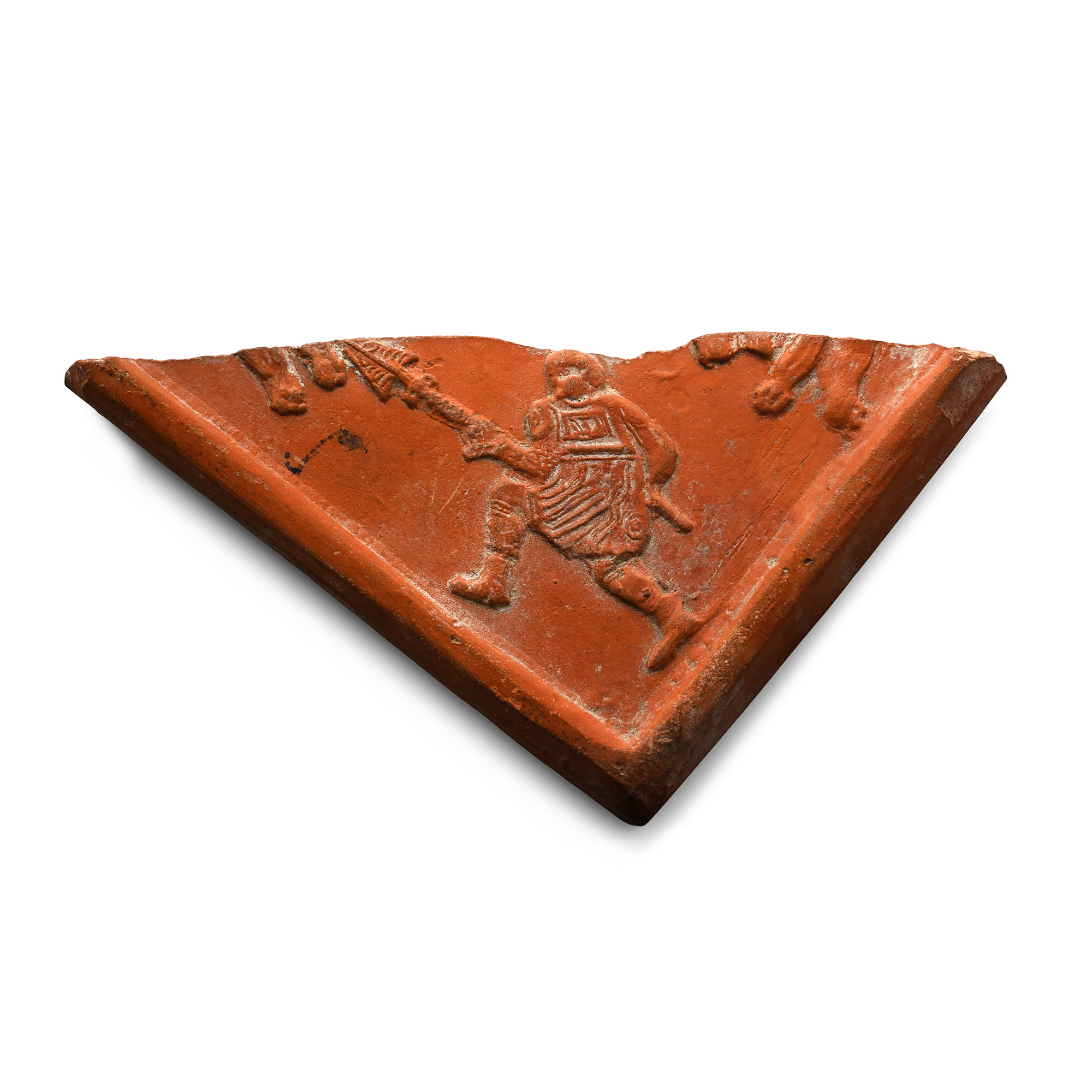
Roman Redware Tile Section with Venatore Gladiator Fighting Lions
CIRCA 4TH CENTURY A.D.
5 1/2 in. (92 grams, 14 cm).
The corner of a rectangular tile showing a dynamic scene of an armoured gladiator charging towards a lion with a large spear, and another lion attacking him from behind. [No Reserve]
ProvenanceFrom the collection of a late Yorkshire, UK, gentleman.
PublishedExhibited at the Harwich Museum, Harwich, Essex, UK, 4th March 2026-7th June 2026; accompanied by a copy of a photograph of the artefacts on display.
CONDITIONTimeLine Auctions follows a vetting process to ensure the authenticity and legality of all items, reinforcing our commitment to integrity and responsible trading. Each antiquity, antique, and coin lot undergoes thorough examination by a vetting committee of at least ten external specialists, professional trade association members, scientists, and archaeologists: Our Vetting Process
AUCTIONS:
TimeLine is a leading auction house specialising in antiquities, ancient art, collectables, natural history, coins, medals, and books. Our auctions offer museums, collectors, historians, and enthusiasts the opportunity to acquire unique and historically significant pieces.
LOT 0679
Roman Redware Tile Section with Venatore Gladiator Fighting Lions
Sold for (Inc. bp): £338
-
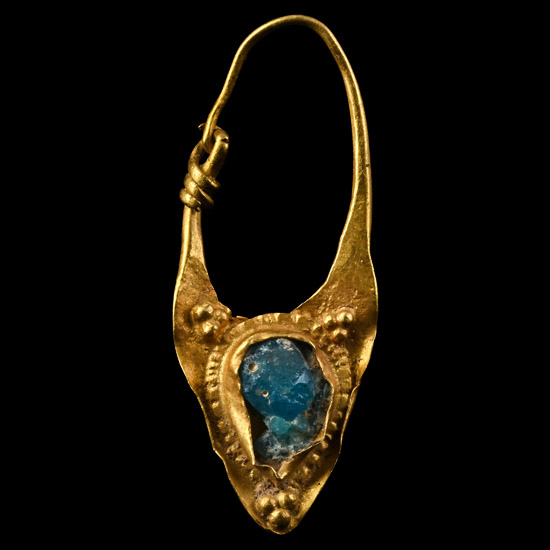
Roman Gold Earring with Glass Cabochon
1st-2nd century A.D.Sold for (Inc. bp): £208
Comprising a triangular plaque with a teardrop-shaped cell set with a turquoise-coloured glass cabochon, granulated edge and three applied granule clusters, loop-and-hook closure. 1.04 grams, 27.6 mm
From the private collection of a European gentleman (1942-2024), formed since the 1970s. -
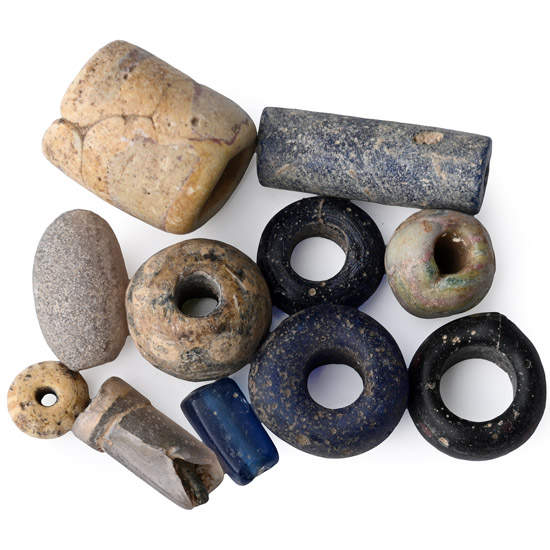
Roman Glass Bead Group
1st-4th century A.D.Sold for (Inc. bp): £59
Including annular, tubular and oblate beads in blue, cream and black, one with eye-motifs and one with trails. 13.12 grams total, 7.05-19.72 mm
From the private collection of a European gentleman (1942-2024), formed since the 1970s. -
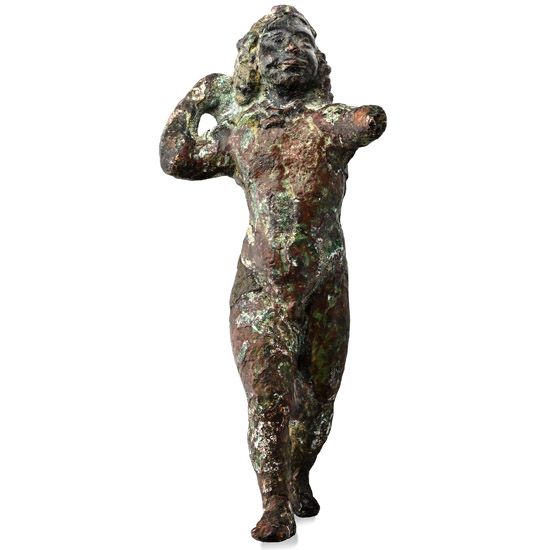
Roman Cupid Bronze Statuette Reaching for Arrows
1st-2nd century A.D.Sold for (Inc. bp): £208
Modelled in the round, standing figure of Cupid, nude in advancing pose reaching over his shoulder to take an arrow from his quiver; left arm extended to support his bow (absent). 82 grams, 78 mm
From the collection of a gentleman, acquired on the London art market in the 1990s.
