
Loading, please wait...
LOT 0690
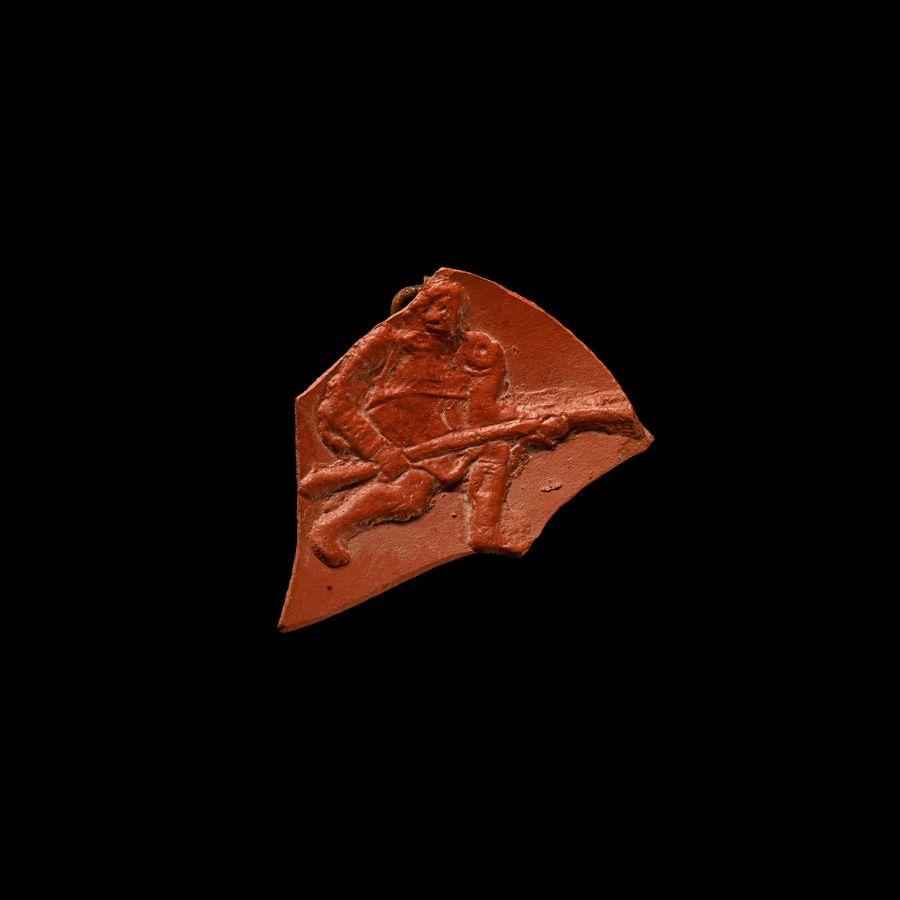
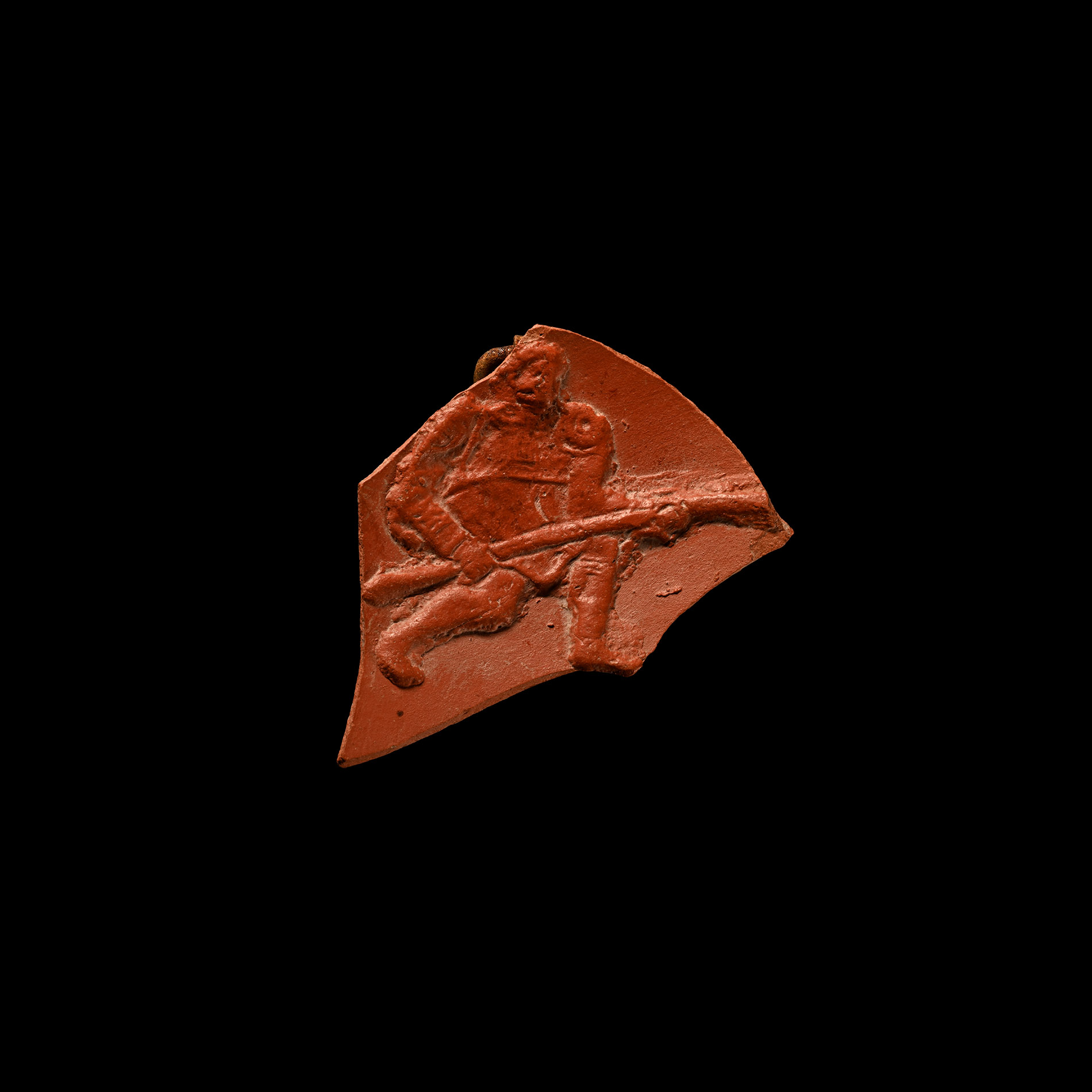
Roman Redware Sherd with Venator Gladiator
4TH CENTURY A.D.
2 3/4 in. (18 grams, 70 mm).
The fighting venator dressed in a long sleeved tunic embroidered with orbiculi and pectorarin, segmenta on the sleeves, brandishing a javelin of venabulum type; suspension loop to the reverse. [No Reserve]
ProvenanceAcquired 1960s-1990s.
From the late Alison Barker collection, a retired London barrister.
See the famous mosaic in Villa Borghese, in Gilbert, F., Devenir Gladiateur, la vie quotidienne á l'ecole de la mort, La Capelle-Marival, 2013, p.136, for a similar scene with similar costumes.
FootnotesThe combat scene is likely a reference to the gladiatorial fights between men and animals; such games in the arena were a principal form of entertainment through the Roman Republic and Roman Empire. Both men and women would partake in such fights. The venatores (hunters) were the most specialised in this field, fighting with a spear with winged blades and long knives (culter venatorius).
CONDITIONTimeLine Auctions follows a vetting process to ensure the authenticity and legality of all items, reinforcing our commitment to integrity and responsible trading. Each antiquity, antique, and coin lot undergoes thorough examination by a vetting committee of at least ten external specialists, professional trade association members, scientists, and archaeologists: Our Vetting Process
AUCTIONS:
TimeLine is a leading auction house specialising in antiquities, ancient art, collectables, natural history, coins, medals, and books. Our auctions offer museums, collectors, historians, and enthusiasts the opportunity to acquire unique and historically significant pieces.
-
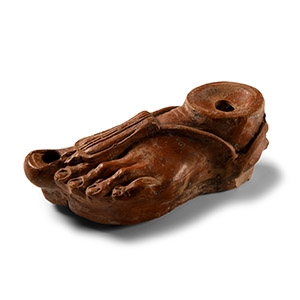
Roman Terracotta Foot Lamp
2nd century A.D.Sold for (Inc. bp): £3,380
Mould-made and shaped as a sandaled left foot, filling-hole surrounded by a ridge in the ankle area, the sandal with two leather straps tied together near the ankle, wick-hole in the big toe; inscription 'ƩΑΛΣΙϹ' to the base, heel chipped. 112 grams, 12.2 cm
With Gorny & Mosch, Auction 194, 14 December 2010, lot 505. This lot has been checked against the Interpol Database of stolen works of art and is accompanied by search certificate number no.11799-206830.
This lamp belongs to a type of plastic lamp made in Anatolia and widespread throughout the Eastern Empire. The sandaled foot was part of the classification of plastic lamps dedicated to the representation of the human body. These lamps were the luxuries of the poor, being brought to temples as votive offerings, however some took their place in the domestic lararia, or were kept by children as playthings. -
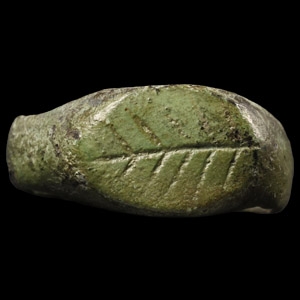
Roman Bronze Ring with Palm Branch
1st century A.D.Sold for (Inc. bp): £124
Integral ellipsoid bezel, incised frond motif. 5.65 grams, 21.09 mm overall, 16.79 mm internal diameter (approximate size British L 1/2, USA 6, Europe 11.87, Japan 11)
Acquired 1980-2015. Ex Abelita family collection. -
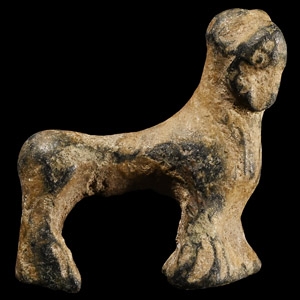
Roman Bronze Standing Lion Statuette
1st-4th century A.D.Sold for (Inc. bp): £169
Modelled in the round with naturalistic detailing, standing with head turned to the right. 12.3 grams, 26 mm wide
‘The Ancient Menagerie Collection’ formerly the property of a Cambridgeshire lady, collected since the 1990s and acquired from auctions and dealers throughout Europe and the USA, now ex London collection.
