
Loading, please wait...
LOT 0597
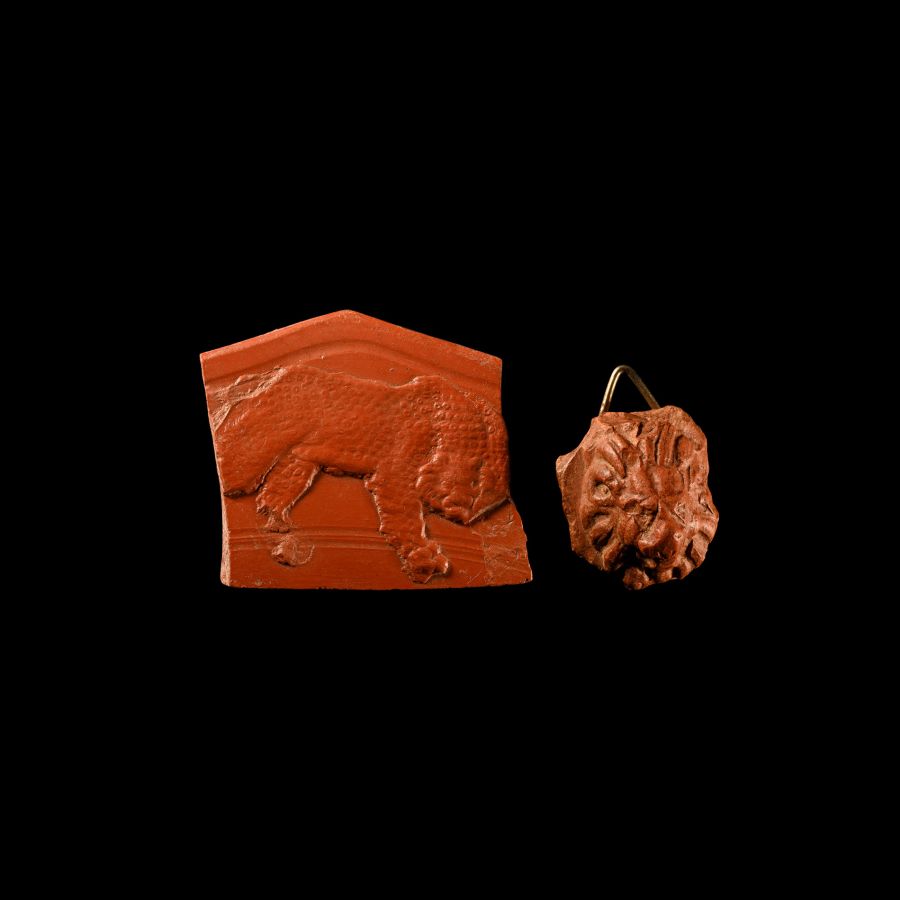
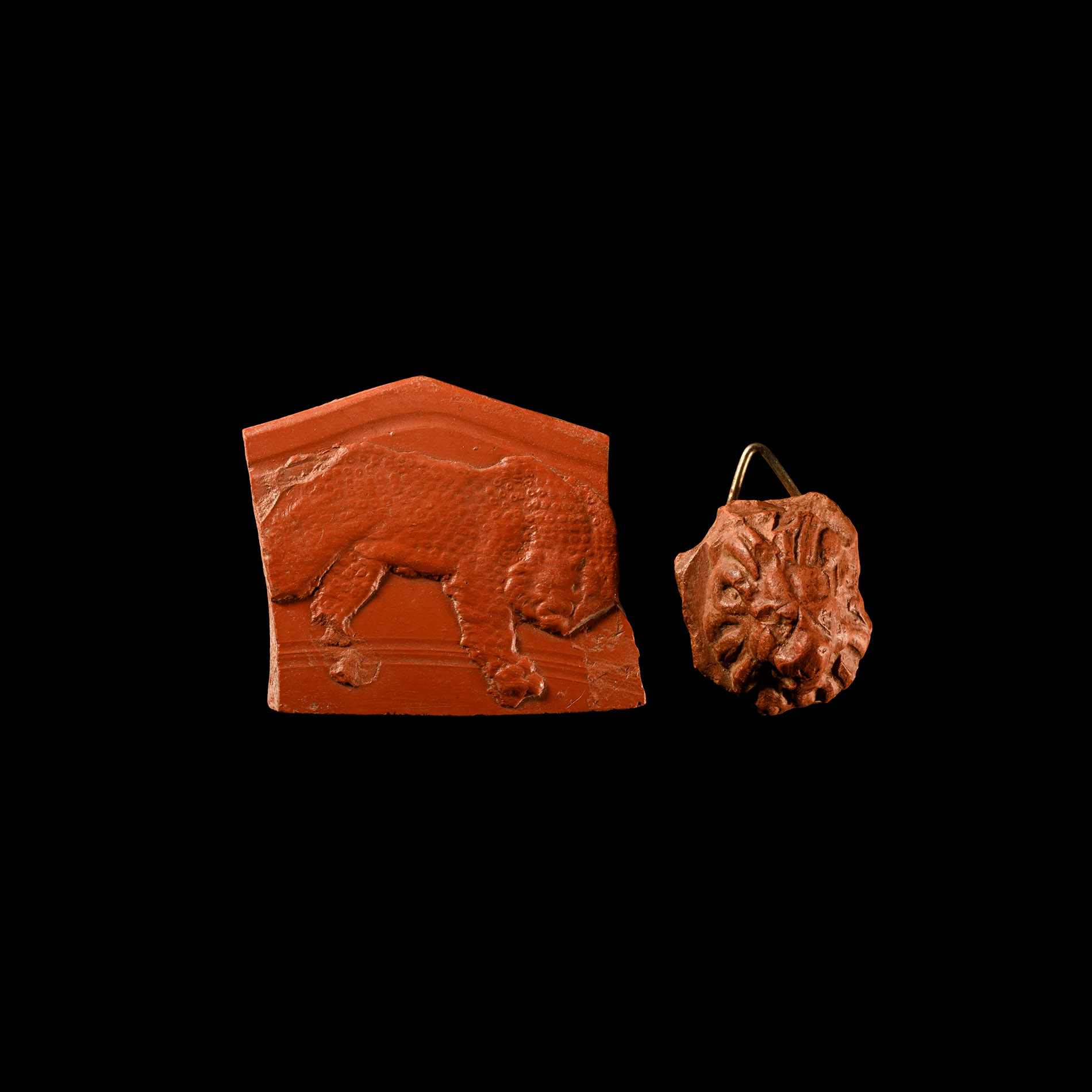
Roman Redware Sherd Group with Lions
4TH-5TH CENTURY A.D.
1 3/8 - 2 3/8 in. (54 grams total, 35-60 mm).
The larger fragment with stepped neck and rim, bearing a leaping lion right in raised relief; the smaller fragment with leonine protome; both in terra sigillata africana; modern suspension loop to reverse. [2, No Reserve]
ProvenanceAcquired 1960s-1990s.
From the late Alison Barker collection, a retired London barrister.
Cf. Humer, F., Kremer, G., Pollhammer, E., Pülz, A., AD 313 Von Carnuntum zum Christentum, Bad Voslau, 2014, n.331, for similar fragment of African redware.
FootnotesThe most ancient production of red African ware began in the Flavian Age. Towards the second half of the 3rd century A.D. – but most probably before – the production reached its zenith and African redware pottery was imported from all the Imperial provinces.
CONDITIONTimeLine Auctions follows a vetting process to ensure the authenticity and legality of all items, reinforcing our commitment to integrity and responsible trading. Each antiquity, antique, and coin lot undergoes thorough examination by a vetting committee of at least ten external specialists, professional trade association members, scientists, and archaeologists: Our Vetting Process
AUCTIONS:
TimeLine is a leading auction house specialising in antiquities, ancient art, collectables, natural history, coins, medals, and books. Our auctions offer museums, collectors, historians, and enthusiasts the opportunity to acquire unique and historically significant pieces.
-
.jpg)
Roman Bronze Military Diploma for Marona, son of Baddaus, a Soldier of Ala Bosporanorum
Dated 19th November 102 A.D.Sold for (Inc. bp): £4,940
Bifacial discharge plaque honesta missio, for a soldier from Commagene serving under Emperor Trajan; Side A: diplomatic text in fourteen lines of seriffed capitals: [IMPERATOR CAESAR DIVI NERVAE FILIVS NERVA TRAIANVS AVGVSTVS GERMANICVS DACICVS PONTIFEX MAXIMVS TRIBVNICIA POTESTATE VI IMPERATOR IIII CONSUL IIII PATER PATRIAE ... QUORUM NOMINA SUBSCRIPTA SUNT IPSIS LIBERIS POSTERISQUE EORVM CIVITATEM DEDIT ET CO] NUBIVM CVM UXORIBVS QVAS TVNC HABVISSENT CVM EST CIVITAS IIS DA- TA AVT SIQVI CELIBES ESSENT CVM IIS QUAS POSTEA DVXISSENT DVM- TAXAT SINGVLI SINGVLAS A (NTE) D(IEM) XIII K(ALENDAS) DECEMBR(ES) L(VCIO) ANTONIO ALBO M(ARCO) IVNIO HOMVLLO CO(N)S(VLIBVS) ALAE BOSPORANORVM CVI PRAEST C(AIVS) IVLIUS CAPITO GREGALI MARONAE BADDAEI F(ILIO) COMMAGEN(IENSI) DESCRIPT(VM) ET RECOGNIT(VM) EX TABVLA AENEA QVAE FIXA EST ROMAE Translation: The Emperor Caesar Nerva Traianus Augustus, conqueror of Germany, conqueror of Dacia, son of the deified Nerva, pontifex maximus, in his sixth year of tribunician power, four times acclaimed Imperator, four times consul, father of his country, has granted to the ones...whose names are written below, citizenship for themselves, their children and descendants, and the right of legal marriage with the wives they had when citizenship was granted to them, or, if any were unmarried, with those they later marry, but only a single one each. 19 November, in the consulships of Lucius Antonius Albus and Marcus Iunius Homullus (A.D. 102). To Marona, son of Baddaus, from Commagene, soldier of the Ala Bosporanorum, commanded by Gaius Iulius Capito. Copied and checked from the bronze tablet set up at Rome. Side B: tabulation in two columns of witness names in seriffed rustic capitals: L. TERENTI • NEPOTIS (Seal of) Lucius Terentius Nepos T. VILLI • [hole for sealing the document] HERACLIDES (Seal of) Titus Villus Heraclides A. LARCI • PHRONIMI (Seal of) A. Larcius Phronimus Q • AEMILI • SOTERICI (Seal of) Quintus Aemilius Sotericus P. CAVLI • VITALIS (Seal of) Publius Caulius Vitalis L. PVLLI • [hole for sealing the document]CHARITONIS (Seal of) Lucius Pullius Chariton P. ATINI • TROPHIMI (Seal of) Publius Atinius Trophimus 214 grams, 17 cm
Ex old English collection. London art market, 1980s. This lot has been checked against the Interpol Database of stolen works of art and is accompanied by search certificate number no.11858-207740.
In the 1st century the Ala Bosporanorum was camped near the Euphrates. It was stationed in Dacia in the 2nd century; stayed for a while in Vecel, from where it went to Maroskeresztúr, where stamped bricks of their building work appear. The unit was also stationed in upper Pannonia in 116 A.D. -
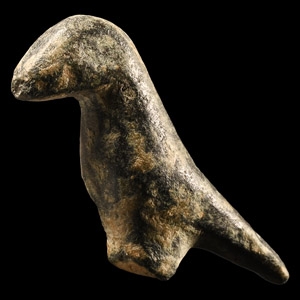
Roman Bronze Eagle Finial
1st-4th century A.D.Sold for (Inc. bp): £33
Modelled in the round with naturalistic detailing, wings closed. 8.9 grams, 30 mm
‘The Ancient Menagerie Collection’ formerly the property of a Cambridgeshire lady, collected since the 1990s and acquired from auctions and dealers throughout Europe and the USA, now ex London collection. -
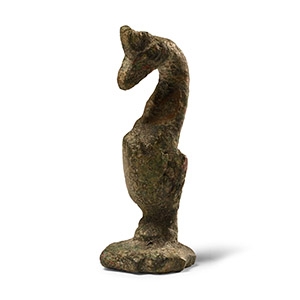
Roman Bronze Mythical Beast Statuette
1st-4th century A.D.Estimate: £100 - 140 (+bp*)
Opening Bid: £56
Modelled in the round depicted upright, standing on an irregular base. 25.7 grams, 45 mm
‘The Ancient Menagerie Collection’ formerly the property of a Cambridgeshire lady, collected since the 1990s and acquired from auctions and dealers throughout Europe and the USA, now ex London collection.
