
Loading, please wait...
LOT 0964
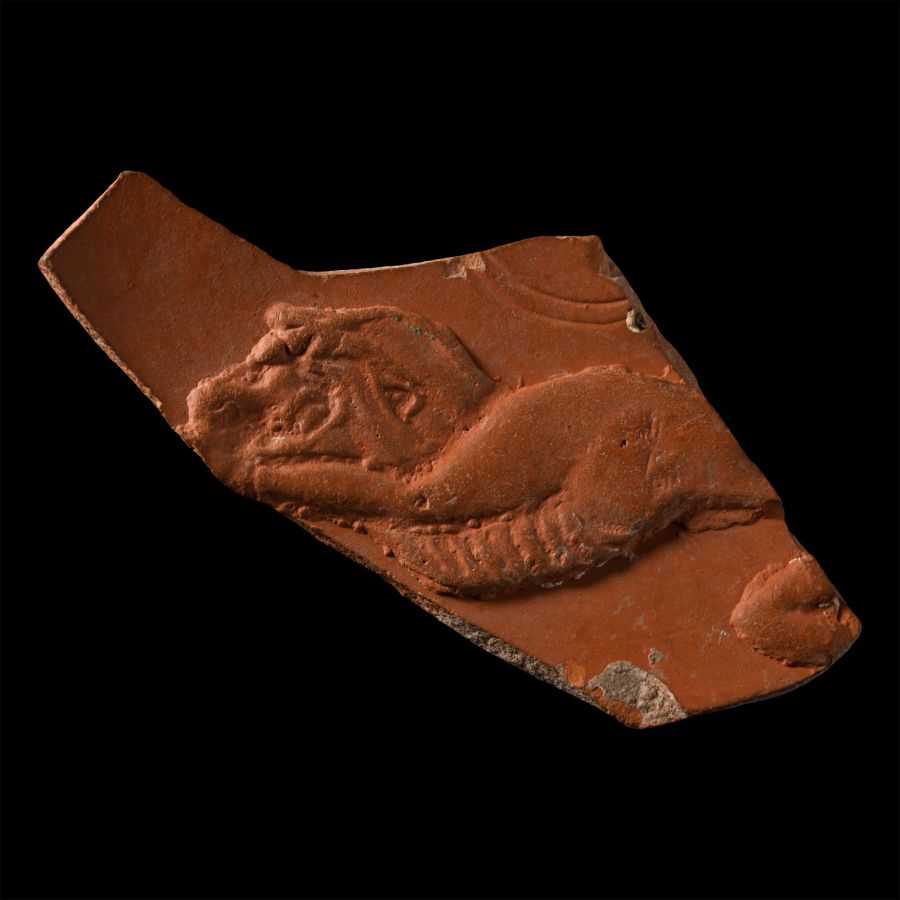
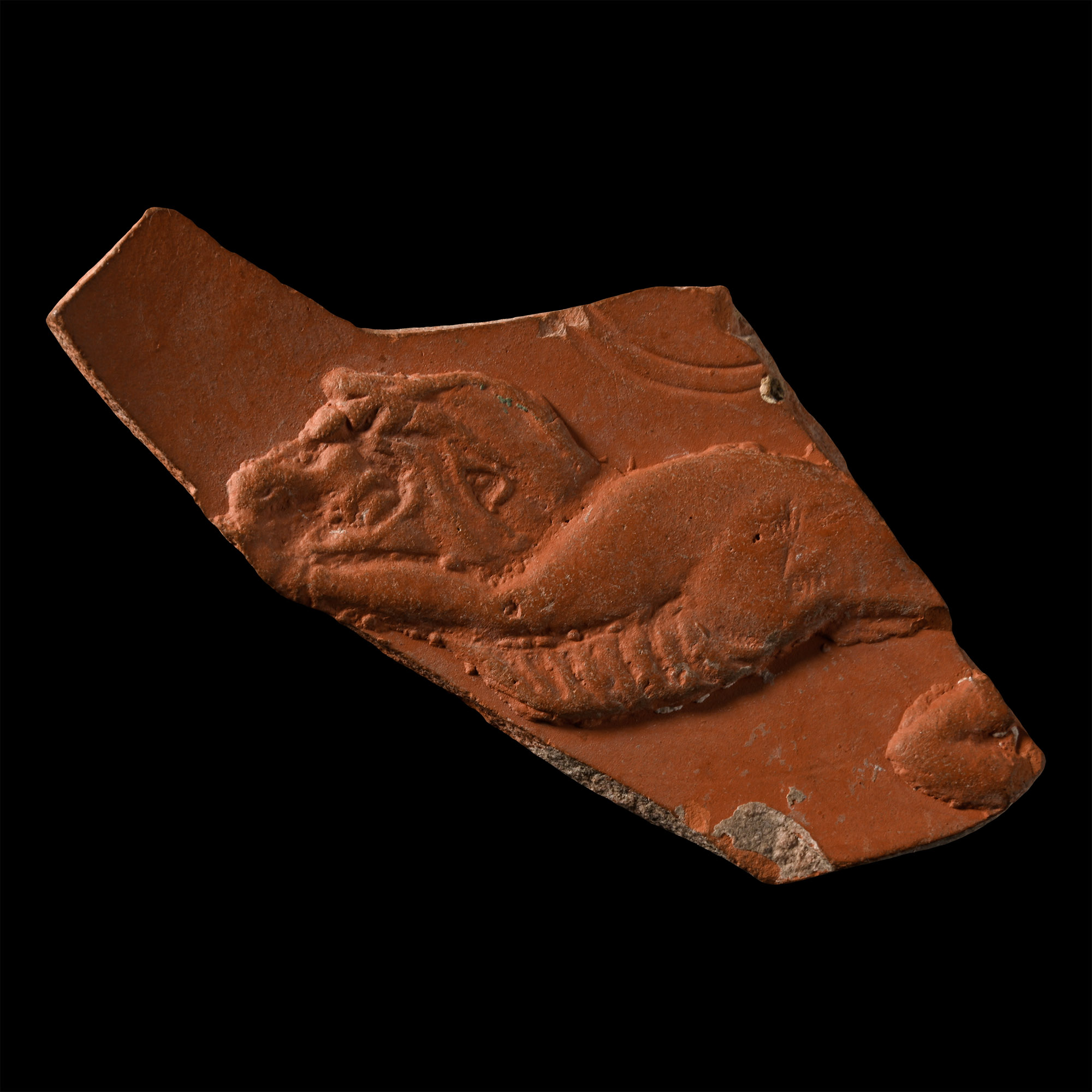
Roman Redware Pot Sherd with Torso of Venus
CIRCA 4TH CENTURY A.D.
3 3/4 in. (26.5 grams, 95 mm).
Irregular ceramic fragment with low-relief image of a female toso and legs with draped fabric panel to left leg, part of elbow at upper edge, incised arc to left edge. [No Reserve]
ProvenanceFrom the private collection of Mr Brian Edwards, New Malden, Surrey, UK, formed from the late 1970s-early 1980s; thence by descent.
Accompanied by the original collector's data sheet(s) with reference no.A35.
Probably Venus Anadyomene arriving at the seashore having emerged fully-formed from the waves.
CONDITIONTimeLine Auctions follows a vetting process to ensure the authenticity and legality of all items, reinforcing our commitment to integrity and responsible trading. Each antiquity, antique, and coin lot undergoes thorough examination by a vetting committee of at least ten external specialists, professional trade association members, scientists, and archaeologists: Our Vetting Process
AUCTIONS:
TimeLine is a leading auction house specialising in antiquities, ancient art, collectables, natural history, coins, medals, and books. Our auctions offer museums, collectors, historians, and enthusiasts the opportunity to acquire unique and historically significant pieces.
-
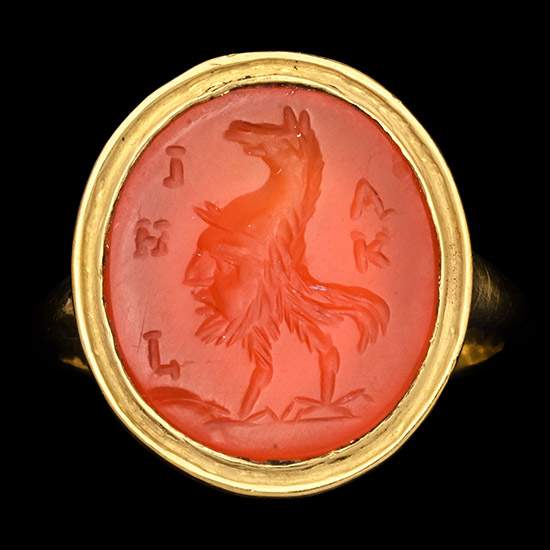
Roman Carnelian Gemstone with Gryllus in Gold Ring
2nd century A.D.Sold for (Inc. bp): £2,860
Translucent oval intaglio featuring a standing gryllus wearing a gryphon-headed helmet, flanked by the inscription 'KAΛHI' meaning 'to the beautiful one'; set in a later gold ring with a D-section hoop; supplied with a museum-quality impression. 9.29 grams, 23.83 mm overall, 20.32 x 17.88 mm internal diameter (approximate size British R 1/2, USA 8 3/4, Europe 19.38, Japan 18)
Acquired on the European art market. This lot has been checked against the Interpol Database of stolen works of art and is accompanied by search certificate number no.13322-257896.
Fanciful combinations of various human and animal heads, sometimes with the addition of other elements, are generally called grylloi. These fantastic devices were more than mere artists' fancies and were worn by the ancient Romans and others for their supposed efficacy in averting the evil eye. -
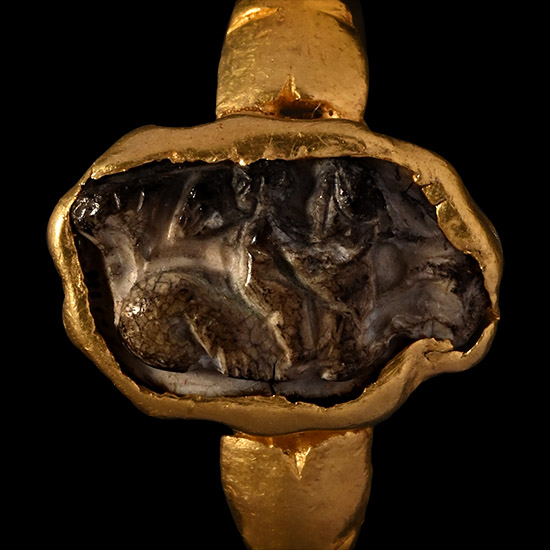
Roman Gold Ring with Burnt Agate Cameo of Eros, the Greek God of Love Riding a Hippocampus
1st century A.D.Estimate: £1,200 - 1,700 (+bp*)
Opening Bid: £600
D-section hoop with ellipsoid cell, inset cameo with Eros on a hippocamp. 3.59 grams, 20.92 mm overall, 16.98 mm internal diameter (approximate size British M, USA 6, Europe 12.46, Japan 12)
Private collection, Europe. Acquired on the English art market. -
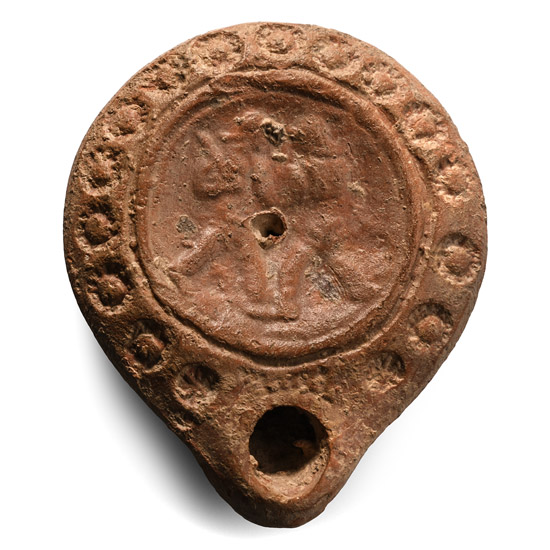
Roman Terracotta Oil Lamp with Fighting Gladiators
2nd century A.D.Estimate: £200 - 300 (+bp*)
Opening Bid: £100
Broad and squat with short stub nozzle, concentric rings to the base, row of impressed annulets to the shoulder, discus with central filler hole; low-relief scene of two murmillo gladiators in combat. 62 grams, 82 mm
From a German private collection, 1980s. Property of an Essex, UK, gentleman.
