
Loading, please wait...


LOT 0762
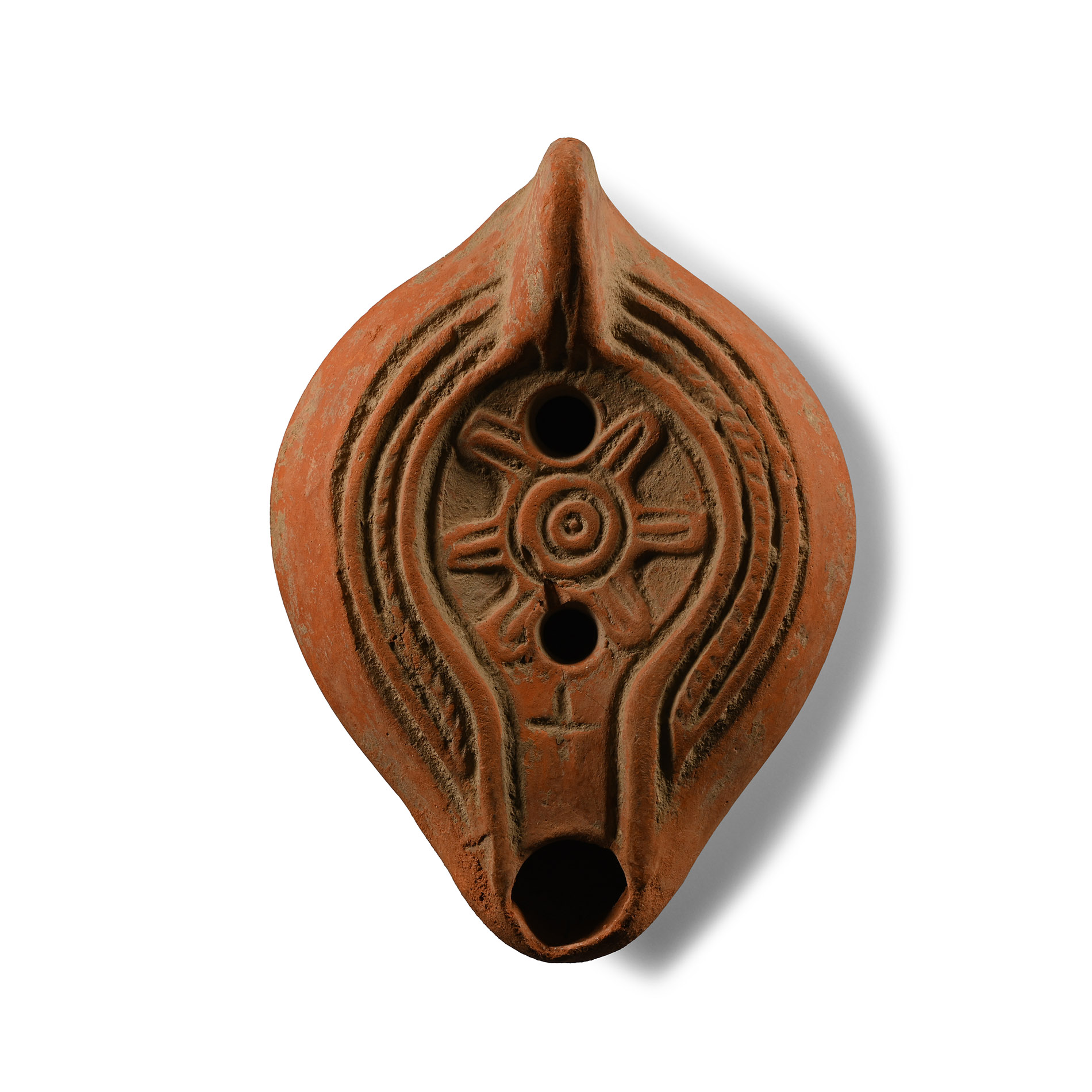
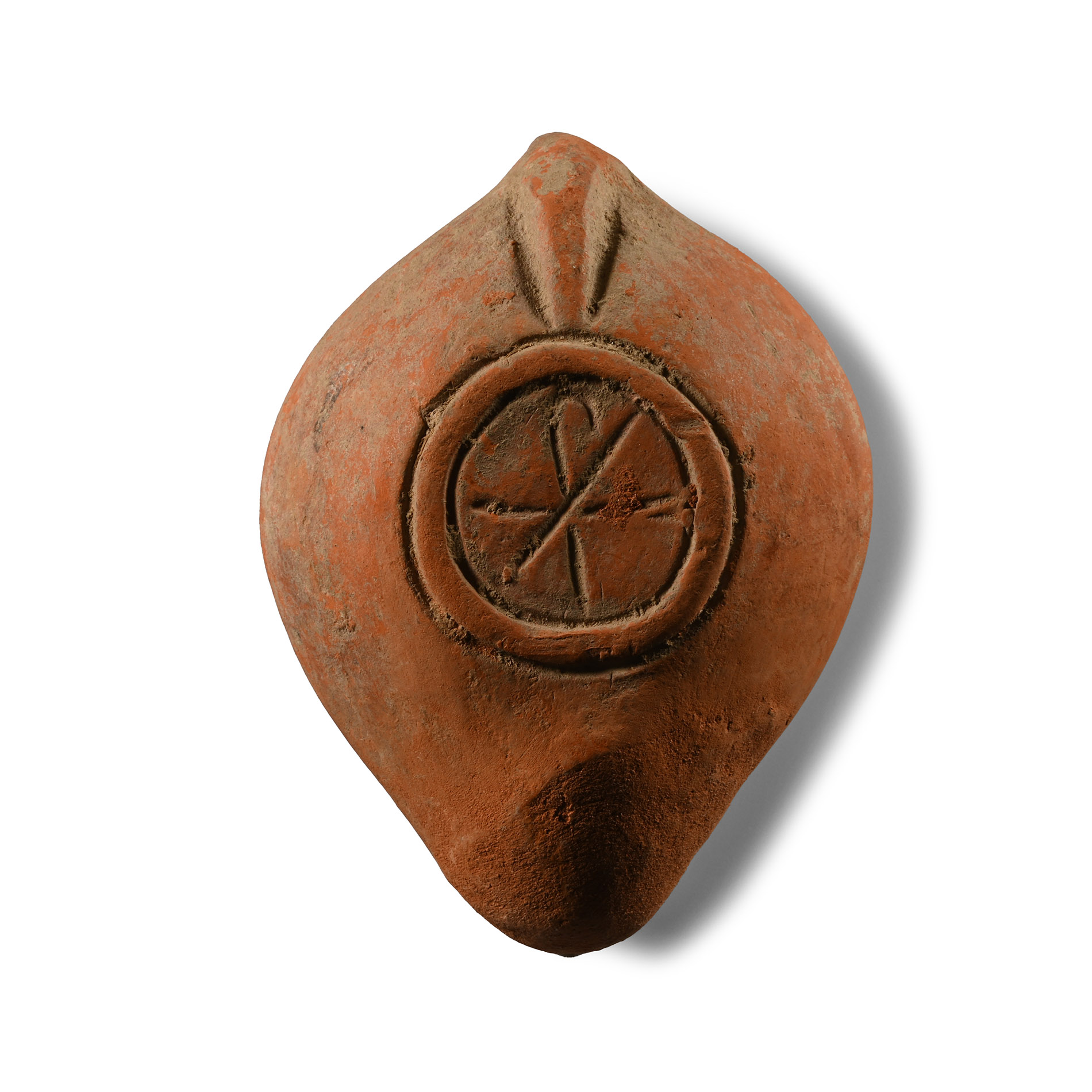
Roman Redware Oil Lamp with Christian Symbols
NORTH AFRICA, CIRCA 375-450 A.D.
4 5/8 in. (177 grams, 11.7 cm).
Redware oil lamp of Hayes's type I, the discus decorated with a stylised blossom, a cross below, and grooved ridges around much of the perimeter; lug handle to rear, a low ring base to the underside with inscribed mark in the form of the Christogram symbol (Chi-Rho). [No Reserve]
ProvenanceFrom the private collection of H.L., Rhineland, Germany, since before 2000.
Ex TimesAncient, Bristol, UK.
Accompanied by a copy of a previous catalogue entry and old handwritten collector's ticket.
This lot is accompanied by an illustrated lot declaration signed by the Head of the Antiquities Department, Dr Raffaele D’Amato.
TimeLine Auctions follows a vetting process to ensure the authenticity and legality of all items, reinforcing our commitment to integrity and responsible trading. Each antiquity, antique, and coin lot undergoes thorough examination by a vetting committee of at least ten external specialists, professional trade association members, scientists, and archaeologists: Our Vetting Process
AUCTIONS:
TimeLine is a leading auction house specialising in antiquities, ancient art, collectables, natural history, coins, medals, and books. Our auctions offer museums, collectors, historians, and enthusiasts the opportunity to acquire unique and historically significant pieces.
-

Roman Marble Portrait of Gaius Caesar
Augustan, circa 1 A.D.Estimate: £18,000 - 24,000 (+bp*)
Opening Bid: £10,000
Modelled in the round and carved in Parian marble, head of a male youth depicted turning slightly to his left, hair trimmed in the Julian style; with soft facial features and long neck; believed to be of Gaius Iulius Caesar Vipsanianus (20 B.C.- 4 A.D.); mounted on a custom-made stand. 17.4 kg total, 48 cm high including stand
Acquired on the London art market in the 1970s by the previous owner’s late father. with Christie’s London, 25 April 2007, no.260. UK private collection, London. Anonymous sale, Bonhams, London, 16 April 2015, no.130. Accompanied by an academic report by Dr Raffaele D’Amato. This lot has been checked against the Interpol Database of stolen works of art and is accompanied by a search certificate number no.163499-10061. This lot has been cleared against the Art Loss Register database, and is accompanied by an illustrated lot declaration signed by the Head of the Antiquities Department, Dr Raffaele D’Amato.
Gaius Caesar (20 B.C.-4 A.D.) and his brother Lucius Caesar (17 B.C.-2 A.D.) held significant positions in the political and dynastic plans of Emperor Augustus. Born to Augustus's daughter Julia and his advisor Marcus Vipsanius Agrippa, they were adopted by Augustus in 17 B.C. to become his heirs, since he lacked natural-born sons. Portraits of the brothers depict them as resembling Augustus, indicating their importance within the imperial family. Gaius's portraits were classified into five types, with this head identified as Type IV, likely created in 1 A.D. to celebrate his consulship. A similar portrait of Gaius exists in Corinth alongside his brother and Augustus. In 1 B.C., Gaius was appointed to govern the eastern provinces, where he successfully negotiated a peace treaty with King Phraates V of Parthia. However, tragedy struck when Gaius fell ill in Anatolia and died at 23 years of age, following the death of his brother Lucius. These deaths disrupted Augustus' plans for succession and led him to adopt Tiberius, his stepson, who eventually became emperor in 14 A.D. -
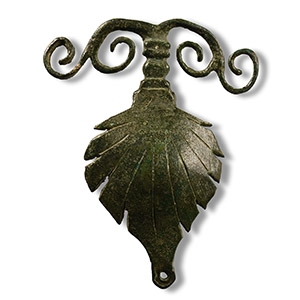
Roman Bronze Military Mount From a Pompeii Gladius Scabbard
1st century A.D.Sold for (Inc. bp): £130
Comprising a domed vine-leaf with notched edge and incised veins, finial with lateral scrolled tendrils; pierced for attachment. 6.12 grams, 50 mm
Acquired on the London art market in the late 1980s-1990s. From the family collection of an East London, UK, gentleman. This lot is accompanied by an illustrated lot declaration signed by the Head of the Antiquities Department, Dr Raffaele D’Amato.
The sword of Pompeii typology was the main side weapon of the Roman legionary from the second half of the 1st century A.D. until the end of the 2nd century A.D. In the Flavian Age, the scabbard was decorated with various bronze appliques: openwork decorated copper-alloy plates and chape, and over the chape, this distinctive bronze foliage mount, used only for these typologies of scabbards. -
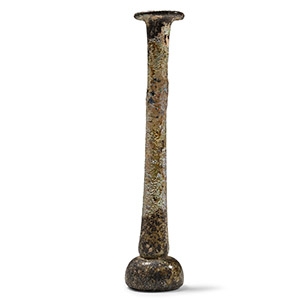
Roman Tall Glass Unguentarium
2nd-3rd century A.DSold for (Inc. bp): £104
Tall iridescent vessel with wide foot and dimpled base, tapering stem and flared rim, two small holes, repaired. 12.5 grams, 14.5 cm
Ex London art market 1990s. From a London, UK, collection. This lot is accompanied by an illustrated lot declaration signed by the Head of the Antiquities Department, Dr Raffaele D’Amato.
