
Loading, please wait...
LOT 0719
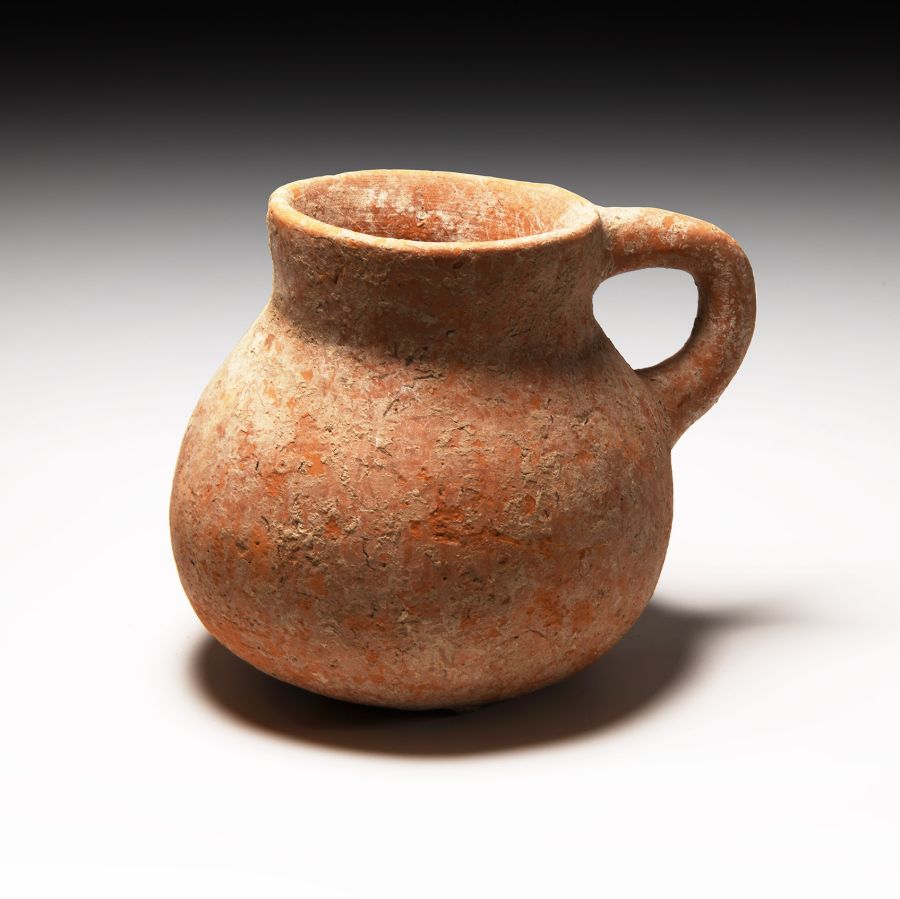
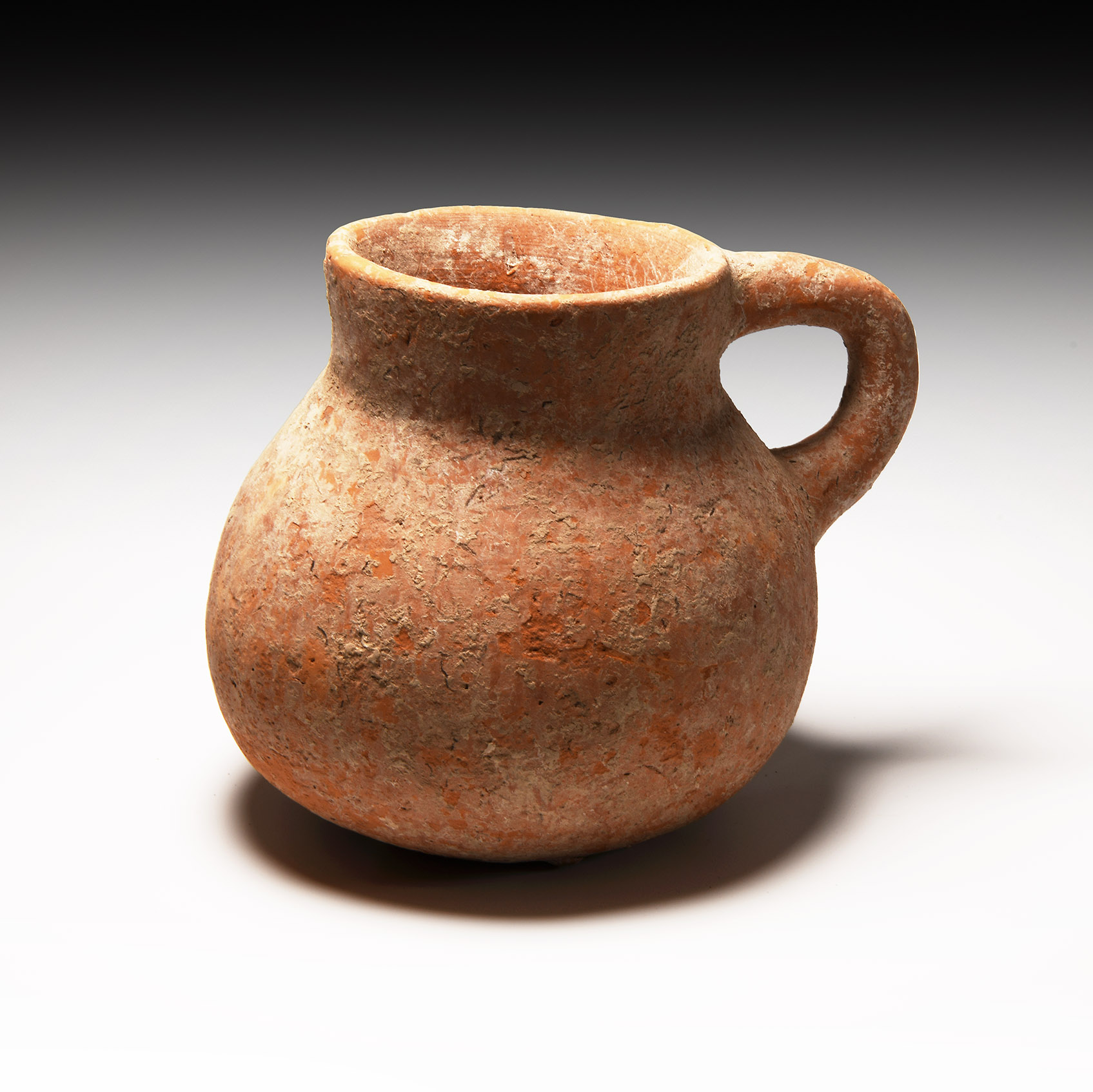
Roman Redware Handled Jug
1ST-4TH CENTURY A.D.
6 in. (464 grams, 15 cm wide).
A squat coarse terracotta jug with thick rim and loop handle to the shoulder. [No Reserve]
ProvenanceAcquired 1980-2015.
Ex Abelita family collection.
TimeLine Auctions follows a vetting process to ensure the authenticity and legality of all items, reinforcing our commitment to integrity and responsible trading. Each antiquity, antique, and coin lot undergoes thorough examination by a vetting committee of at least ten external specialists, professional trade association members, scientists, and archaeologists: Our Vetting Process
AUCTIONS:
TimeLine is a leading auction house specialising in antiquities, ancient art, collectables, natural history, coins, medals, and books. Our auctions offer museums, collectors, historians, and enthusiasts the opportunity to acquire unique and historically significant pieces.
-
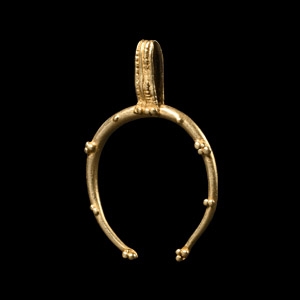
Roman Gold Lunula Pendant
1st-4th century A.D.Sold for (Inc. bp): £364
A crescentic gold lunula pendant with granule clusters to the terminals and body, granulated suspension loop. 1.78 grams, 28 mm
Acquired before 2000. From the collection of a European gentleman living in the UK. -
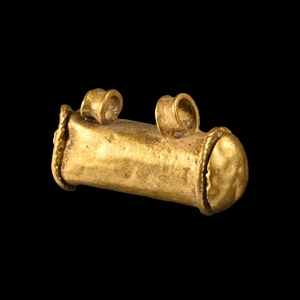
Late Roman Gold Amulet Case Pendant
5th-6th century A.D. or laterEstimate: £120 - 170 (+bp*)
Opening Bid: £60
A gold amulet case pendant composed of a cylindrical body with two suspension loops to one face, filigree collar to both arms, one end face retaining a removeable domed cap. 1.15 grams, 15 mm
Acquired 1980-2015. Ex Abelita family collection. -
.jpg)
Roman 'Thames' Samian Ware Stamped Fragment Group
Circa 2nd century A.D.Sold for (Inc. bp): £143
A group of seven stamped Samian ware vessel bases including specimens labelled by the collector; accompanied by a copy of the collector's typed notes, identifying four of the stamps: 'g. MARCELLI I F Marcellinus Central Gaul mid 2nd century; h. ANNIO F Annius Central Gaul early 2nd century; i. NOBILIANI Nobilianus Central Gaul; j. SOLINI.OFI Solinus (officiana) Central Gaul mid 2nd century'; three non-identified stamps, possibly reading 'AEIOX.E; [ ]ERNI; MAX[]M'. 278 grams total, 3.8-10.3 cm
Found Billingsgate spoil from the Thames foreshore, London, UK. Acquired on the UK antiques market between 1974-1985. Albert Ward collection, Essex, UK. Accompanied by a copy of a typed original identification document from the Museum of London dated 29th August 1984.
