
Loading, please wait...
LOT 0950
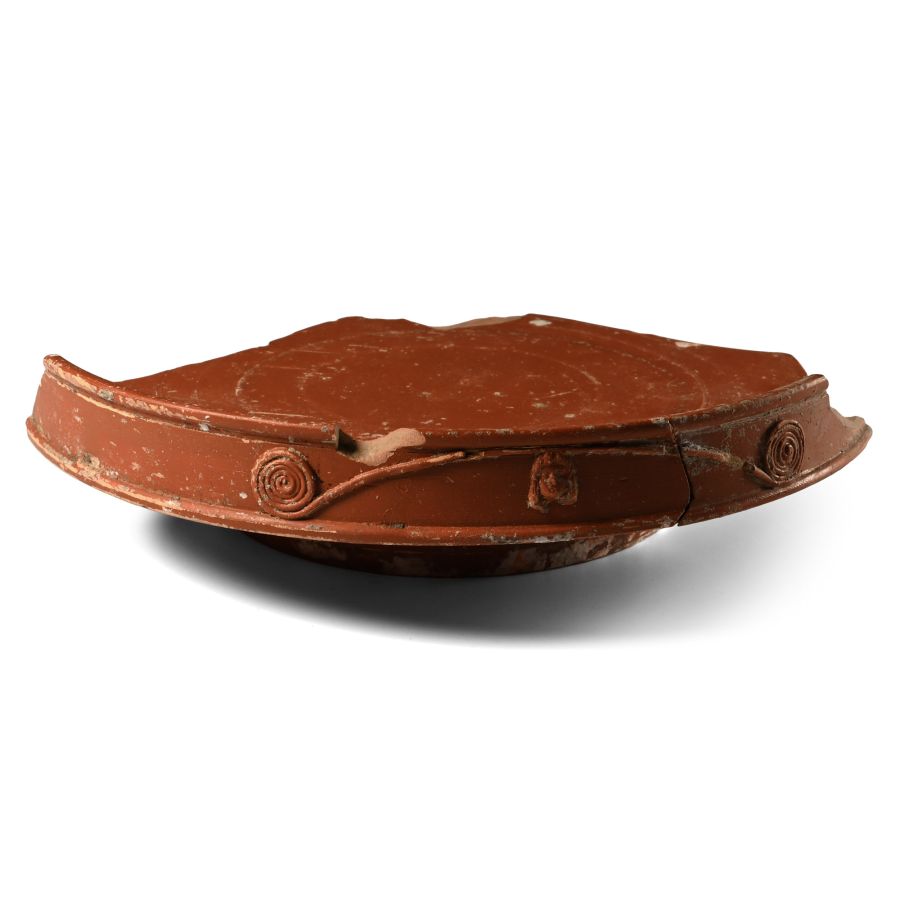
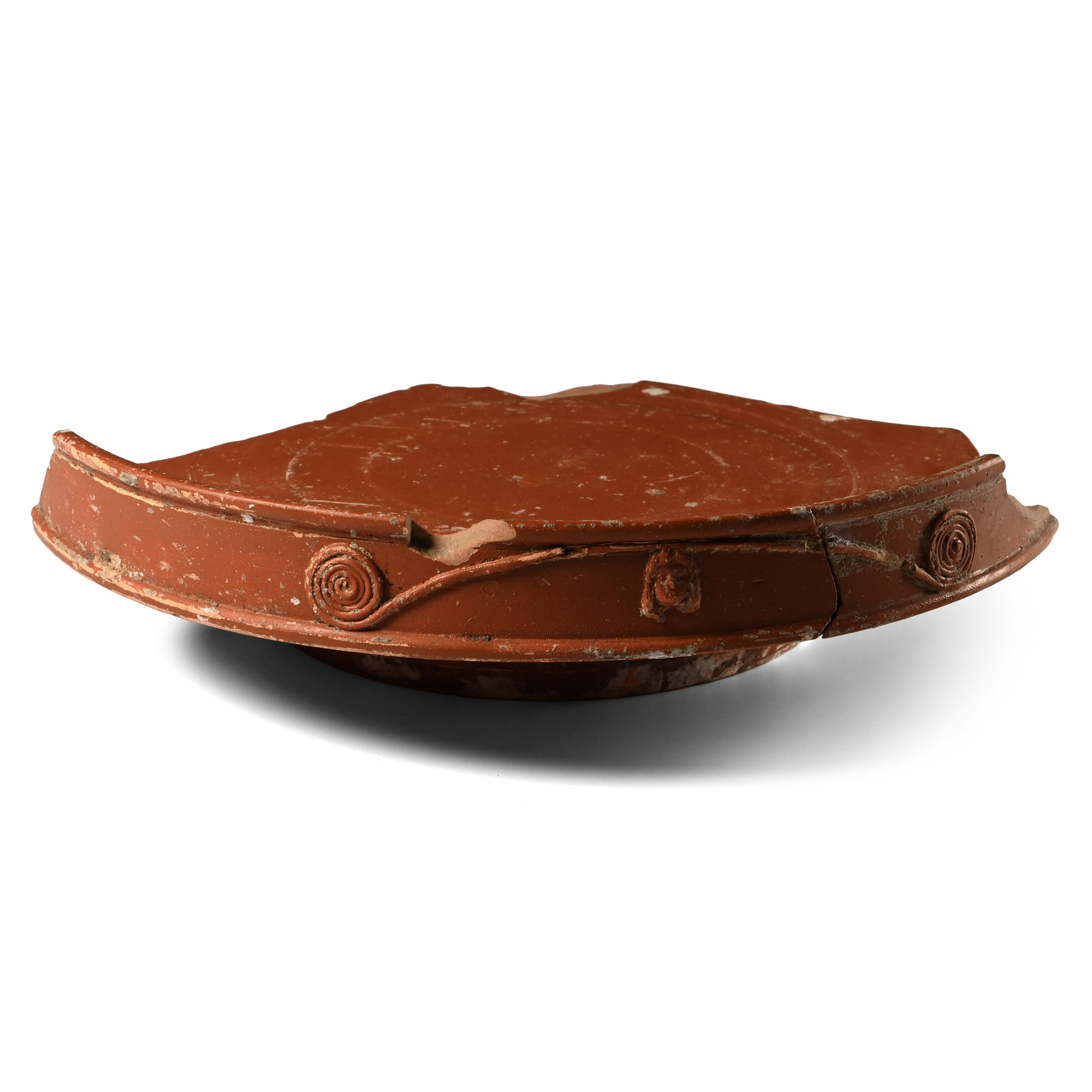
Roman Redware Footed Dish Fragment with Maker's Mark
4TH CENTURY A.D.
7 in. (220 grams, 17.6 cm).
Comprising a large portion of a shallow round dish with ring foot, a shoe-shaped maker's mark 'GELLI' to the centre. [No Reserve]
ProvenanceEx German art market, 2000s.
Acquired from an EU collector living in London.
From the collection of Surrey, UK, gentleman.
This lot is accompanied by an illustrated lot declaration signed by the Head of the Antiquities Department, Dr Raffaele D’Amato.
TimeLine Auctions follows a vetting process to ensure the authenticity and legality of all items, reinforcing our commitment to integrity and responsible trading. Each antiquity, antique, and coin lot undergoes thorough examination by a vetting committee of at least ten external specialists, professional trade association members, scientists, and archaeologists: Our Vetting Process
AUCTIONS:
TimeLine is a leading auction house specialising in antiquities, ancient art, collectables, natural history, coins, medals, and books. Our auctions offer museums, collectors, historians, and enthusiasts the opportunity to acquire unique and historically significant pieces.
-
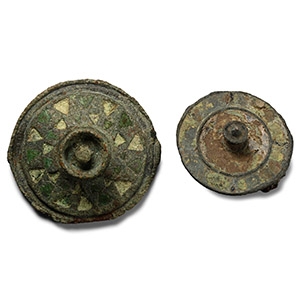
Roman Enamelled Bronze Plate Brooch Group
2nd century A.D.Estimate: £100 - 140 (+bp*)
Opening Bid: £50
Comprising: discoid type with central trumpet-shaped stud, enamelled cells, pin and catch to reverse; conical type with carinated rim, central stud, triangular cells for enamel inlay. 20.45 grams total, 27-34 mm
Acquired on the London art market in the late 1980s-1990s. From the family collection of an East London, UK, gentleman. This lot is accompanied by an illustrated lot declaration signed by the Head of the Antiquities Department, Dr Raffaele D’Amato. -
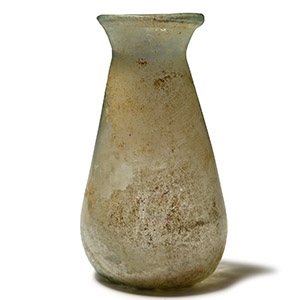
Roman Glass Jar
4th century A.D.Sold for (Inc. bp): £111
Piriform in profile with flared neck and rolled rim, dimple base. 36 grams, 11.1 cm
Ex Helene Wackernagel-Wenk (1901-1979), Switzerland; thence by descent. This lot is accompanied by an illustrated lot declaration signed by the Head of the Antiquities Department, Dr Raffaele D’Amato.
These small jars were used as storage vessels. Their typology shows similarities with some material from Northern Black Sea region as well as with other glass finds found in Eastern Mediterranean settlements due to the decreasing variety of forms starting from the Late Roman Period, with whom they have similarities in colour, shape and typology. Helene Wackernagel-Wenk was a distinguished collector of art and antiquities, celebrated for her refined taste and commitment to preserving cultural heritage. Her collection encompassed a wide range of artefacts, reflecting her deep appreciation for the artistic and historical significance of ancient civilizations. Known for her meticulous curation, Wackernagel-Wenk’s legacy endures through the exceptional pieces that once formed part of her esteemed collection. Artefacts associated with her name are highly valued for their provenance and quality. -
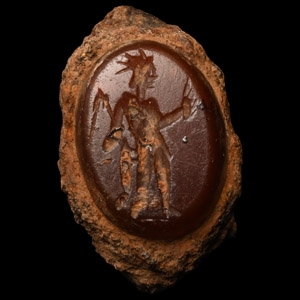
Roman Carnelian Gemstone with Sol Standing Right
2nd-3rd century A.D.Sold for (Inc. bp): £195
Ellipsoid cloison with intaglio figure of Sol standing with sceptre in one hand, the other extended, radiate crown to the head; mounted in a fragment of the ferrous finger ring. 2.75 grams, 19 mm
From the Fadel family collection, London, UK, 1970s. This lot is accompanied by an illustrated lot declaration signed by the Head of the Antiquities Department, Dr Raffaele D’Amato.
