
Loading, please wait...
LOT 0675
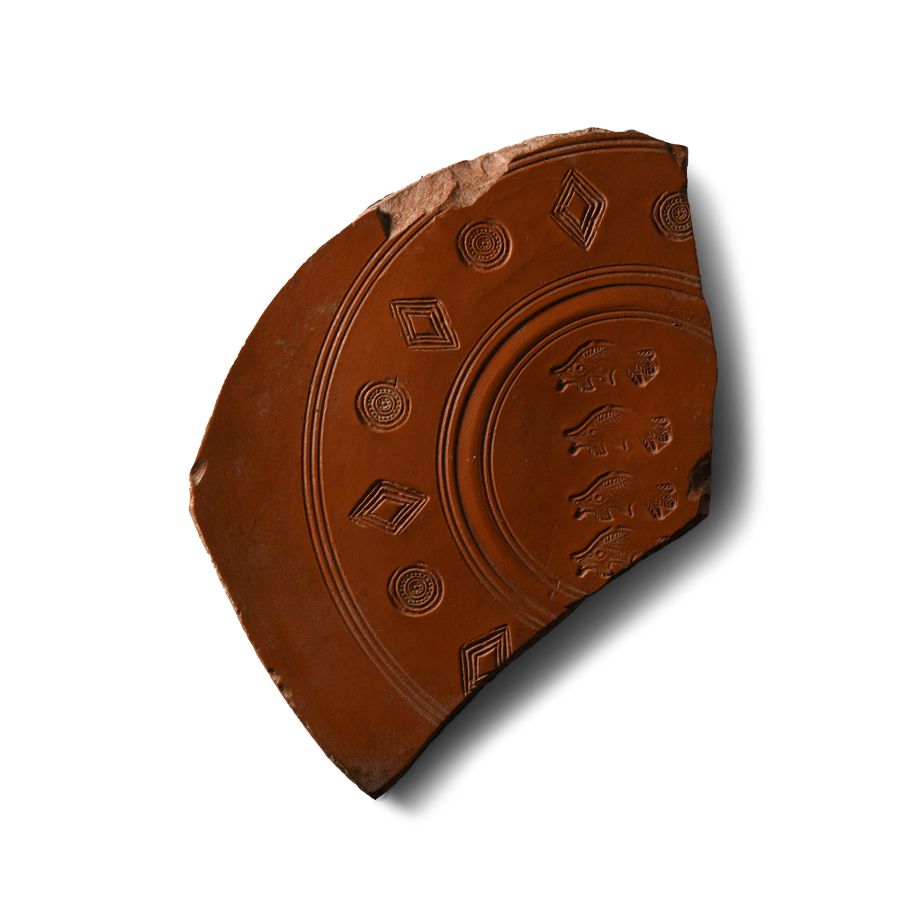
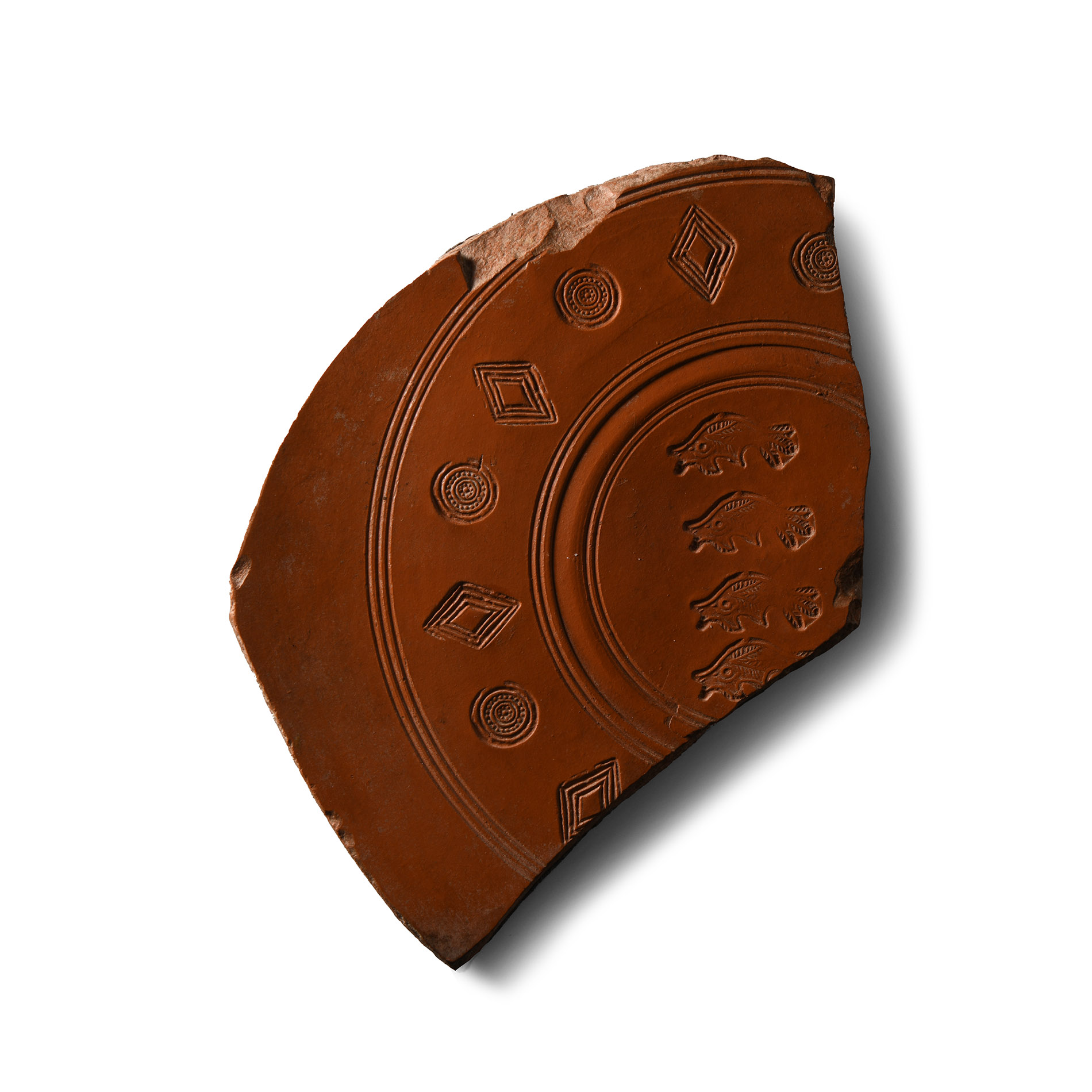
Roman Redware Fish Sherd with Christian Symbols
4TH-5TH CENTURY A.D.
6 7/8 in. (178 grams, 17.5 cm).
Flat ceramic sherd with incised concentric rings, band of impressed alternating lozenges and roundels, group of four fish to the centre; fabric-backed. [No Reserve]
ProvenanceAcquired 1960s-1990s.
From the late Alison Barker collection, a retired London barrister
Cf. Corrado, M., ‘Sigillata Africana C decorata a rilievi applicati e a matrice dal territorio di Nicotera (Sealed Africana C decorated with applied reliefs and matrix from the Nicotera' territory)’ in Givigliano, G.P., D’Andrea, M., Insediamenti e paesaggi dalla Preistoria al Tardo Antico sul monto Poro, Vibo Valentia, 2014, pp.167-221, figs.27,49,50, for similar images.
FootnotesThe representation of fish on this terra sigillata from a North African workshop suggests the connection with Christian faith through the fish symbol. The ancient Greek: 'ἰχθύς', was an acronym for the phrase ‘Jesus Christ, Son of God’, in Greek, and was used by early Christians for this reason. The fish symbol was very common in the catacombs of Rome and was used as a recognition symbol among the early Christians.
CONDITIONTimeLine Auctions follows a vetting process to ensure the authenticity and legality of all items, reinforcing our commitment to integrity and responsible trading. Each antiquity, antique, and coin lot undergoes thorough examination by a vetting committee of at least ten external specialists, professional trade association members, scientists, and archaeologists: Our Vetting Process
AUCTIONS:
TimeLine is a leading auction house specialising in antiquities, ancient art, collectables, natural history, coins, medals, and books. Our auctions offer museums, collectors, historians, and enthusiasts the opportunity to acquire unique and historically significant pieces.
-
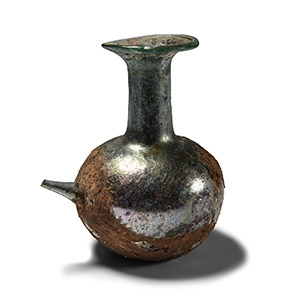
Roman Iridescent Glass Feeder Bottle
2nd-4th century A.D.Estimate: £300 - 400 (‡+bp*)
Opening Bid: £150
With bulbous bottle, tubular neck, broad everted rim and conical spout; extensive iridescence. 40 grams, 10.2 cm high
Acquired early 1990s. Ex private American collection; thence by descent. Private collection since 1998. -
.jpg)
Roman Gold Ring with Serapis Gemstone
1st century A.D.Sold for (Inc. bp): £1,300
Hollow-formed with inset carnelian gemstone engraved with a profile bust of Serapis above a perching eagle flanked by fronds, possibly a marriage. 3.15 grams, 26.98 mm overall, 13.22 mm internal diameter (approximate size British D, USA 1 3/4, Europe 1.15, Japan 1)
Acquired early 1990s. Ex private American collection; thence by descent. Private Swiss collection since 1998. -
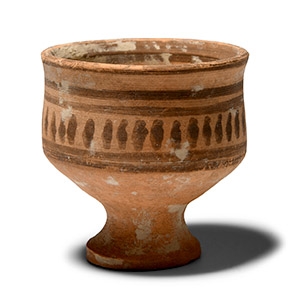
Roman Terracotta Footed Cup
2nd-4th century A.D.Sold for (Inc. bp): £85
With a low foot, carinated bowl with everted rim, the body with painted circumferential lines enclosing a frieze dashes. 58.5 grams, 56 mm high
Acquired in the 1980s-1990s. Property of a Nottinghamshire gentleman.
