
Loading, please wait...
LOT 0710
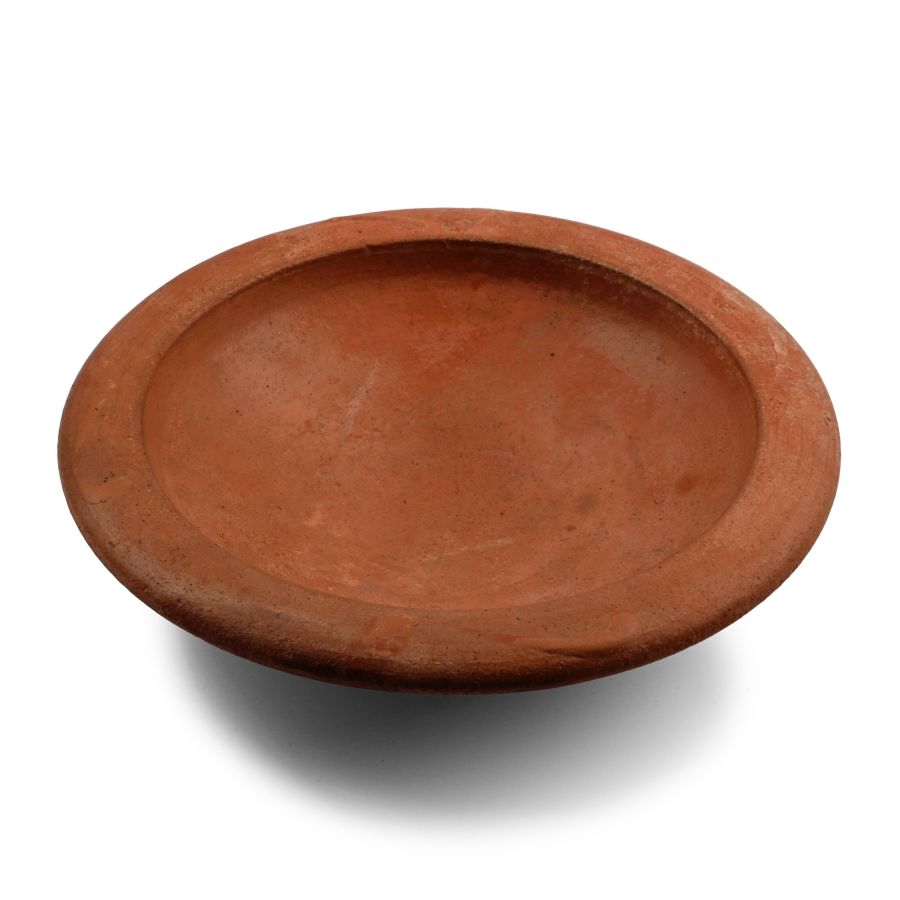
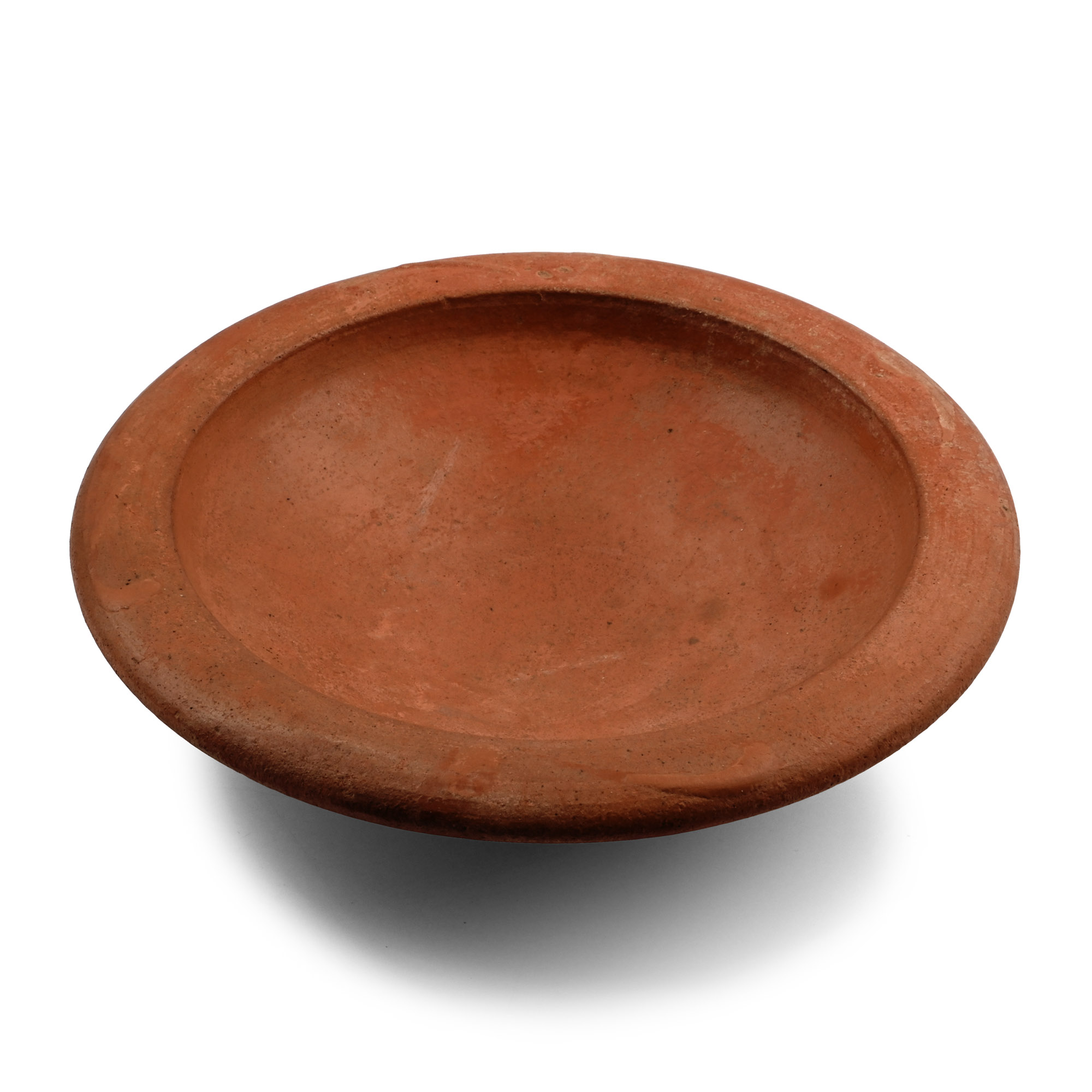
Roman Redware Bowl with Wide Rim
CENTRAL GAUL, 3RD-4TH CENTURY A.D.
6 1/2 in. (287 grams, 16.5 cm).
Squat and shallow with curved rim, old pencilled notation '[....] Alfriston, E. Sussex'. [No Reserve]
ProvenanceFrom the private collection of a Canadian gentleman living in Essex, UK, formed since the 1920s-circa 1990.
Property of an Essex lady until the late 1990s; thence by descent.
From the private collection of an Essex gentleman since the late 1990s.
This lot is accompanied by an illustrated lot declaration signed by the Head of the Antiquities Department, Dr Raffaele D'Amato.
TimeLine Auctions follows a vetting process to ensure the authenticity and legality of all items, reinforcing our commitment to integrity and responsible trading. Each antiquity, antique, and coin lot undergoes thorough examination by a vetting committee of at least ten external specialists, professional trade association members, scientists, and archaeologists: Our Vetting Process
AUCTIONS:
TimeLine is a leading auction house specialising in antiquities, ancient art, collectables, natural history, coins, medals, and books. Our auctions offer museums, collectors, historians, and enthusiasts the opportunity to acquire unique and historically significant pieces.
-
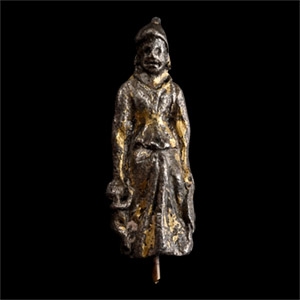
Roman Silver-Gilt Statuette of Athena
1st-2nd century A.D.Sold for (Inc. bp): £433
Modelled in the round, standing erect with crested helmet, shield in her left hand, small shield at her right knee. 4.62 grams, 24 mm
Acquired in the late 1980s-early 1990s. Private collection, London. This lot is accompanied by an illustrated lot declaration signed by the Head of the Antiquities Department, Dr Raffaele D'Amato.
In Greek myths, Athena had no child; nor did Minerva in Roman myths. Figures such as Venus and Isis, who did have children, famously were not warriors and were not depicted with weapons or armour. -
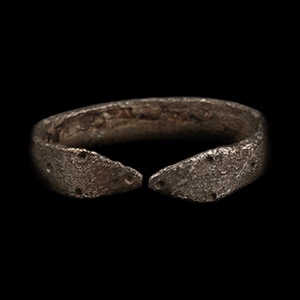
Roman Silver Ring with Snake Heads
1st-4th century A.D.Sold for (Inc. bp): £65
Penannular in form with opposed serpent-head finials, pointillé detailing. 1.65 grams, 20.61 mm overall, 18.01 mm internal diameter (approximate size British L 1/2, USA 6, Europe 11.87, Japan 11)
Acquired on the London art market in the late 1980s-1990s. From the family collection of an East London, UK, gentleman. This lot is accompanied by an illustrated lot declaration signed by the Head of the Antiquities Department, Dr Raffaele D'Amato. -
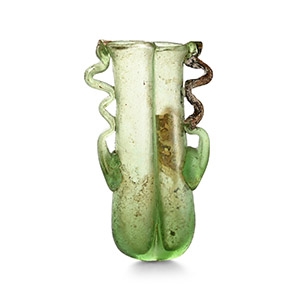
Roman Green Glass Handled Double Unguentarium
4th-5th century A.D.Sold for (Inc. bp): £234
Comprising two parallel tubes with rolled rims, joined at the base; applied handle styled as 'waves', iridescence to the surface. 77 grams, 10.9 cm
Acquired on the European art market in the early 2000s. with Galerie Rhéa, Zurich, Switzerland. This lot is accompanied by an illustrated lot declaration signed by the Head of the Antiquities Department, Dr Raffaele D'Amato.
