
Loading, please wait...
LOT 1230
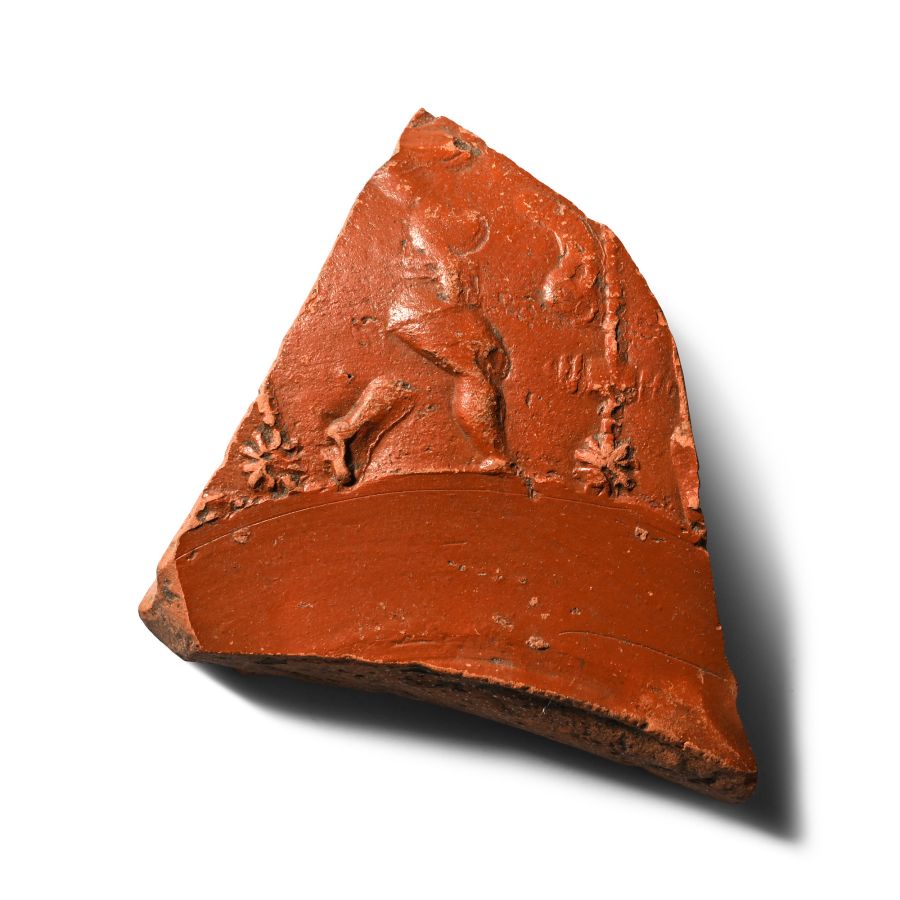
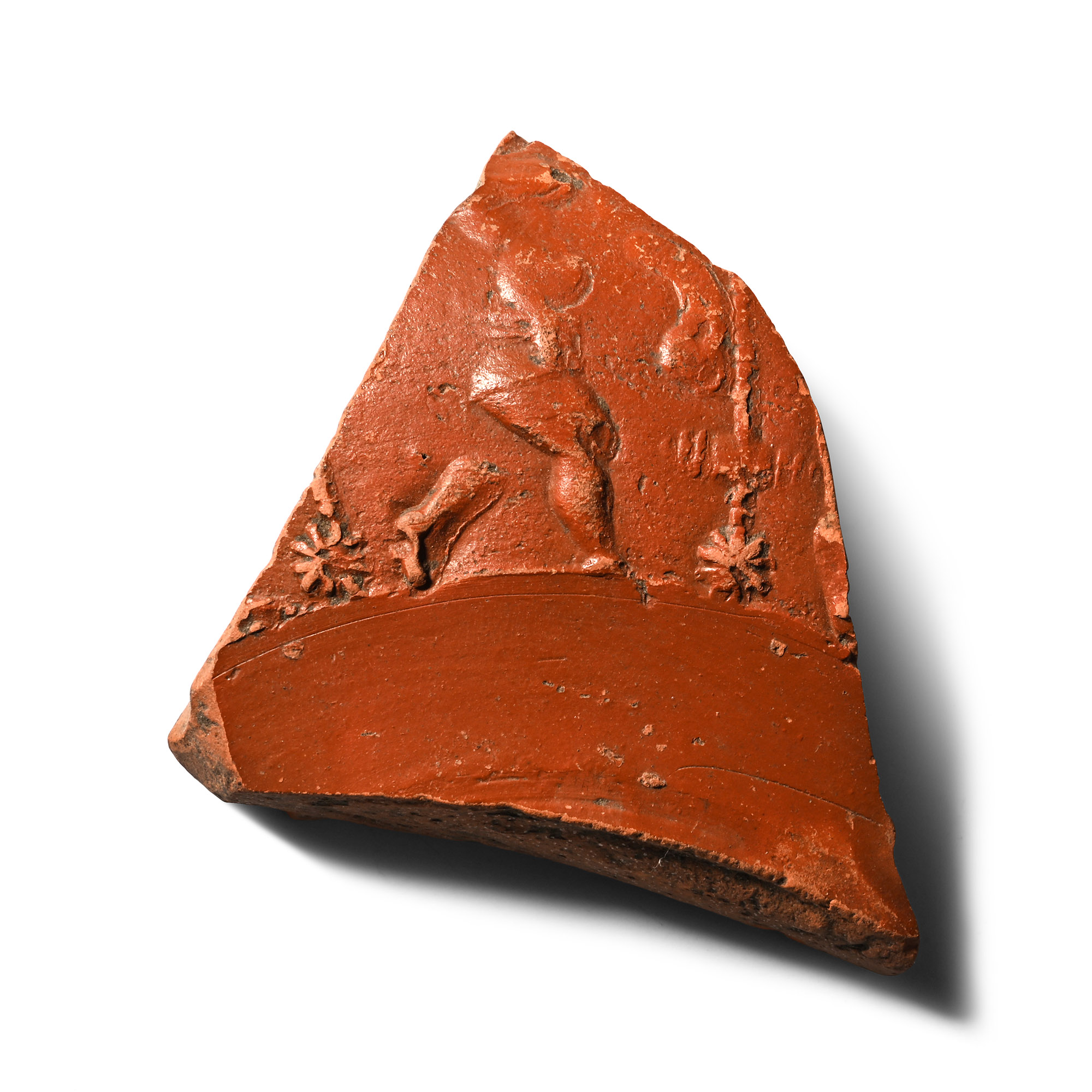
Roman Redware Bowl Fragment with Figure Running Right
3RD-4TH CENTURY A.D.
3 in. (40 grams, 78 mm).
Curved in profile with moulded frieze fragment to outer face, figure advancing on a baseline with rosettes and other detailing; inked legend to one edge 'REG 3'56D37'. [No Reserve]
ProvenanceFrom the private collection of Peter Clayton, FCILIP, Dip, Arch, FSA, FRNS, Hemel Hempstead, Hertfordshire, UK; formed since the late 1950s.
CONDITIONTimeLine Auctions follows a vetting process to ensure the authenticity and legality of all items, reinforcing our commitment to integrity and responsible trading. Each antiquity, antique, and coin lot undergoes thorough examination by a vetting committee of at least ten external specialists, professional trade association members, scientists, and archaeologists: Our Vetting Process
AUCTIONS:
TimeLine is a leading auction house specialising in antiquities, ancient art, collectables, natural history, coins, medals, and books. Our auctions offer museums, collectors, historians, and enthusiasts the opportunity to acquire unique and historically significant pieces.
LOT 1230
Roman Redware Bowl Fragment with Figure Running Right
Estimate £30 - 40€35 - 46 (for guidance only)$41 - 54 (for guidance only)
Opening Bid
£5 (EUR 6; USD 7) +BP*
-
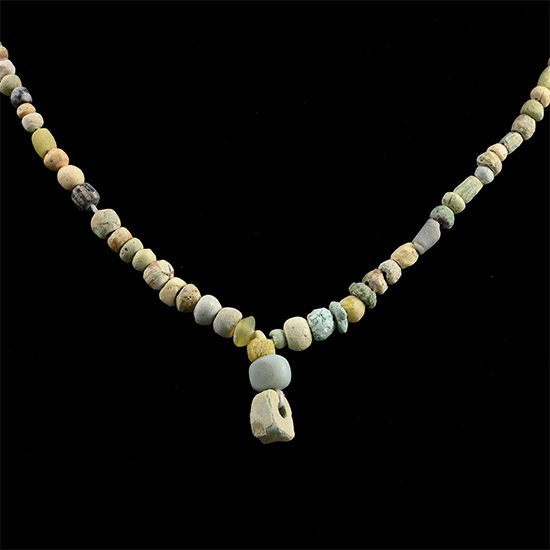
Roman and Other Mixed Faience Bead Necklace String
1st-4th century A.D. and laterEstimate: £50 - 70 (+bp*)
Opening Bid: £5
Composed of oblate, annular and other beads with a polygonal bead as a central feature, restrung. 7.93 grams, 37.5 cm
Ex London, UK, collection, 1990s. -

Roman Gold Ring with Emerald Cabochon
2nd-3rd century A.D.Estimate: £700 - 900 (+bp*)
Opening Bid: £350
Hollow-formed with a later inset cabochon to the bezel. 3.11 grams, 21.73 mm overall, 16.44 x 14.07 mm internal diameter (approximate size British I, USA 4 1/2, Europe 7.44, Japan 7)
Private collection, 1990s-early 2000s. -
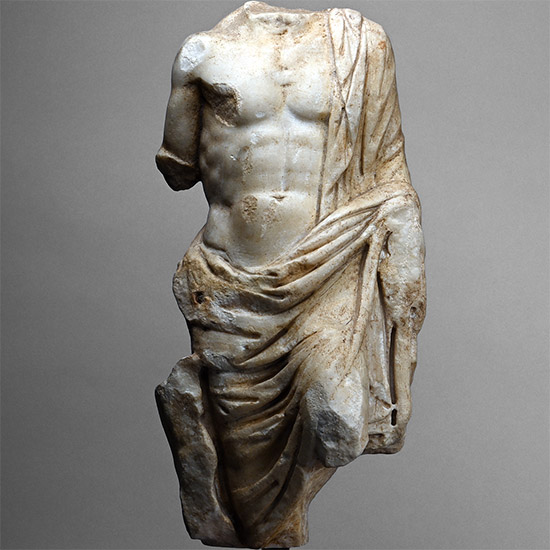
Roman Marble Figure of Asclepius, The God of Medicine
1st-2nd century A.D.Estimate: £20,000 - 30,000 (‡+bp*)
Opening Bid: £10,000
Depicted in a contrapposto stance, detailed torso with well-defined musculature, indicative of the idealised human form, carefully rendered drapery cascading over the figure's left shoulder and wrapping around his lower body, the folds of the garment deeply carved; mounted on a custom-made display stand. 33 kg total, 71 kg including stand
Ex Nicolas Koutoulakis (1910-1996), Paris and Geneva, thence by descent. Private collection, Europe. Accompanied by a printed copy of the Spanish cultural export licence no.1775-3178156. Accompanied by a copy of a French passport, no.134277. This lot has been checked against the Interpol Database of stolen works of art and is accompanied by search certificate no.13459-260915.
Asclepius, the god of medicine, is a pivotal figure in Greek mythology and was later adopted by the Romans. According to myth, Asclepius was the son of Apollo and the mortal Coronis. Trained by the centaur Chiron, he became a skilled healer, so proficient that he could even bring the dead back to life. His abilities eventually led to his demise at the hands of Zeus, who struck him down with a thunderbolt to maintain the balance between mortals and gods. The Pio-Clementino Museum houses a marble statue of Asclepius in the Octagonal Courtyard. This statue, similar in pose and drapery, provides an excellent comparative study. The National Museum in Athens (Room 28) displays a marble statue of Asclepius, highlighting his characteristic bearded face and draped garments. The British Museum's Greek and Roman Antiquities collection includes a statue of Asclepius (Room 69), illustrating the common attributes and stylistic elements. The Louvre Museum, Paris, in the Department of Greek, Etruscan, and Roman Antiquities, contains a marble statue of Asclepius in Room 17, showcasing the classical drapery and posture similar to the piece in question.
