
Loading, please wait...
LOT 0606
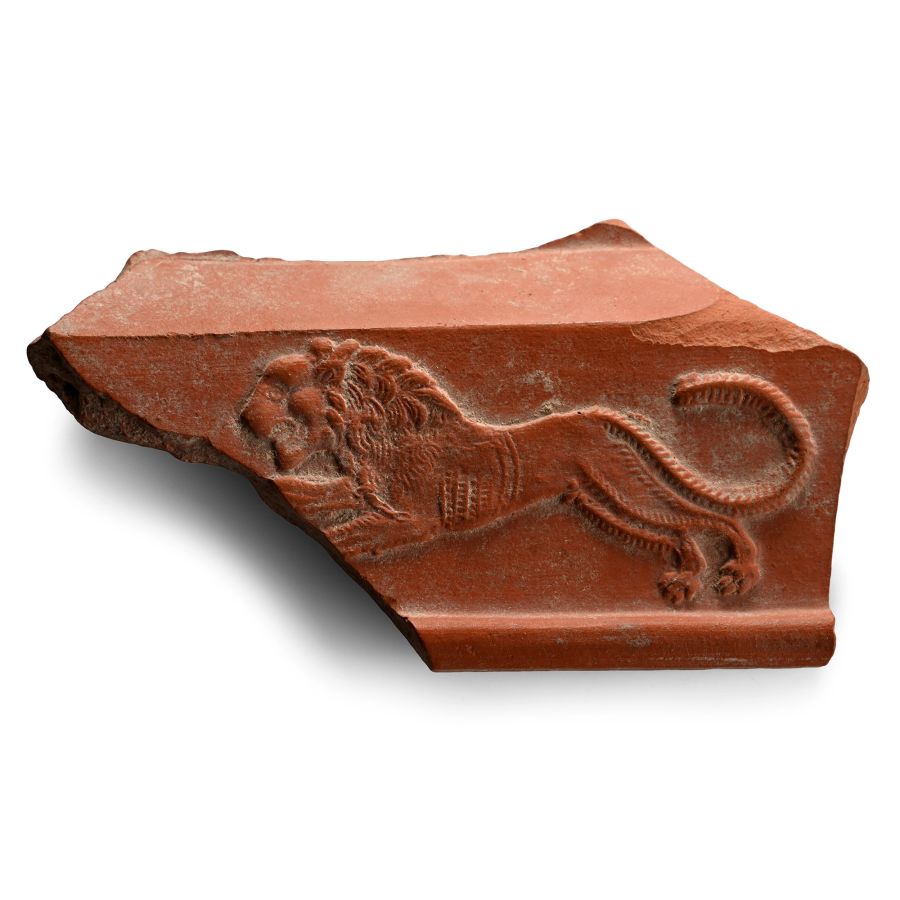
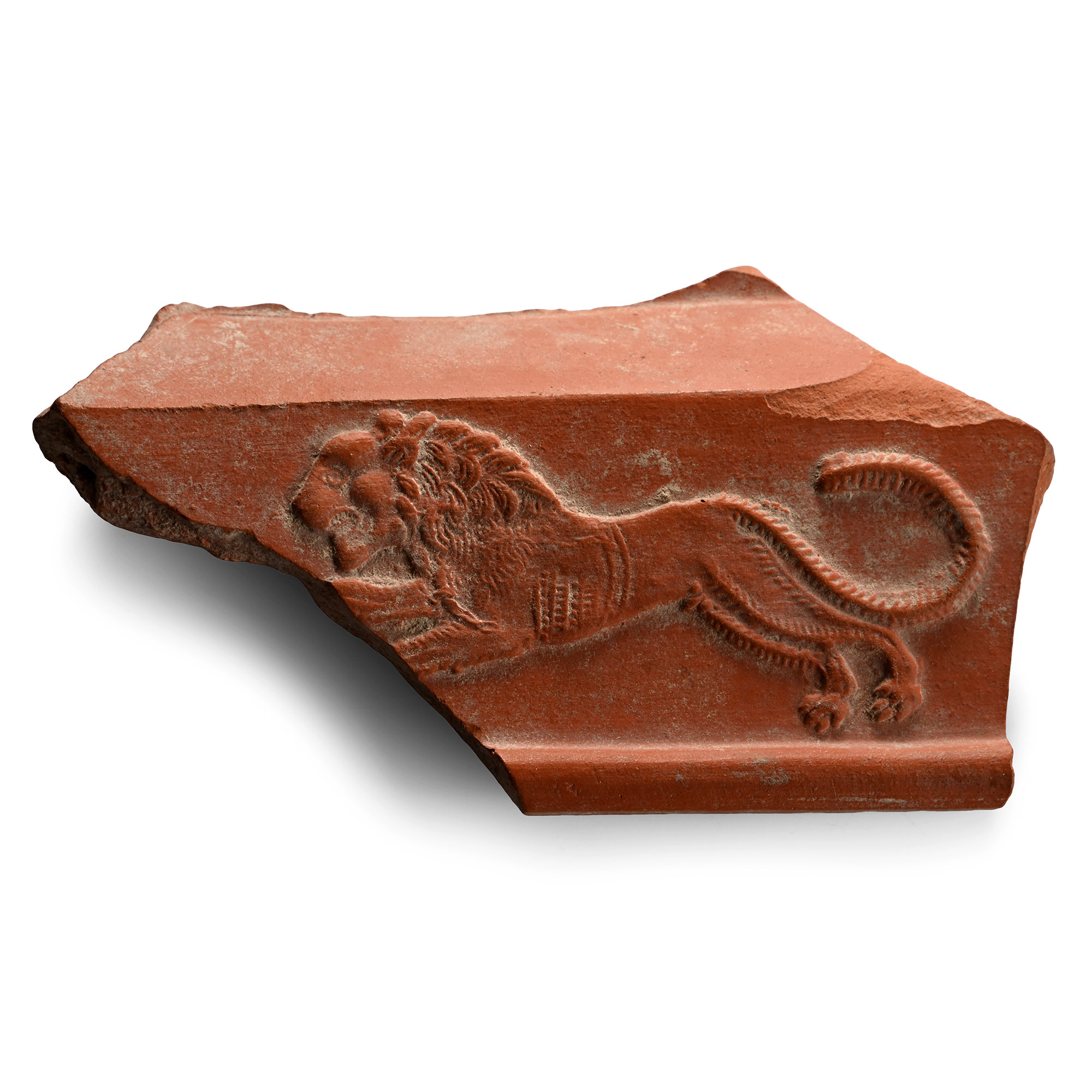
Roman Red Ware Fragment with Gladiatorial Lion
CIRCA 4TH CENTURY A.D.
4 5/8 in. (84 grams, 11.7 cm).
An irregular fragment from a large vessel with an angled shoulder and thickened rim, showing a low-relief leaping lion with its forelegs extended, jaws gaping, and its ears pulled back. [No Reserve]
ProvenanceFound near the village of Braughing in Hertfordshire, UK, in the early 1960s.
By descent to the son of a late Hertfordshire gentleman collector, whose collection was formed from the 1960s.
TimeLine Auctions follows a vetting process to ensure the authenticity and legality of all items, reinforcing our commitment to integrity and responsible trading. Each antiquity, antique, and coin lot undergoes thorough examination by a vetting committee of at least ten external specialists, professional trade association members, scientists, and archaeologists: Our Vetting Process
AUCTIONS:
TimeLine is a leading auction house specialising in antiquities, ancient art, collectables, natural history, coins, medals, and books. Our auctions offer museums, collectors, historians, and enthusiasts the opportunity to acquire unique and historically significant pieces.
-
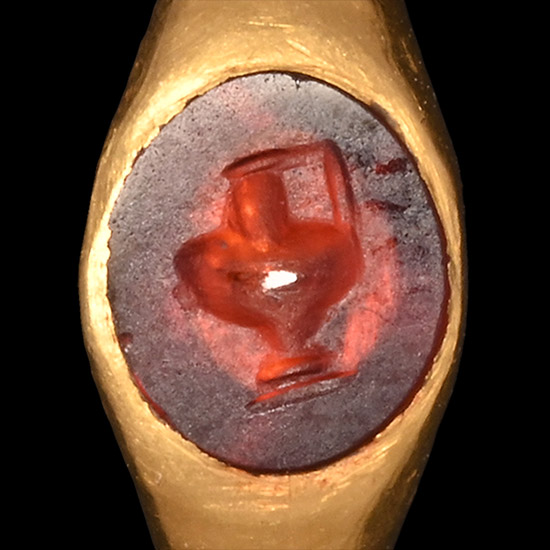
Roman Gold Child's Ring with Garnet Pitcher Gemstone
1st century A.D.Estimate: £500 - 700 (+bp*)
Current Winning Bid: £310
Solid ring inset with an intaglio of a guttus (pitcher) with socle foot and handle; supplied with a museum-quality impression. 0.87 grams, 9.77 mm overall, 7.20 mm internal diameter
Private English collection, formed between the late 1970s and early 1990s. Private collection, UK. -
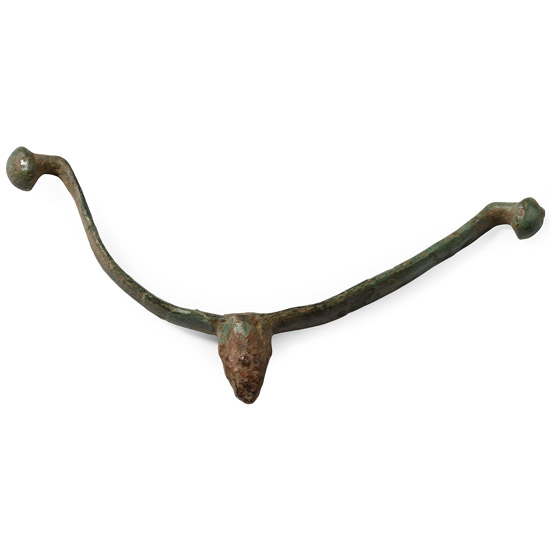
Roman Bronze Prick Spur
1st-2nd century A.D.Sold for (Inc. bp): £26
With a curving plate and lateral attachment lugs, a conical pricket. 9.85 grams, 82 mm
From a UK collection formed in the 1980s. Property of an Essex, UK, gentleman. -
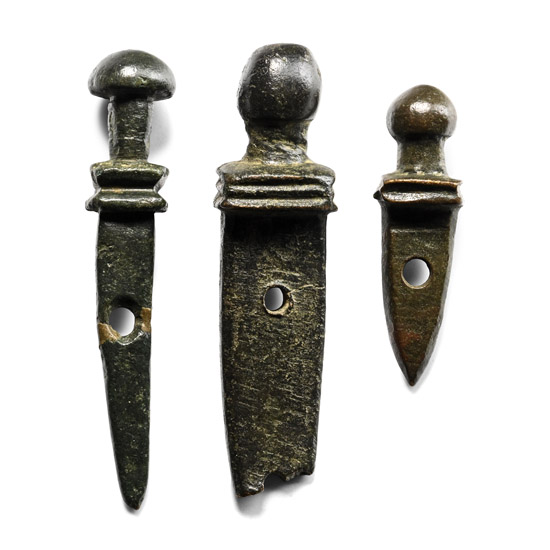
Roman Bronze Gladius Sword Pendant Collection
1st-2nd century A.D.Sold for (Inc. bp): £208
Comprising three gladius pendants, each with a domed pommel and pierced through the blade. 19.7 grams total, 28-42 mm
Ex German art market, 2000s. Acquired from an EU collector living in London. From the collection of a Surrey, UK, gentleman.
