
Loading, please wait...
LOT 0198
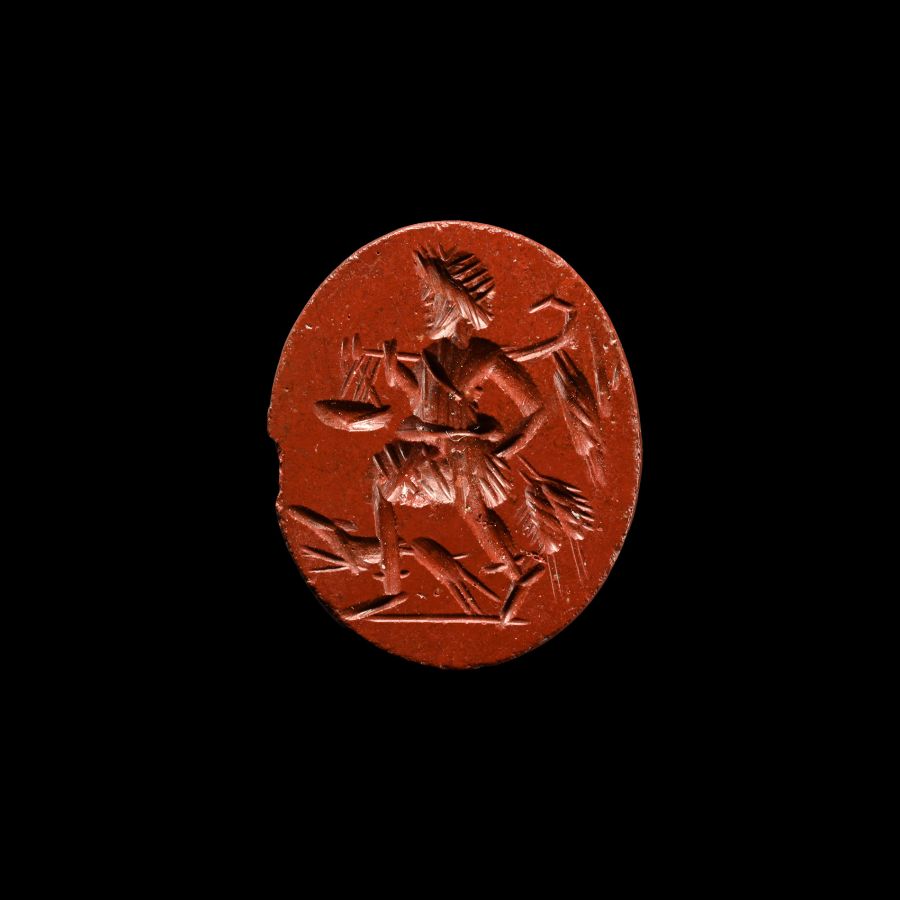
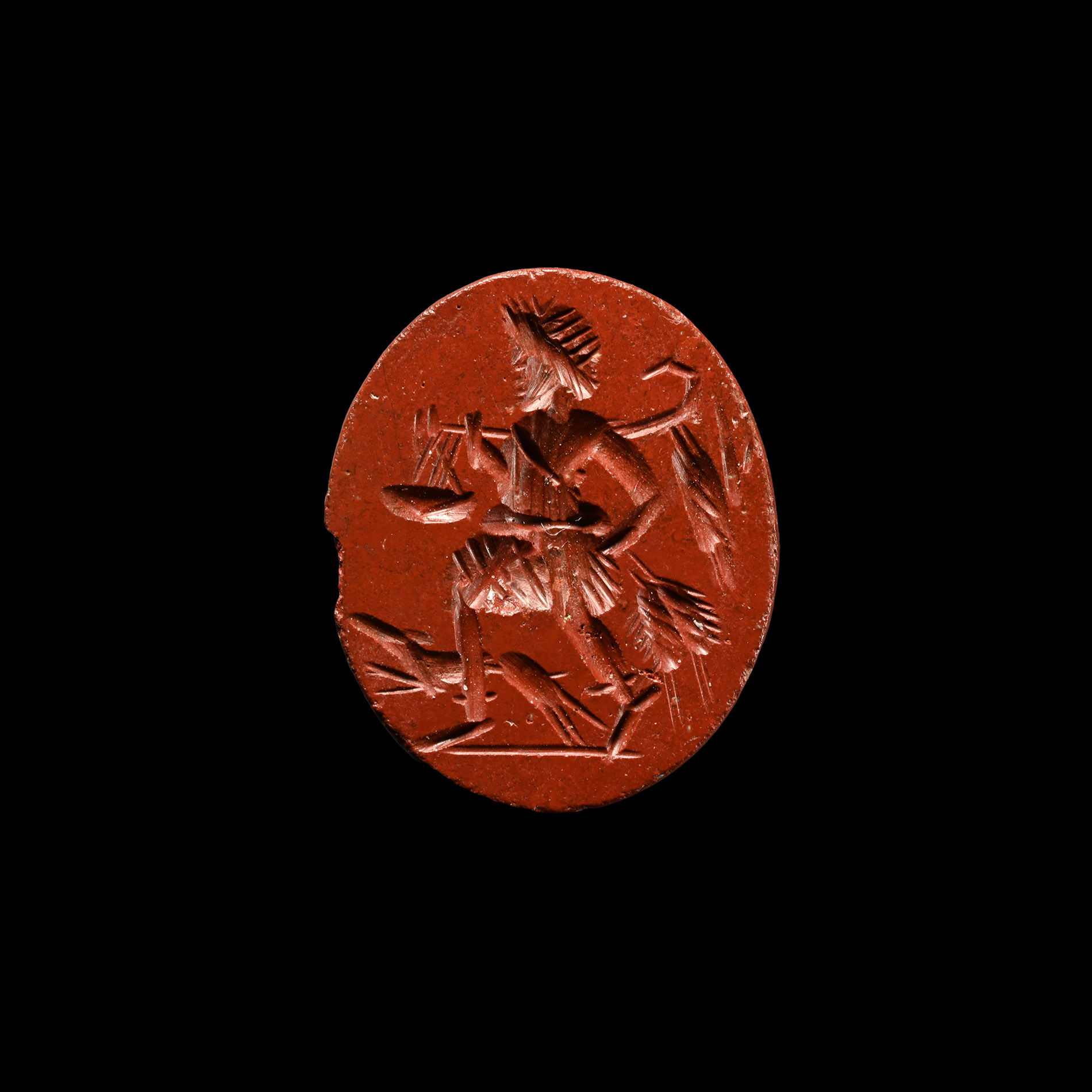
Roman Red Jasper Gemstone with Hunter and Dog
2ND-3RD CENTURY A.D.
5/8 in. (0.71 grams, 15 mm).
Oval in shape, engraved with an advancing male figure holding a long curved staff on his shoulder, a water skin hanging from the rear end and a low dish from the other, a leaping hound at his feet.
ProvenanceAcquired 1980-2015.
Ex Abelita family collection.
TimeLine Auctions follows a vetting process to ensure the authenticity and legality of all items, reinforcing our commitment to integrity and responsible trading. Each antiquity, antique, and coin lot undergoes thorough examination by a vetting committee of at least ten external specialists, professional trade association members, scientists, and archaeologists: Our Vetting Process
AUCTIONS:
TimeLine is a leading auction house specialising in antiquities, ancient art, collectables, natural history, coins, medals, and books. Our auctions offer museums, collectors, historians, and enthusiasts the opportunity to acquire unique and historically significant pieces.
LOT 0198
Roman Red Jasper Gemstone with Hunter and Dog
Estimate £400 - 600€460 - 700 (for guidance only)$540 - 810 (for guidance only)
-
.jpg)
Roman and Other Glass and Stone Bead Group
1st millennium B.C.-20th century A.D.Sold for (Inc. bp): £234
Comprising a large quantity of variously shaped beads in lapis lazuli, faience, red jasper, glass and other materials, with some from Asia, North and West Africa, with some glass Venetian chevrons. 65.5 grams total, 2-14 mm
UK gallery, early 2000s. -
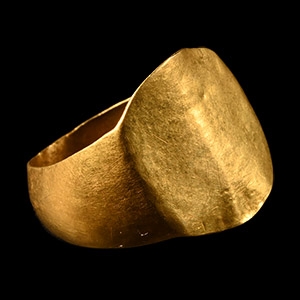
Roman Solid Gold Ring
Circa 3rd century A.D.Sold for (Inc. bp): £338
With a flat-section, wide hoop and rounded bezel. 3.06 grams, 19.11 mm overall, 16.10 mm internal diameter (approximate size British L, USA 5 3/4, Europe 11.24, Japan 10)
From a late Japanese specialist collector, 1970-2000s. -
.jpg)
Roman Carnelian Gemstone with Opposed Busts
Late 2nd century A.D.Sold for (Inc. bp): £1,170
With two opposed profile male and female busts; supplied with a museum-quality impression. 1 grams, 16 mm
From the collection of a Swiss gentleman formed in Europe from 1970-1980s; thence by descent from the family in London.
