
Loading, please wait...
LOT 0197
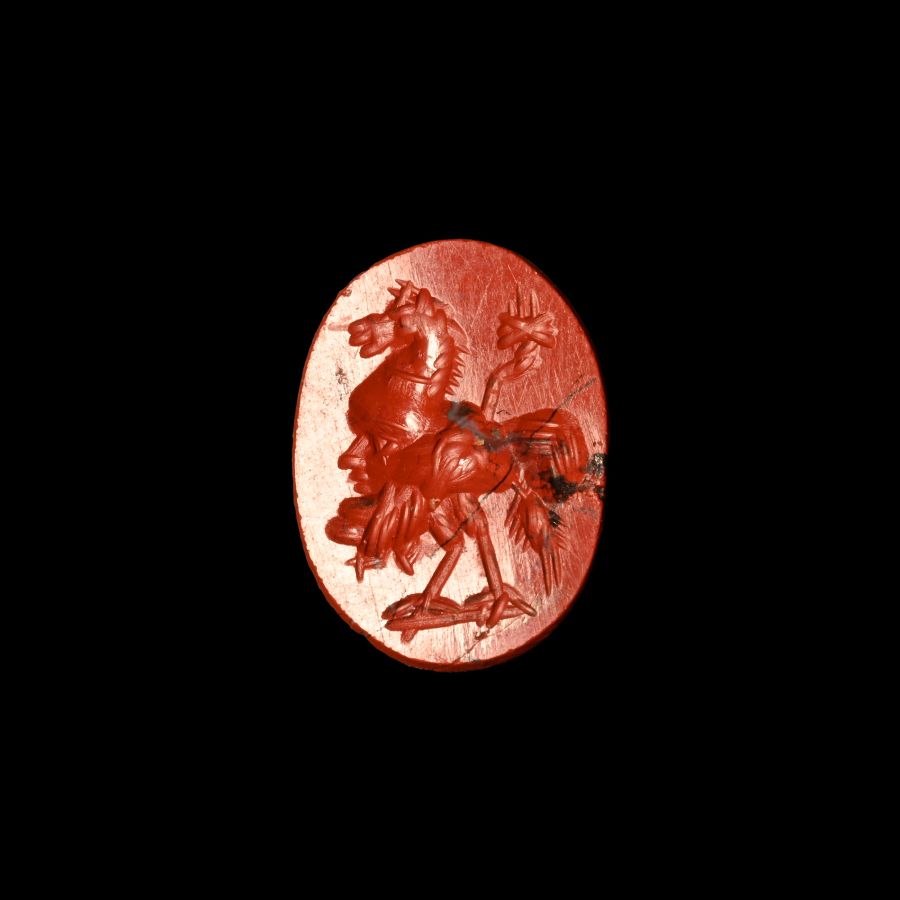
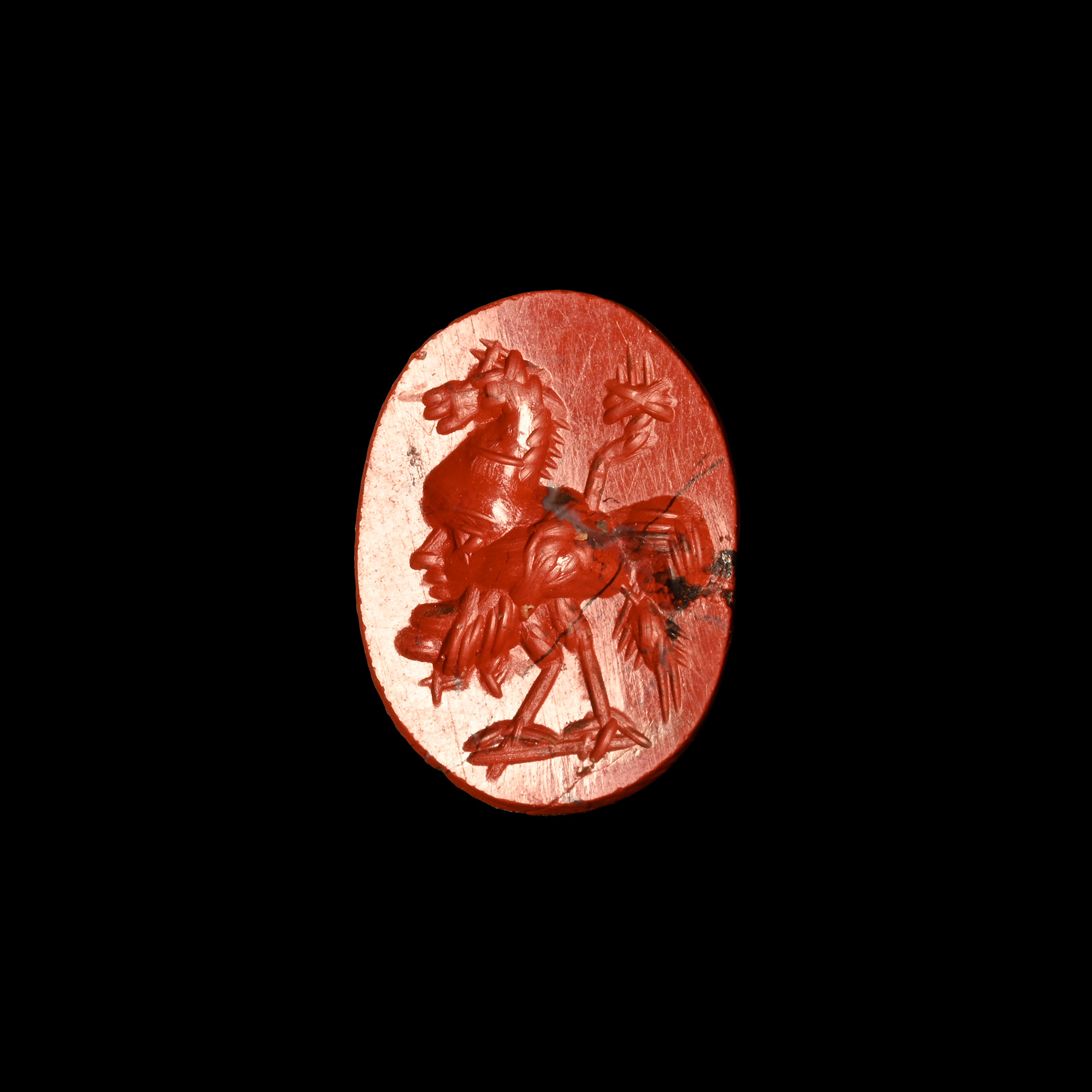
Roman Red Jasper Gemstone with Gryllos
2ND CENTURY A.D.
3/8 in. (0.34 grams, 11 mm).
Oval in shape; the main subject of the gryllos a youth wearing a horse-head topped helmet, the body a ram's head holding an ear of corn in its mouth, the legs and tail that of a cockerel.
ProvenanceAcquired 1980-2015.
Ex Abelita family collection.
According to Plutarch, grylloi had apotropaic properties to ward off the evil eye.
CONDITIONTimeLine Auctions follows a vetting process to ensure the authenticity and legality of all items, reinforcing our commitment to integrity and responsible trading. Each antiquity, antique, and coin lot undergoes thorough examination by a vetting committee of at least ten external specialists, professional trade association members, scientists, and archaeologists: Our Vetting Process
AUCTIONS:
TimeLine is a leading auction house specialising in antiquities, ancient art, collectables, natural history, coins, medals, and books. Our auctions offer museums, collectors, historians, and enthusiasts the opportunity to acquire unique and historically significant pieces.
-
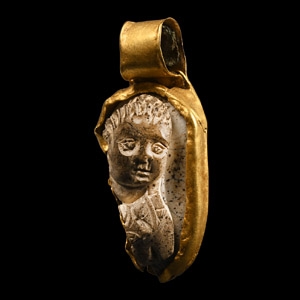
Roman Gold Pendant with Cameo
Circa 1st-2nd century A.D.Sold for (Inc. bp): £562
Suspension loop to one edge, the stone cameo fragment portraying a young boy. 3.84 grams, 30 mm
Acquired 1990s-early 2000s. East Anglian private collection. -
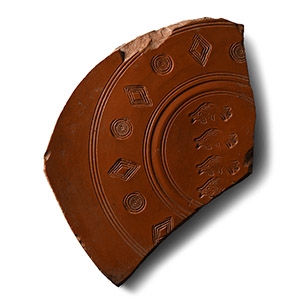
Roman Redware Fish Sherd with Christian Symbols
4th-5th century A.D.Sold for (Inc. bp): £85
Flat ceramic sherd with incised concentric rings, band of impressed alternating lozenges and roundels, group of four fish to the centre; fabric-backed. 178 grams, 17.5 cm
Acquired 1960s-1990s. From the late Alison Barker collection, a retired London barrister
The representation of fish on this terra sigillata from a North African workshop suggests the connection with Christian faith through the fish symbol. The ancient Greek: 'ἰχθύς', was an acronym for the phrase ‘Jesus Christ, Son of God’, in Greek, and was used by early Christians for this reason. The fish symbol was very common in the catacombs of Rome and was used as a recognition symbol among the early Christians. -
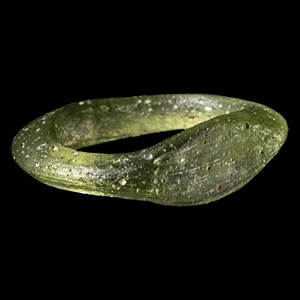
Roman Glass Ring with Bezel
1st-4th century A.D.Sold for (Inc. bp): £78
In light green translucent glass, the hoop widening at the base, lozenge-shaped flat bezel 1.39 grams, 21.56 mm overall, 14.96 mm internal diameter (approximate size British F, USA 2 3/4, Europe 3.67, Japan 3)
Property of a UK gentleman, acquired 1986. Property of an East Sussex, UK, gentleman. Accompanied by an old handwritten identification ticket.
